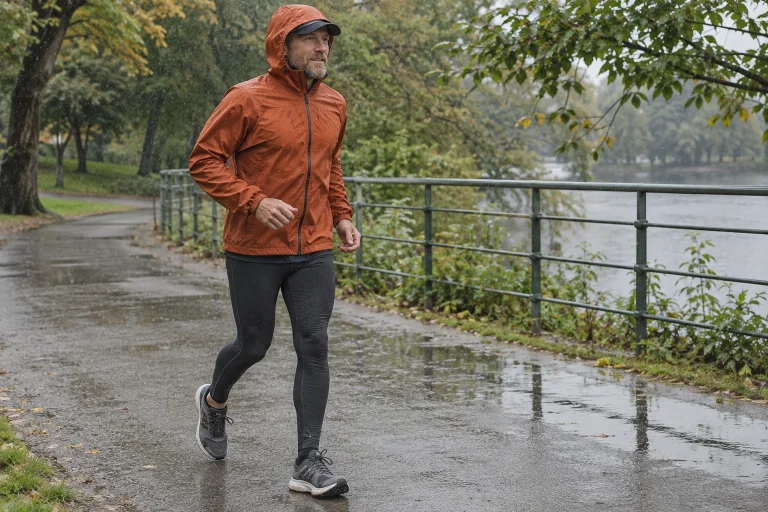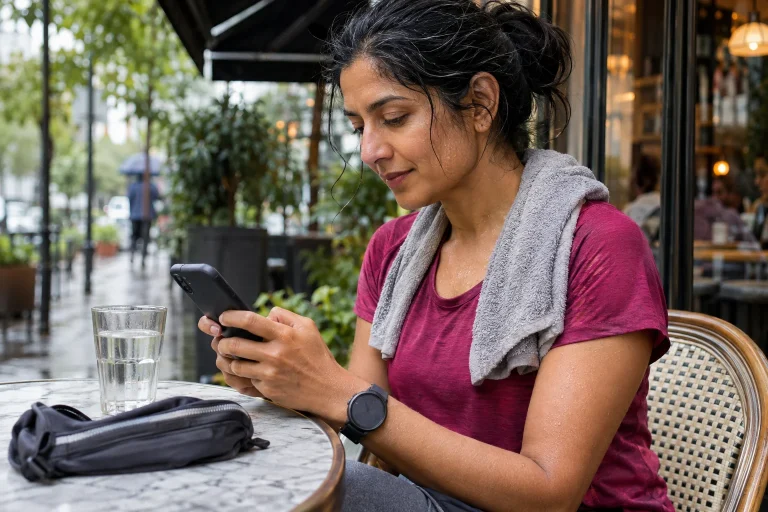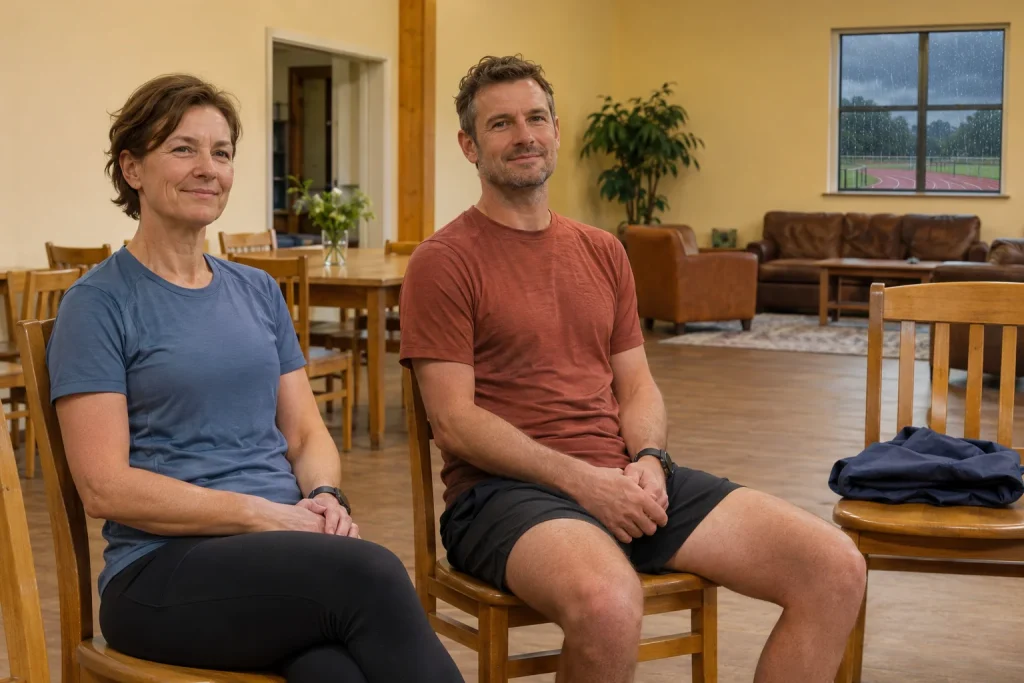
A park pavilion looks promising from a distance: it has a roof, the running group fits inside, and perhaps the bench stays dry. For lightning, however, an open rain shelter is different from an appropriate enclosed building. The same applies to an isolated tree: getting less wet beneath its canopy does not make it a suitable lightning-safety destination. Clarify this distinction with actual places before running.
The NWS basic guidance says to seek appropriate shelter immediately on hearing thunder and remain there for at least thirty minutes after the last thunder. Here we explore what this means for a running route, group workout or group preparing for a race. Our own route and timing examples help plan the steps. This article does not certify any building or replace local warnings or organiser instructions.
The response to thunder should not depend on how heavily it is raining
The US weather service emphasises that when thunder is audible, lightning may already be close enough to pose a danger. You do not need to wait until the heaviest shower reaches your starting point. NWS outdoor-sports guidance explains that lightning can occur beyond the area of precipitation. More pleasant-looking local conditions therefore do not provide a reliable reason to continue unchanged.
During a run, this is a concrete decision. If the workout aims to finish a set, do not negotiate another repetition when thunder sounds: head to the agreed shelter. “Just one more lap” is understandable in terms of the training plan, but adds no information about lightning conditions. Stopping works when a predefined signal is linked to an action everyone already understands.
Not everyone perceives the surroundings in the same way: noise, distance, attention or hearing difficulties may affect what different group members notice. Our organisational suggestion is therefore to have a short, familiar message for stopping too. People should not have to infer the safety decision merely from the first runner suddenly changing direction. Reaching your companions should form part of the plan.
What counts as appropriate shelter?
The NWS identifies suitable enclosed, properly constructed buildings, such as homes, offices or schools; its description distinguishes substantial buildings with electrical wiring and plumbing from small outdoor structures. Another option is an enclosed, metal-roofed vehicle with the windows closed. An open-sided pavilion, picnic shelter, sports-field rain shelter or tent is not appropriate lightning shelter.
Marking “some kind of roof here” on a running route is therefore insufficient. The real questions are which building you can enter, when it is accessible and whether the entire group can reach it. A closed sports hall’s name on a map does not provide entry. A café’s open terrace does not become suitable because the main building stands beside it. Clarify the entrance you can actually use and access arrangements before setting off.
Give the building and its accessibility separate lines on your own location list. For example: “Clubhouse, open with staff during training; group access agreed beforehand.” This is an organisational note, rather than an architectural lightning-protection certificate. Its value lies in identifying more than a map point: you also check whether the plan can work at the actual time.
 Enlarge image
A tree, tent and open roof serve different purposes
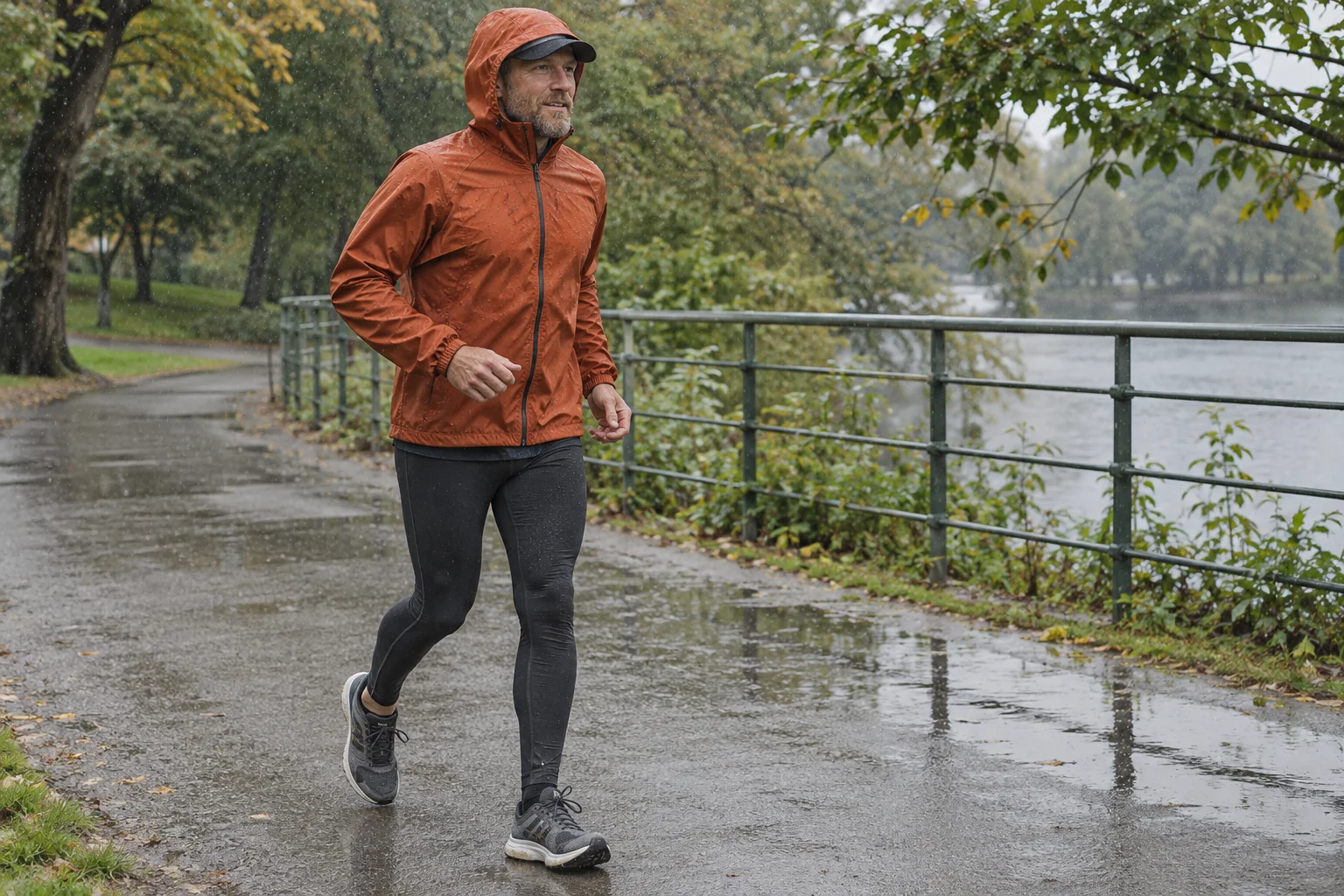
CDC lightning-safety information explicitly excludes pavilions, tents and other open structures from appropriate shelters. Do not seek protection beneath an isolated tree either. A good raincoat, dry bench or avoiding contact with a support post does not remove the risk of being outdoors. Protection from lightning and staying dry from rain are separate questions.
Our route-planning conclusion is to keep rain shelters and places usable during a thunderstorm on separate lists. You might adjust a shoe under a roof after rain, but that stop’s name should not quietly remain in the lightning-safety plan too. Separate markings help prevent automatically choosing an earlier stop intended for another purpose when under stress.
Vehicles also need precise identification. “Someone will be in the car park” does not mean an appropriate enclosed vehicle is accessible, has space inside and has its key available. Do not treat an open vehicle or one with its roof lowered as equivalent. If the running group arrives in several cars, do not base access on people who are meanwhile running at the far end of the course and know nothing about the plan.
Your route map: allow for entry time as well as distance
Imagine a fictional city park with two running options. The inner loop stays near an operating sports centre; the outer loop spends longer in open areas and passes only pavilions. This example is not a safety assessment of an actual place. Its point is that reaching shelter and obtaining access involve different organisational tasks on the two routes, even if both look like comfortable running loops.
| Your planning question | What should be clarified? | What remains insufficient information? |
|---|---|---|
| Which building? | Precise location and an entrance that can actually be used. | “There is some kind of clubhouse nearby.” |
| When is it accessible? | Whether it is open during training, with entry agreed. | Old opening hours on a map or a previous memory. |
| How does the group get inside? | Those behind, companions and different mobility needs are included. | Only the first runner’s arrival time is known. |
| What if the door is closed? | The activity can be changed beforehand, with a genuine alternative. | You retrospectively designate the pavilion as shelter. |
Do not divide map distance by your usual race pace as though this gave everyone’s exit time. Gathering the group, navigating passages and approaching the actual entrance may take time too. The task is not to justify an outdoor programme with a seemingly precise number of minutes. It is to recognise when the route is unsuitable for the expected weather situation.
If appropriate shelter is inaccessible, address the planning gap before starting. Choosing another time, an indoor programme or postponement may be the decision. Running through a distant open section does not acquire an adequate supporting plan merely because the group knows where a pavilion is. A simpler plan that can actually be carried out is worth more than a map with many points but unresolved access.
The thirty minutes start after the last thunder
The NWS advises remaining in appropriate shelter for at least thirty minutes after the last thunder. The waiting period therefore starts neither at the first heavy rain, nor on reaching shelter, nor when the sky first brightens. If thunder sounds again, the last-thunder time changes and the count restarts from there. Lighter precipitation alone does not shorten this guidance.
In our timing example, you hear what you think is the last thunder at 14:10. Thirty minutes would end at 14:40. If thunder sounds again at 14:28, however, counting from the new time gives 14:58 as the earliest thirty-minute point. These are fictional times illustrating a rule; they do not mean every other danger disappears at 14:58 or that restarting the event is compulsory.
Make clear within the group who tracks this time and who communicates the next decision. Otherwise, several phone timers with different starting points can easily run alongside one another. Waiting is not a race towards the exit. If the remaining workout, darkness, local instructions or getting home make continuation unreasonable, the programme can end even if a waiting condition would later be satisfied.
Choose your position consciously inside an enclosed building too
NWS indoor guidance says to stay away from exterior windows and doors, plumbing and direct use of electrical equipment connected to mains power. Do not shower or unplug connections during a thunderstorm. Leaning against concrete walls and lying on concrete floors are also discouraged. Entering an appropriate building is an important step; adapt how you wait inside accordingly too.
For a running club, this means wet-kit organisation and washing can wait. You can arrange access to dry layers beforehand, but the group should not lean against windows to watch lightning. Agree the waiting area with building staff. A calm interior space with a clear attendance check is easier to manage than a group crowding the doorway while some people start heading home.
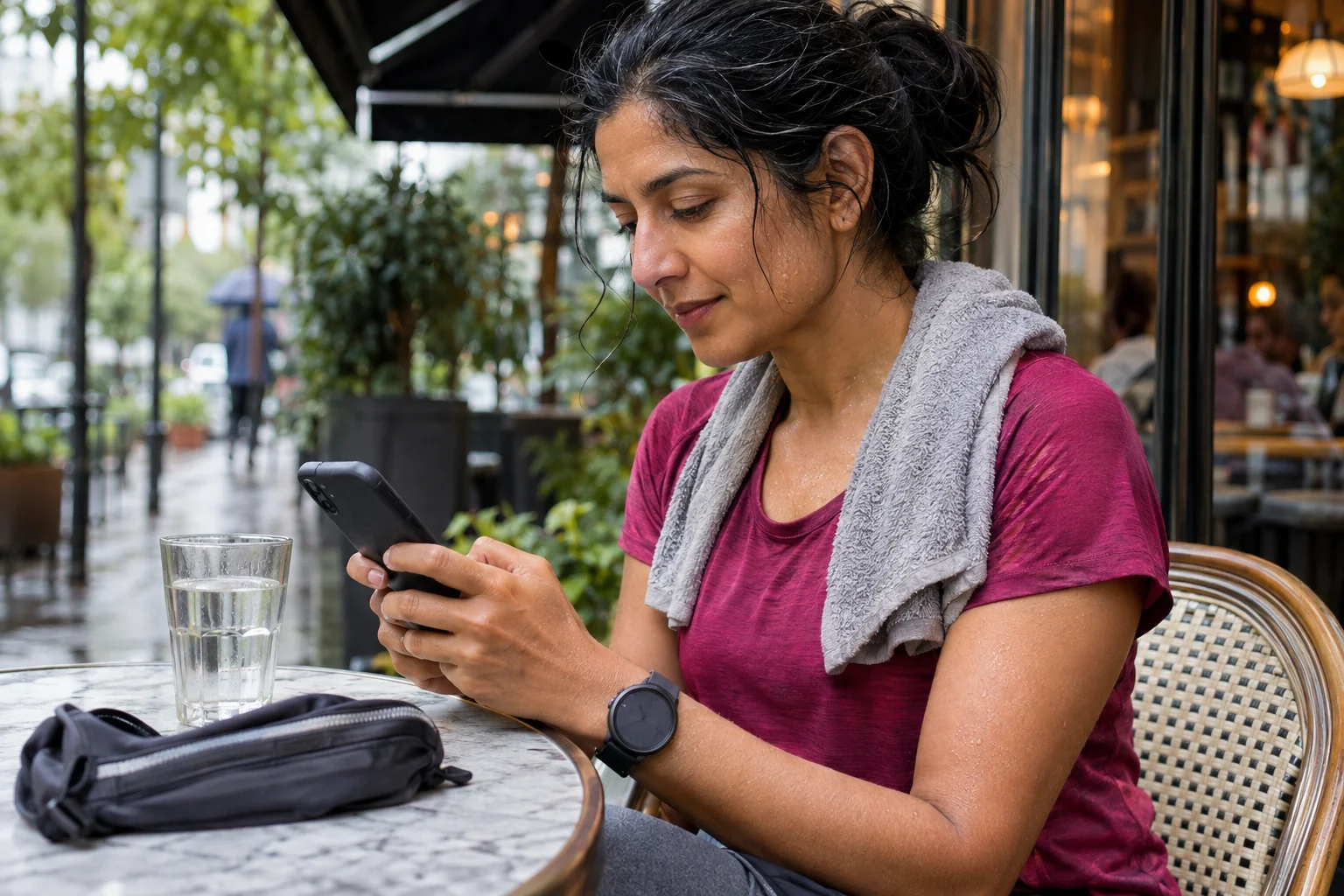
A mobile phone can help you read organiser messages and request assistance. The CDC distinguishes wired, connected devices from mobile-phone use. Use the device for its appropriate role: communication, rather than justifying standing somewhere risky to film through a window. Documenting the event does not take priority over remaining in an appropriate waiting area.
 Enlarge image
A group run needs both a decision-maker and a communication channel
NWS guidance for outdoor sports recommends a written lightning-safety plan and a designated weather monitor. Decisions should not be left solely to people simultaneously managing other training tasks. This is an organisational principle, rather than legislation quoted for a Hungarian sporting event. Even a smaller running group benefits from knowing who signals the interruption, where to go and how to check that everyone has arrived.
HungaroMet’s description of its warning system treats thunderstorms as a separate warning and alert element. Check the current map and written information for the run’s location and time. A phone notification does not replace observing your surroundings, however; on hearing thunder, the next step is not to wait for every device to send the same alert. Official information and the group’s actual movements must be handled together.
Our short sample message: “We are stopping outdoor training. We are going to the agreed indoor waiting area at the sports centre; the route leader will check numbers. We will announce any continuation here and on the group channel.” This assumes a place already known, rather than an open door to be found now. Discuss the plan on a day when there is still time to clarify access calmly.
Immediate help is needed after a lightning strike
According to the CDC, a lightning-strike victim does not retain an electrical charge, so touching them is not dangerous for that reason; the continuing lightning risk in the surroundings must nevertheless be considered. In Hungary, call 112 and provide the exact location, access details and the condition of those affected. Follow the dispatcher’s instructions. Unconsciousness and abnormal breathing may require immediate resuscitation; if an AED is available, its instructions also help.
The Hungarian National Ambulance Service’s emergency-call information specifically asks for an explanation of access when the address is unclear. A running trail can be such a place: alongside the park’s name, the entrance, a nearby landmark and the actual location matter greatly. As an advance task, the group leader should know the names along the planned route. Requesting help should not require translating the group run’s nickname into a road address.
The main preparation remains choosing appropriate shelter in time. Before starting, identify an accessible building, agree entry and the group message, then adapt the programme to current weather. You will have clarified the roles of the pavilion and isolated tree while still calm. When thunder sounds, the next step can be an action thought through beforehand, rather than an on-site debate.
Sources and planning examples
Checked: 21 November 2026. The park’s two loops, access table, timing example and club messages are our own examples. They do not constitute a lightning-protection inspection of a specific place or documented medical review.
- NWS: Lightning Tips – thunder, shelter and waiting
- NWS: When a Safe Building or Vehicle is Nearby
- NWS: Lightning Safety and Outdoor Sports Activities – group plan and responsibility
- NWS: Lightning Indoors – waiting indoors
- CDC: Safety Guidelines: Lightning – shelters and providing help
- HungaroMet: description of the warning system
- Hungarian National Ambulance Service: Who can call an ambulance and when? – 112 and stating the location
- Hungarian National Ambulance Service: What should you do until the ambulance arrives?
How Futószív articles are prepared: our editorial guidelines.