Pain in the groin crease while running can easily be called a muscle strain. If you also notice it when coughing, or experience swelling, ask about the possibility of a hernia during an individual assessment. Even these two circumstances together do not establish a diagnosis, and groin pain is not always a hernia. What matters is that your care provider receives the full symptom history.
This article brings together the basic concept of an abdominal-wall hernia, the potentially confusing term ‘sports hernia’ and a useful description for seeking help. You do not need to perform your own coughing or exertion tests to confirm a suspicion. With new severe pain or feeling unwell, necessary care comes before deciding how to adjust the next running workout.
The basic concept of a hernia and naming the groin area
A hernia occurs when an internal structure protrudes through a gap or weakness in the muscle that holds it in place. The NHS explains that hernias often occur in the abdomen or groin; some may cause a visible or palpable lump. The official NHS page on hernias describes different types and symptoms. Understanding the basic concept is not the same as establishing your own condition.
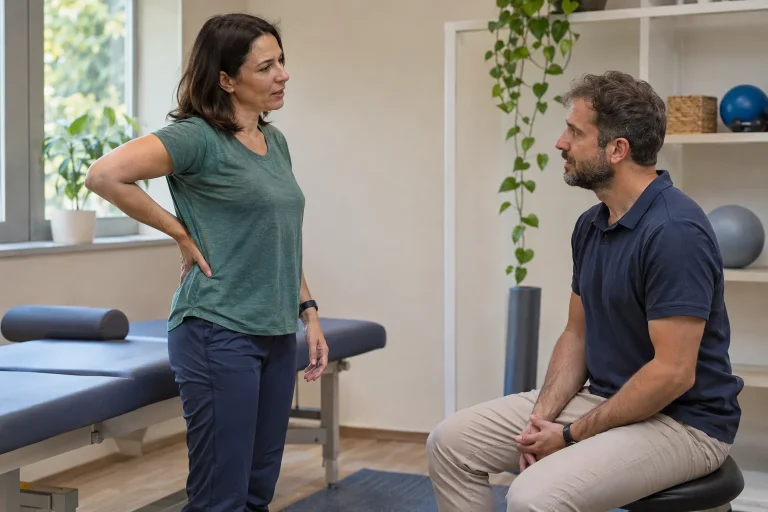
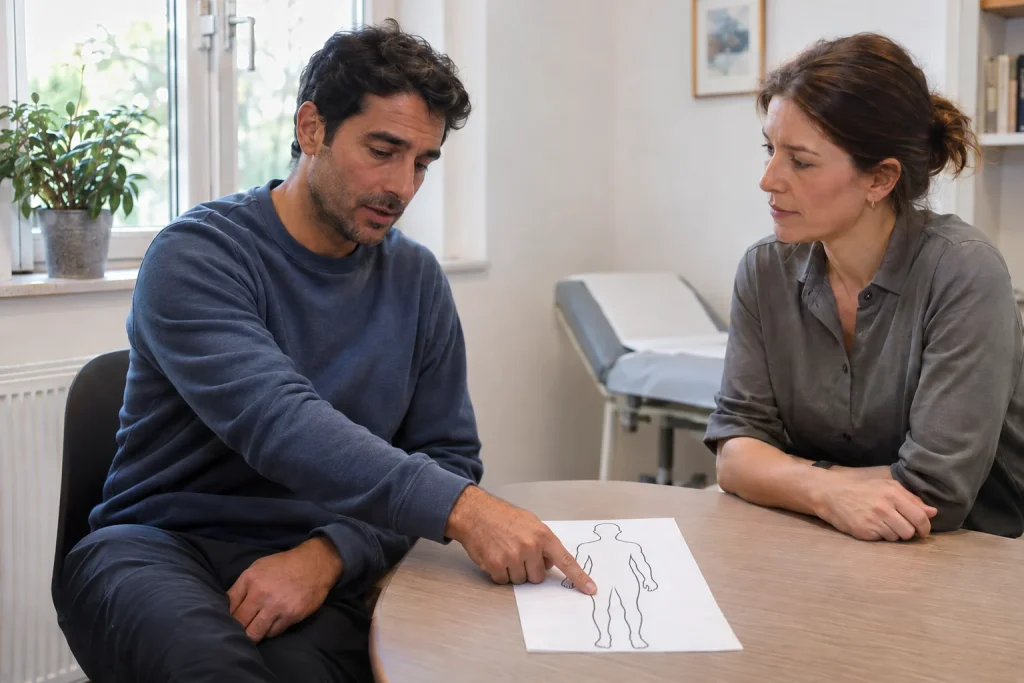
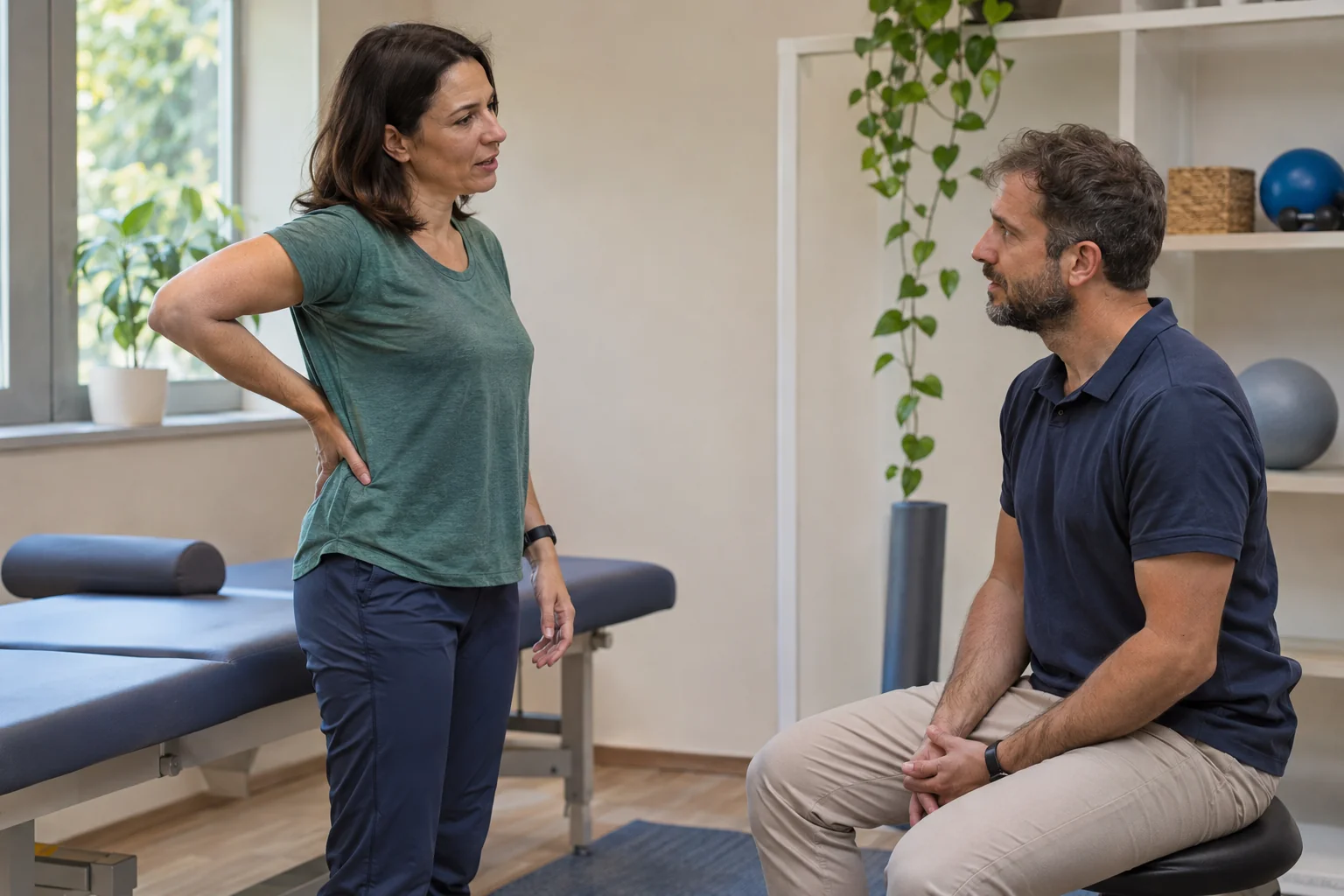
The groin is the region where the abdomen meets the thigh. If you notice pain or swelling, describe which side, the area involved and how long it has been present. You need not invent the anatomical name of an opening or canal. You can show the location through clothing at the start of the conversation and ask why a particular examination is appropriate.
It is not your task to check a lump or swelling by pressing it either. Describing a change you noticed is important information in itself. If you are unsure what you see or feel, say so. You do not need to remove that uncertainty through firm pressure, repeated lifting or running.
What does noticing a change while coughing mean?
The NHS hernia information explains that a hernia-related lump may appear larger with coughing or sneezing and may change with body position. If you noticed this spontaneously, mention it. This is not an instruction to search for the sign by coughing forcefully or straining in front of a mirror. You do not need to imitate an examination at home.
Distinguish pain from a visible change in your account. ‘It hurts when I cough’ and ‘I also noticed a lump when coughing’ are different statements. Both may have a place, but do not add one to the other just because a description listed them together. Pain is still a symptom you can describe even without a noticed lump.
Describe the sequence too: whether the cough or groin symptom came first, whether it began suddenly and whether it has since changed. You need not establish a cause from this. The actual sequence tells the care provider more than naming one movement as the definite trigger. Persistent coughing can also be discussed separately.
If a lump you previously noticed is not visible at the appointment, simply say so as part of the history. Do not try to recreate it by straining before entering the clinic. Discuss the examination arrangements and any further checks needed with the professional.
 Enlarge image
‘Sports hernia’ does not always mean a true hernia
The AAOS uses athletic pubalgia, commonly called sports hernia, for a soft-tissue injury in the groin and distinguishes it from a conventional inguinal hernia. Muscle, tendon or other soft tissue may be involved without a conventional hernia. The AAOS information on sports hernia specifically highlights the distinction between the two terms.
This difference in language matters because a sporting label does not make a hernia assessment unnecessary, and information about a conventional hernia does not automatically apply to every symptom called a sports hernia. If someone has already used this term for your situation, ask precisely what they meant and which assessment led to that conclusion.
The AAOS describes individual history-taking, physical examination and further checks where needed. The examination movements listed there are not home tasks. Trying a painful sit-up or twisting movement yourself does not reliably distinguish different groin conditions. Clarifying terms should support the conversation rather than self-testing.
You can describe hip, thigh and abdominal symptoms together
Questions about groin pain do not always stop at one body region. Hip symptoms, a musculoskeletal injury or another condition may also be considered; differentiating them is a professional task. The NHS page on hip pain in adults also mentions several causes and warns against self-diagnosis. The NHS hip-pain information provides a general framework for understanding another possible area.
Mention separate abdominal, thigh or lower-back symptoms, without deciding beforehand which is ‘just referred pain’. The place you feel something and its origin are not necessarily the same information. Describing distinct experiences in separate sentences and saying which came first can help the assessment.
If you also have symptoms in an intimate area, discuss them confidentially with your care provider. You do not need to send photographs of the area to a coach or public group to seek help. A general running community does not replace individual healthcare assessment, even when someone can describe a similar experience.
A short symptom history before assessment
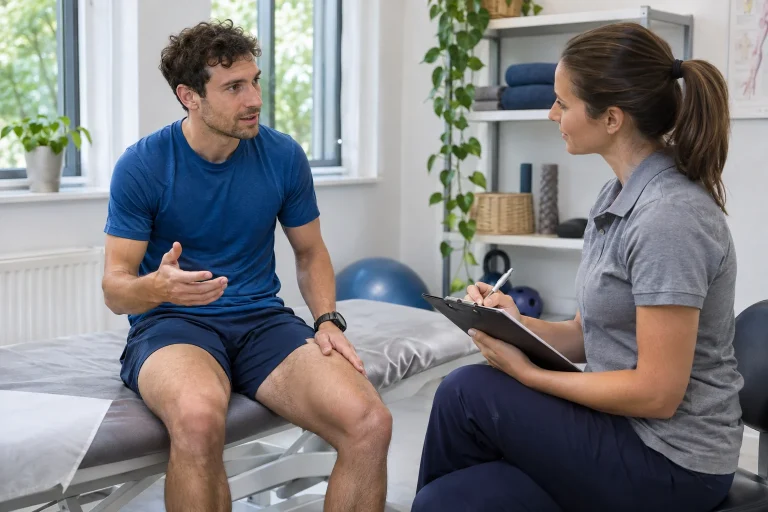
A few organised points may be enough when booking and attending: location, onset, possible swelling, the relationship with coughing and daily effects. Do not name only the type of run. It may matter whether symptoms also occur while walking, working or making everyday movements, or whether they have suddenly changed.
| Observation | A factual sentence | What it does not establish by itself |
|---|---|---|
| Pain when coughing | ‘After this stimulus, I notice pain in the groin area.’ | It does not alone prove a type of hernia. |
| A noticed lump | ‘I noticed a change on this side at this time.’ | You do not need to identify it by pressing or trying to push it back. |
| Onset related to running | ‘It began on this occasion and has since also occurred in these situations.’ | It does not automatically mean a muscle strain. |
| Feeling newly unwell | ‘This new symptom has now appeared alongside the previous situation.’ | Do not simply label it a continuation of the old sporting symptom. |
Do not treat notes as an entry requirement for care. You can seek help with little information too. The professional can clarify the history through further questions. You need not fill every field before attending, particularly if doing so would require deliberately provoking the symptom.
If you previously had hernia surgery or another relevant assessment, bring the document. The history may matter, but do not automatically call the current symptom the same condition. Describe the present story alongside the report or earlier treatment: what began newly and what has changed since.
Do not wait for a sports check with sudden severe pain and illness
According to the NHS, pain, bloating, nausea or vomiting and other illness alongside a hernia may warrant urgent medical advice. Sudden very severe abdominal or groin pain, vomiting, inability to pass stool or wind, fever or feeling seriously unwell may require immediate care. Do not leave the question until just before the next day’s workout.
The NHS page on femoral hernia treats complications involving trapping and interrupted blood supply as emergencies. The NHS femoral-hernia information helps explain why associated illness matters. This article does not teach you to exclude these complications at home. In Hungary, call 112 in a serious condition, and do not try to continue training alone or set off without safe assistance.
Do not force the swelling back or perform coughing or lifting tests to determine how serious it is. Urgent assessment exists precisely to clarify the condition properly. You do not need to state a definite diagnosis on the phone; clearly describing what happened and how you are now is enough.
 Enlarge image
Why should the next run not be the deciding test?
If the symptom’s cause is unclear, another run’s outcome does not reliably answer whether a hernia or another condition needing care is present. A symptom being quieter briefly does not automatically resolve the question. Equally, worsening during running does not itself identify which tissue is involved. Bring the history you observed to assessment rather than doing a workout to prove it.
Do not try to create an outcome that lets the programme continue through pain relief, tight trousers or new exercises. Comfort measures and healthcare assessment are different tasks. If equipment or treatment is suggested, ask what it is for in your case and under which conditions; do not automatically adopt another runner’s routine.
Ask within your care about movement that changes symptoms. Do not determine which intensity or distance is appropriate now from a general online hernia description. Treatment and a later sporting plan depend on the established condition and individual circumstances. You do not need to fill the time until follow-up with another, more demanding sport simply because running has become uncertain.
Understand the assessment’s purpose and subsequent plan too
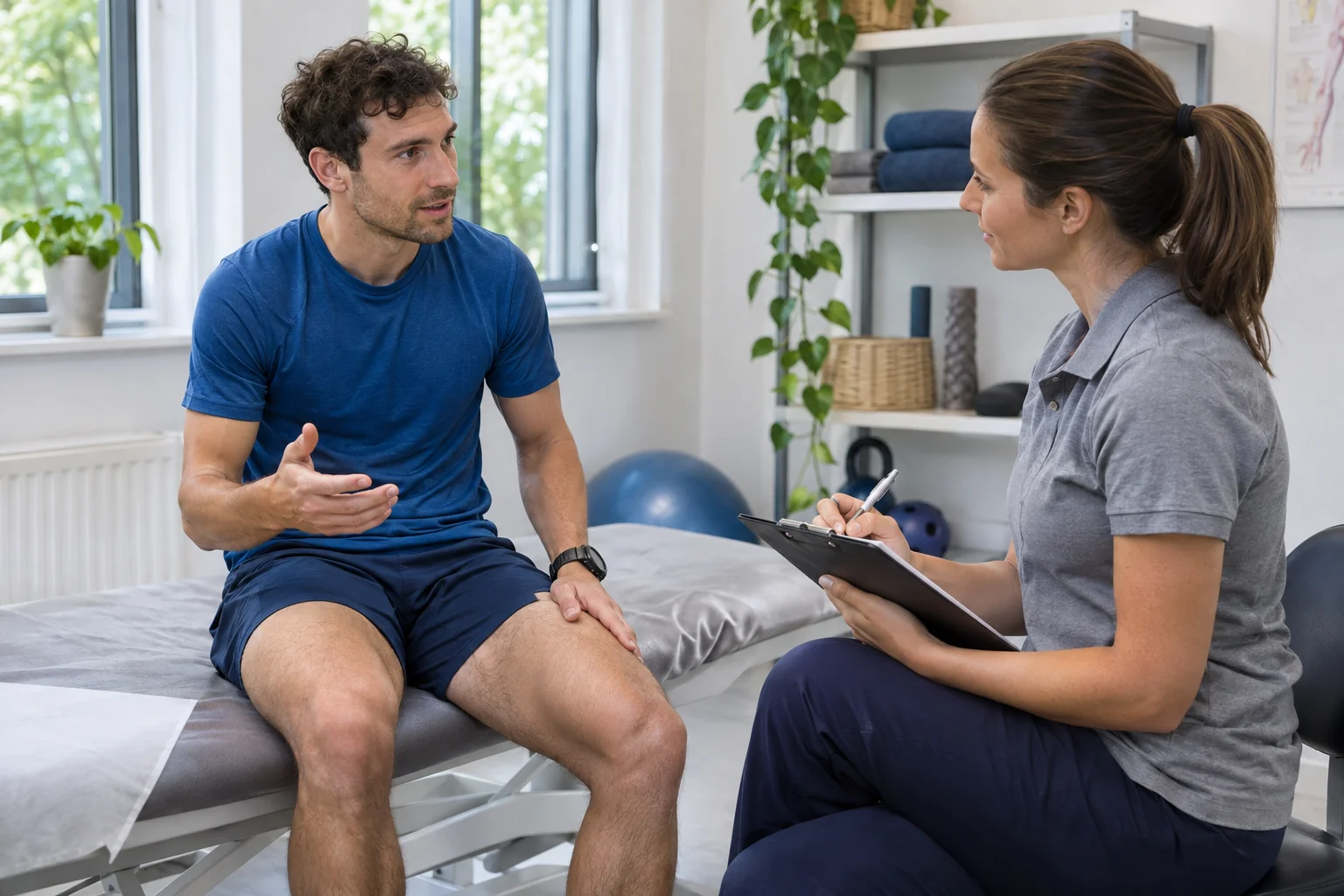
At the appointment, ask which possibilities the care provider is considering, why a particular assessment is recommended and what it may answer. Before an intimate examination, request an understandable explanation of the process and who will be present. Describing a symptom does not mean having to go through the entire process without explanation.
If several terms arise, note precisely which were used. A conventional hernia, athletic pubalgia and hip symptoms may raise different questions. Take home not only the name of the finding but also what it means for the next step. If anything is unclear, there is still room for a clarifying question.
A workable plan identifies whom you will contact next, which new symptoms to report sooner and how sport will be discussed. Understanding groin symptoms more precisely is not a test of skill at home examinations. Clearly conveying your experience, taking urgent changes seriously and individual assessment together provide a basis for the next decision to rest on more than guesswork.
Sources
- NHS: Hernia
- NHS: Hip pain in adults
- AAOS OrthoInfo: Sports Hernia – Athletic Pubalgia
- NHS: Femoral hernia
How Futószív articles are prepared: our editorial guidelines.