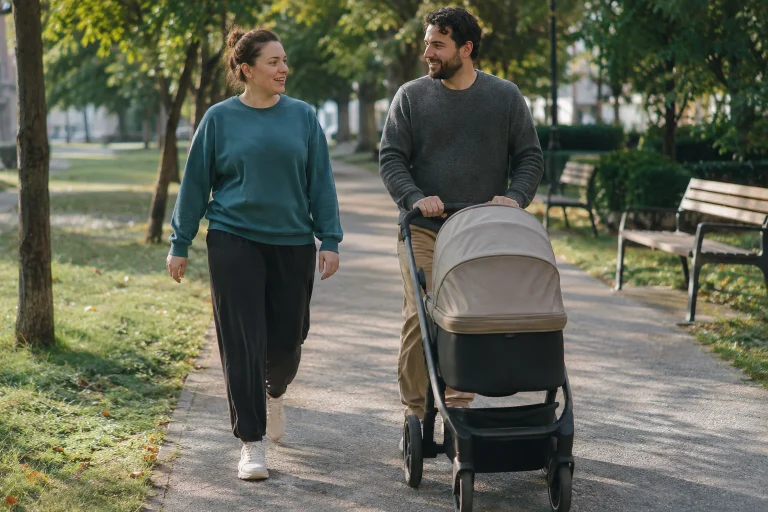
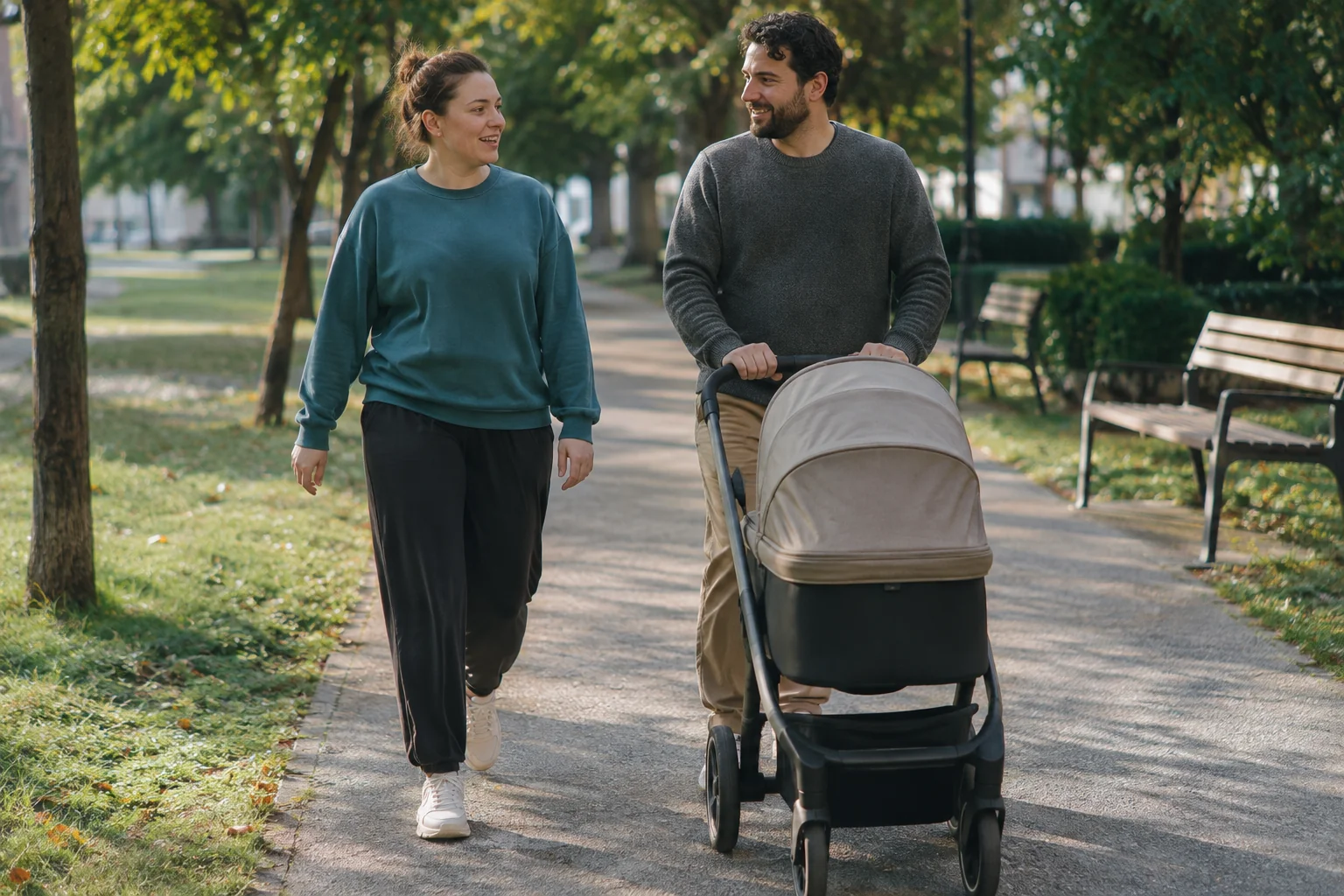
The difference between a short loop from home and a running outing involving longer time away is more than kilometres. Travel, changing, waiting at the venue and returning home can together take much longer than the training plan suggests. While breastfeeding, arranging the child’s care and your own comfort adds further tasks.
Planning does not mean proving a race or long run can happen under every circumstance. It means having a real choice based on available help and individual health conditions. Choosing another outing that currently suits your family can be a complete, valid decision too. The considerations below support organisation rather than provide a breastfeeding or sporting-fitness protocol.
Count door-to-door time rather than running alone
List successive parts: leaving home, travel, venue tasks, running, changing and the return. You need not predict every section to the minute. Make clear which parts of time away are known and where uncertainty remains. Knowing running duration precisely without a return arrangement does not make total time settled.
A race may add details missing from an ordinary loop: traffic restrictions, bag drop, waiting before the start and leaving the finish area. These differ by event, so check official organiser information. A previous-year memory or a running partner’s usual estimate does not replace clarifying the present route and schedule.
Discuss more than departure time with a partner or other helper: agree how long they undertake childcare and what happens with delays. If this remains open, the child’s adaptability is not what should be tested. Base the plan on care actually available.
Individual activity conditions and travel plans are separate checks
Childcare being arranged does not establish individual conditions for postnatal running. Comfortable clothing and a paid entry do not replace discussion of recovery, symptoms or load. Breastfeeding alone is not a label producing one identical running ban or permission for everyone.
The CSEP 2025 postnatal guideline highlights individual, gradual, symptom-guided progression and discusses family support as part of feasibility. The official CSEP introduction provides a general first-year activity framework. It does not automatically validate a particular long race, its travel or your individual fitness.
If readiness for a longer run remains unclear, take it as a separate question to your clinician or an appropriately qualified professional. Family schedules can meanwhile be prepared, but do not reverse the decisions: everyone freeing the day does not make the outing unchangeable. Organisational effort creates no health obligation.
 Enlarge image
The childcare plan should make sense on its own
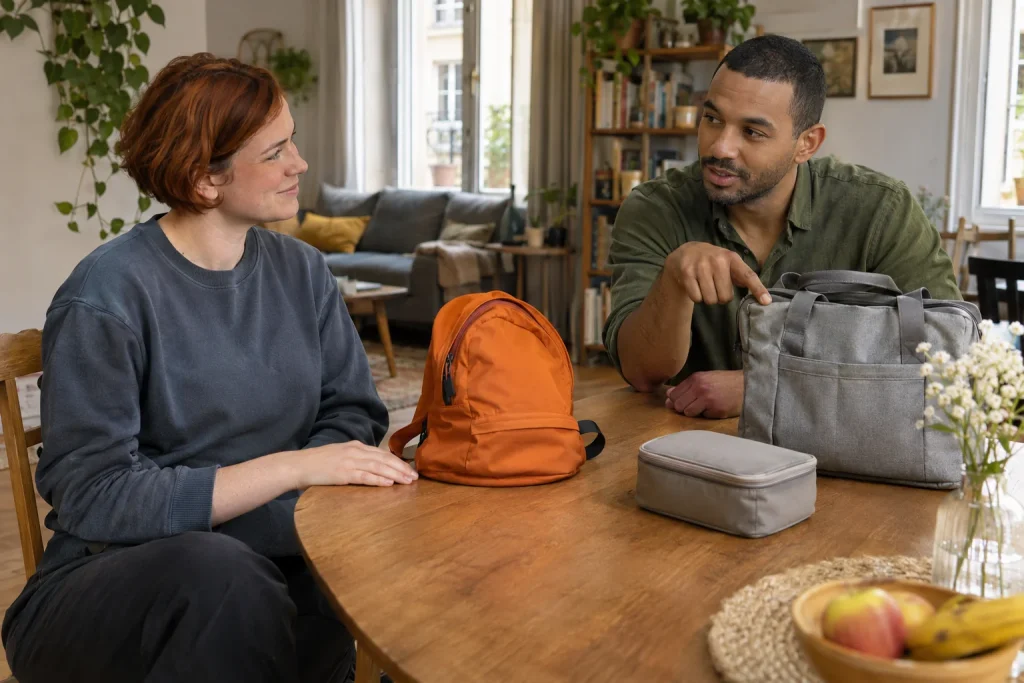
The caregiver during your absence should know the agreed care, where necessary equipment is and how to seek help. Start from the child’s familiar situation rather than assumed operation of a newly bought device. The same feeding solution does not suit every family, and a running outing does not require independently introducing a new method.
If expressed breast milk belongs in the plan, clarify expressing, storage and feeding in ways suited to your situation. The NHS mentions absence as one possible reason for expressing and emphasises that frequency and amount depend on purpose. Do not independently calculate a prescribed milk volume from the duration of a sporting outing. The NHS information on expressing and storing milk provides information on basics and seeking help.
If the child was premature, is ill or has a particular feeding plan, instructions agreed with their clinicians matter. Do not assume ordinary home-storage tables apply automatically everywhere. Adapt running logistics to the actual care framework rather than care needs to the start time.
Your comfort during time away needs a plan too
The child’s feeding and your physical comfort may connect, but organisation also requires considering them separately. Childcare may be arranged at home while you lack a calm accessible place to meet your needs at the venue. Everything will be fine at home is therefore not a complete plan.
For questions about expressing, feeding timing or breast comfort, discuss them with someone qualified in breastfeeding support. Do not schedule extra expressing or longer gaps from a general running article. Understand which options and actions may apply to your absence. A new or painful situation is not merely a packing problem.
The NHS postnatal activity information also raises a well-fitting bra, since a previous size and style may not suit the changed body. The NHS page on activity and everyday life with a baby also includes practical comfort considerations. An appropriate garment does not, however, replace assessment of new pain or illness.
Do not assume a calm space exists from the event map alone
If you may need privacy, ask the organiser or venue exactly what is available. Where is it, when is it open, how can you enter and what conditions does it offer? A family-friendly label does not answer these details. Treat event services as certain only after checking them for that specific event.
If equipment requires electricity, clarify supply, an appropriate connection and usability. Equipment without electricity may still have cleaning, storage or handling conditions. Follow manufacturer instructions and individual professional advice; size or a travel label does not prove comfortable use at every venue.
Do not make a toilet the only imagined solution merely because its door locks. Ask separately about a clean, calm space appropriate for you. If none exists, changing the outing can also be a decision. Looking forward to an event does not oblige you to accept uncomfortable or uncertain arrangements.
Know the storage chain rather than inventing it during the race
If transporting or storing breast milk in connection with time away, consider conditions throughout: who handles it, where appropriate storage is provided, how it is identified and which instructions the feeding caregiver follows. The NHS discusses suitable containers, cleanliness, time and temperature conditions and labelling. Follow specific storage rules from current reliable guidance and individual care needs.
Merely having a cool bag does not establish the whole storage process. A planned short journey differs from a bag remaining outside agreed conditions for longer. Do not wait until the event ends to guess about an uncertain condition. Seek appropriate professional help with handling and storage rather than applying general race-fuelling habits to infant feeding.
A separate compartment and short list may reduce confusion, but everything need not fit into the runner’s backpack. Your running equipment, the child’s care bag and a pack handled by a helper can remain separate. Labels should include what the caregiver will actually use; clarify incomplete explanations given from memory beforehand.
 Enlarge image
What happens when the day differs from the plan?
Give the backup plan an owner. Who calls whom, where is the meeting point and how do you return if the outing changes? Discuss a longer delay as well as an ideal day. Signal and transport access can vary along a route; check these for the particular location.
Changing time away need not be the runner’s decision alone. A caregiver should also be able to report that agreed arrangements are no longer manageable. Advance feedback is a point of cooperation rather than a lack of independence. Plan so necessary changes are not discussed for the first time amid a rush.
Do not conflate a health symptom with logistical delay, however. Painful, warm, swollen breasts accompanied by feeling unwell or rapid worsening call for more than finding a convenient return time. Seek appropriate healthcare help. The NHS information on mastitis identifies severe illness and rapid worsening as reasons for urgent contact.
Three outings with three different organisational questions
Time away alone does not tell everything. Access and return options also differ in the examples below. These are not recommended postnatal running forms or manageable distances; they only show why specific outing circumstances need discussion.
| Planned situation | Important organisational question | Possible area for modification |
|---|---|---|
| Local outing with a caregiver at home | Who is available, and how will agreed time away remain manageable? | Departure, outing duration or getting home. |
| A race involving travel | Which space and assistance are available during waiting around start and finish? | Companion tasks, bags and time at the venue. |
| A more distant route with few exit points | Are usable return and contact options genuinely available? | Another location, different participation or postponement. |
Modification may mean participating without running if that suits you now: meeting the community, starting later or choosing a different day entirely. These are not automatic healthcare solutions, but expanded choices. An organisational difficulty need not be locked into one scenario that must be completed.
Leave help and room for your own needs at the end of the day too. After travelling, do not automatically take over every unfinished task because you had some free time. Longer time away involves shared organisation: childcare, your comfort and individual sporting conditions all belong. A plan is usable when none remains only an assumption.
Sources
- NHS: Keeping fit and healthy with a baby
- CSEP: Guideline for Postpartum Physical Activity, Sedentary Behaviour & Sleep
- NHS: Expressing and storing breast milk
- NHS: Mastitis
How Futószív articles are prepared: our editorial guidelines.