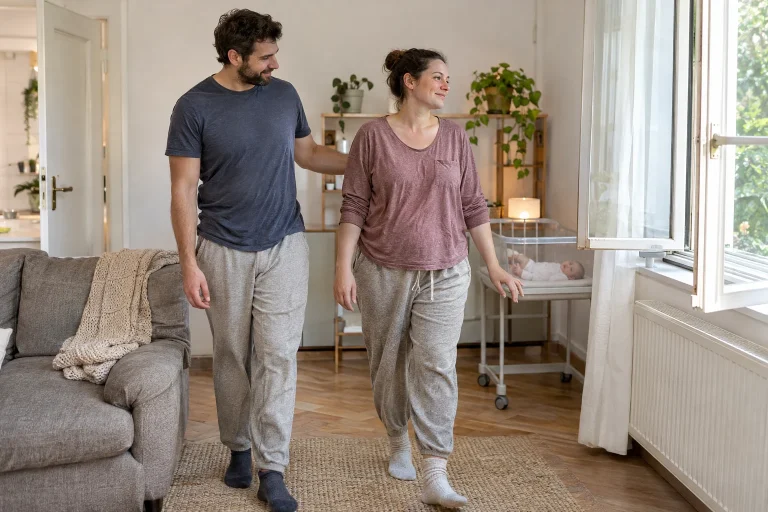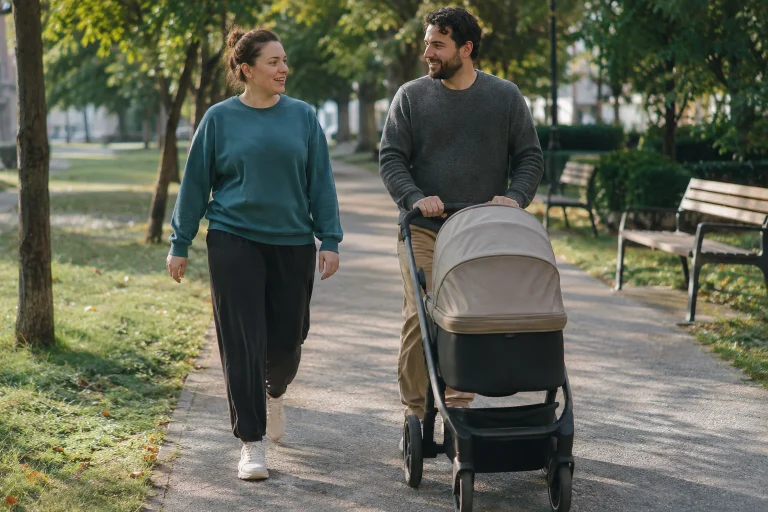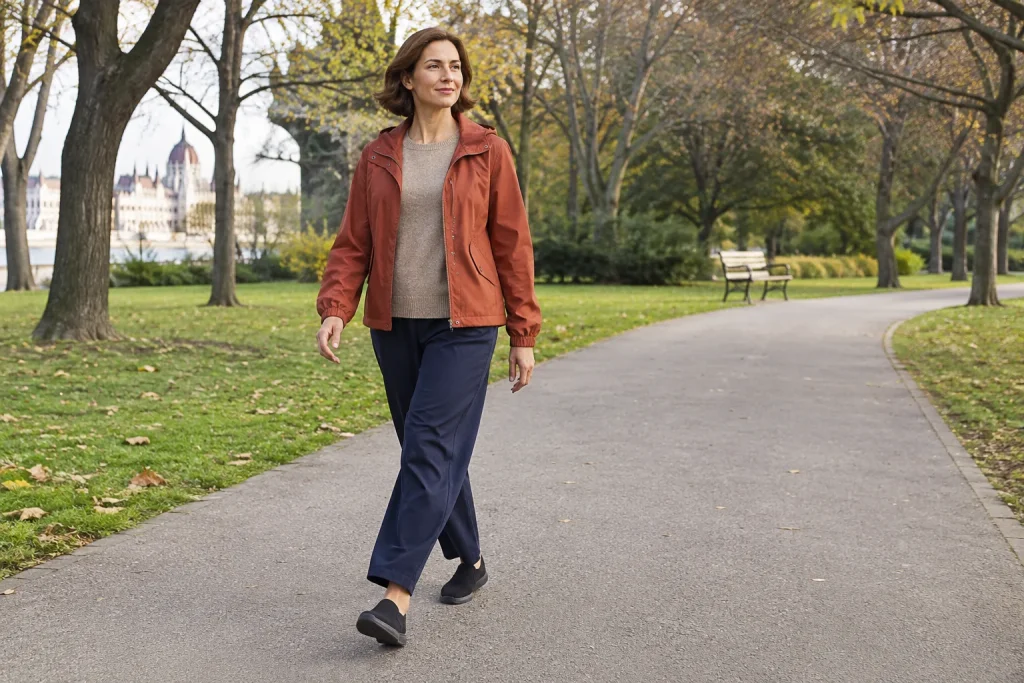
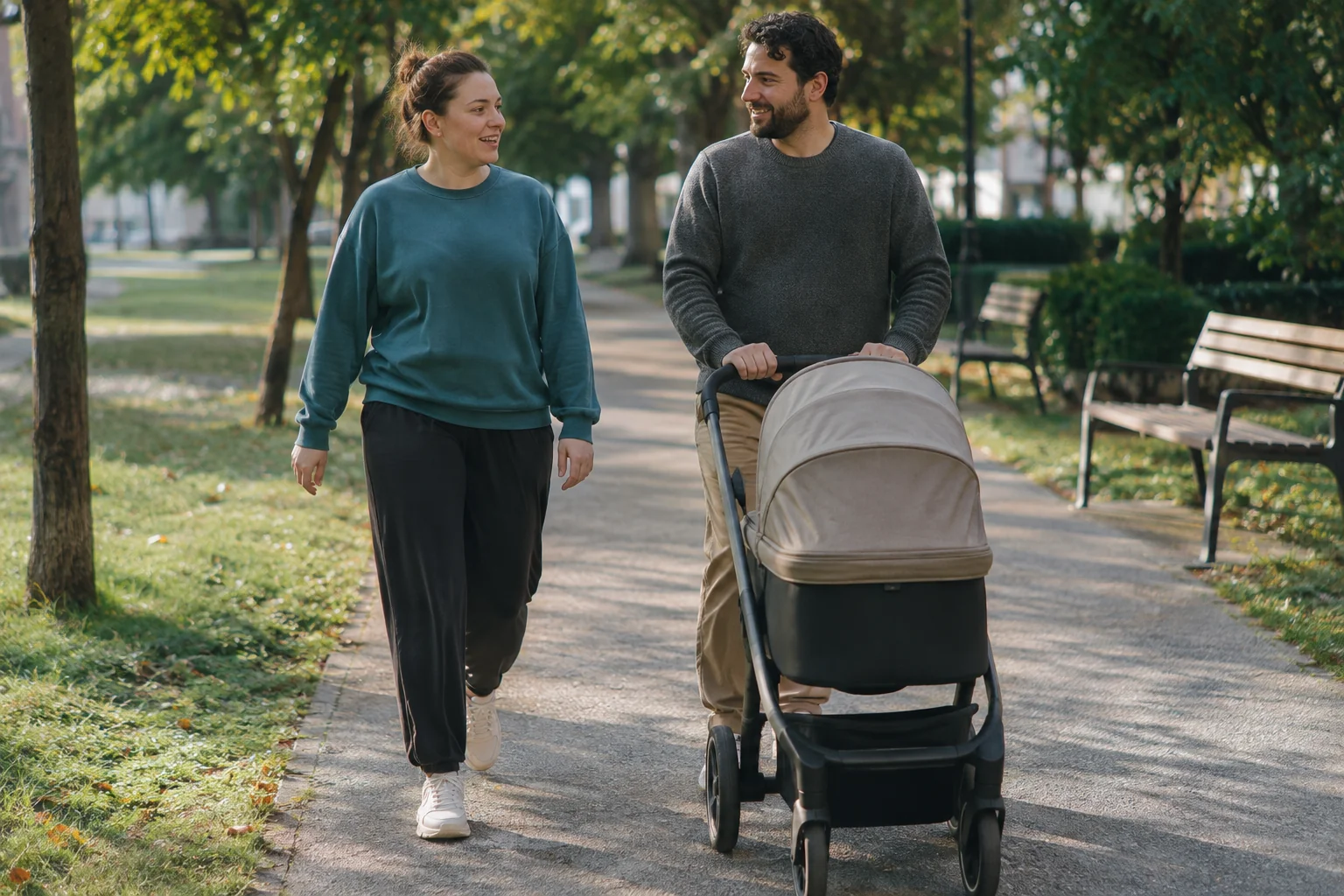
A comfortable walk after childbirth can mean a great deal: you are outside again, have a few minutes for yourself and see a familiar route in a different light. You need not immediately turn it into a running test. Enjoying a walk does not rule out separate questions about running, and lacking an individual running plan does not make walking any less valuable as movement.
The misunderstanding begins when a pleasant loop becomes a conclusion about complete fitness: If I could do this, I can surely do everything else. Walking experience provides information about a particular activity. Decisions about running also involve postnatal recovery, symptoms, current physical capacity and everyday circumstances. Here, we examine how to preserve the positive walking experience while planning the next step separately and individually.
Walking is an activity in its own right, rather than a failed run
The NHS information on postnatal exercise lists walking among gentle activities after an uncomplicated birth when the mother feels able. It also recommends seeking professional advice before high-impact activity such as running, and separate discussion about more demanding activity after a complicated birth or caesarean section. The NHS page on postnatal activity already treats gentle movement and running as different questions in this way.
You need not judge after every walk whether you are closer to your previous pace. The aim may be fresh air, a brief meeting or a period when you are not organising every family task. If walking suits your condition and individual advice, you need not convert its usefulness into kilometres or a future race result.
Walking pace is not a certificate either. You may feel slow beside old running acquaintances while your environment and daily routine are now quite different. Describe your experience within the current situation: what felt good, what was difficult and whether questions remain. You need not validate the walk with a compulsory acceleration at the end.
Why is readiness to run a separate question?
The international Delphi consensus published in 2024 describes postnatal running readiness as an individual decision involving several factors. The professional consensus process includes musculoskeletal and pelvic-floor considerations, assessment of loading and impact, wider physical and mental circumstances, previous training and current goals. The original consensus research on return-to-running readiness does not derive the decision from a single walking performance.
Walking and running are different movement situations. Experience from a calm walk cannot simply be renamed an assessment of the loads experienced while running. That does not make walking dangerous or useless; it keeps the information’s scope precise. After it went well, it helps to understand the qualification: this walk, on this day, under these circumstances.
The Delphi study developed expert consensus; it did not validate a flawless readiness test tried in every woman after childbirth. There is no need to turn it into a home jumping sequence or compulsory performance threshold. If a movement task is suggested in an individual assessment, ask its purpose, how it is performed and the limits of interpreting its result.
 Enlarge image
What does a good walk show, and what remains open?
A good walk may show that you comfortably completed a particular route in a particular situation. Perhaps you could talk calmly during it for the first time or did not need to interrupt the outing. These are real experiences you can describe. Walking does not, however, automatically examine wound healing, assess pelvic-floor function under every load or plan the first running steps for you.
| Walking experience | What you can describe | A separate question to clarify |
|---|---|---|
| The route was comfortable. | I felt good on this loop under these circumstances. | What does my present condition mean for later running? |
| You noticed no symptoms during it. | The symptom we previously discussed did not occur during the walk. | What further observation or assessment is needed? |
| You had energy afterwards. | This is what I experienced during the rest of the day. | How should the next step fit with the whole day’s demands? |
You need not answer every question at the end of the walk. You may think of something to ask only later. Prepare a two-sentence summary for your next discussion that includes both a positive experience and uncertainty: This was comfortable now. However, I would still like to clarify this question about running.
Do not treat one pleasant occasion as a contract for the following day. If your schedule, available rest or how you feel differs the next day, the earlier walk does not become a false success. You need not conceal changing circumstances from a professional as though they were inconsistency. An individual plan can be useful when these are known.
Information about symptoms should not end at the gate
The 2025 Canadian postnatal activity guideline recommends individual, gradual and symptom-guided progression. Time needed for recovery, physical and mental condition, and readiness to participate all matter. Gentle movement and later higher loads are not discussed under identical conditions. The 2025 Canadian guideline does not provide a return date automatically applicable to everyone.
If a symptom becomes noticeable only after walking or during another part of the day, describe that too. You need not immediately attribute the event to the walk: describing chronology and establishing a cause are different things. For example: I walked in the morning, noticed this in the afternoon and do not know whether they are connected. Naming uncertainty accurately is better than choosing an explanation beforehand.
Do not omit urine leakage, pain, a feeling of pelvic heaviness or a change in bleeding because it did not occur halfway around the loop. Ask about these through care appropriate to your condition. New or worsening symptoms need not be justified with a comparison from another walk, and equipment chosen to conceal a symptom does not replace its assessment.
A questionnaire starts a conversation rather than printing running permission
The CSEP Get Active Questionnaire for Postpartum aims to identify who should seek healthcare advice before starting or continuing movement. The organisation presents it as one step in considering participation beforehand. The CSEP explanation accompanying the questionnaire specifically highlights starting a conversation with a professional and recognising a need for further assessment.
When using a questionnaire, interpret it with its original guidance rather than taking only the reassuring parts. No indicated barrier is different from an individual prescription for a specific running session. The tool does not observe changes in how you have felt in recent days or automatically know every previous examination result.
Do not delay reporting a new symptom because of the questionnaire either. If your condition changed after completing it, discuss that change. An old response sheet combined with a successful walk still does not replace the present situation. The tool helps when it organises information for discussion rather than closing questioning prematurely.
Progression should mean more than doing more every week
The possibility of individual progression is not a compulsory path of increases. Clarify beforehand what may remain unchanged now, when another discussion is appropriate and what to do if circumstances or symptoms change. A general percentage rule for increasing load does not take over assessment of the postnatal situation. A plan should have an understandable reason, rather than merely an automatically rising number sequence.
The Canadian guideline explains that recovery, symptoms and individual circumstances must be considered together when progressing. Wound healing and bleeding that changes with activity, for example, are different questions from how quickly you could walk along a park path. If your individual recommendation currently concerns gentle movement, ask what needs clarifying before a later step and with whom that discussion should happen.
For now, we will stay with this does not necessarily mean uncertainty in care. It can be a deliberate, agreed decision if you understand its purpose and what follows. Equally, instead of a vague we will see, you can request a more specific framework: which question remains open, what information to bring to review and how the next appointment will be arranged.
 Enlarge image
Your whole day should be visible in the plan
Life happens before and after a walk: lifting, shopping, travel, feeding, work and little uninterrupted rest. Listing these does not aim to turn everything into a single load score. It shows what kind of day the individually agreed movement must fit into and where help can be arranged.
If you create walking time by doing all the housework alone afterwards, reconsider that arrangement too. You can request specific help for the rest of the day, rather than only childcare during the walk. The Canadian guideline considers social and emotional support an important part of feasibility; you cannot be expected to solve every barrier through individual willpower.
Your walk may be social or solitary, but that is not a fitness question either. If you want to go alone, someone else should take over childcare through an advance agreement. If you want company, explain which pace and flexible route currently fit your individual framework. A companion’s role may be helping the outing adapt, rather than assessing your symptoms.
Which questions help you move forward when running comes up again?
You can tell the professional: This is how I currently experience walking. What remains to clarify about running? Ask separately about recovery, pelvic-floor and musculoskeletal symptoms, present capacity and how the first individual plan can fit your days. These are discussion topics considering several perspectives, rather than stations in a test you assign yourself.
Discuss feedback as well as starting. Which symptoms, uncertainties or changes should you report? Whom do you contact with a question before the next appointment? If earlier advice is unclear, request clarification. An understood, manageable plan helps more than a single remark that you can gradually start now.
Meanwhile, walking can remain what it is: a movement experience suited to you, which need not be followed by progression every time. It may form part of an individual journey towards running, but need not become a race against time. You can acknowledge the good experience while taking unresolved health and load questions seriously.
Sources
- NHS: Keeping fit and healthy with a baby
- CSEP: Get Active Questionnaire for Postpartum
- 2025 Canadian guideline for physical activity, sedentary behaviour and sleep throughout the first year post partum
- Christopher and colleagues: Clinical and exercise professional opinion of return-to-running readiness after childbirth
How Futószív articles are prepared: our editorial guidelines.