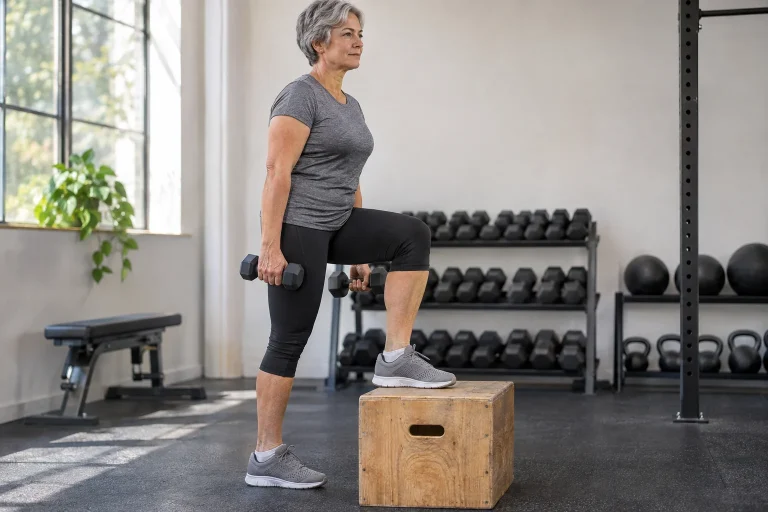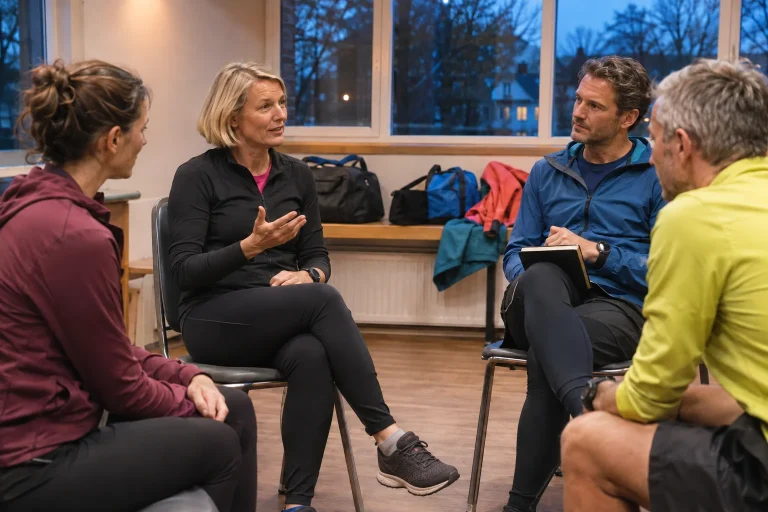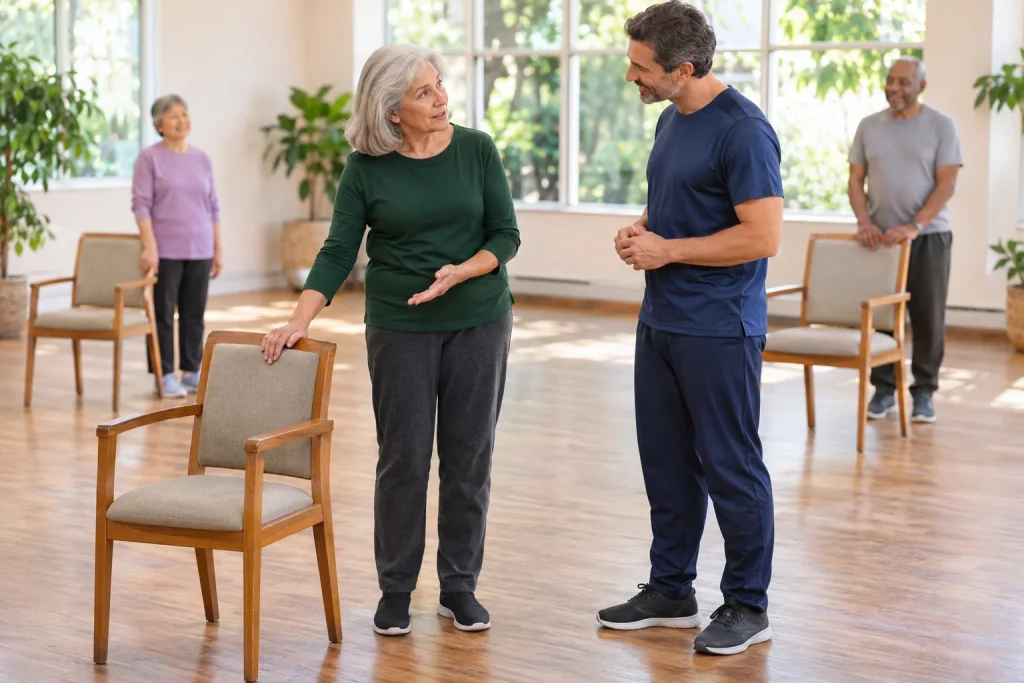
A poster says: balance class for older adults. This can be a promising starting point, but the label does not yet tell you how the session works, who it is intended for or what help you receive with a harder task. Even at the same age, movement experience, hearing, vision, sense of security and individual health circumstances can differ. A good choice therefore starts with how the programme actually operates.
Ask a few questions before signing up. You are not examining the instructor; you are trying to understand whether their offer and your goal meet. Perhaps you want more confidence turning at home, to get around more easily while shopping or, as a runner, to work on an ability you have not practised separately before. These three goals do not necessarily call for the same class.
What is the class’s actual purpose?
First ask what they mean by a balance class. General group activity, teaching a particular method, a falls-prevention programme based on professional assessment or a session within medical rehabilitation? These can be valuable options, but admission, the instructor’s competence and individual adaptation may differ. The name alone establishes none of these contents.
The National Institute on Aging information gives separate roles to aerobic, muscle-strengthening and balance activities. It may therefore be worth learning about a balance class even if you run regularly. Running kilometres do not tell you which tasks you should perform in such a group, however. Connect the class’s structure with your own goal.
A useful opening question might be: “Which everyday movement situations do you practise, and how do you select the right version for each participant?” The answer may reveal more than a long list of exercises filled with unfamiliar terminology. It is also informative when an organiser clearly states what the programme cannot do and when they recommend another kind of help.
Who leads it, and how do they get to know participants?
Ask about the instructor’s qualifications and experience with older participants of different abilities and similar goals. Social media follower numbers or personal sporting results are not the same as the preparation needed to lead a class. Skill in a demonstration video is not sufficient either: the question is how the instructor supports other people’s learning.
The NICE falls-prevention guideline names an appropriately trained professional, adaptation to individual needs and abilities, and regular review for programmes serving that purpose. This is a professional reference, not Hungarian qualification law. With a local provider, clarify the capacity in which the leader works and the limits of their role.
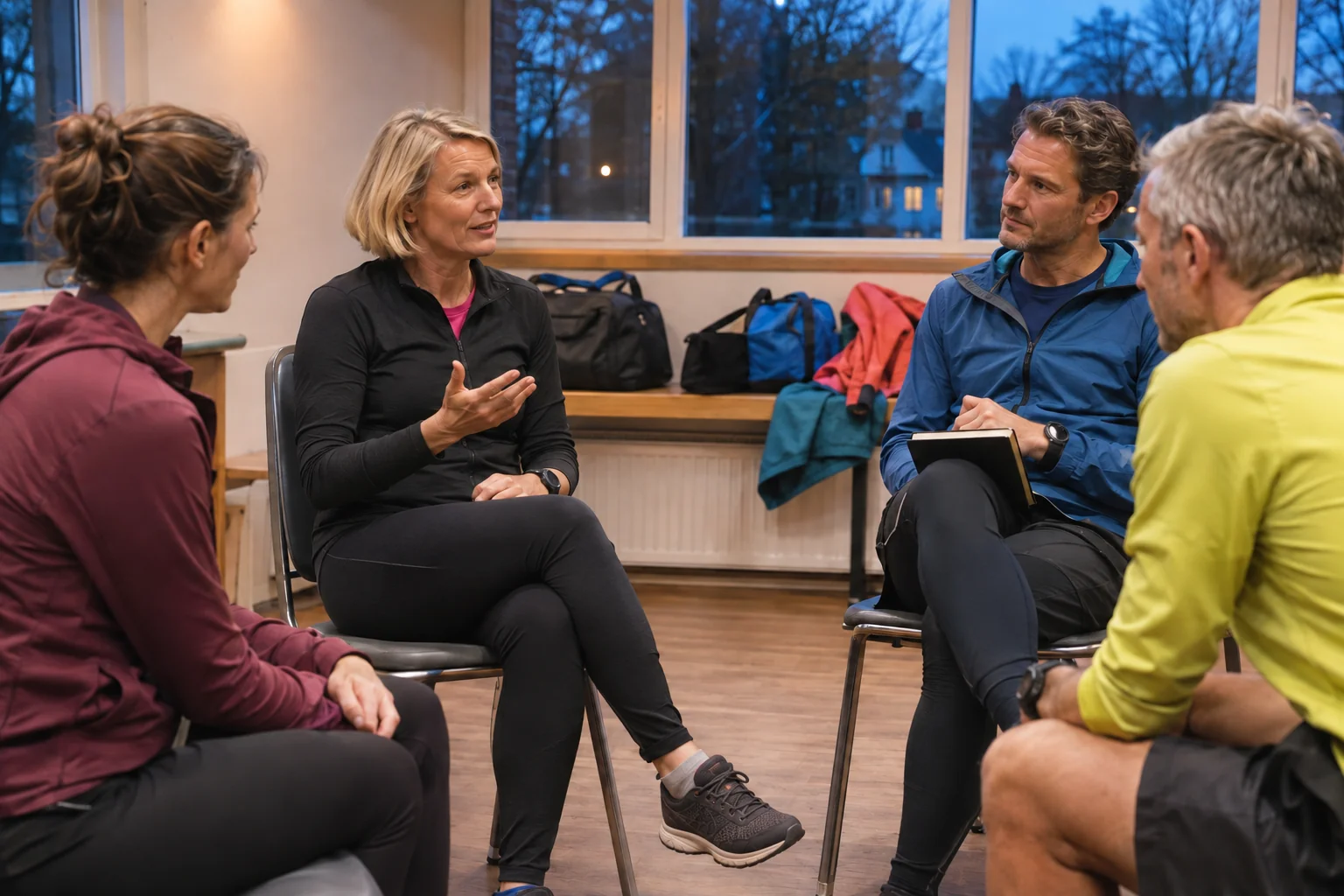
The way the first conversation happens also says a great deal. Can important circumstances be reported privately, or is everyone questioned in the middle of the room? Do they explain which information they request and why, and what happens when a question exceeds the instructor’s competence? Clarifying personal history is useful when it serves adaptation, rather than public comparison of participants.
 Enlarge image
What does an adaptable task mean in practice?
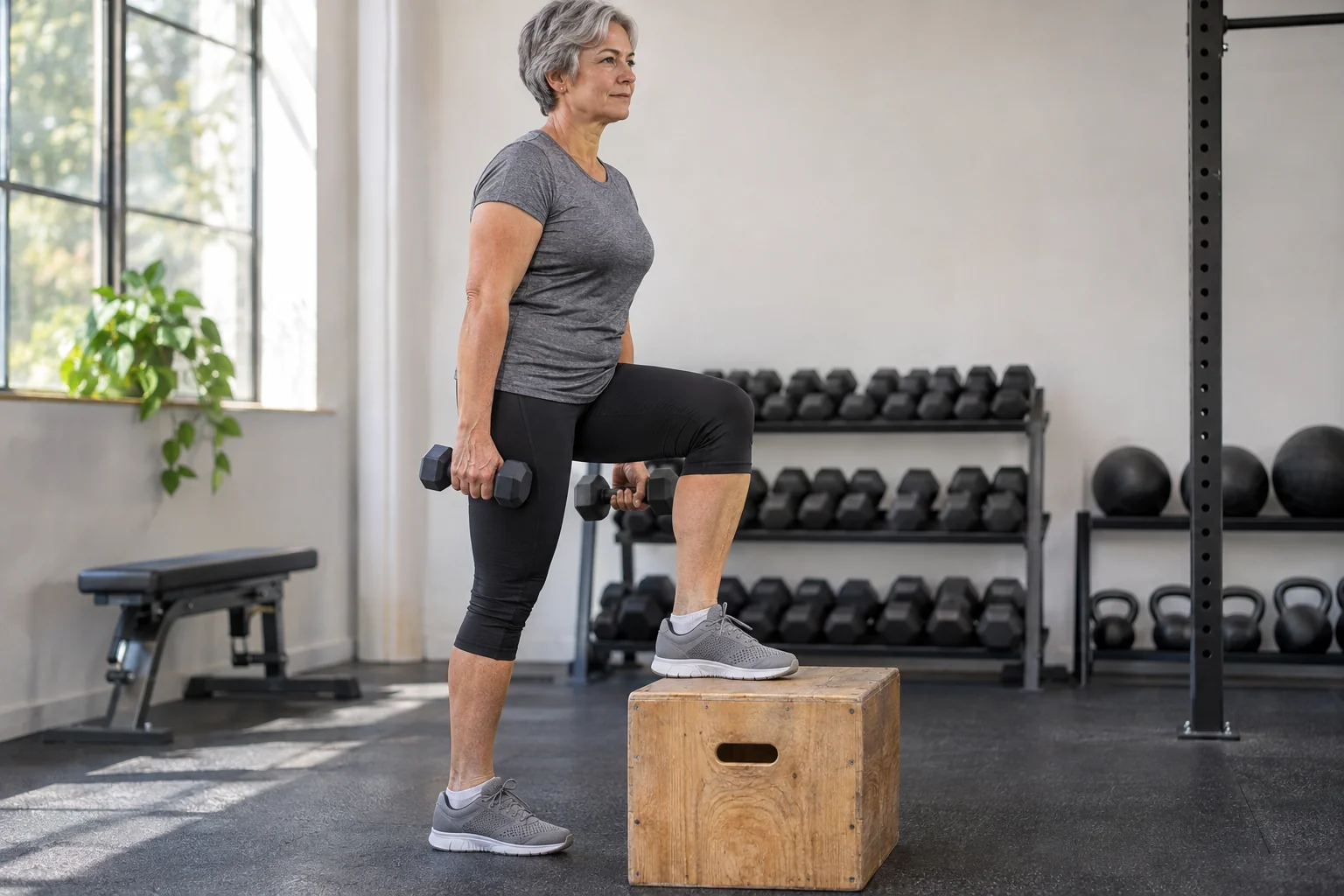
“Everyone works at their own pace” sounds good, but ask for a concrete example. What happens if someone needs more support, understands instructions more slowly, cannot comfortably sit on the floor or feels unsteady with a movement? Slowing the pace does not resolve every difference. Sometimes the starting position, equipment or task itself needs changing.
A good modification is not a punishment version. Even if the rest of the group works differently, an individual option may be the appropriate task. Ask how the instructor signals that another option is available and checks that it is genuinely usable. “Only the weaker people do this” can create an uncomfortable competition before a choice is even made.
A separate important question is whether any movement is compulsory. Participants should be able to stop and ask for help without proving their courage. Increased difficulty becomes a meaningful learning step when the individual foundation and appropriate support are there. A public coordination challenge does not replace these.
The route to the room is part of the class too
Look at the whole route, not just the gym photograph. What is the entrance like, are there stairs, a lift, a well-lit corridor and an accessible toilet? Where can you change clothes or shoes safely? Even if the main session is well organised, rushing in a wet entrance area can add unnecessary difficulty before it starts.
Supports need stability and accessibility. The mere presence of a chair does not show whether it is in the right place during a task or can move. Bags on the floor, equipment pushed together and an overly tight layout also affect whether you can follow the class calmly. You do not have to certify the room’s technical safety, but ask about arrangements from the perspective of your own movement.
Light and sound often become noticeable only on the first visit. Loud background music may make a new instruction harder to hear; backlighting may obscure a demonstration. Ask beforehand where you can stand to see the instructor’s face clearly and how information is repeated. These are not minor comforts, but parts of being able to follow.
How many people receive real attention?
There is no single ideal group size for every class. Task difficulty, differences between participants, room layout and the presence of assistants matter together. The useful question is therefore: how does the leader notice when someone is stuck, and how can they help while still attending to everyone else?
Ask whether newcomers receive a separate introduction, how you join an established group and when you can ask questions privately. A class with rapid transitions may be harder to follow for someone still learning the venue and basic instructions. The better programme is not necessarily the one packing more tasks into an hour, but one with a learning rhythm that works for you.
Individual feedback should be understandable. “Well done” can encourage, but does not replace knowing what to focus on next time. Ask how they follow changes related to your goal and when they discuss whether a task remains appropriate. Regular review does not necessarily mean public testing or ranking.
Do not leave reporting your history until the middle of the warm-up
If you have fallen before, experience recurring dizziness, have a changed walking pattern or have individual movement restrictions, address these through appropriate professional discussion. Selecting a group class does not replace an assessment that is warranted. The organiser also needs to know within which boundaries they can receive you safely and when another professional is needed.
A sudden new illness should not be clarified by trying a first class. Severe symptoms, serious injury after a fall or inability to get up independently require appropriate help, urgently when needed. The NHS information on falls also distinguishes these situations from general prevention advice. A class can only be a next step suited to the actual condition.
Important history can be reported briefly and factually: when it happened, what changed and whether individual professional advice already exists. You do not need to share your whole medical history with the group. If an organiser requests particular information, understand how it will be used and which part should instead be clarified with your healthcare professional.
 Enlarge image
Note more from a trial class than whether you became tired
A trial class can aim to familiarise you with the venue and teaching. Say beforehand that you mainly want to see how the session can be followed. You do not need to complete every task or imitate everyone else’s movements on the first occasion. In a new environment, learning where you can move, where to ask for help and how choices work is already important experience.
| Observation | What should be clarified? |
|---|---|
| I did not hear the next instruction. | Will it be repeated, and is there a better place for me? |
| I needed another task. | Did I receive a clear and appropriate alternative? |
| I rushed during transitions. | Can I join in more calmly, or would another group suit me better? |
| I had a question, but there was no time. | When and how can an individual discussion happen? |
The table is not a grading scale. One difficulty does not prove the entire programme is poor; it may be a detail that can be changed easily. Equally, help that remains unavailable or questions being dismissed need not be explained by your own lack of skill. A programme’s usability depends on how the service operates as well as participants’ effort.
How tired you feel does not by itself show whether the class appropriately developed balance-related task performance. It may have been highly demanding and hard to follow, or felt moderate while providing much new learning. Return instead to your goal: did the task become clearer, did you receive attention and do you know why you performed that version?
Travel, price and the ability to continue are part of the choice
Even a professionally well-structured class will be difficult to fit in if catching the last bus makes you rush at the end every time. Ask about arrival and departure times, changing, building opening hours and cancellation conditions. These reveal how much of a programme the advertised sixty minutes represents in your actual day.
For finances, look at the total cost: trial session, class pass, necessary equipment and travel. A more expensive service is not automatically more individualised, and an inexpensive community programme is not automatically worse. The aim is to compare offers on professional and practical conditions rather than the volume of their marketing.
Your choice can change later too. A group not suiting you does not prove that balance-related activity has no place for you. Another time, teaching style, individual help or a different programme may be useful. With an appropriate class, belonging to the community need not require giving up your own questions or movement boundaries.
Sources
NICE NG249: individualised falls-prevention programmes and participation conditions; NIA: different roles of aerobic, muscle-strengthening and balance activity; NHS: falls, seeking help and prevention. Checked: 21 November 2026. Organisational examples are our own editorial aids, not a certified provider audit or individual exercise prescription.
How Futószív articles are prepared: our editorial guidelines.