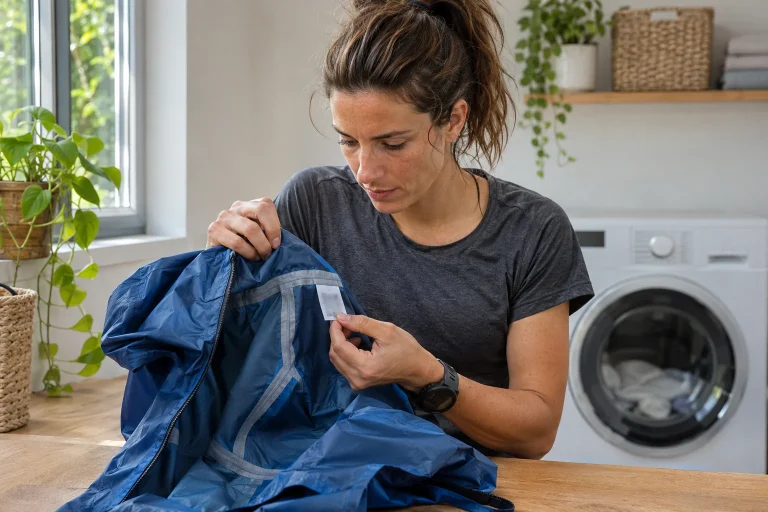
Water vapour passing through a running jacket’s fabric and air flowing through an opened vent take two different routes. That is why you may happily open a zip at the foot of a climb even on a carefully chosen membrane jacket, then close it again for a windier, slower section. A vent does not make fabric properties irrelevant; nor does a good laboratory fabric value tell you when your complete outfit will feel comfortable. A useful decision concerns the particular opening, environment and your current activity.
This guide follows how you operate the jacket: what to observe in a pre-purchase fitting, how to think about opening vents and protection from water together, and what to note after an ordinary run. The examples are our own editorial situations. They are not measured heat-loss results or universal temperature rules, and do not promise a dry inner layer at every intensity. The aim is to use the options your jacket offers intelligently.
Two routes for moisture: through fabric and through an opening
Rab explains breathability in waterproof clothing through moisture escaping and describes vapour transport through a membrane. The same guide mentions ventilation features, including pit zips, as part of overall comfort. Both options can exist in one garment. To understand using an open vent, however, consult the finished garment’s actual design rather than the fabric’s name.
A simple observation question makes the difference clear. When you open a purpose-made vent, does the feeling of airflow beneath the jacket change? That is an experience tied to a garment and a situation. Comparing laboratory evaporative resistance of fabric instead answers a different question. Do not add the two together into your own “total breathability” number: these different pieces of information cannot credibly produce such a result.
In practice, keep two lines in your notes about the jacket. Put the documented fabric property and specified test, if known, on one. Put the actual openings on the other: where they are, how they open and whether you can reach them with your own equipment. Separate lines prevent a good material value from making you assume an awkward cut will be comfortable, or a pleasant first impression from becoming an inferred laboratory value.
The location of a vent matters more than the mere presence of a zip
The short product description “has ventilation zips” does not yet reveal your own use. Examine the opening’s position, length, the material behind it and the cut around it. You may reach one section easily beside your arm, while accessing another requires adjusting the garment. We do not rank every location: find out which movement and how much attention this jacket needs for a simple opening and closing action.
A running-vest strap or a bag’s shoulder section can physically change conditions around the vent too. Put on your usual kit and check while standing whether you can reach the pull. Finding the zip but discovering that another layer lies over the open section is information too. The garment’s design viewed alone and the way your whole combination works then differ. Try the solution in the way you actually wear it.
Check pocket and ventilation functions separately in the manufacturer’s description. A pocket left open is not necessarily a designed air channel, and its contents may no longer remain in the condition you intended. If the maker explicitly describes dual use, examine its conditions. If unclear, ask about the specific model. Assigning the same purpose to every zip does not help everyday use.
 Enlarge image
In rain, opening a vent can create another route too
The jacket’s protection and the use of an opening need to be considered together. Once a vent is open, body position and the direction of precipitation also affect what happens at that opening. We set no general water-entry limit: the particular design and instructions need consideration. A trial under shelter does not reveal how the same opening behaves in slanting rain when facing another direction.
As an everyday example, imagine a route leaving a sheltered park for an exposed embankment. An opening that felt pleasant in the park may give different feedback at the next location. Useful preparation means knowing where the pull is before setting off and being able to restore the closed position promptly at a safe stop. The example does not imply that a given vent leaks at every such change or that every jacket must be handled identically.
If you notice moisture inside, do not name the membrane as the only cause. Record which opening was open, the zip position, whether there was precipitation and where you felt dampness. This does not establish a definitive fault diagnosis, but allows a much more precise question to the manufacturer or service centre. Separating the observed location from the assumed cause preserves real information instead of losing it in a general “It does not breathe” or “It leaks”.
Look at the whole outfit before opening a vent
If it feels warm under the jacket, a vent is one possible adjustment, but the rest of your clothing is present too. Which top is underneath, how far is the front zip closed, and are you wearing a vest or hood? Name these for yourself before expecting one component to restore all comfort. You then interpret jacket operation within the system in which you actually run, rather than only the description of an empty garment.
At home, you can observe particularly well which openings are accessible with the actual layers. If you wear gloves, try gripping the pull with them too; notice if several layers overlap under the arm. Keep the movement comfortable and calm, rather than tugging the zip while imitating running. Examine a sticking mechanism in line with the model’s instructions; do not use force to prove that opening it would be possible on the move.
Use what you learn to create a short pre-departure check: what am I wearing, where are the pulls, and can I close the opening I plan to use? This is especially useful with a new jacket whose controls are not yet automatic to find. A few preliminary movements do not replace watching the environment, but remove the task of first deciphering an unfamiliar zip while running.
Climbing, slowing and stopping: different situations, different impressions
Your movement and environment can change along the route, so a setting comfortable at the start may not feel the same throughout. Choose recognisable points for personal observation: how was the jacket on the easy opening section, what changed on the climb and what did you feel when slowing later? The aim is to distinguish situations. You do not have to number every feeling or derive a general threshold temperature from one run.
If you want an adjustment, find a calm, safe place for it. Try a small change, then observe your impression on the next suitable section. Opening clothing as widely as possible is not a competition: a useful setting is one that suits you and is manageable in that environment. If you feel uncomfortable or the weather worsens, you can change the running plan too. You do not have to complete the original route for the sake of a clothing setting.
A stop is also worth recording as a separate situation. Note whether openings stayed in the same position, whether you moved somewhere more sheltered or windier and how long you remained there. On rereading, you can then avoid confusing comfort while running with comfort during a break. The note promises no ready-made recipe for every occasion, but helps reveal which personal habit deserves deliberate thought before your next departure.
What do test data tell us, and what do they not answer?
Air permeability and resistance to water vapour are separate areas of material testing. The public description of ISO 9237 concerns the former, while ISO 11092:2026 concerns measurement under specified conditions related to the latter. The distinction is useful because it lets you connect a number in a product description with the appropriate question. Naming a material test alone does not describe air exchange through an open zip during your own movement.
When reading two jacket specifications, write down the quantity’s name, unit and stated method. Do not fill missing information with assumptions. A RET value on one sheet and the general phrase “well ventilated” on another provide different levels of detail. You cannot create a clean numerical ranking simply because both appear under breathability. Missing information can be requested specifically.
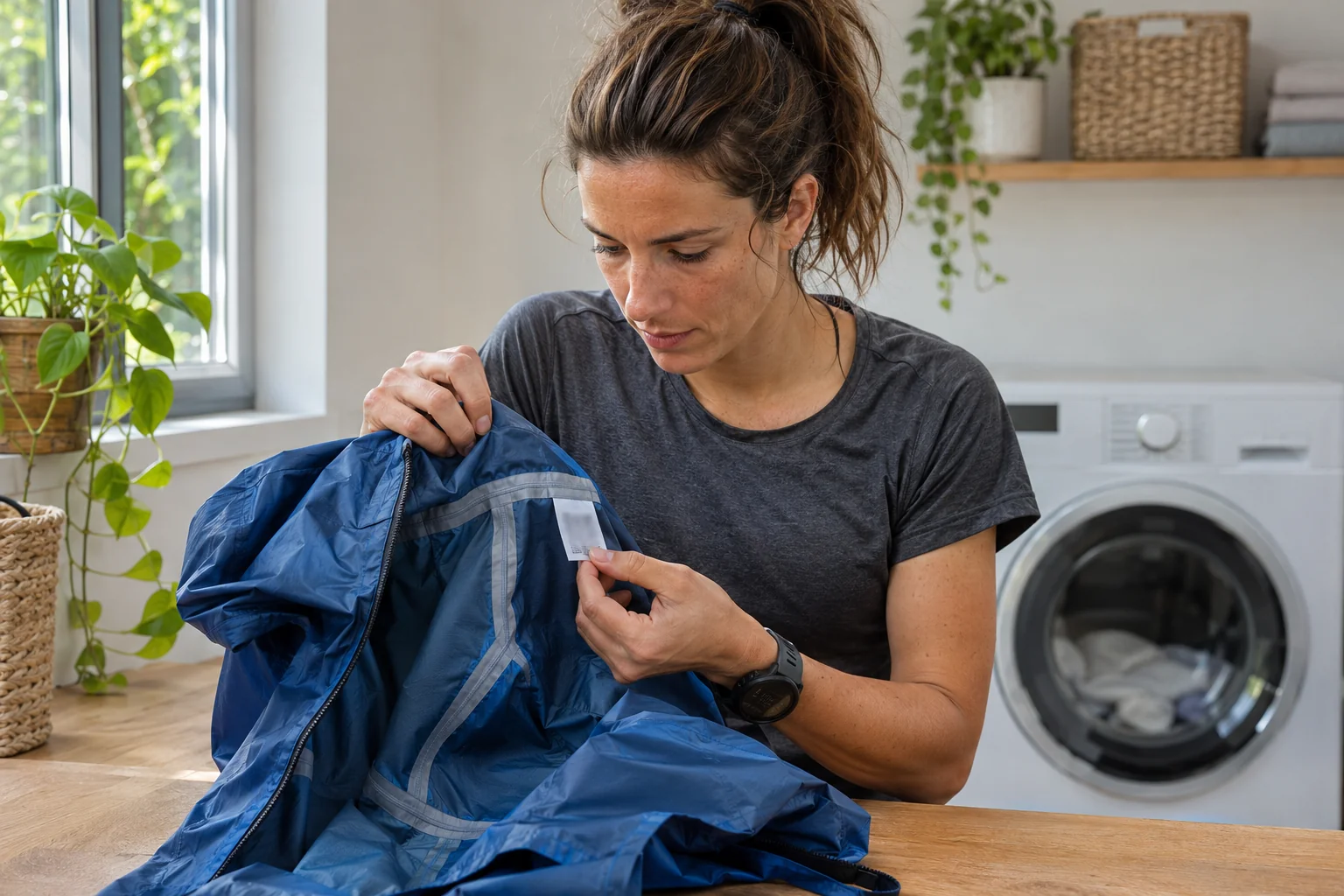
Operating the finished garment deserves a separate column in the same comparison. Which zip can you grip comfortably, which vent does your vest cover and which setting returns easily to closed? These are findings from your own trial, so label them as such. You can keep material-test data and personal impressions alongside each other without calling either proof of the other. A decision can then be both informed and honest.
 Enlarge image
Learning from two runs: personal observation without exaggerated conclusions
An everyday comparison does not require deliberately seeking poor weather or high exertion. If two similar, suitable outings occur anyway, note the day’s clothing, a brief environmental description and vent use. On one run, for example, you opened the vent earlier; on the other, you wore another layer. If several circumstances changed, record that. The different impression cannot then be confidently attributed to one factor.
Keep the notes descriptive: “I stopped after the park and opened the pit zip”, “the vest strap made the left pull harder to reach”, “I closed it again during the break”. These are specific actions and situations. You do not have an appropriate measurement for “It breathed thirty per cent better”. Personal experience gains value not by being disguised as a laboratory result, but by actually helping resolve a known operating problem next time.
If access is the recurring difficulty, try another kit arrangement or cut. If the question concerns dampness inside instead, ask about layers, openings and the specific state of use together. Different questions call for different next steps. This may be the greatest benefit of a two-run note: vague general dissatisfaction becomes a named clothing task that can be checked.
Choose a manageable system for your own runs
Before buying, state what you need the jacket for: short urban loops, changing terrain, regular use with a vest or another particular situation. Look for usable openings, appropriate fit and interpretable fabric data for that purpose. The greatest possible number of zips is not an aim in itself; every new control also requires space, access and familiarity. Few openings are not automatically a disadvantage if the combination works manageably in your own use.
The same question can be asked of an existing jacket without replacing it. Do you really know how every intended opening works, and have you tried them with your own layers? Sometimes a more precise routine is the next sensible step; at other times, cut or access remains a lasting limitation. Observation does not make a purchase compulsory. First clarify the specific gap and what can meaningfully be resolved with the garment available.
Three short questions are therefore enough as a starting point before departure: what conditions do I expect, how will I use the whole outfit and where can I safely change it? Your answer may change along the route. Known membrane data and a familiar vent together offer scope for deliberate handling, but final feedback always comes from the current situation. This attentive, adaptable routine can be a useful part of more comfortable running.
Sources and editorial examples
For the conceptual background, we used Rab’s explanation of breathability, the public description of ISO 9237 and the public description of ISO 11092:2026, checked on 21 November 2026. We do not claim to have examined the standards’ full paid texts. Route examples, clothing notes and the vent-opening trial are our own practical editorial suggestions; we report no measured product results from them.
How Futószív articles are prepared: our editorial guidelines.