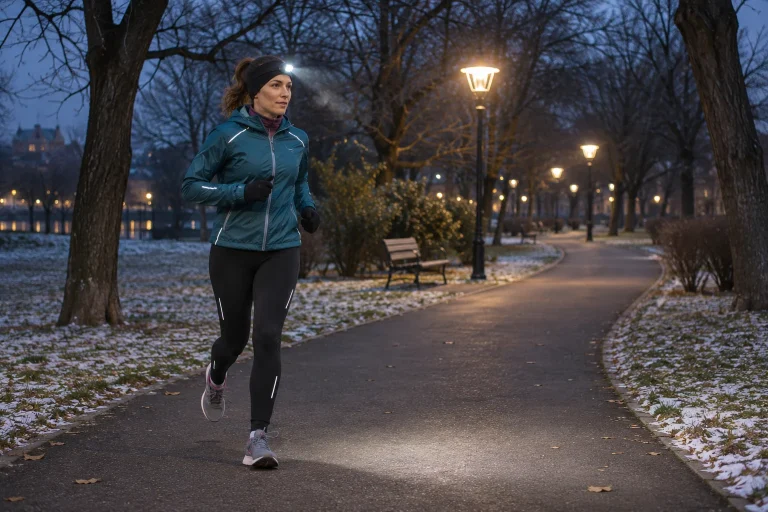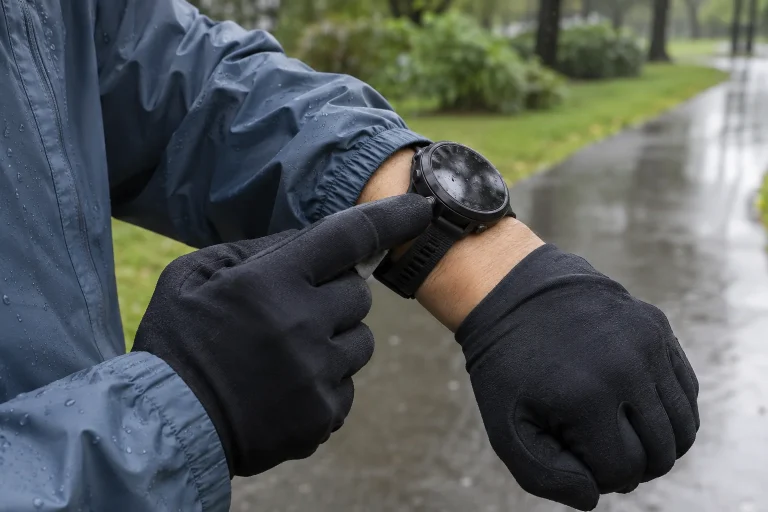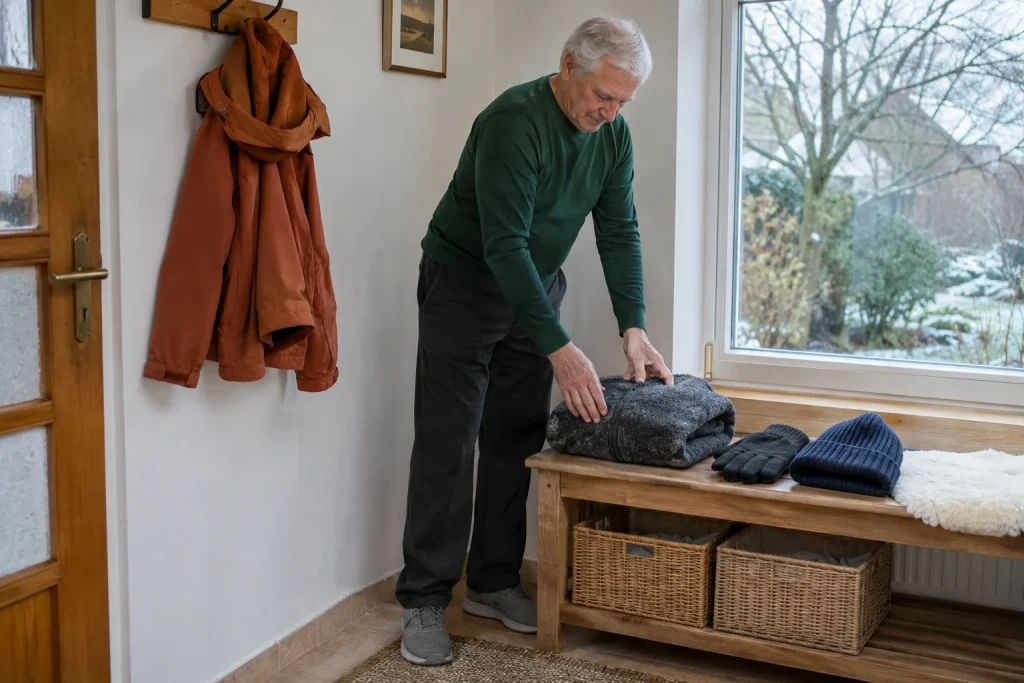
An old winter coat has served many cold mornings, making it easy to regard as a ready-made solution. Today’s outdoor activity may differ: pace, waiting time, hand dexterity or individual health can change. The coat’s value depends not on time spent in your wardrobe, but usability within the whole current outing.
Confusion, slurred speech, marked clumsiness or unusual drowsiness in cold conditions may require urgent help. The NHS hypothermia information treats hypothermia as a medical emergency. Stop the outing, reach sheltered warmth and seek help. Do not leave the person alone; adapt further actions to emergency-care guidance.
Cold sensation and actual conditions matter together
The NIA winter information for older adults explains that cold perception and adaptation can change with ageing; some conditions and medicines matter too. This does not mean every older person feels cold identically. Previous habits are nevertheless insufficient personal safety criteria for every subsequent winter.
Before leaving, consider more than how stepping outside for a few minutes feels. Wind, precipitation and total outdoor time may differ from a sheltered courtyard. Stops during the outing or waiting on the way home also belong to the plan. Relate clothing to these conditions.
Describe changed responses to cold through specific situations: discomfort now appears sooner in previously suitable clothing, or fastenings and gloves are harder to handle. These are not diagnoses by themselves. They identify which daily task and condition need reconsideration.
Moving and waiting create different clothing situations
An outing called running may involve much standing: waiting for a companion, chatting, a delayed bus or a gate opening. Do not judge clothing solely by active minutes. Finishing movement does not necessarily mean reaching a warm, dry environment.
A visible timeline helps: departure from home, the shared start and getting home afterwards. No scientific heat balance is necessary. The aim is keeping a lengthy stop from remaining hidden. Regular waiting needs its own solution.
A nearby heated meeting place or more precise arrival arrangements can reduce unnecessary standing outside. Participants need not politely shiver before the outing officially begins. Organisation can change alongside clothing. The solution must work within your actual day.
Check whether layering works at home
The CDC cold-weather guide highlights several layers and weather-appropriate equipment. Adaptability may be layering’s practical advantage, but you must be able to put garments on, operate fastenings and store removed pieces. Item count alone does not describe function.
Calm preparation in the hallway can show whether zip pulls are reachable, fingers have room in gloves and layers obstruct one another’s handling. No timed full-kit trial is needed. The check supports everyday use rather than measuring physical suitability.
| Clothing question | Detail observable at home | Practical significance |
|---|---|---|
| Operating the outer layer | Is the fastening reachable and working? | No need to find a fault or new grip in the cold. |
| Gloves and storage | Can you access necessary objects? | Less rushing may be needed during the outing. |
| Spare clothing | Is it stored dry and within reach? | There is a usable option after movement too. |
The table does not rank products. An easily operated existing garment may suit better than complicated new equipment, but individual fit and conditions still matter. Identify precisely what fails before shopping. You then seek a specific solution rather than a general promise of being “More winter-ready”.
 Enlarge image
Clothing can become wet beneath the coat too
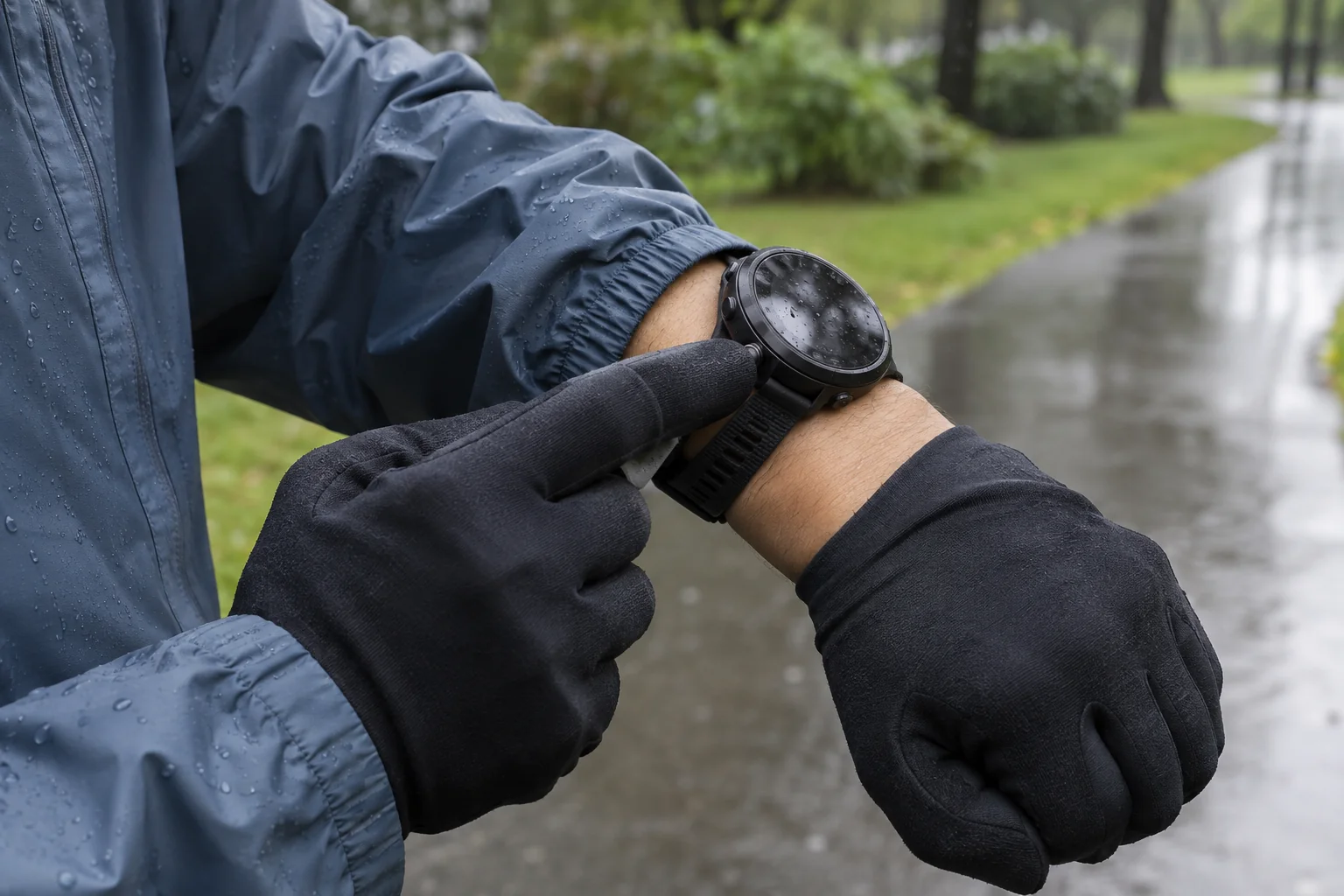
The CDC explains that wet clothing and sweat can increase heat loss, and hypothermia can occur in moderately cool weather under sufficiently unfavourable conditions. Starting dry does not guarantee every layer stays dry until the end. Precipitation and wetting during movement deserve separate attention.
No rigid universal “Start in this much less clothing” rule is needed. Individual health and actual tasks differ. Adaptable clothing and a plan for wetting matter more. Feeling too warm need not become an endurance challenge merely because it is winter outside.
A dry spare layer’s location matters. Deeply packed, hard-to-reach or already wet clothing is less usable. A simple packing check can belong to winter planning. Clarify changing opportunities beforehand just as you clarify the route.
Wind, moisture and route do not fit into one temperature number
The forecast can provide more than its prominent number. A sheltered residential street may lead to an exposed riverside; dry departure may be followed by rain. Consider these in route arrangements. A favourite loop is not suitable in every winter condition simply because you completed it many times.
The CDC hypothermia-prevention information discusses time outside, suitable dry clothing and avoiding dangerous cold. Options to shorten the outing and reach warmth therefore matter too. Equipment does not remove the need to modify plans.
Winter surfaces remain separate. A warm coat supplies no grip, and appropriate shoes do not turn every icy section into a usable running surface. Uncertain conditions allow another place or activity. Clothing planning and route evaluation complement each other.
Clarify treatment’s cold-related aspects too
NIA winter information mentions the role of some illnesses and medicines in cold. Assess this within your care. A disease list cannot independently decide which winter activity is allowed, and medicines must not be changed for an outing. Adapt sport to individual boundaries.
The NIA medicine-safety guide emphasises sharing current products and avoiding stopping without consultation. Ask what to watch for in cold with current treatment and which changes need help. The answer does not follow from the coat’s label.
New difficulty moving or handling clothing can also be described professionally. Name the task: putting on gloves, closing a zip or ending the outdoor situation. Seek a usable individual solution. You need not first prove the old routine has become completely impossible.
Do not simply call cold-related changes tiredness
The CDC lists clumsiness, confusion, slurred speech and drowsiness among hypothermia signs. Do not regard these as natural at a workout’s end. Every sign together or a watch warning is unnecessary before taking the situation seriously.
If these changes occur, stop the shared outing and prioritise help. NHS guidance describes shelter, removal of wet clothing and dry covering as potentially important while waiting. Avoid hot baths, direct strong heat and rubbing limbs. Your finishing plan must not delay care.
A warm drink is not suitable in every condition; only a fully alert person can safely receive one, according to circumstances and guidance. Do not use alcohol for warming. Running companions are not expected to improvise complete healthcare. Early recognition, urgent help and following professional instructions provide direction.
 Enlarge image
Have a next step after finishing too
At a winter outing’s end, a sporting photograph or conversation can extend standing outside. Know where to change, when to leave and what happens with transport delays. The finish need not automatically be identical for everyone. Social time can continue somewhere warmer.
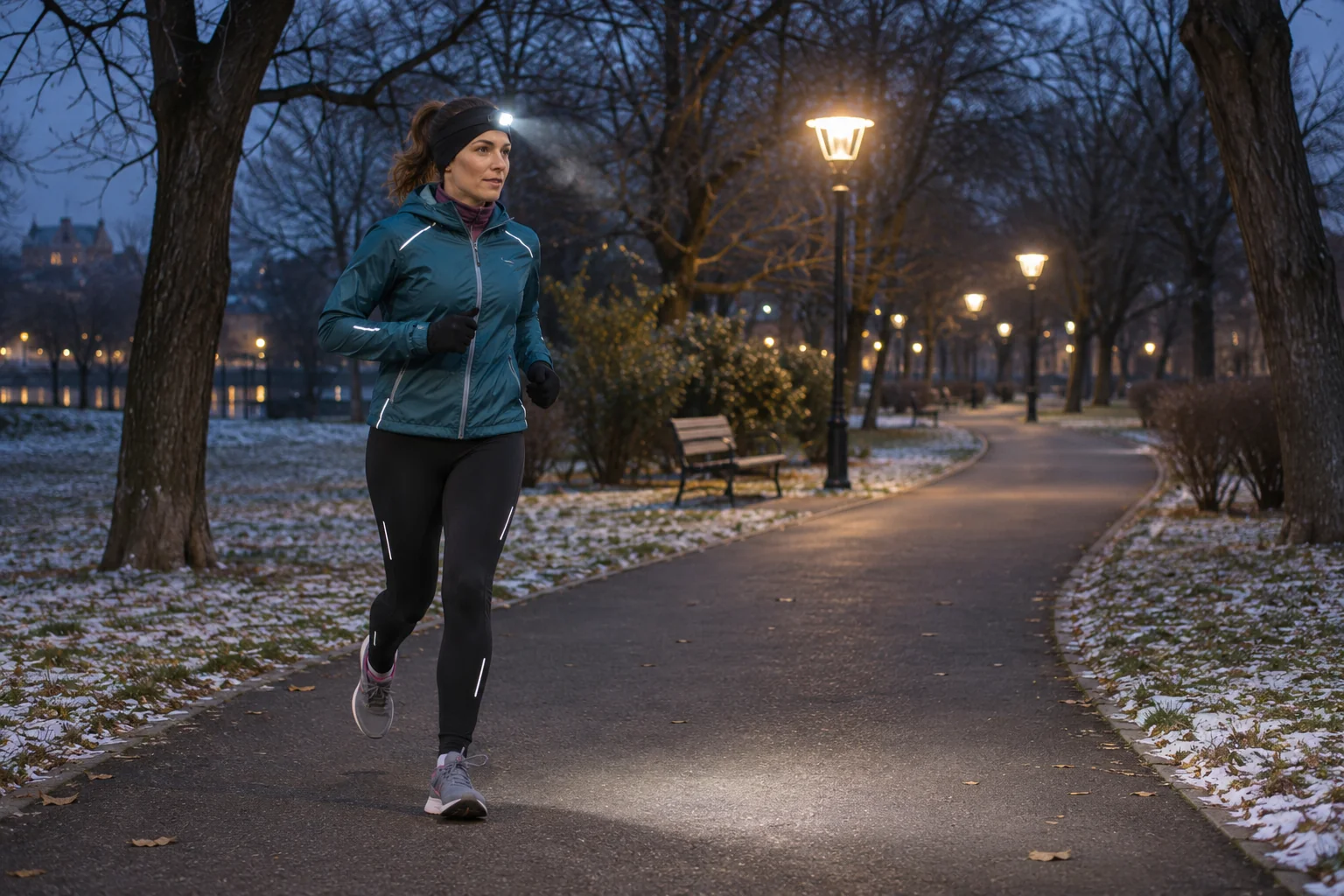
In an illustration, the group would stay chatting at its usual bench, but someone in damp clothing wants to leave. Agree beforehand to continue at a nearby indoor meeting point or shorten conversation. The decision need not cause competition or offence. Individual conditions may differ.
For getting home, an accessible dry layer and actual warming opportunity may matter more than a theoretically insulating coat. Equipment helps only when usable at the right moment. Storage, access and timing are therefore parts of winter organisation, not minor details.
Keep what still works from the old routine
You need not replace an entire wardrobe each season. Identify suitable items, repairs and gaps. A broken zip, lost glove or inaccessible spare layer is specific. A precise fault is easier to address than collecting products from general uncertainty.
Parts of favourite winter company or routes can remain if conditions and individual guidance allow. Changes may involve another time, shorter outdoor section or more accessible warmth. Retaining the entire previous outing is unnecessary for activity to remain valuable.
An old coat routine can be a useful memory, but this winter requires planning the actual outing. Layer handling, dryness, weather, individual care and getting home shape usability together. Seek activity fitting present function that can genuinely change when needed.
Sources
NIA: winter safety for older adults; CDC: cold and travel; CDC: hypothermia prevention; NHS: hypothermia and urgent help; NIA: medicine safety. Checked: 21 November 2026. The outing scenario is an editorial example, not individual clothing or treatment instructions.
How Futószív articles are prepared: our editorial guidelines.