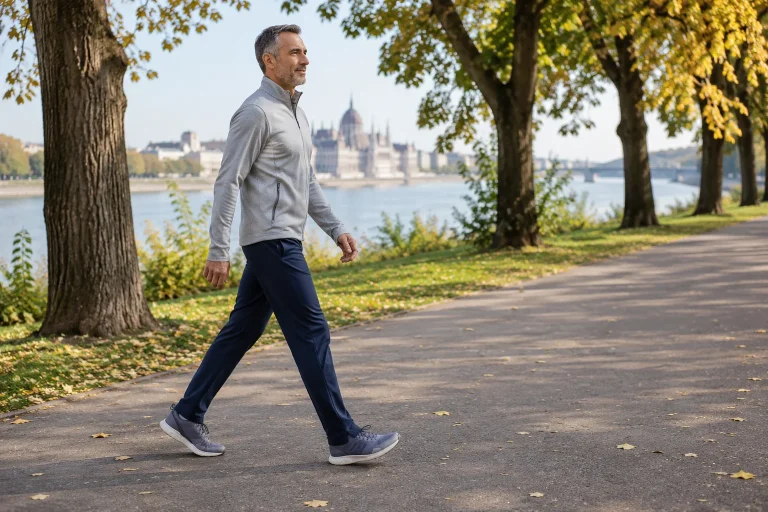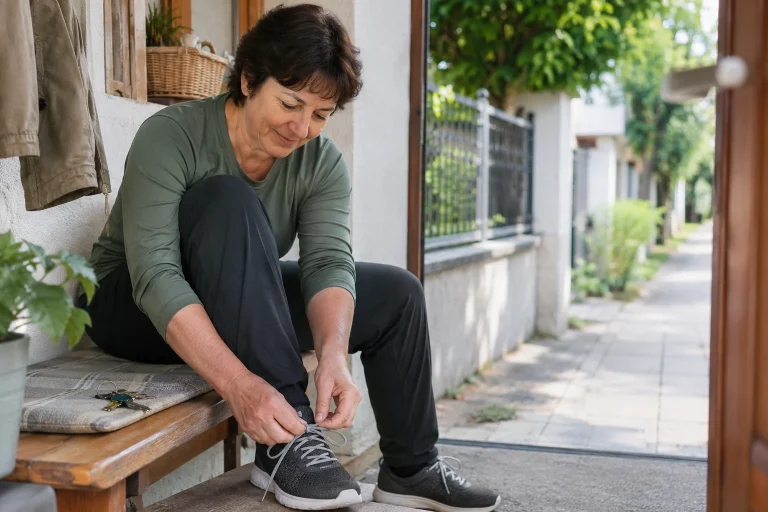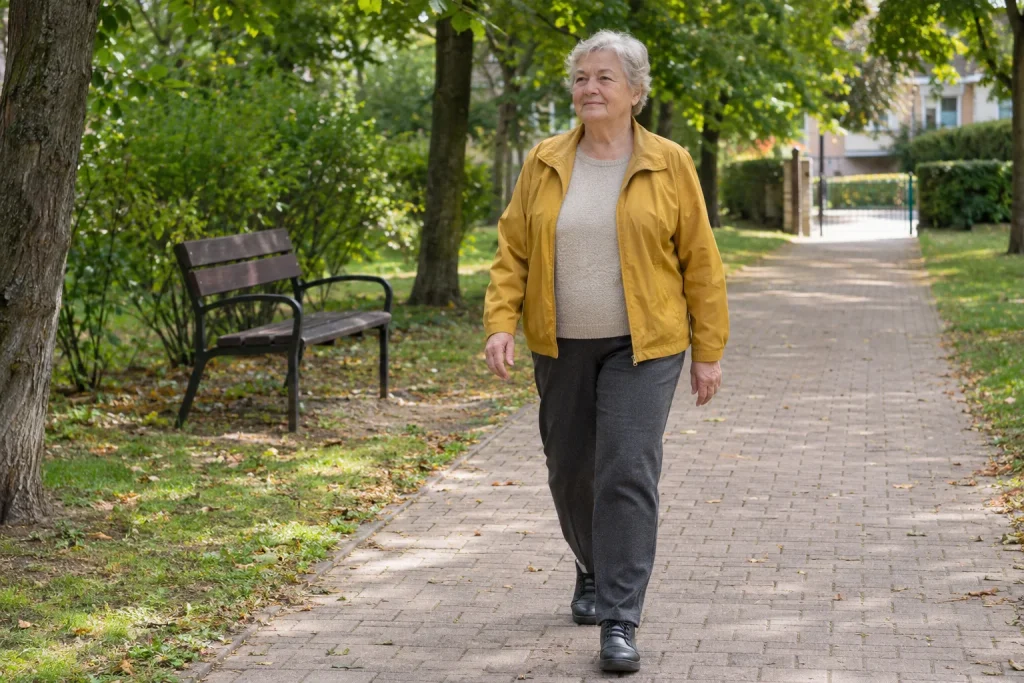
If you want to jog for the first time later in life or return after a long break, comfortable walking can be a useful starting question. How do familiar journeys go now? Is there a loop you enjoy walking calmly? These are not examination tasks. They can reveal which movement and surroundings fit your life now, but do not independently provide clearance to run.
Walking is not a compulsory waiting room before a more valuable sport. It can be an independent choice, shared activity or part of daily life even if running never follows. If familiar walking already involves pain, unsteadiness or unusual illness, do not try to prove suitability through ever-longer walks. Appropriate individual assessment and choosing activity come first.
Name walking’s purpose before the distance
You organise a walk differently for errands, meeting a friend or missing outdoor activity. Knowing the aim makes it easier to identify the important part. A pleasant meeting does not require a long loop; for independent travel, a safe crossing and getting home may matter more than distance in an app.
The NHS information on walking presents it as an accessible activity option. Your personal goal need not include definitely becoming a runner later. If regular walking provides what you seek, it can be a meaningful routine in its own right. Turning towards jogging is a separate question that can be raised later.
Write one sentence about what you want to make easier in everyday life: calmly reaching the nearby park, for example, or having a shared outdoor activity again. This is an organisational direction, not a medical target. It helps evaluate the next outing by an experience important to you as well as metres covered.
Start from existing daily journeys rather than an unfamiliar test
First consider familiar situations. How much standing precedes departure? Where do you stop? Are you carrying a bag? A journey to the shop and an empty-handed park walk can pose different logistical tasks over similar distances. Without circumstances, it is easy to infer too much or too little from how a journey feels now.
You do not need a timed walking trial at home. Existing experience can help: you moved calmly on that path, had to hurry another time or found the return load more tiring. Data should not become compulsory self-checking. If something hurts or feels uncertain, do not repeatedly provoke it for a more precise note.
In an illustrative situation, someone thinks they ‘cannot even manage walking’ because shopping regularly ends in fatigue. Examining the journey may reveal long queues, carrying bags and hurried crossings. This does not rule out a medical cause but helps frame the question more precisely. Include the entire event in assessment rather than just the word walking.
Choose somewhere easy to leave earlier
The longest or most spectacular local route is not necessarily the most usable first practice location. Check smooth surfaces, stopping options, clearly visible crossings and an accessible exit. The possibility of shortening is useful because your day and preferences can change. You need not complete a fixed loop at any cost.
| Site detail | What to inspect |
|---|---|
| Approach | Can you reach it without rushing or long waiting beforehand? |
| Surface | Are defects visible and the ground predictable? |
| Stopping | Is there a safe place to step aside or sit? |
| Shortening | Can you turn back sooner or get home simply? |
| Everyday use | How crowded, light and calm is it at that time? |
The table checks surroundings, not personal safety guarantees. Good paving cannot resolve a new health symptom. Equally, an access barrier should not automatically make you blame your abilities. If the usual place is too crowded or slippery, another time or location may be more appropriate; greater effort is not necessarily the solution.
 Enlarge image
A short outing can have a clear role in your day too
Movement need not require one large separate leisure block. A shorter outdoor outing may fit your schedule more easily. The WHO overview of activity describes movement in several forms, from transport to leisure. Personal planning does not require calling everything a workout.
Choose a connection that actually exists in your day: a calmer afternoon period, nearby meeting or short errand. Look beyond departure time. Leave room for returning and the next task too. If an outing fits only through rushing, a smaller activity is often more workable than a theoretically perfect plan repeatedly missed.
Small sessions should not become an all-day compliance system either. You need not immediately walk after every period sitting or catch up in the evening with what the day changed. Planning seeks a usable option. With illness, medical instructions to limit activity or new symptoms, general activity messages do not override personal circumstances.
An external pace label should not define comfortable walking
A walk an app or companion calls slow may be demanding for you. The CDC guide to measuring intensity therefore separately addresses effort relative to the individual. Speed alone does not reveal how an outing feels. You do not need to accelerate to a general pace range to consider your own starting point meaningfully.
Notice the ability to converse if already walking with company, but do not make it a diagnostic trial. Breathing changes can indicate effort; being able to speak does not make unusual illness harmless. If uncertain, observations can help describe the situation in consultation, rather than become an independent medical decision.
Keeping your rhythm is easier when companions understand the plan. Agree that every section need not be covered together or that stops are possible. The activity is then not defined by whoever wants to reach the next point fastest. Conversation and comfortable organisation can themselves be goals.
Comfort involves everyday equipment details
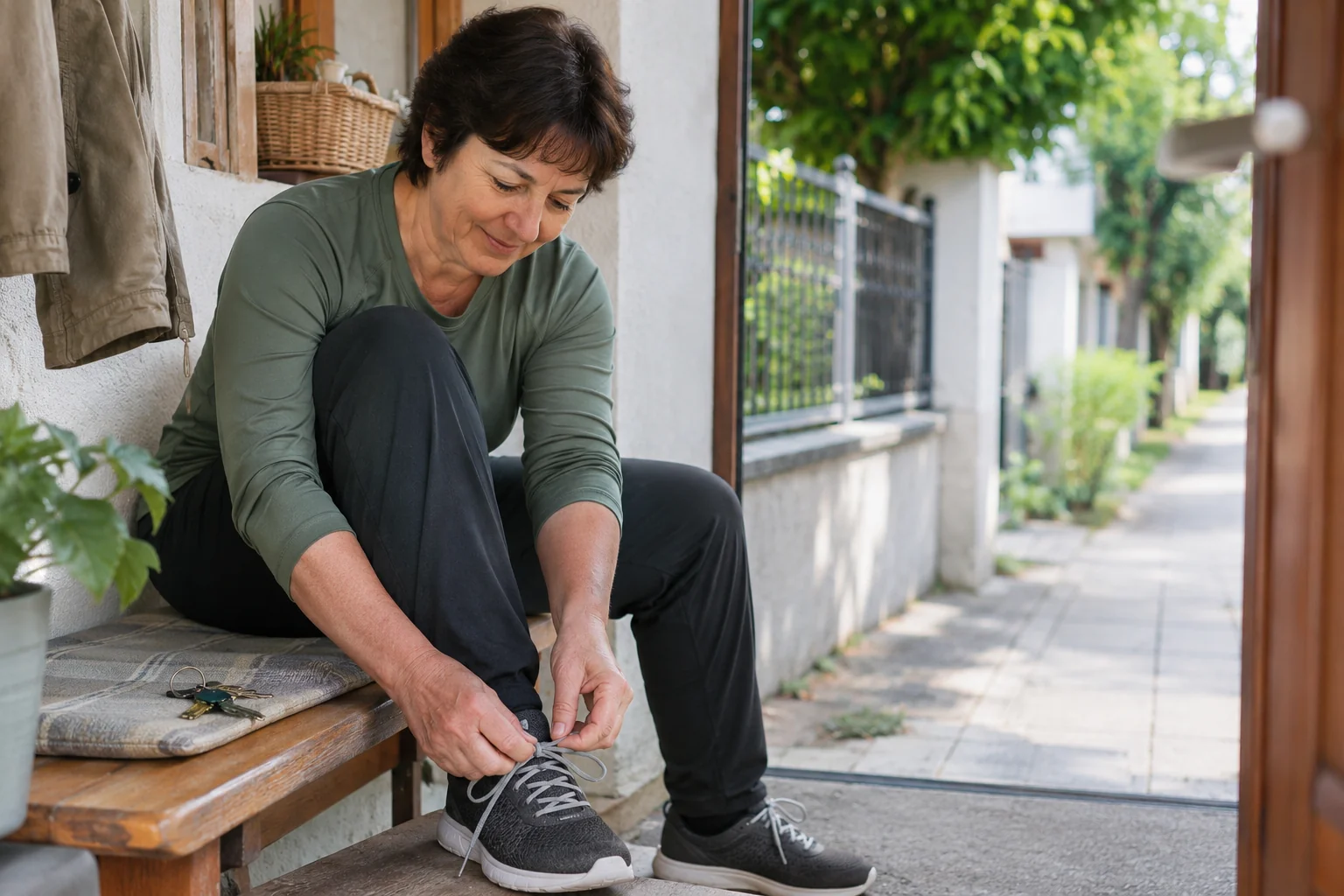
Walking shoes should give your feet comfortable room, stay on securely and avoid rubbing. The NHS also highlights well-fitting, comfortable footwear. This does not mean a compulsory sports-shoe brand or shopping list. Examine existing equipment for actual use rather than relying on an old size label.
Consider what you need to carry and how easily you can handle it. Searching for keys, a hard-to-open bag or slipping glasses can interrupt comfort. These are organisational details, not endurance failures. Address repeated annoyances first; you do not need a new version of every accessory at once.
Weather can change the activity, not only clothing. If a familiar place becomes hard to see, slippery or uncomfortably hot, choose another occasion. A new jacket does not make every condition appropriate. The aim is a currently workable walk, not proving suitable equipment makes going out compulsory in every situation.
Observe the beginning, ending and rest of the day separately
At the beginning, your condition and the preceding day may matter. At the end, consider why you finished: arrival, enough activity, something intervening or discomfort. These need not merge into one success-or-failure judgement. Recording them separately shows which detail needs changing.
The rest of the day provides useful everyday information too. Could you comfortably continue usual tasks; did symptoms require modifying anything? You need not score every feeling or fit it to a predetermined hours rule. The description aims to understand your own response, not complete a universal progression algorithm.
With concerning or worsening symptoms, the next walk should not become the confirming test. Severe pain, new difficulty with exertion or illness differs from organisational discomfort. Reassess activity type and amount with appropriate professional help. Stopping may be the most workable decision for that occasion.
 Enlarge image
Walking is not an automatic recipe for joint symptoms either
Walking is often mentioned as a gentler choice, but personal symptoms still matter. The CDC activity information for joint conditions lists several options and emphasises starting in a way suited to symptoms. It does not mean the same walk suits everyone or a painful route should be repeated.
If everyday walking is uncomfortable, considering another activity or appropriate support may matter. Options depend on health and access. You need not prove your desire to run by first completing painful walking amounts. The personal path may differ, and jogging will not be every reader’s next step.
With an existing treatment plan, fit walking’s role to it. General advice on a website does not independently change physiotherapy, load restrictions or monitoring conditions. Ask how the outdoor activity you want fits the current plan and which feedback warrants contact again. That differs from simply prescribing more walking.
Decide about jogging when that is genuinely the question
If walks fit your days appropriately, you may later consider trying jogging. You need not tie that to a compulsory distance, step count or continuous walking duration. Such a threshold can create an appearance of clearance. Running is a new activity with its own individual circumstances and considerations.
You may meanwhile discover walking already provides the experience sought. Perhaps you find a social group or it simply works better in your schedule. Do not call it temporary solely because the first idea was running. Your goal can change, and you may find something more workable than the original plan.
The main practical value of starting with walking is therefore not obtaining an entry ticket to running. It is knowing the setting, organisational needs, personal responses and desired experience better. Those remain useful whether you continue walking, choose another activity or later consider jogging under appropriate individual conditions.
Sources
NHS: walking for health; WHO: physical activity; CDC: relative intensity; CDC: activity with joint conditions. Checked: 20 November 2026. Route-selection and diary ideas are original editorial tools, not gait tests or return protocols.
How Futószív articles are prepared: our editorial guidelines.