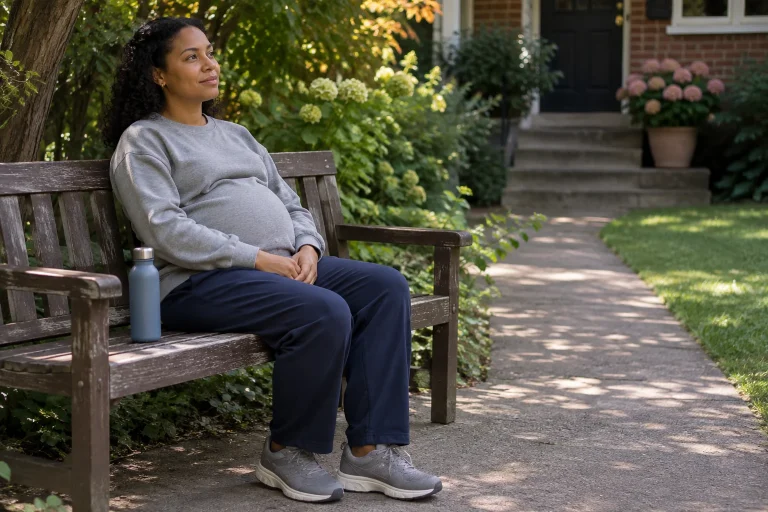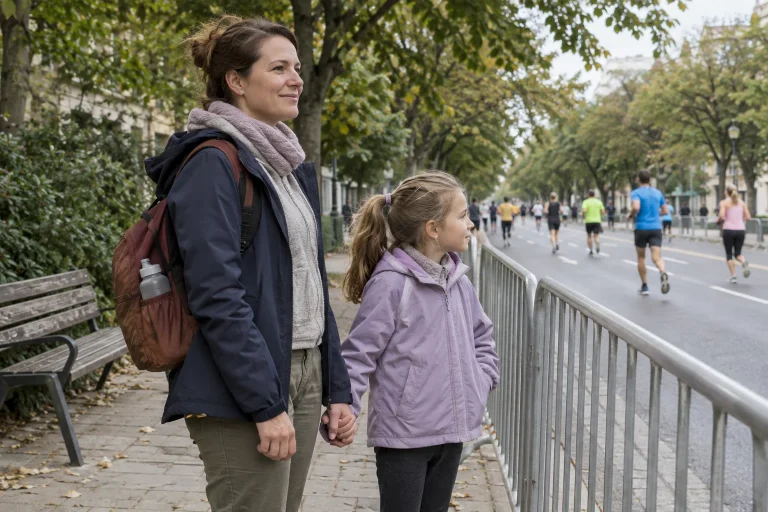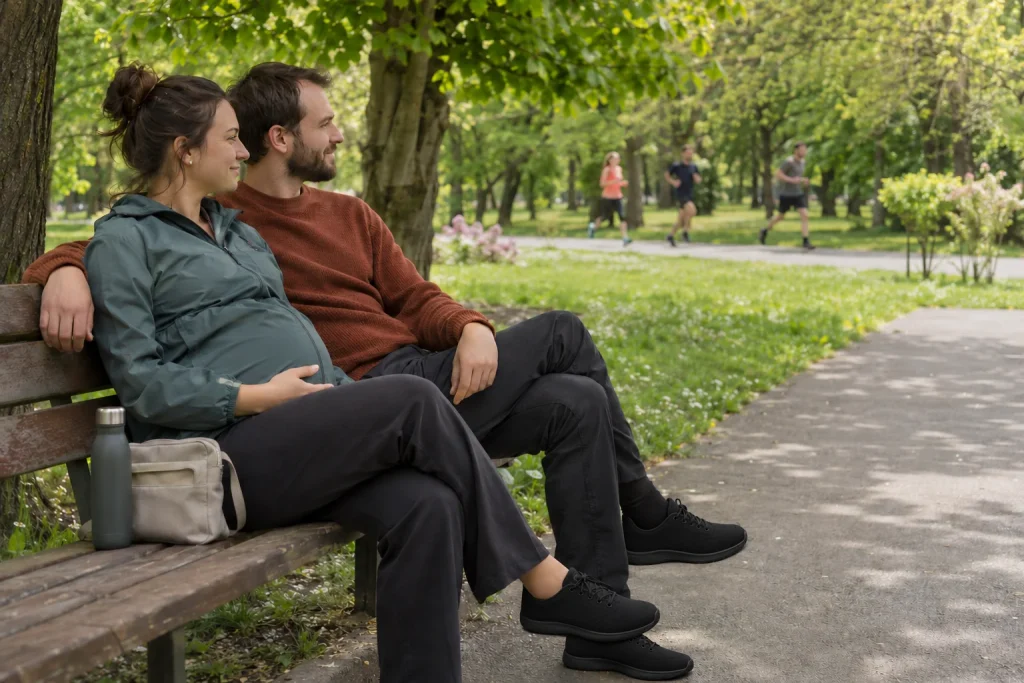
Family or a running partner is starting a race and you would like to join as a spectator this time. At first, the day seems easier: no distance, result or refuelling plan. The real programme may include an early departure, long travel, walking around closures, hours waiting and getting home late. During pregnancy, these details matter to comfort even if you do not plan a single running step.
A good spectator plan therefore organises your day too. It considers not only when the runner finishes, but access to seating, shade, toilets and a journey home independent of waiting for the whole event. Participation can be shorter, simpler or changed at the last moment. These are organisational options, not measures of commitment.
First review the full door-to-door day
Record morning departure, vehicle changes, the approach to the venue and the way home. The advertised start and finish times are only two points in that chain. A morning event can occupy almost an entire day if parking is distant, leaving is slow or you can only travel home with the runner. Name the end of your own programme too, not only the race’s.
Add situations beside distances. The route from the stop to the course may be flat and shaded, or involve a footbridge with stairs or a difficult crowd. You do not need a medical calculation for every metre. Identify uncertain sections and places where you can comfortably change plans if you want less time outside that day.
If the day depends on one tight connection, loosen the arrangement. You do not necessarily need to attend the start if a later meeting point is easier to reach. Cheering is not more personal because you visit the greatest number of places. One well-chosen point can offer more attention than three rushed relocations.
Choose attendance for your own condition
Fatigue during pregnancy can influence interest and energy for a long social programme. The NHS information on pregnancy tiredness also emphasises the place of rest and accepting help. This does not establish a predetermined spectator time limit: personal circumstances and that day matter.
A ticket, prebooked accommodation or a promise to friends cannot override guidance from your own care. If symptoms or complications involve specific agreed actions, adapt the event arrangements accordingly. Organisers can answer questions about entry and the venue; event information does not determine personal medical suitability.
Say beforehand that you want to be there but the form of participation may change. You then need not explain on site why you want to leave earlier. If you choose rest that day, supporting the runner remains possible through a conversation beforehand or message afterwards. You do not need to invent a performance-based justification for staying away.
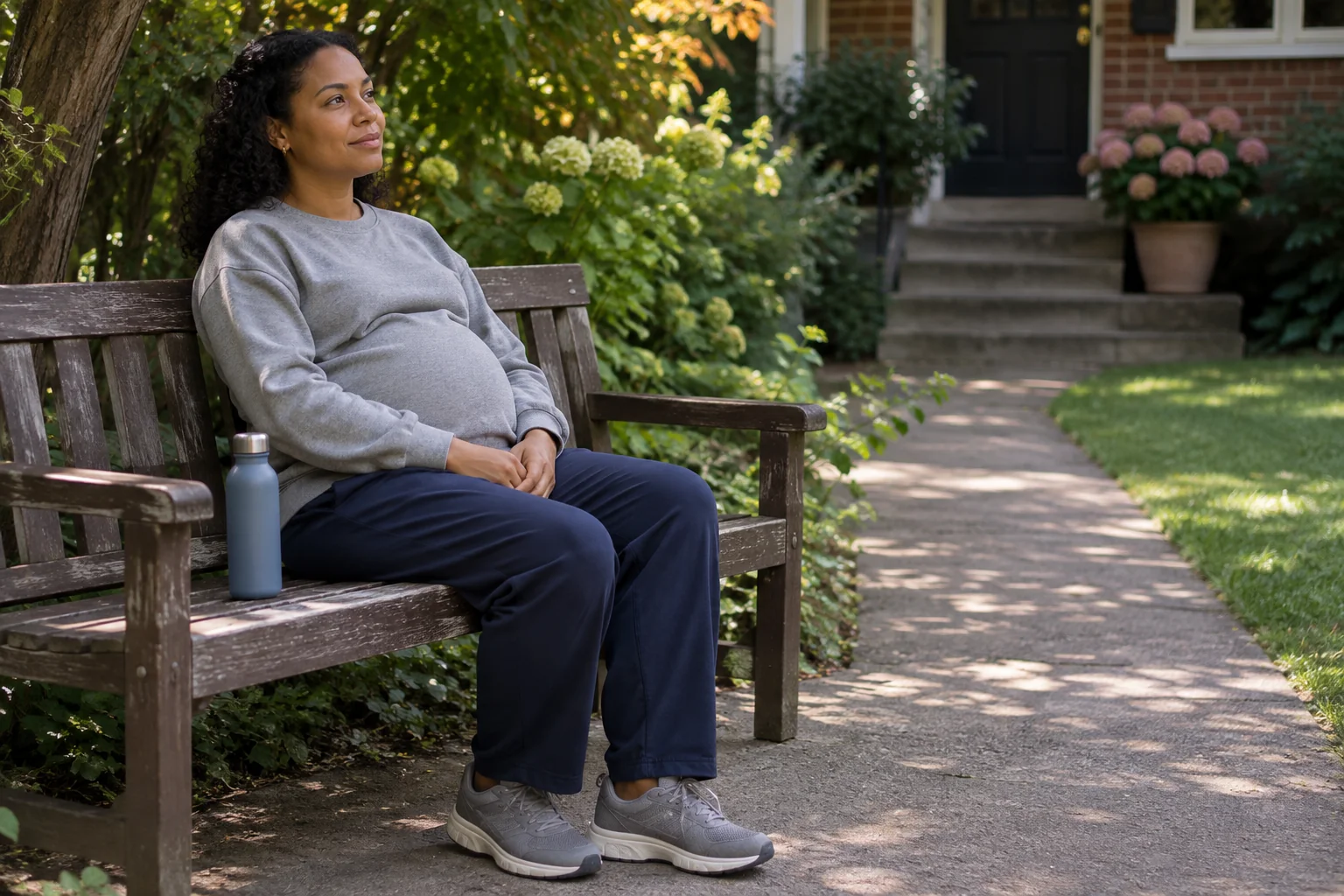
Seating helps when it is actually accessible
A park or café marked on a map does not necessarily mean a usable rest point during the event. Benches may be behind closures, a terrace may open later or seating may be reserved for another programme. Ask the organiser about a specific place: which area can spectators access and how can you leave without crossing the course?
If bringing a folding chair, check whether it is permitted, where it can be placed and who will carry it. Even an easy-to-use item becomes inconvenient if you must carry it all day. Do not plan to put it in a walkway or barrier opening. Alongside a good view, leave real room for others and for your own departure.
Have a backup rest location. Alongside a spacious shaded viewing point, for example, choose a nearby indoor option if its opening hours and use are clarified. The venue should not be where you discover the only covered place requires an event ticket. Backup does not mean visiting both; it means having a choice.
 Enlarge image
In heat, do more than swap to a larger bottle
According to the CDC information on heat and pregnancy, pregnancy can increase vulnerability to heat-related illness and dehydration. Discuss a personal hot-weather plan with the maternity-care professional too. The source does not give a spectator temperature cutoff or a drink quantity suitable for everyone.
Shade changes as the hours pass. A barrier section appearing protected in the morning may later be in full sun just as the wait begins. Assess the point for the period you plan to attend. Without suitable rest or a cooler alternative, shortening the whole programme may make more organisational sense than preserving unlimited waiting.
The runner starting early does not automatically create a cool spectator day. It may be much hotter by the finish. Agree that you need not wait directly at the finish arch. A calmer meeting farther away can still provide a shared ending if both of you know its location and how the runner gets there.
Food, fluids and toilets need to be available for your own use
Do not assume runners’ aid stations provide for spectators too. You may not be able to access course services, and the organiser’s food selection may not suit your needs. Clarify separately where to drink, eat or sit. For your own food, storage and any necessary refrigeration apply throughout travel too.
The route to toilets matters alongside their position. A closure or hard-to-bypass queue can make a supposedly nearby building distant. Ask about spectator toilets, the approach and any opening hours. If moving between points, consider each separately rather than only the start.
Do not turn general organisation advice into self-directed fluid or salt management. Follow personal dietary, fluid or other health guidance received in your care. The useful practical question here is whether what you need is accessible. A day should not require setting aside personal needs because water or toilets are absent.
Keep runner and spectator roles distinct
A companion can easily become photographer, bag keeper, route planner and contact person for the whole group simultaneously. Discuss which tasks you gladly accept and which belong elsewhere. You do not necessarily have to move the runner’s spare clothing or large shared bag between cheering points. Tasks need actual owners, not just names.
Distribute important belongings so separate journeys home can work. If every key, ticket and personal document stays in one bag with the runner, leaving independently can become difficult. The reverse matters too: the runner should not finish without necessary belongings because you left earlier. Arrange this beforehand; complicated equipment is unnecessary.
Clarify what phone availability means. Someone on the course cannot always reply immediately, and spectators need not continually watch a screen. A known meeting point and another available companion can reduce uncertainty. The plan should not depend on every message receiving an answer within seconds.
One workable meeting instead of three viewing points
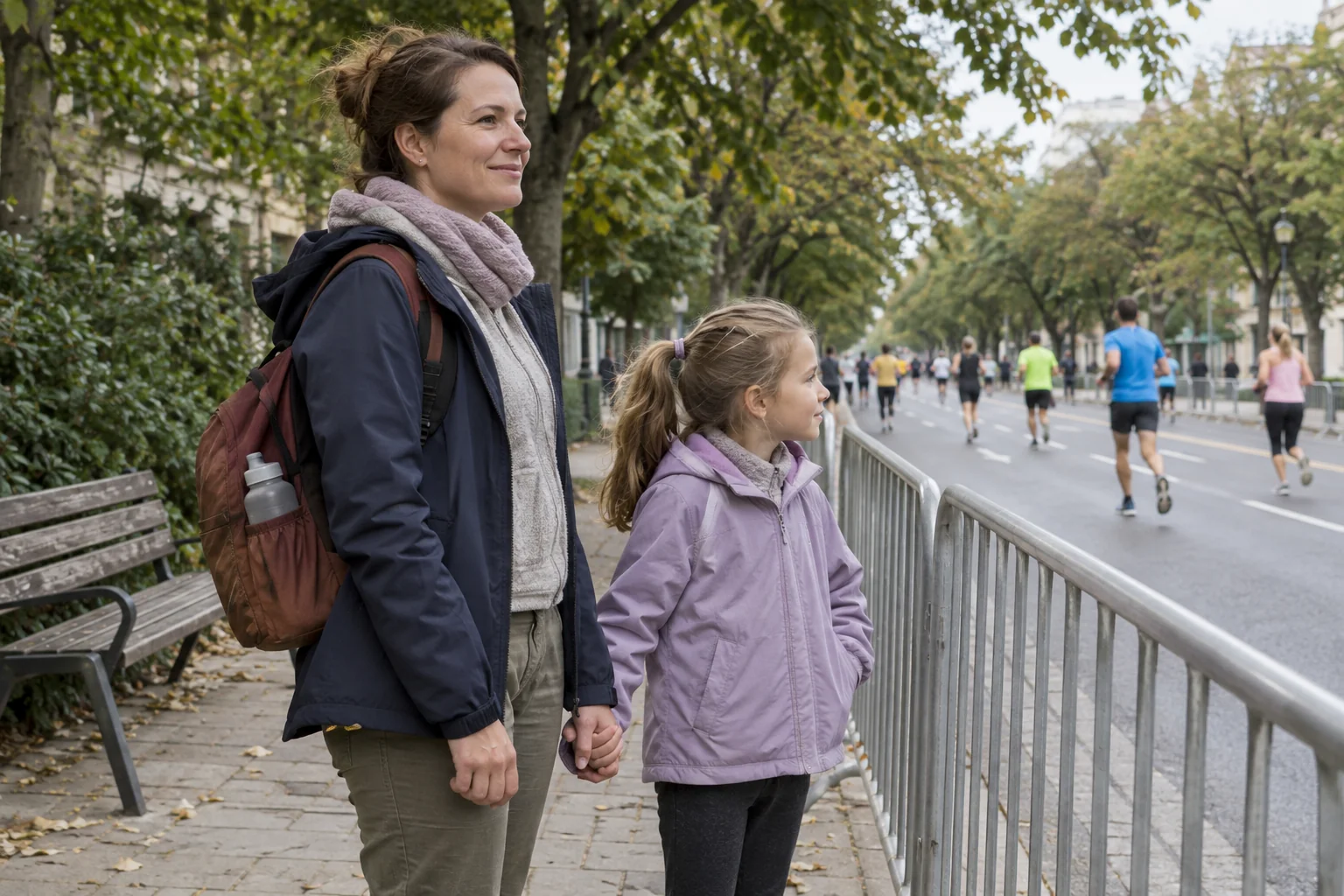
Imagine an urban race with the start, intermediate point and finish in three different places. Apparently short links involve two underpasses and a busy tram service. The group’s original plan is to photograph everywhere. Your version can be to cheer only at the accessible intermediate point, then rest somewhere agreed.
The change becomes concrete when others understand it too. Explain where you will not be, where shared belongings go and who takes the photograph originally assigned to you. Saying only that you will see how it goes may leave others relying on you. You need not predict every minute, but name the role undertaken precisely.
In another situation, everyone plans to return in a shared car after a longer rural event. Without a separate departure option, leaving early is only theoretical. Change plans while still at home: another companion, a shorter visit or verified transport may work. Improvising the journey home on site can require more effort than you intended for the programme.
 Enlarge image
A plan for feeling unwell should not test endurance
If attendance becomes uncomfortable, you do not need to wait for a preset time to change it. Ordinary comfort needs and urgent symptoms are different situations, however. The CDC maternal warning-sign page discusses severe or worsening headache, vision changes, fainting and breathing difficulty, among other signs that may require immediate medical attention.
Do not explain away new, severe or concerning symptoms among yourselves solely as crowds or heat. Personal maternity-care guidance and appropriate care come first. In immediate danger in Hungary, call 112. Knowing the event’s medical point helps, but is no reason to make an unwell person walk a long way there.
Agree beforehand who stays with you if help is needed and who informs other family members. To describe your location, an actual street or identifiable entrance is better than ‘beside the runners’. Arranging care should not also depend on whether a finish photograph will be taken. Health needs are separate from race-day plans.
Keep the morning check short but real
Before leaving, review changes in weather, transport, how you feel and venue information. An earlier plan is not a final instruction. If one important condition fails, every other element need not remain unchanged. Seek a workable response to the present situation, even with fewer locations and shorter attendance.
- Do you know where to sit, and is that place actually usable?
- Are food, fluids and toilets accessible for your own needs?
- Can you leave earlier without stranding someone else’s keys or bag?
- Do companions understand which tasks you accept and which someone else handles?
- Do you know the necessary contact arrangements if your condition requires a change?
The success of a spectator day is not measured by hours at the venue. It can consist of a brief meeting, attentive cheering and a comfortable journey home. The runner completes their own programme; choose participation manageable in your personal situation. A shared experience does not require the spectator to end the day as tired as the competitor.
Sources
How Futószív articles are prepared: our editorial guidelines.