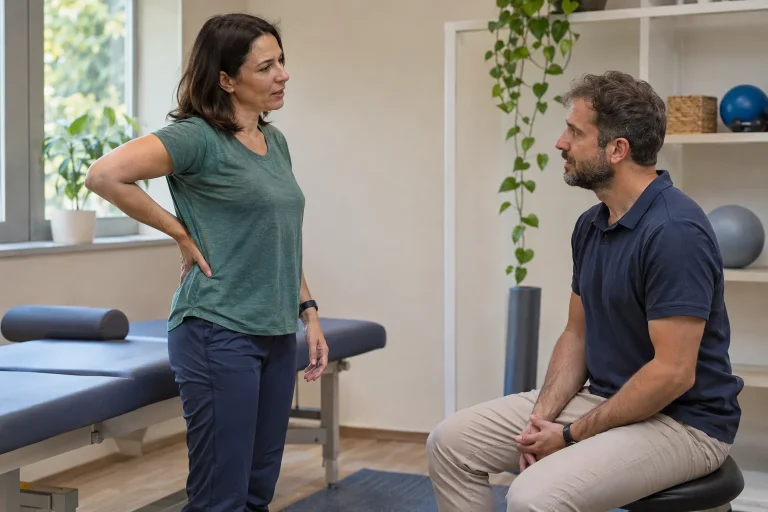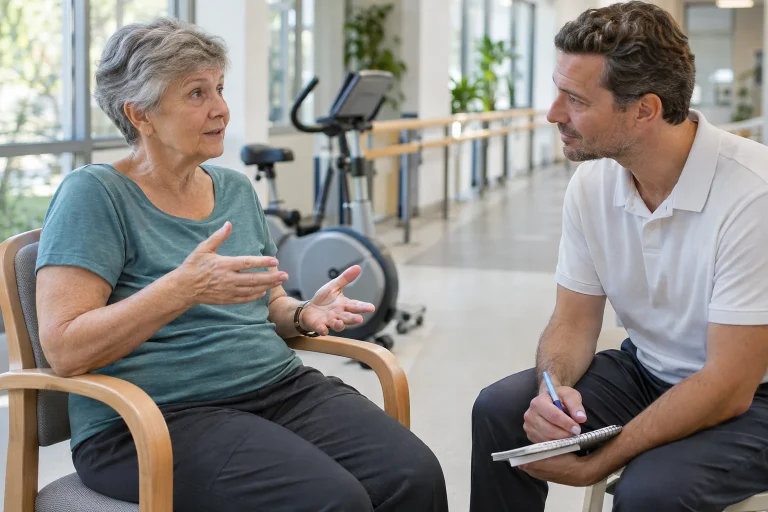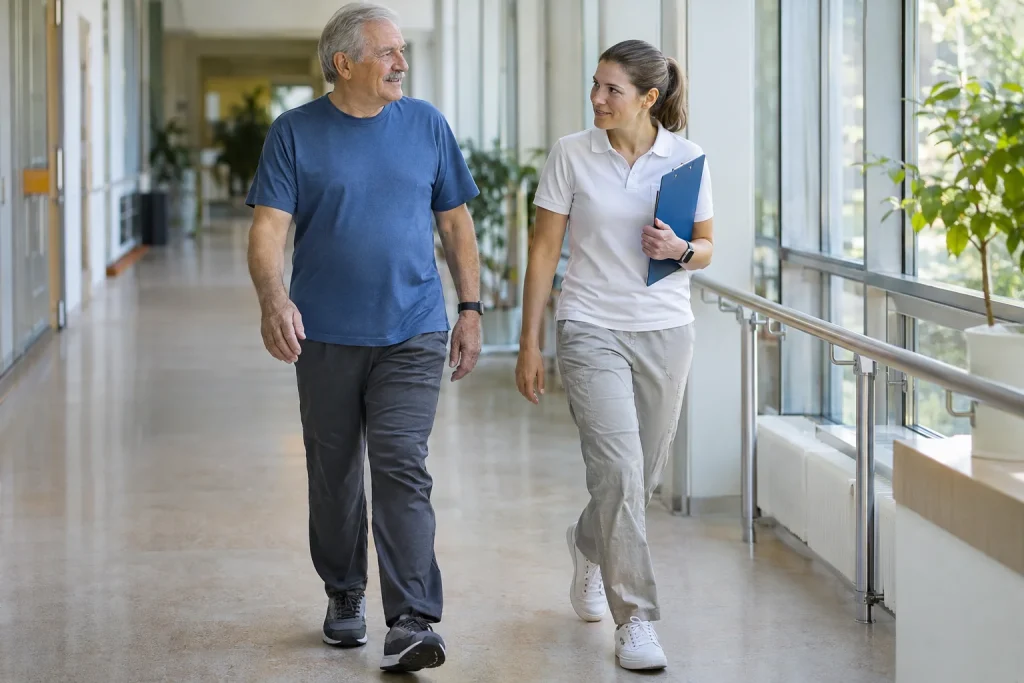
After a stroke, a former running route can represent both desired freedom and an uncertain task. Walking may already go well while fatigue, balance, vision or handling several tasks differs. Weeks or months elapsed are therefore insufficient to answer the running question. Individual condition, rehabilitation and planned demands together can inform it.
Movement can be important in recovery and long-term life, but the appropriate form differs. This article offers questions for discussion with treating and rehabilitation teams. It is not personal sports clearance or a universal running programme, and does not override post-stroke treatment instructions.
Post-stroke condition involves several areas
The NHS recovery information emphasises individual differences in physical and mental effects and the role of a personal rehabilitation plan. Function beyond visible movement may change. Pace or the appearance of walking cannot provide a complete picture.
At consultation, describe daily travel, turning, steps and longer tasks. Following a route, watching surroundings and functioning at day’s end matter too. You do not need to assign these to one cause beforehand; specific situations support assessment.
Previous sporting history is valuable but differs from the current starting point. An old marathon result does not assess today’s balance or cardiovascular condition. While retaining your goal, you can establish the basis for preparation afresh.
Readiness for aerobic activity and running are separate questions
The 2025 Canadian stroke rehabilitation recommendations say participation in aerobic training should be assessed when medically stable. They discuss necessary screening and appropriate monitoring too. They do not state that everyone medically stable may run immediately.
Endurance activity can take several forms. Running’s repeated foot strikes, speed and environmental demands may differ from another aerobic activity. Ask why a particular option suits you now and how running might connect later.
If a professional generally recommends activity, specify the sport desired. Easy walking, a cycling task and trail running are not interchangeable. Detailed questions help prevent interpreting general permission as an overly broad rule for exertion.
Let assessment produce an understandable next step
A rehabilitation team can help choose tasks from necessary physical, movement and other assessments. The NICE guideline emphasises personalised, goal-based rehabilitation and care supporting participation. Running can appear as a personal goal in that conversation.
Describe the route and experience you want. If running is not the next task yet, ask what may prepare for it and what you will monitor. Precise explanation offers more support than simply being told to take care for now.
Do not seek a home performance threshold for independently clearing yourself. Completing a task and health status do not rest on one test. The next step belongs to individual decisions and professional review where needed.
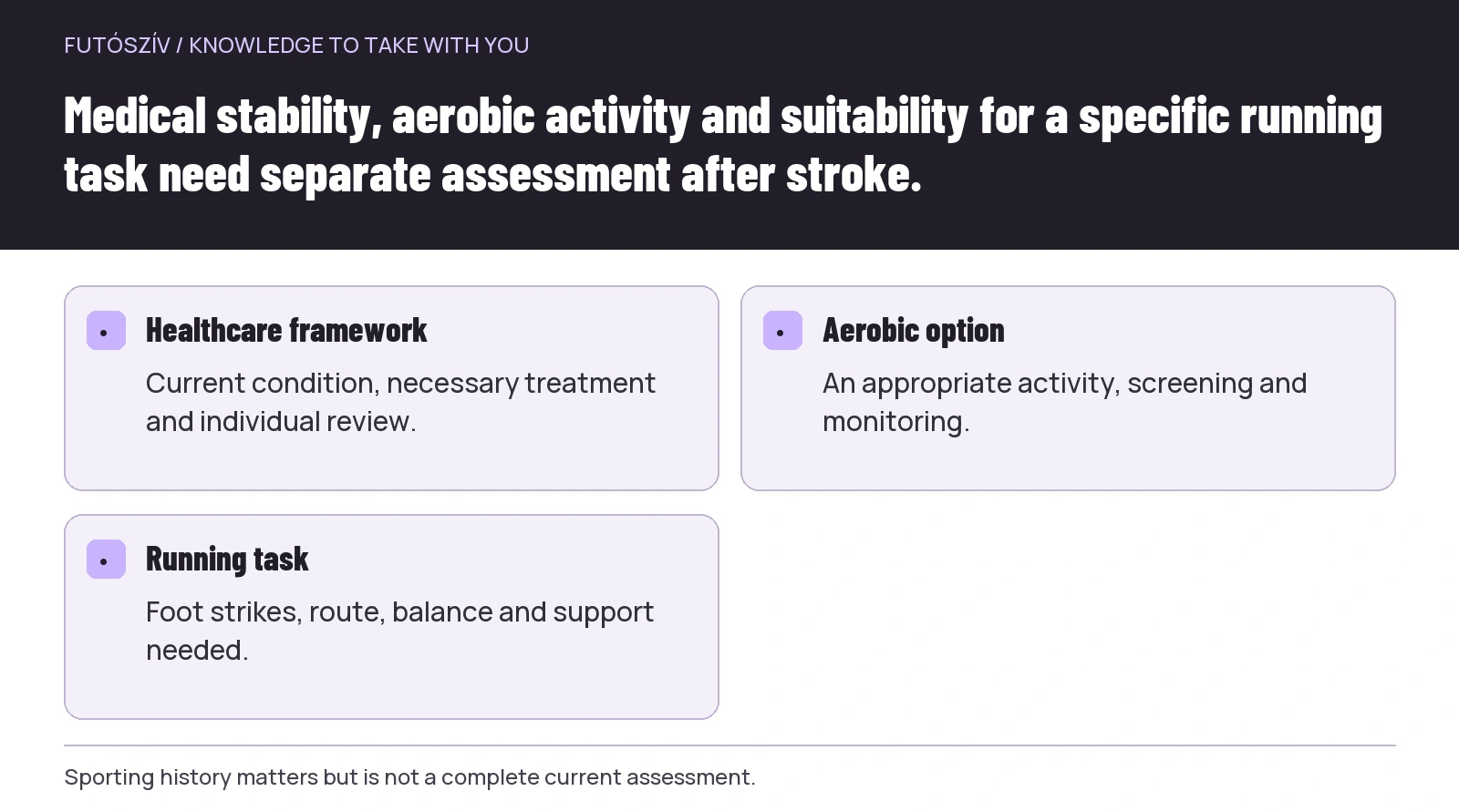 Enlarge diagram
Text version of the illustration
- Healthcare framework
- Current condition, necessary treatment and individual review.
- Aerobic option
- An appropriate activity, screening and monitoring.
- Running task
- Foot strikes, route, balance and support needed.
Fatigue needs separate assessment too
The NICE guidance also recommends assessing post-stroke fatigue and considering it in rehabilitation goals. Do not automatically call exhaustion laziness or poor fitness. What happens during the rest of the day after sport may matter too.
Write a few sentences about the task performed, rest needed and evening or next-day function. This does not require scoring every sensation hourly. The aim is identifying patterns useful for a professional plan.
A shorter outing should not automatically become faster. If available time or capacity declines, reconsider the purpose of exertion too. A missed run is not a compulsory debt for tomorrow.
Gait, balance and surroundings matter together
Moving confidently along a quiet straight stretch differs from turning on a crowded pavement or avoiding an unexpected obstacle. Canadian recommendations discuss gait, mobility and balance as separate rehabilitation areas. Consider the running route alongside them.
If using equipment or support, clarify its particular use and sporting task with an appropriate professional. Do not independently abandon help to make running resemble the past. Support serves function, not performance judgement.
A predictable setting with easy exits may be appropriate initially where it fits the personal plan. Lighting, surface, traffic and return options belong to the task too. Difficulty depends on more than kilometres and pace.
Leave time and independence in communication
Some people need more time or another communication method after stroke. The NICE guideline also emphasises information adapted to communication needs. Clear route information sent ahead and a precise meeting point can support group running.
An organiser should address the person directly. If a companion attends, agree their involvement too. Do not automatically finish sentences or infer from speech difficulties that someone else must make every decision.
Do not announce important changes on the move with several people shouting at once. Have a stopping point and room for questions. Predictable communication reduces unnecessary complexity.
Treatment and the sports plan should fit together
Post-stroke care considers the original cause, accompanying conditions and prevention of another event. Do not change medication or reviews based on running results. Discuss medication or timing that affects sport with your clinician.
The American Stroke Association supports physical activity alongside appropriate healthcare assessment and advice. This does not mean movement replaces indicated medication or other treatment. Sport is an opportunity connected to the care plan.
Discuss falls or injury risks individually where treatment makes these particularly important. Do not seek a general prohibition or exemption. A particular route, support and task are more assessable than the sport’s name alone.
If running is manageable, make the first outing interpretable
An individually agreed trial should not aim to confirm the old distance. Explain or record demands, surroundings and stopping conditions clearly. A short, simple situation makes learning from experience easier.
Do not combine a new route, faster pace and longer duration at once. Later response matters for monitoring too. Report new difficulties or symptoms in daily function afterwards to the professional.
A companion should know the necessary framework. Their pace or expectation should not decide whether you continue. Good help may mean slowing together, stopping or helping you return when requested.
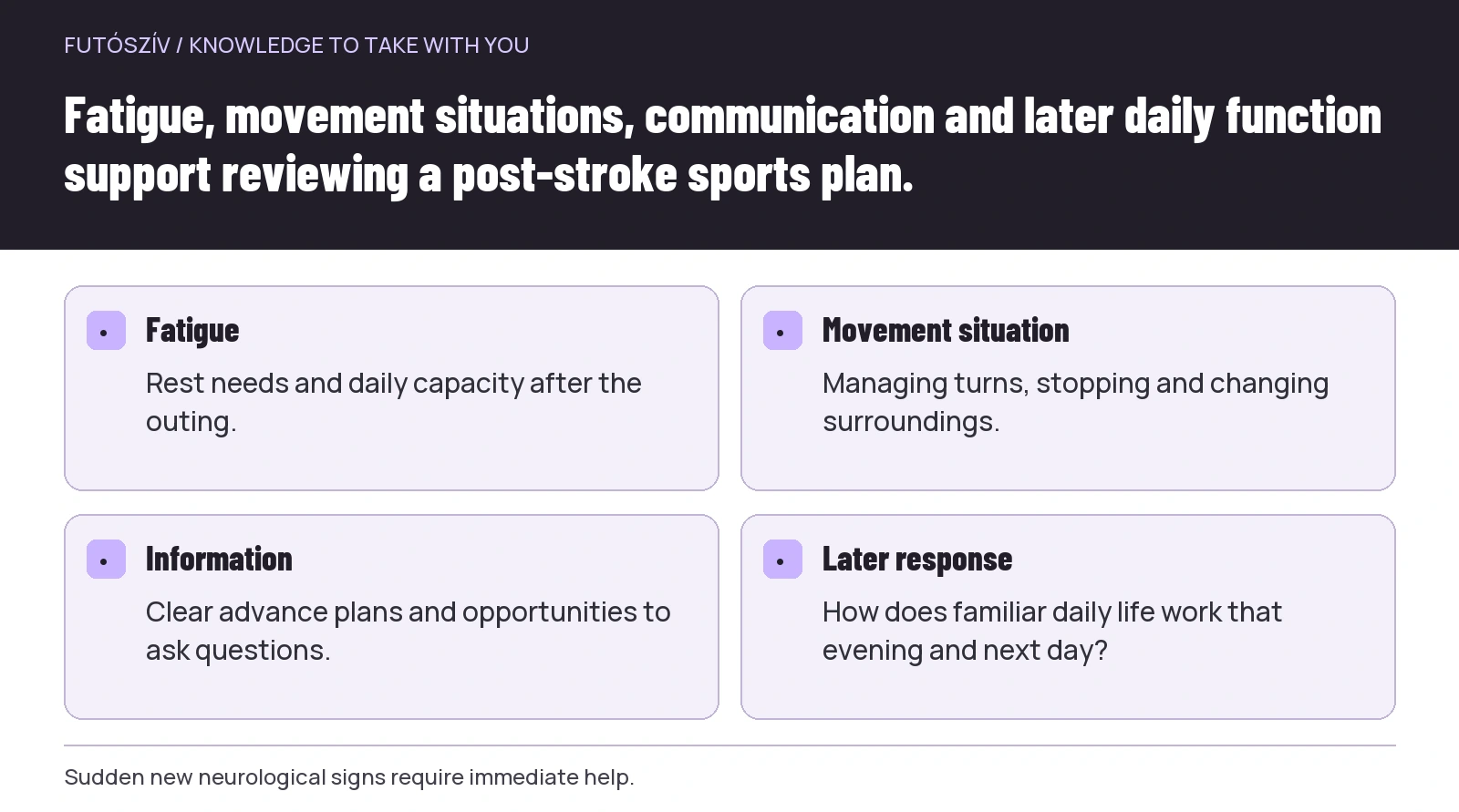 Enlarge diagram
Text version of the illustration
- Fatigue
- Rest needs and daily capacity after the outing.
- Movement situation
- Managing turns, stopping and changing surroundings.
- Information
- Clear advance plans and opportunities to ask questions.
- Later response
- How does familiar daily life work that evening and next day?
Do not attribute new stroke signs to old residual symptoms
The NHS information highlights sudden facial weakness, reduced arm strength and speech difficulty as stroke warning signs. Sudden new one-sided weakness, speech or visual disturbance and other serious neurological changes require immediate help; in Hungary, call 112. A previous stroke does not automatically explain a new event.
Do not wait to see whether warming up, resting or another kilometre improves it. Symptoms easing does not remove the need for urgent assessment. Do not drive alone; a companion can help state the location and onset time.
Ask about other urgent signs in your personal care plan too. Severe chest symptoms, serious breathing difficulty and fainting are not merely training-adjustment questions either. Stop the programme and arrange care.
The emotional side of returning matters too
Changed opportunities compared with your previous running life can bring grief or fear. Every outing need not prove successful recovery. Daily function and your own experience matter, beyond performance others consider impressive.
The NHS information also discusses psychological effects within stroke recovery. Seek appropriate help for persistent anxiety, low mood or other difficulties during return. Running can bring enjoyment without having to provide every form of support alone.
A companion’s thoughtful question may help more than constant emphasis on heroism. They can ask which outing you want, what felt good and what you need. You can tell your own story in the way that suits you.
How can the plan stay sustainable?
Give the goal a simpler version where needed and review it periodically. Accurate community information, appropriate assistance and contact with the treating team may all belong. Running needs to work within the whole life situation, not only during the sports session.
Choose a race date from actual preparation. Entry does not override rehabilitation, and a previously accepted goal can change. Another activity or smaller event can also offer a sporting experience where it fits the personal plan now.
Consider progress from several angles: what you can complete appropriately, how you feel afterwards and what remains important in daily life. Progress differs in rhythm and is visible beyond kilometres.
Questions for the rehabilitation team
- Given my current condition, which aerobic activity and supervision are appropriate?
- Which additional conditions are needed before considering running?
- How will we monitor fatigue, balance and later daily function?
- Which route, equipment and communication support my participation?
- Which symptoms mean stopping, and whom should I contact to review the plan?
- How does sport connect with necessary treatment and follow-up?
An active life after stroke can build on individual assessment, appropriate rehabilitation and manageable goals. Running may be a current or later possibility, but is not a compulsory milestone. A good plan supports your own function and decisions.
Sources
- Canadian Stroke Best Practices: Lower Extremity, Balance, Mobility and Aerobic Training, 2025
- NICE NG236: Stroke rehabilitation in adults – recommendations
- NHS: Recovering from a stroke
- American Stroke Association: Physical Activity
- NHS: Symptoms of a stroke
How Futószív articles are prepared: our editorial guidelines.