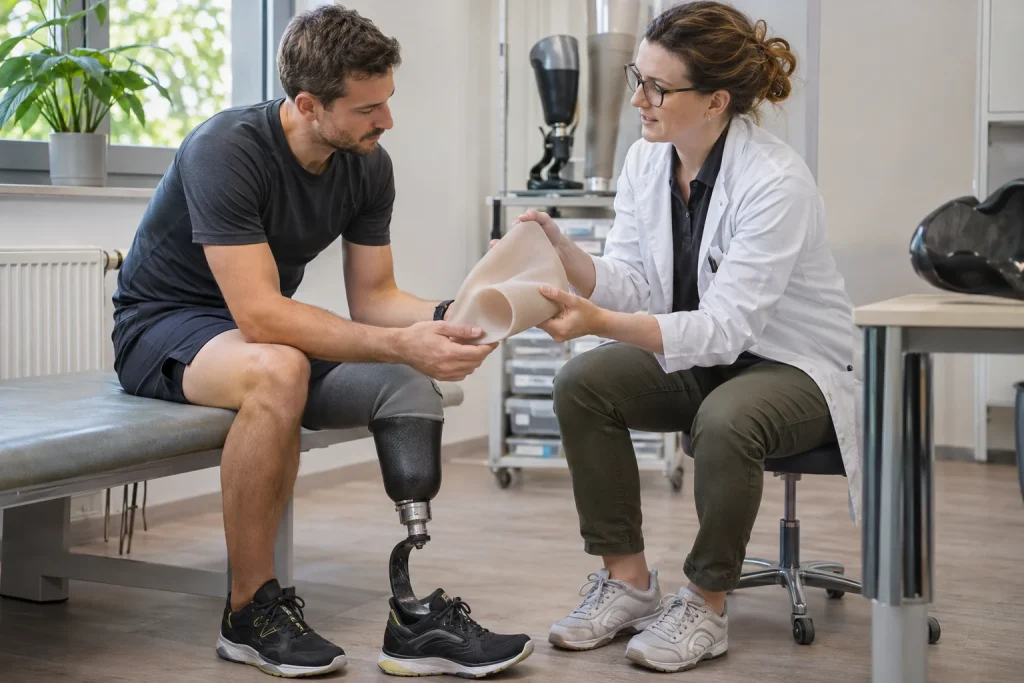
When exercising with a prosthesis, skin is not insignificant wrapping between body and equipment. Pressure, friction, moisture and changing fit can affect how equipment is worn during daily movement and running. Even a seemingly small concern matters if it recurs in the same place or alters normal function.
Appropriate checking does not mean constant worry. A few clear observation points and a known route to help are more useful than guessing after every run. This article offers questions for a skin and equipment monitoring plan developed with your provider; it is not a wound-care protocol or substitute for individual examination. For a fresh surgical wound, follow the treatment instructions given.
Know the starting condition, not only the new symptom
The Leeds Teaching Hospitals guide recommends daily checks for signs including rubbing, pressure points, increased redness, blisters and cracks. Regular observation can help distinguish your usual condition from a new change. Clarify individual frequency and actions with your provider.
Ask more than whether it hurts. Check areas covered by the socket or other components too. If skin is difficult to see, request a usable checking method, such as an appropriately positioned mirror or help from a person you choose. The aim is supporting independence, not increasing dependence.
A new change can be described simply: where it is, when you noticed it, what preceded it and how it changes after use. You need not decide at home whether rubbing, pressure or another cause is responsible. Accurate observation supports professional assessment.
Keep the pre-run check brief and specific
Before leaving, check your skin and equipment according to individual instructions. Is there a new injury, moisture, a crease or an unusual feeling of fit? If a concern arose previously, today’s outing should not rely solely on hoping it will not return.
Follow instructions for putting on equipment and using layers. Appropriate socks, liners and other parts can be equipment-specific. Do not infer the number of layers or solution you need from another athlete’s setup. If your usual method is no longer comfortable, request a check.
Try new running clothes and kit with the whole system too. A trouser seam, attachment or movement caused by a bag may alter comfort. Introducing many new things together makes a concern’s cause harder to understand.
Discuss moisture alongside fit
Sweating during sport may be natural, but it can affect comfort and use at an enclosed interface. The Leeds guide addresses sweating and skin care separately. The solution differs between equipment, so advice for your own system matters.
Ask in which situations and how you may need a break, cleaning or drying. Plan the sporting route to include an appropriate calm place for necessary tasks. A long loop difficult to interrupt is less suitable for a first trial.
Do not choose strong antiperspirants, creams or other skin products at random. Your skin’s condition and compatibility with materials matter too. A solution clarified with your provider or equipment specialist is easier to follow than trying several new products simultaneously.
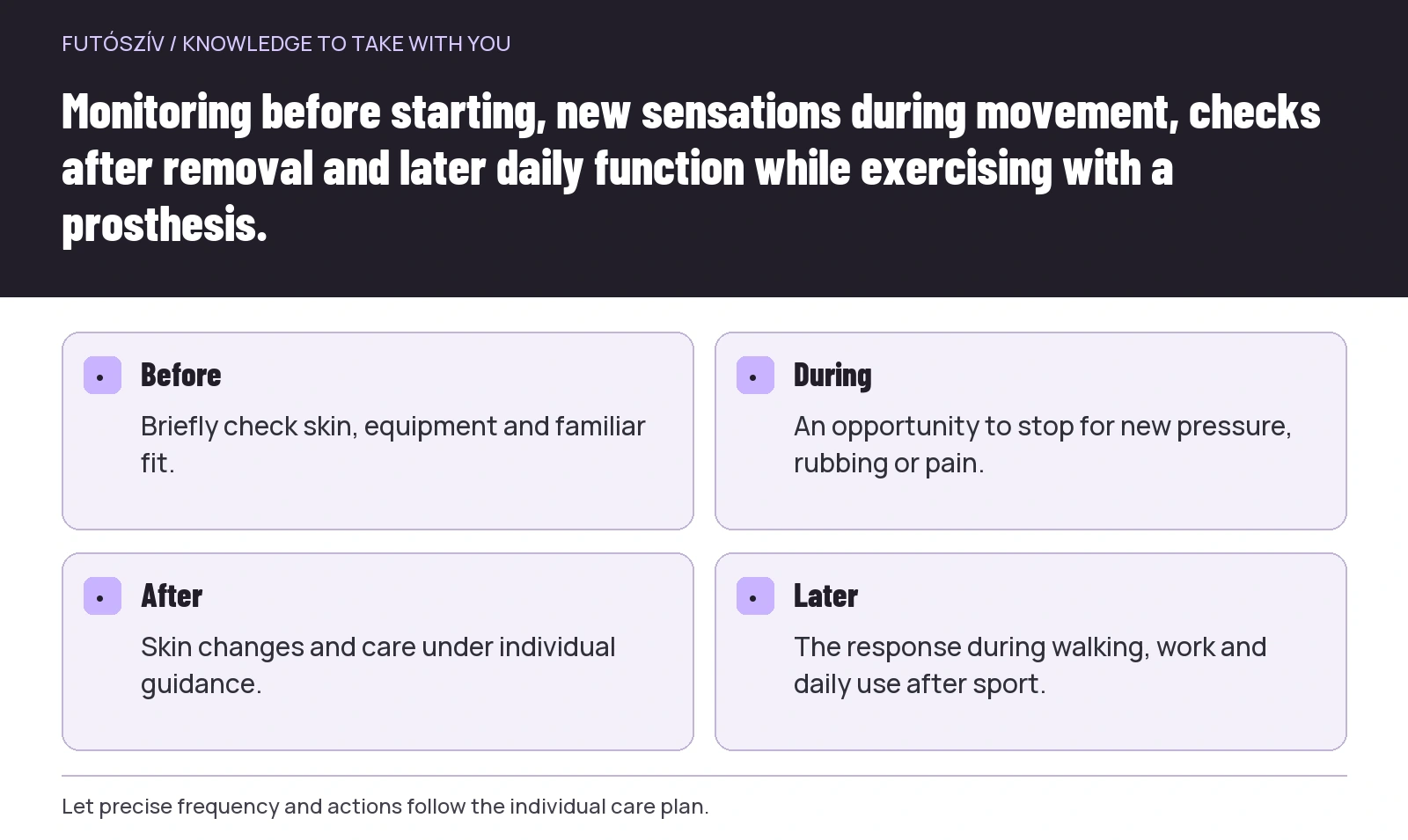 Enlarge diagram
Text version of the illustration
- Before
- Briefly check skin, equipment and familiar fit.
- During
- An opportunity to stop for new pressure, rubbing or pain.
- After
- Skin changes and care under individual guidance.
- Later
- The response during walking, work and daily use after sport.
Cleaning applies to skin and equipment alike
The EnableNSW information emphasises regular hygiene, thorough rinsing and drying, while avoiding prolonged soaking. Wound condition and equipment also shape individual care. Do not scrub hard because you sweated more after sport.
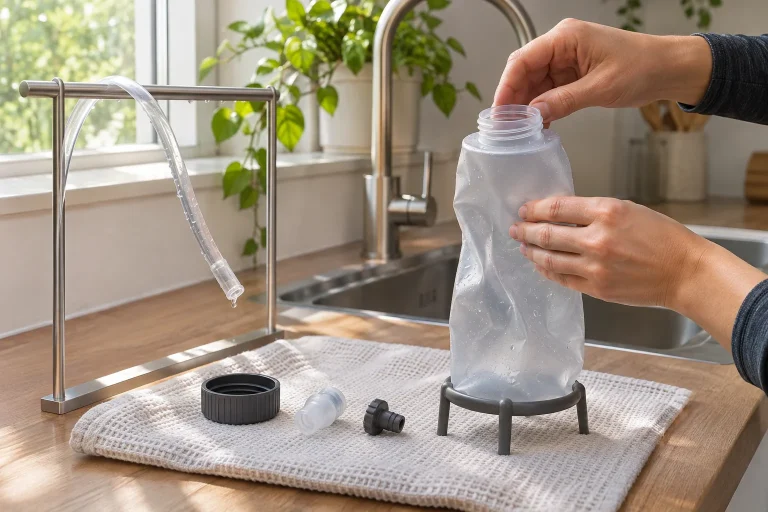
Clean liners, socks, sockets and other parts according to the particular product’s instructions. The same detergent or drying method does not suit every material. If instructions are unclear, ask the maker for a demonstration or written summary.
Do not hurriedly put equipment back on damp skin or inadequately prepared components. Necessary care belongs in the time after sport too. If the schedule repeatedly leaves no room, change the arrangements first rather than omitting the task.
Fit can change over time
The University Hospitals Dorset information also discusses the relationship between residual-limb volume and socket fit. A previously appropriate system’s comfort may change; this does not automatically mean skin needs toughening. Recurring rubbing or redness may require an equipment check too.
Explain if equipment feels looser or tighter, moves or applies different pressure even after your usual fitting routine. These are useful observations. Do not conceal the difference through independently chosen tight securing, padding or mechanical modifications.
If your provider taught an individual volume-management or layering procedure, stay within it. When uncertain, ask for another check. Settings that work for someone else are not universal rules.
Keep the option to stop during the outing
Do not automatically wait until the planned distance ends with a new rubbing, pressing or painful sensation. Choose a route beforehand where you can stop and check according to your own care plan. Making interruption manageable does not indicate inadequate preparation.
Let a running companion know beforehand that a break or early return may be needed. You should not have to explain midway why a seemingly small concern matters. Their role is the help you request, not persuading you to continue.
If the next action remains unclear after checking, another running section should not become a diagnostic trial. Discussion with your provider or prosthetist may be warranted. Enduring pain does not reliably teach skin to adapt to a poorly fitting system.
Later responses matter after the run too
The EnableNSW guidance recommends looking for increased redness, pressure points, irritation, swelling and skin damage when removing a prosthesis. Judge the change’s meaning and further use according to your personal plan. A minute limit read online does not replace it.
Note the demands preceding a change and how it developed later. Naming a recurring difference in the same place or a new sensation can help. You need not take a full photo series every time; agree necessary documentation with your provider.
Skin and equipment monitoring extends to other use during the day. Report if normal walking or work becomes uncomfortable after training. A sports plan is not completely separate from daily prosthesis use.
Not every skin symptom is simple chafing
Rashes, itching, recurring damp areas and blisters can have different causes. Skin, products applied and equipment fit may all matter for assessment. Do not treat every case with the same cream or tape.
If symptoms develop, explain the timing and composition of a new skin product. Opening a blister yourself or aggressive skin treatment may cause further problems. Seek appropriate healthcare advice for a wound or persistent symptom, and do not organise sport around concealing it.
The NHS information recommends contacting the treating team when infection is suspected. With increasing warmth, spreading redness, swelling, discharge or feeling unwell, do not wait to see whether it returns on the next run. Rapid deterioration or serious illness requires urgent care.
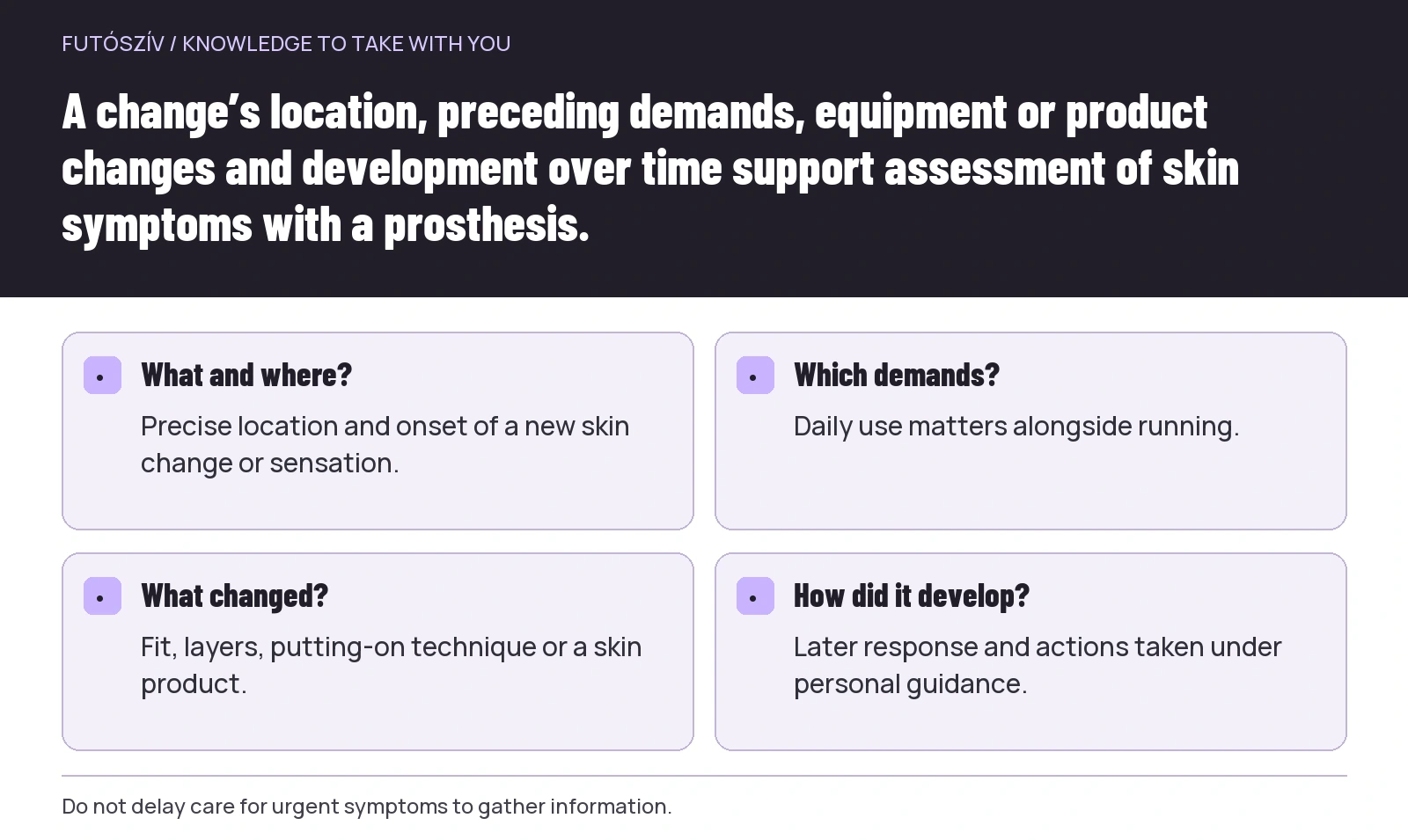 Enlarge diagram
Text version of the illustration
- What and where?
- Precise location and onset of a new skin change or sensation.
- Which demands?
- Daily use matters alongside running.
- What changed?
- Fit, layers, putting-on technique or a skin product.
- How did it develop?
- Later response and actions taken under personal guidance.
With reduced sensation, no symptoms is not a complete check
If you have a known sensory problem, circulatory condition or another relevant health circumstance, ask for tailored skin-checking and use advice. People do not all sense pressure or injury identically. Individual assessment should determine which observations and frequency are needed.
Care of the other limb may matter too. The EnableNSW information discusses this separately, particularly with certain accompanying illnesses. Look beyond the area around the prosthesis if symptoms arise elsewhere during sport or daily travel.
Footwear suited to your condition, skin observation and follow-up may belong throughout the day. A running friend or community group should not assemble these from a diagnosis name. Individual guidance aims to clarify genuinely necessary tasks, not add unnecessary ones.
Gather four pieces of information for review
- What changed in the skin or sensation, and exactly where?
- Which sporting and daily demands preceded it?
- Did fitting, layers, putting-on technique or a product change?
- How did the symptom develop later, and what did you do under your own guidance?
These help the professional see connections. Observation does not replace checking equipment in person or examining skin. If a symptom seems urgent, do not delay care to collect information.
Ask about the next step too: when can equipment be used in that way again, is adjustment needed and whom should you contact if symptoms return? Clear follow-up can reduce repeated guesswork.
Resolve an earlier problem before another trial
When returning after a long break or equipment change, do not begin with your previous longest outing. Start from current condition and the professional plan. Simple surroundings, a shorter task and appropriate monitoring help you understand the new response.
Alongside resolution of earlier skin symptoms, review the cause. Symptoms may return if the same fitting or organisational conditions remain. Reducing activity is not the only answer to every problem; equipment or care arrangements may need changing with professional help.
Consider skin and daily function for the next sporting goal too. An entry or group activity should not make painful use compulsory. Your decision matters even when others are eagerly awaiting your return.
Good checking aims to support a workable sporting life
Regular skin and equipment monitoring need not occupy every thought. It helps when brief to carry out, important changes are noticed and you know whom to contact. Individual plans can also be simplified or clarified occasionally.
With limb loss, equipment comfort and skin condition together shape opportunities for movement. Describing concerns precisely, checking equipment appropriately and obtaining necessary care do not obstruct running. They can provide a foundation for more predictable, manageable outings later.
Sources
- Leeds Teaching Hospitals NHS: Skin management and general care advice for prosthetic users
- EnableNSW: Caring for your residual and intact limb
- University Hospitals Dorset: Care of your residual limb
- NHS: Amputation
How Futószív articles are prepared: our editorial guidelines.