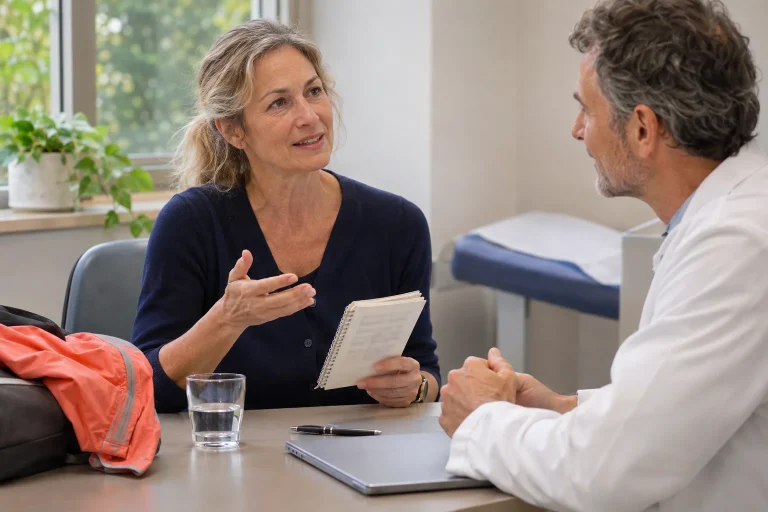
If periods become irregular or stop at a younger age than expected, a runner may easily attribute it to training, work or stress. These deserve review too, but the question should not be closed without assessment. Early menopause and premature ovarian insufficiency can involve long-term follow-up and personal decisions beyond symptoms themselves.
Running can have a place in these circumstances. Sport, however, is neither a diagnostic tool nor a substitute for necessary treatment. The following steps help you understand terminology, know what to tell your doctor and include sporting goals within your overall healthcare plan.
Early menopause and POI: why does the name matter?
The NHS discusses menopause before age 45 as early, with premature ovarian-function terminology used below 40. The Office on Women’s Health calls menopause between 40 and 44 early. Professional guidelines use the abbreviation POI for premature ovarian insufficiency developing before 40.
Names matter because POI does not always mean ovarian function has ceased continuously and permanently. Discuss diagnosis, clarification of the cause and implications with an appropriate professional. Do not diagnose yourself from an age boundary and one missed period.
If a report or previous conversation uses another term, ask exactly what it means. A clear explanation can also help direct questions about fertility, contraception and long-term health to the right place.
Do not explain missed periods on your own
Irregular or absent periods can have several causes. Even when running, it is important to consider possible pregnancy, energy availability, other hormonal conditions and medication. Good endurance does not exclude a health issue, and high training volume does not establish the cause on its own.
The international POI guideline considers clinical history alongside appropriate laboratory assessment. Choosing, timing and interpreting tests are healthcare tasks. A home hormone package or one app estimate should not become a diagnosis.
Mention hormonal contraception or other treatment because it may affect bleeding patterns and assessment. Do not stop it independently for a test. Ask for specific instructions about what is needed to clarify the situation.
What should you bring to the first consultation?
Bleeding history, symptom onset, known family history and a list of previous operations or treatments can help. Mention more than hot flushes: sleep, mood, vaginal symptoms, wellbeing and changes in daily function may matter too. You do not need to confidently link every symptom to the same cause.
As a runner, describe weekly workload, recent changes, eating difficulties and previous bone-stress injuries or fractures. These contribute to the whole picture, rather than prove you caused the condition. Discussion aims at clarification and appropriate care, not blame.
Write down personal questions too: whether you want a child, need contraception, what worries you most and what sport you want long term. Important decisions may take several appointments; everything need not be settled at the first conversation.
 Enlarge diagram
Text version of the illustration
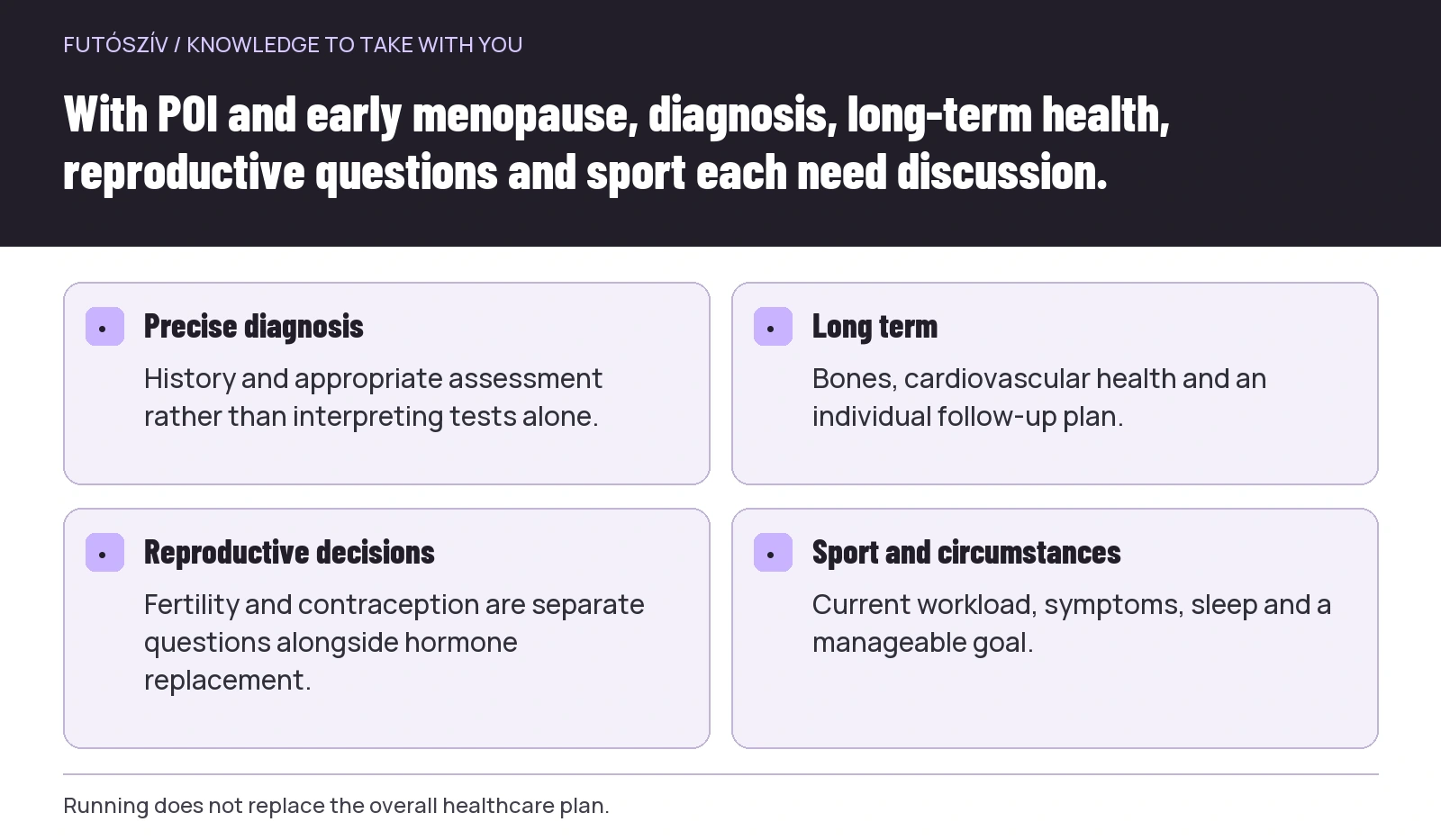
- Precise diagnosis
- History and appropriate assessment rather than interpreting tests alone.
- Long term
- Bones, cardiovascular health and an individual follow-up plan.
- Reproductive decisions
- Fertility and contraception are separate questions alongside hormone replacement.
- Sport and circumstances
- Current workload, symptoms, sleep and a manageable goal.
Symptom treatment and long-term health are separate tasks
The ESHRE guideline summary highlights bone, cardiovascular, sexual and mental health alongside fertility. POI care is therefore not only about how bothersome hot flushes are. Individual follow-up may matter even with few or mild symptoms.
Ask which assessments and reviews are appropriate given your history. Running results do not show the full state of bone or cardiovascular health. A good pace is not a reason to conclude that follow-up is unnecessary.
The long-term plan need not feel like a frightening prohibited list. Its purpose is appropriate recognition and management of risks and support for a workable lifestyle. Ask for a clear explanation of why a step is recommended and what it is expected to achieve.
Hormonal treatment requires an individual decision
The NICE guideline recommends discussing hormone-replacement options for POI where there are no contraindications and adapting care to individual circumstances. General statements about older menopausal populations cannot be applied unchanged to every younger person affected. Expected benefits and risks need personal assessment.
Describe your medical history, other medication and preferences. Clarify the preparation, route, duration and monitoring with your clinician. Running does not remove the need for indicated treatment, and a good training period is not a reason to stop it yourself.
If you fear side effects or find an option difficult to use, say so openly. The issue is not whether you are cooperative, but creating an understandable, workable plan. You can request another explanation, a written summary and a follow-up discussion.
Contraception is not the same question as hormone replacement
The international guideline emphasises that hormone replacement is not contraception. In some circumstances with POI, ovarian activity and the possibility of conception can remain. If you do not want pregnancy, state this separately; if you do, a separate professional discussion of options is appropriate too.
Occasional or absent bleeding is not a basis for home contraceptive decisions. Avoiding assumptions matters for the running plan too. Treatment and pregnancy prevention can relate without being interchangeable.
Fertility information can be emotionally demanding. You can request time, involvement of a partner or another supportive person, and professional emotional support. Sport does not have to quickly conceal or turn a difficult experience into a positive story.
Include more than running in the activity plan
The POI guideline mentions weight-bearing activity within a lifestyle supporting bone health; it considers some resistance-training benefits from other populations while also identifying a lack of direct evidence in POI. Retain that limitation: there is no single running programme established for everyone affected.
An individual plan can include strength, balance and everyday movement alongside running. Amounts and technique depend on current condition, findings and sporting history. With known bone problems or pain, do not try to protect bone through an independent jumping programme.
If you exercised before diagnosis, do not assume every previous activity must immediately stop. Ask precisely what can continue, what needs changing and which symptoms should prompt further discussion. Specific guidance may preserve more movement opportunities than vague general caution.
 Enlarge diagram
Text version of the illustration
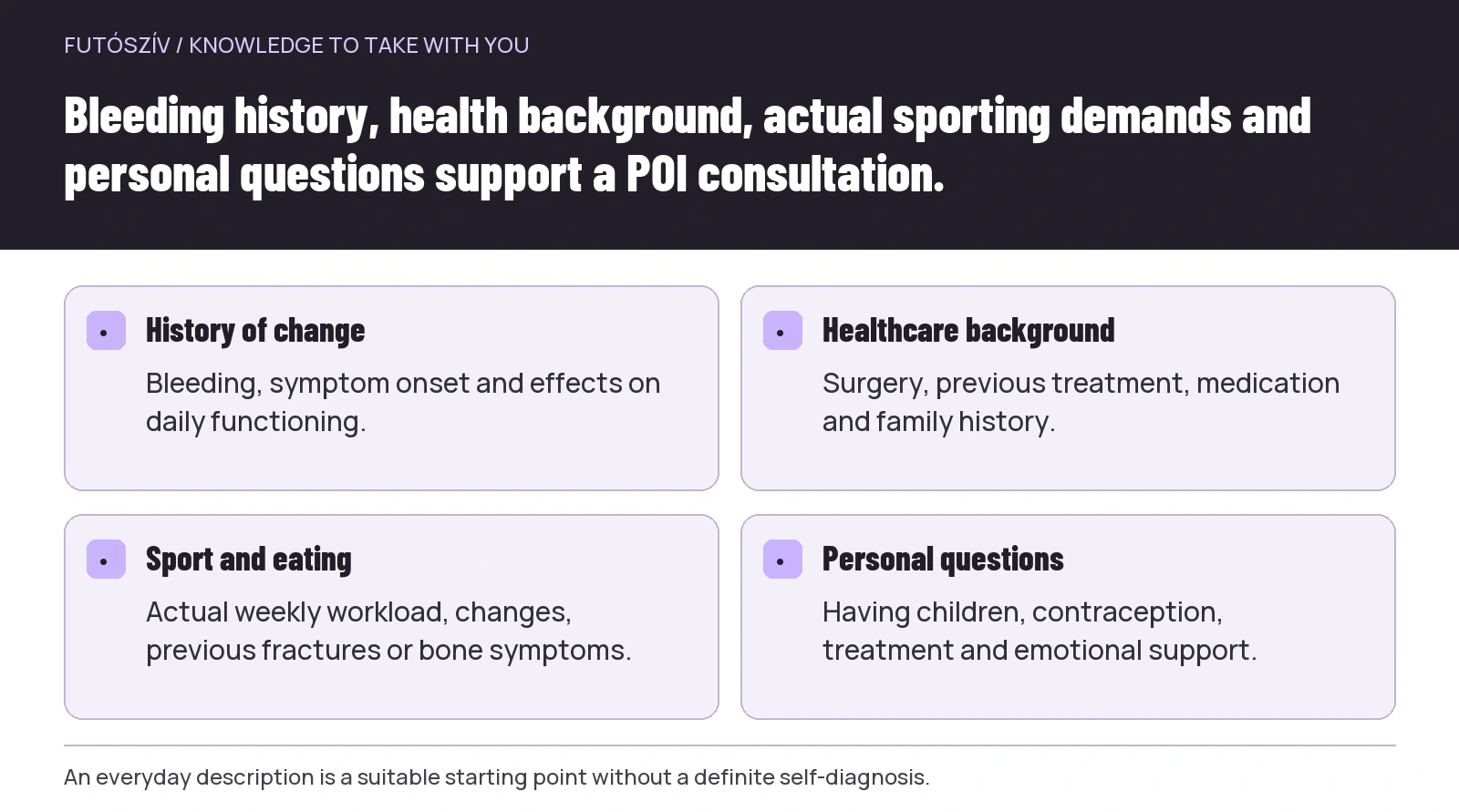
- History of change
- Bleeding, symptom onset and effects on daily functioning.
- Healthcare background
- Surgery, previous treatment, medication and family history.
- Sport and eating
- Actual weekly workload, changes, previous fractures or bone symptoms.
- Personal questions
- Having children, contraception, treatment and emotional support.
Sleep and wellbeing also shape daily workload
If night-time symptoms fragment sleep, morning training can change. Even when feeling well, start from current preparation rather than trying to prove something against the diagnosis. You do not need a particularly difficult race to demonstrate the condition does not define you.
Choose shorter or easier options in advance and retain the possibility of dropping a session entirely. Do not automatically add missed training to the following day’s busy schedule. Monitoring sport also includes how you function for the rest of the day.
Support around you matters for regularity too. Share necessary practical information with a partner, family or running friend: changing times, easier routes or more rest. You do not owe everyone a detailed medical explanation.
Do not build the nutrition plan from self-blame
Reviewing daily food, energy availability and nutrients supporting bone may matter, but diagnosis is not punishment for an earlier dietary decision. If intake is uncertain, an appropriate professional can assess the individual situation. The same supplement or quantity is not necessary for everyone.
Do not combine high training volume and substantial food restriction into one supposed health project. The aim is sustainable functioning. Eating difficulties, constant pressure to lose weight or compulsive feelings around sport are information worth seeking help with.
Tell your clinician which products and dietary changes you use. An advertised natural solution is not automatically individualised or necessary. Even with an athlete’s familiarity with your body, a new situation can need professional support.
Allow room for the emotional impact too
The NICE guideline also highlights psychological support for people experiencing significant difficulty because of early menopause. Diagnosis can affect views of the future, relationships with the body and personal relationships. These effects need not feel proportional to the number of symptoms or immediately resolvable.
Running may provide a familiar anchor, but your connection with it may change for a while. Discuss what you miss, what worries you and what would help daily life. Support need not concern only restoring performance.
If community stories feel oppressive, choose less comparison and more personal connection. Look for an environment that does not trivialise health questions or demand continual positivity. Your own decisions and pace have a place.
Questions to check a long-term plan
- Exactly which diagnosis was made, and are any questions unresolved?
- Which individual treatment and monitoring are needed, and who coordinates them?
- Have fertility and contraception been discussed separately?
- Which bone and cardiovascular follow-up is recommended given my history?
- Which running and strength workloads are manageable now, and what should I observe?
- How can I access help if physical or emotional symptoms change?
Sport with early menopause or POI has no single compulsory story. Understanding the diagnosis accurately, individual care and manageable movement can together provide longer-term support. Running can be part of this healthcare plan without having to answer every question alone.
Sources
- ESHRE, ASRM, CRE-WHiRL and IMS: Evidence-based guideline – Premature Ovarian Insufficiency, 2024/2025
- NHS: Early or premature menopause
- NICE NG23: Menopause – identification and management
- U.S. Office on Women’s Health: Early or premature menopause
- ESHRE: Guideline on premature ovarian insufficiency
How Futószív articles are prepared: our editorial guidelines.