After night sweats, a running morning can feel trapped between two poor choices: attempting the same workout as after a peaceful night, or abandoning activity completely because sleep has become unpredictable. The real question is understanding the symptom and your daily capacity. Changing clothes at dawn, difficulty falling asleep again and daytime fatigue are more than inconveniences when they regularly affect your life.
Around menopause, night-time hot flushes may disrupt sleep, but not every case of night sweating can automatically be explained this way. Separate symptom assessment, comfort and running plans. New nightwear or a shorter workout may help one part of the problem without necessarily addressing the cause of persistent symptoms.
What counts as night sweats?
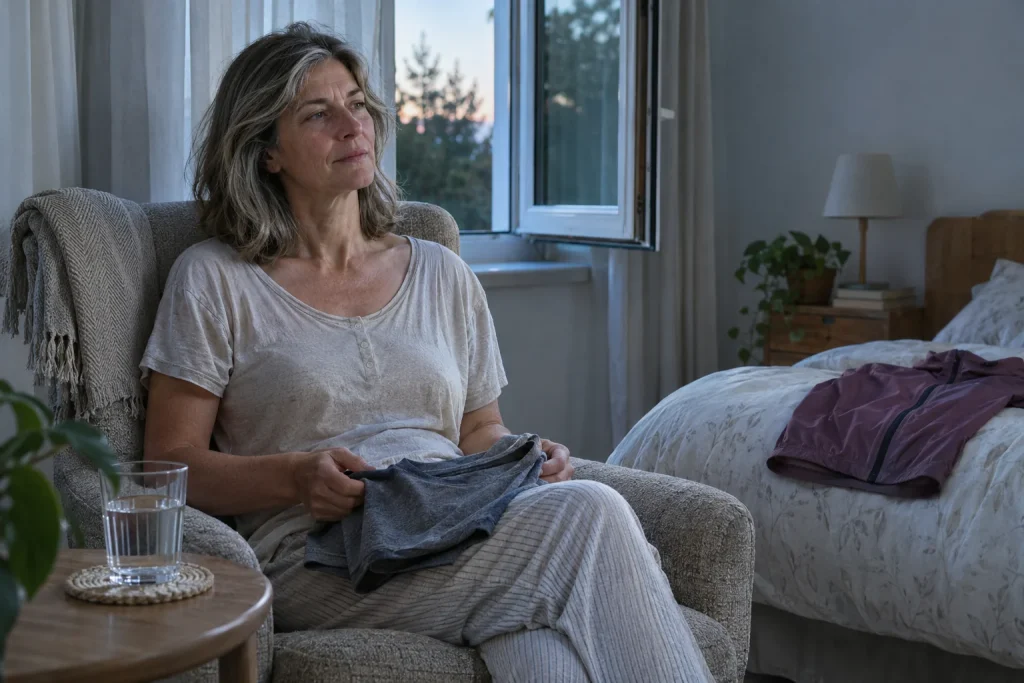
The NHS information describes substantial sweating that can soak nightwear and bedding even in a cool sleeping environment. An overly warm duvet and a recurring, intense symptom are not necessarily the same situation. Precise description supports discussion, but you do not have to fit a strict label to seek medical advice for a troubling symptom.
Describe what wakes you: heat, sweating, palpitations, noise or another symptom. Notice what happens afterwards too. Do you quickly fall asleep again, remain awake for a long time or struggle to settle because you fear another waking? These are separate questions, and one change may not answer all of them.
Daytime hot flushes, menstrual changes, new medication and other symptoms can also be important information. Do not use them to establish a definite cause yourself. You can describe a suspected connection without deciding the assessment’s outcome in advance.
Sleep can become difficult at several points
The National Institute on Aging discusses sleep problems around menopause as involving several factors. Alongside hot flushes, mood symptoms, another sleep disorder or life changes can contribute. Attributing every poor night solely to feeling hot can overlook another issue needing separate assessment.
Bring more than the fact that you sweat to an appointment. Explain your opportunities for sleep, daytime alertness and any snoring, suspected pauses in breathing or persistent emotional difficulty. Night-time details and daytime effects together provide a picture.
This matters for running too. The same planned workout happens in different circumstances after one brief waking than after hours unable to return to sleep. Leave room for this difference in the daily routine rather than starting every morning with identical expectations.
Running is not a guaranteed treatment for hot flushes
In a MsFLASH randomised trial twelve weeks of moderate-intensity aerobic exercise did not meaningfully reduce the vasomotor symptoms studied compared with usual activity, while possible small improvements appeared in some sleep and mood measures. The study concerned sedentary participants in late perimenopause or after menopause.
This does not mean movement is useless or cannot benefit your wellbeing. It does mean training should not become a guaranteed symptom-treatment promise. Persistent symptoms do not establish that you are running too little or using the wrong method.
Name the movement’s purpose separately: enjoyment, endurance, social connection or a more pleasant daily rhythm. Seeking healthcare for the symptom may be appropriate alongside it. You do not have to complete every lifestyle suggestion perfectly before asking for help.
 Enlarge diagram
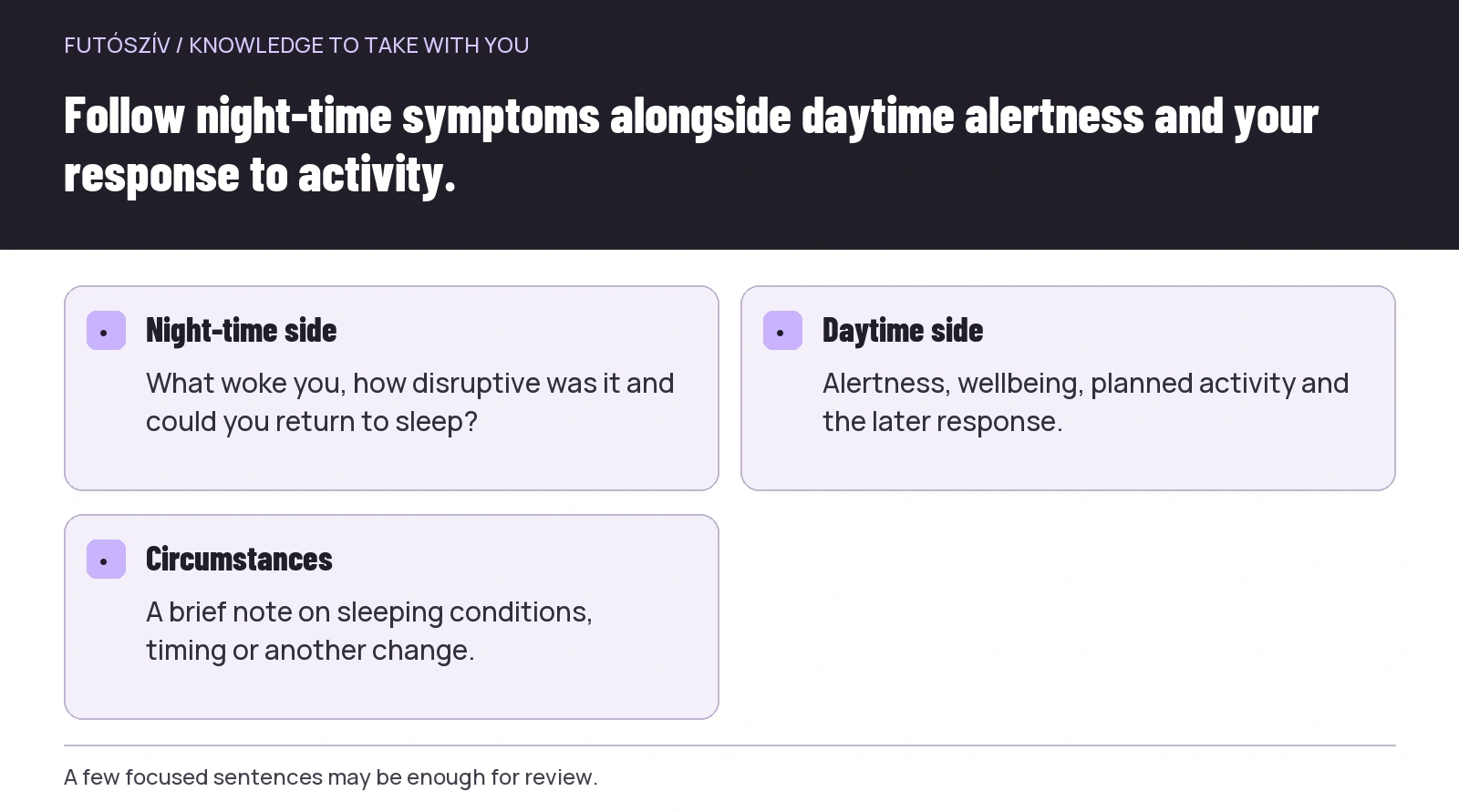
Text version of the illustration
- Night-time side
- What woke you, how disruptive was it and could you return to sleep?
- Daytime side
- Alertness, wellbeing, planned activity and the later response.
- Circumstances
- A brief note on sleeping conditions, timing or another change.
Keep a short, two-sided record
One side covers the night: which symptom woke you, how disruptive it was and how returning to sleep went. The other covers the day: alertness, wellbeing, running or other movement and your condition afterwards. A few sentences can help more than monitoring the entire night in detail.
Record changes such as bedroom temperature or running time. You do not need to alter several factors every day. One better night does not prove a cause-and-effect relationship either; the aim is to recognise a pattern that can be discussed.
Do not let the diary become another performance task. Simplify if continual measurement increases tension. Symptoms and daily effects can be described without a perfect dataset or a watch displaying every sleep stage.
Arrange comfort in advance
The NIA includes a cooler, comfortable sleeping environment and manageable evening habits among possible supports. In practice, prepare comfortable nightwear that is easy to change and bedding whose handling does not require lengthy night-time arrangements.
The aim is not to optimise every bedroom detail with new products. First identify what actually disturbs you: an overly warm duvet, difficulty ventilating or changing clothes fully waking you up. A simple solution may reduce the night-time task.
If you share a sleeping space, discuss different temperature preferences. Separate covers or another practical arrangement may be more comfortable than continual negotiation. Comfort does not mean abandoning assessment of recurring symptoms; both tasks can proceed together.
Keep the morning session adaptable
Start with alertness and general condition. If you are particularly sleepy, do not treat driving to a training venue as the solution. New illness or another concerning symptom requires separate assessment rather than testing during exercise.
If movement is appropriate in that condition, make the session shorter, easier and simpler if needed. Choose a nearby route that can be cut short. Intense training is not compulsory merely because it was previously scheduled. Changes should affect the rest of the week as well as the morning plan.
Do not automatically compress missed training into the next day. If symptoms recur over several nights, review expectations for the entire week. Recovery opportunities do not begin only at the end of a session; they develop across successive days.
Do not try to choose treatment alone
The NICE NG23 guideline also recommends considering menopause-specific cognitive behavioural therapy for sleep difficulties associated with menopausal vasomotor symptoms. The appropriate option depends on individual circumstances, history and preferences. Mentioning a psychological approach does not mean the sweating is imaginary.
Discuss hormonal and other treatment questions within your full healthcare context too. Explain sporting plans, sleep and the effect on daily functioning. Do not substitute a running friend’s medication or an advertised product for an individual decision.
If you already have treatment, review changes with your clinician. Do not stop it independently because a few nights improve, or increase training to prove something. Symptom improvement and adapting a sports plan can relate, but are different decisions.
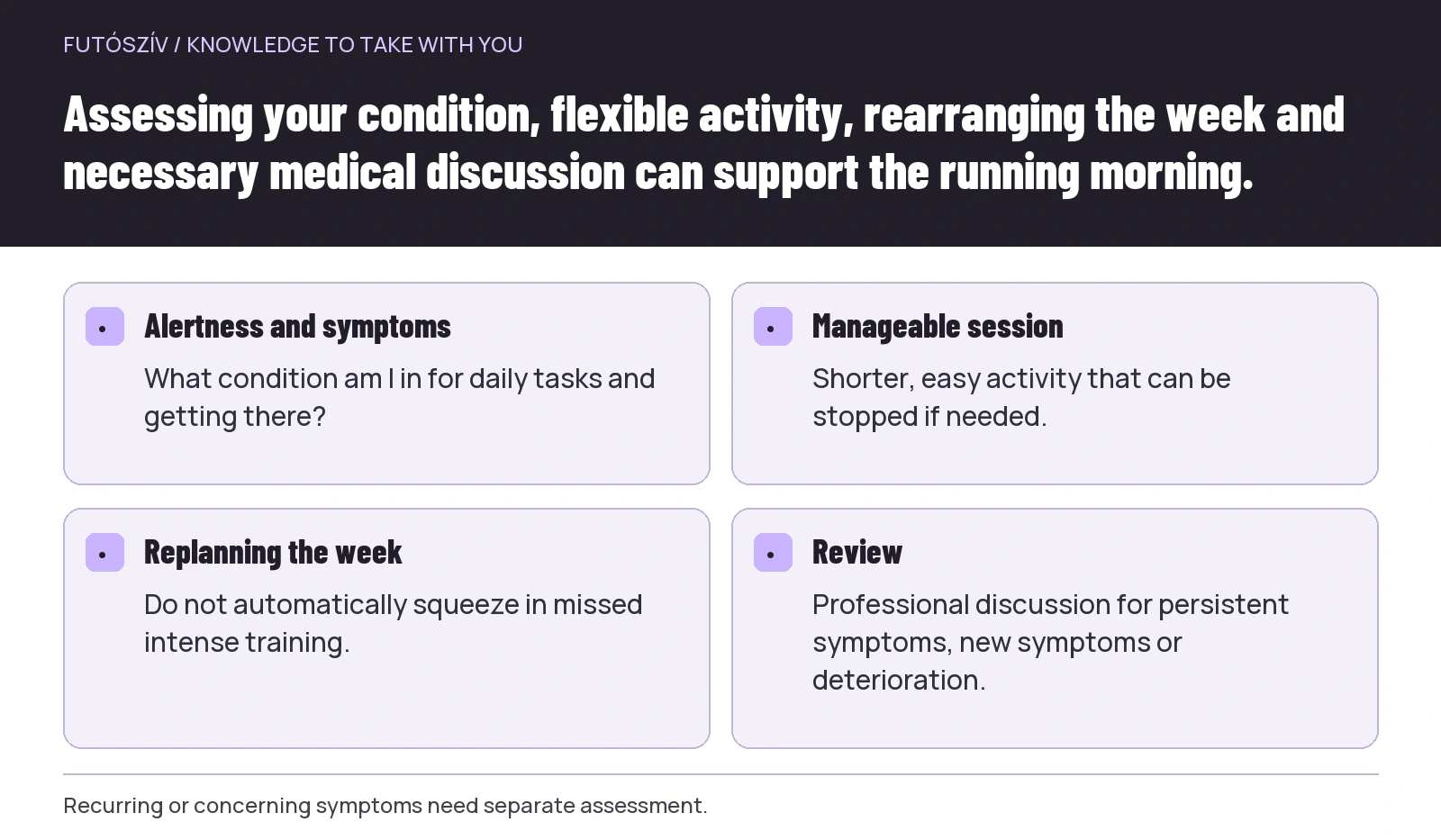 Enlarge diagram
Text version of the illustration
- Alertness and symptoms
- What condition am I in for daily tasks and getting there?
- Manageable session
- Shorter, easy activity that can be stopped if needed.
- Replanning the week
- Do not automatically squeeze in missed intense training.
- Review
- Professional discussion for persistent symptoms, new symptoms or deterioration.
Do not turn the evening routine into another strict exam
More predictable bedtimes and comfortable surroundings can help without guaranteeing a perfect night. Symptoms despite these measures are not proof that you followed rules badly. Instead of rigid self-monitoring, notice what reduces the burden at the end of the day.
Observe running time too. If settling is harder after a late intense session, try another arrangement. Without such a pattern, one experience does not need to become a universal prohibition. Review personal sleep difficulties with a professional if needed.
Alcohol, caffeine or other habits can also be discussed specifically, but do not build a long prohibited list in one step. Sustainable changes and appropriate care are more useful than blaming something new after every poor night.
When should you avoid automatically attributing it to menopause?
The NHS recommends medical advice for regular or concerning night sweats, especially with fever, cough, diarrhoea or unexplained weight loss. These do not establish a definite diagnosis at home, but should not be treated solely as clothing or training questions.
New medication or another physical change is important background too. Do not stop medication on your own; bring the list to the consultation. Report separately if symptoms change character or your general condition worsens, even if they were previously discussed as menopausal symptoms.
Knowing yourself as an athlete helps describe changes accurately, but does not replace assessment. Do not wait for a striking decline in training performance. Sleep difficulty disrupting daily functioning is itself a valid reason for discussion.
What should you bring to a review?
- Which night-time symptom wakes you, how often and how disruptive is it?
- What happens with returning to sleep and daytime alertness?
- Are there other physical symptoms, menstrual changes or new medication?
- What activity do you do, and how have you adjusted the workload?
- Which comfort changes have you tried, and what happened?
- Which treatment and follow-up options are worth considering?
Ask for an understandable next step: when symptoms will be reviewed, whom to contact if they worsen and what to observe meanwhile. A short diary can help, but should not become a prerequisite. You can seek help even when all you can say is that you have slept badly for weeks and mornings have become difficult.
A new measure for the running morning
Completing the workout is not necessarily the measure of a successful day. An appropriate reduction, an accessible review or avoiding exhaustion for the rest of the day can be an outcome too. As symptoms settle, training can gradually be adapted again according to current condition.
Planning running with night sweats means addressing several tasks together: symptom assessment, comfort, sleep support and a flexible sporting plan. You do not have to expect everything from one device or more kilometres. An individual solution becomes useful when it noticeably works in life beyond the morning run too.
Sources
- NHS: Night sweats
- NIA: Sleep Problems and Menopause – What Can I Do?
- NICE NG23: Menopause – recommendations
- Sternfeld and colleagues: Efficacy of exercise for menopausal symptoms, randomized controlled trial, 2014
How Futószív articles are prepared: our editorial guidelines.