An egg dish can be a straightforward choice on many running weekdays if it fits your diet. A few ingredients can produce several meals, but brief cooking time does not remove necessary preparation or thorough cooking. In a good routine, vegetables, bread or another accompaniment and serving equipment are ready when eggs enter the pan. You then need not search for another ingredient during the stage requiring most attention.
This guide gives food-preparation ideas for adult recreational runners. It prescribes no daily egg count, personal protein portion or compulsory post-run menu. Adapt meals to your needs, diet and exercise demands. With an allergy, illness or prescribed diet, check eggs and other ingredients individually. These are kitchen formats, not recipes verified by our own sports-performance study.
Planning a running week need not mean storing cooked meals for days
For egg dishes, build on ingredients that can be prepared ahead and fresh cooking. Shopping, appropriately handled vegetables, familiar seasoning and ready equipment already remove much evening uncertainty. You still cook the egg dish appropriately for that meal. More predictable weekdays do not require manufacturing days of finished omelettes.
The Nébih information on egg storage and use recommends avoiding egg-dish leftovers where possible. If storing remaining food is unavoidable, it describes rapid cooling, refrigeration and thorough reheating before eating. A practical routine should therefore begin with preparing an appropriate quantity fresh. Cooked food should not remain on the counter while you decide later what to do with it.
Distinguish three states of readiness when planning. Purchased ingredients are one, safely prepared components another and ready-to-eat food the third. A box of appropriately prepared vegetables does not yet mean a finished egg dish. The distinction supports realistic timing and prevents accidentally treating a half-completed process as immediately edible food.
Egg storage and kitchen handling
Do not wash eggs before storage. Nébih explains the shell’s natural protective layer and maintaining refrigeration of already chilled eggs until use. Shells should not contact other foods. Original cartons and identifiable markings support household clarity too: you know which supply is in use and retain package information.
For pan cooking, prepare only the quantity needed and keep the rest appropriately stored. Do not keep a large bowl of beaten raw eggs intended for several future meals. Cracking belongs to preparation of the specific dish. Crack eggs individually into a separate small container before adding them to the food. Shell fragments and contaminated utensils still require attention; a small bowl does not remove cleanliness needs.
Keep raw-egg containers separate from plates for cooked food. Do not return the finished dish to an unwashed bowl used for raw mixture. Wash hands appropriately after discarding shells and before touching other ingredients too. With vegetables and bread ready, you need not handle shared packages with contaminated hands after the egg stage. Sequence can reduce kitchen mistakes.
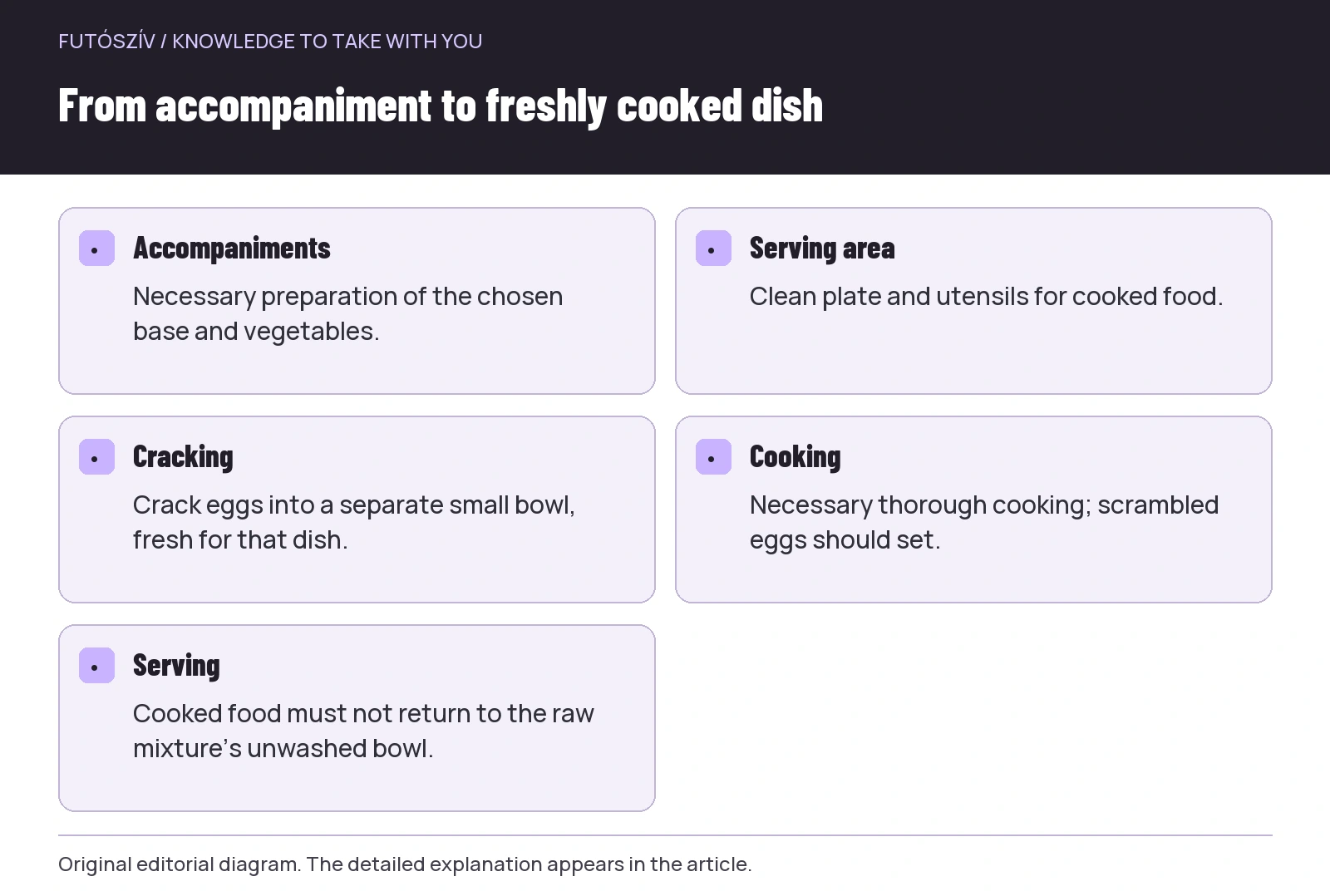 Enlarge diagram
Text version of the diagram
- Accompaniments
- Necessary preparation of the chosen base and vegetables.
- Serving area
- Clean plate and utensils for cooked food.
- Cracking
- Crack eggs into a separate small bowl, fresh for that dish.
- Cooking
- Necessary thorough cooking; scrambled eggs should set.
- Serving
- Cooked food must not return to the raw mixture’s unwashed bowl.
Accompaniments first, eggs afterwards
Timing often creates rushing around egg dishes. A finished omelette waits while salad needs washing, or scrambled eggs remain in the pan too long while you search for bread. Choose a simple order: appropriately handled vegetables and the accompaniment accessible, serving area ready, then begin the eggs. Start longer-cooking sides earlier according to the recipe and safe workflow.
Do not force the same accompaniment into every version. Some evenings, appropriate bread and separate vegetables make serving simple; another day, a different base fitting your diet completes the dish. Remaining space beside eggs does not determine quantity. Consider the whole meal and your needs. Arranging serving around freshly cooked eggs is a workflow, not a rigid plate ratio.
| Task | When should it be ready? | Why does it help? |
|---|---|---|
| Preparing necessary accompaniment. | Timed to the egg stage, preferably before it. | The finished dish does not wait for this. |
| Appropriate vegetable preparation. | Before raw-egg work, with clean utensils. | Operations remain separate. |
| Plate and serving utensil. | Before the pan stage begins. | Cooked food reaches a clean place. |
| Cracking and cooking eggs. | Fresh for that meal. | You can focus on thorough cooking. |
Scrambled eggs: few elements and a clear sequence
Scrambled eggs remain simple when ingredient numbers and preparation are understandable. Decide beforehand what goes into the pan and what stays separate on the plate. Do not randomly begin longer-preparation vegetables together with eggs. Different elements may require different operations to reach appropriate doneness. Describe this in your recipe, not merely its ingredients.
The Nébih advice for egg dishes states that scrambled eggs should be cooked until set. Wash egg-contact containers and utensils before preparing other food. This workflow belongs to the brief dish. Prioritise appropriate doneness over a texture called silky but left raw, and do not judge safety from an attractive photograph.
Season with flavours and suitable additions you enjoy and tolerate. Stronger flavours can come separately to the table. A shared dish remains simple while serving can vary individually. If allergen-free preparation is needed, establish its conditions from cooking’s start; removing an ingredient from the finished surface does not automatically resolve allergens.
Vegetable omelette: ingredient order matters
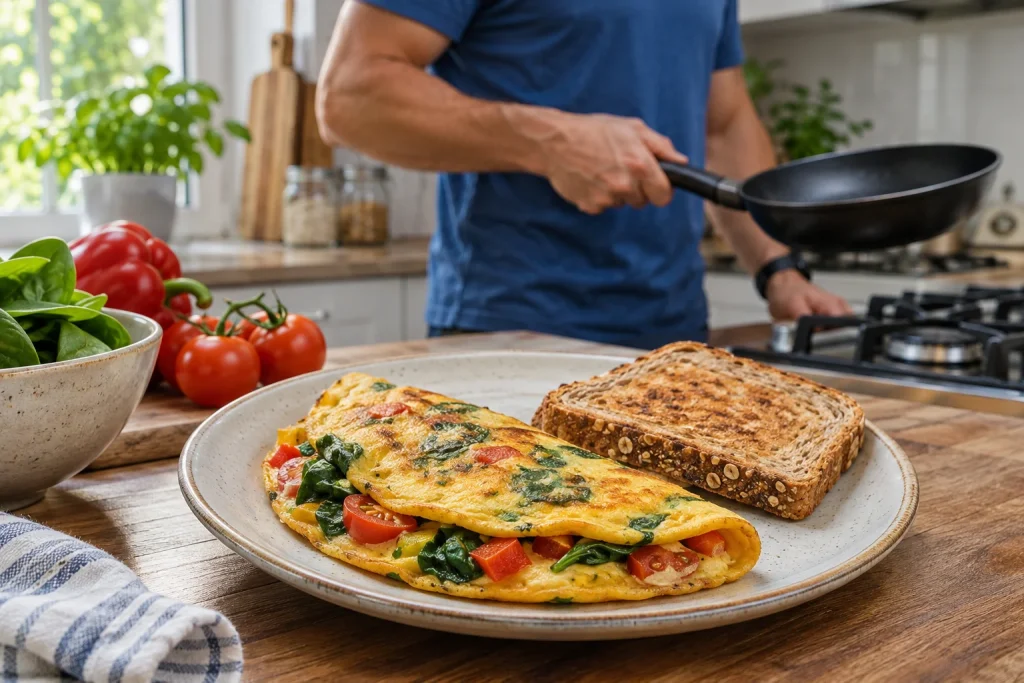
The NHS vegetable omelette recipe begins by preparing vegetables before adding eggs. Where needed, it also describes finishing under a grill to set appropriately. This is a family meal idea, not personal portions for runners. The useful lesson is sequence: handle slower-cooking elements separately rather than waiting for them at the expense of egg texture.
Put equipment into an oven or under a grill only if its manufacturer permits it. A pan handle’s or coating’s heat tolerance cannot be guessed from appearance. If a recipe needs a finishing method for which you lack suitable equipment, choose another appropriately cookable version. A quick dinner does not justify unintended use of an unfamiliar vessel. Match equipment and recipe during planning.
Too much wet filling may make your recipe harder to execute. Begin with simpler composition, then adjust towards desired texture on later occasions. This is kitchen refinement, not reducing required cooking. Separately served vegetables are as valid as putting every ingredient into the omelette. Everything need not be solved in one pan if doing so makes preparation more complex and uncertain.
A pan-cooked dish with a separate accompaniment
A third format plates the cooked egg component separately beside an appropriate accompaniment. The main task is coordinating two sequences. The side should not cool for an uncertain period, nor should cooked eggs wait long for everything else. Choose a sequence allowing safe, fresh serving in your kitchen. Fewer pans do not themselves matter more than appropriate cooking.
For more than one person, consider pan size and actual portions beforehand. An overcrowded pan behaves differently from a recipe’s smaller quantity. Do not automatically multiply or divide an old short cooking time by the number of people. Several successive fresh portions or another format may be simpler. Required doneness remains fundamental in every portion.
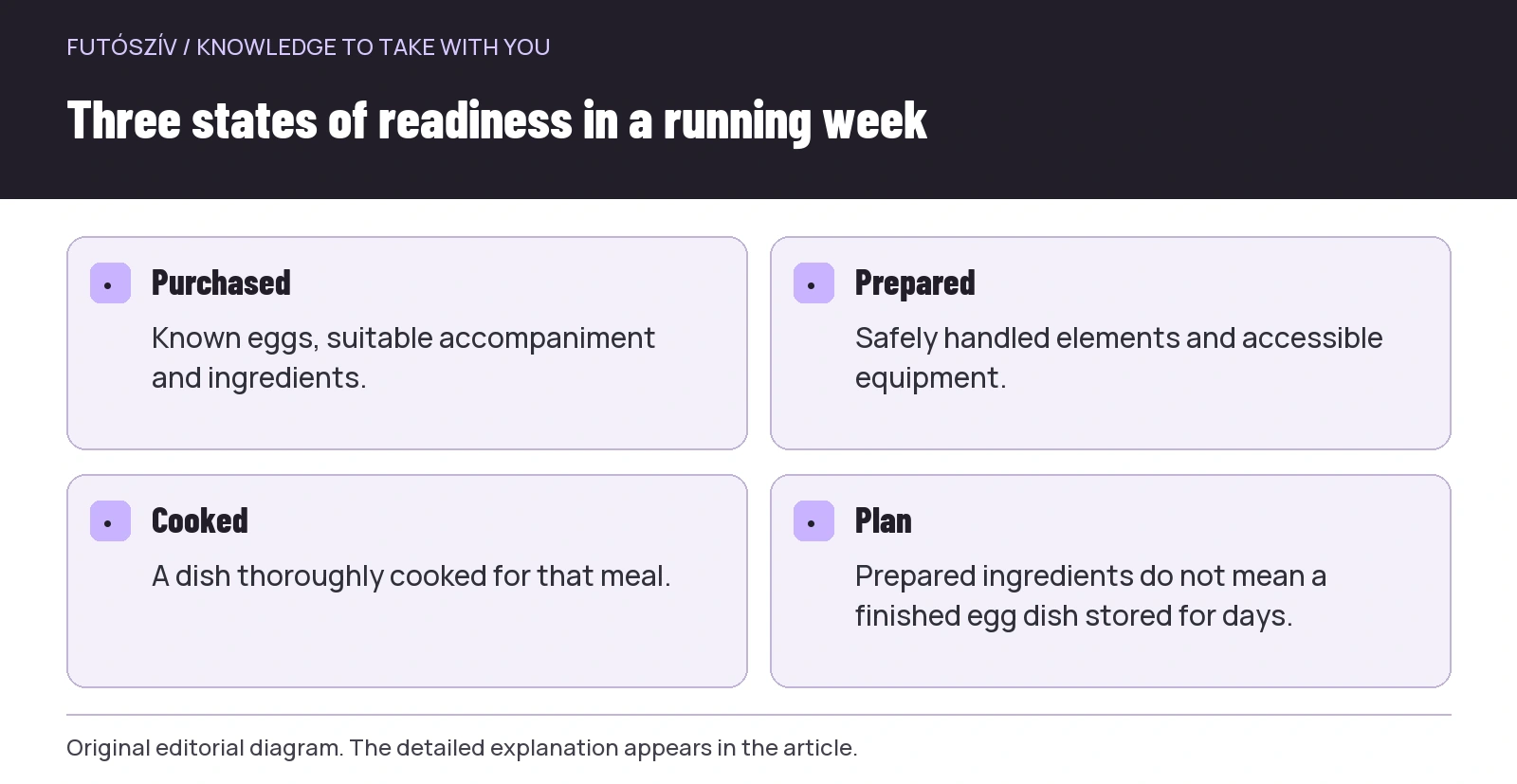 Enlarge diagram
Text version of the diagram
- Purchased
- Known eggs, suitable accompaniment and ingredients.
- Prepared
- Safely handled elements and accessible equipment.
- Cooked
- A dish thoroughly cooked for that meal.
- Plan
- Prepared ingredients do not mean a finished egg dish stored for days.
What if some remains?
Decide leftover handling at the end of the meal and follow food-safety advice appropriate to the dish. Do not leave egg food in the pan until the next run. In a fresh-cooking plan, adjust portions next time if leftovers recur. This may be more precise than accumulating ever more uncertainly stored dishes in the fridge.
Later reheating is not a general repair for earlier improper storage. If history or condition is uncertain, do not make it the next dinner. Nor should identical assumptions automatically apply to food left after serving and a prepared element appropriately separated beforehand. Your household system should clarify what was made when, its conditions and possible use.
Three evening situations, three different decisions
If arriving home alone with little time, a familiar fresh format and planned accompaniment may be achievable. Make equipment and ingredients accessible before cooking. If family members eat at different times, do not leave one large cooked egg dish waiting indefinitely. Fresh cooking with shared prepared accompaniments may be more appropriate, according to individual conditions.
If time is insufficient for every step of a vegetable dish, simplify the recipe or choose another suitable meal. Shortening may affect ingredient numbers, chopping work or serving complexity, not required cooking. Learn a new recipe on an occasion allowing calm exploration of equipment and sequence. Every late dinner need not include practising a new technique.
Make sequence legible on your recipe sheet
For your favourite egg dish, record accompaniment preparation, vegetable operations, a clean serving area and cooking the eggs. The sheet should be more than an ingredients list. Mark which equipment touches raw egg and when a clean alternative is needed. A short sheet can reduce repeated evening rushing because the next step is known.
A successful egg dinner is adaptable, appropriately cooked and easy to serve. Preparing ingredients, equipment and sequence can offer genuine help in running-week planning. Personal quantities and the whole meal’s composition remain separate questions. If matching daily eating is uncertain, seek individual dietetic help; kitchen routine supports implementing that suitable meal in everyday life.
Sources and further reading
- Nébih: How should we store eggs?
- Nébih: Food-safety advice for preparing egg dishes
- NHS: Traffic light vegetable omelettes
How Futószív articles are prepared: our editorial guidelines.