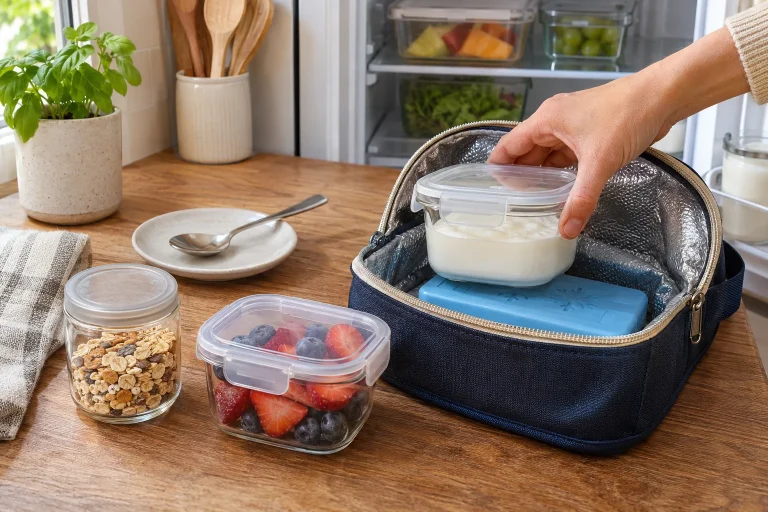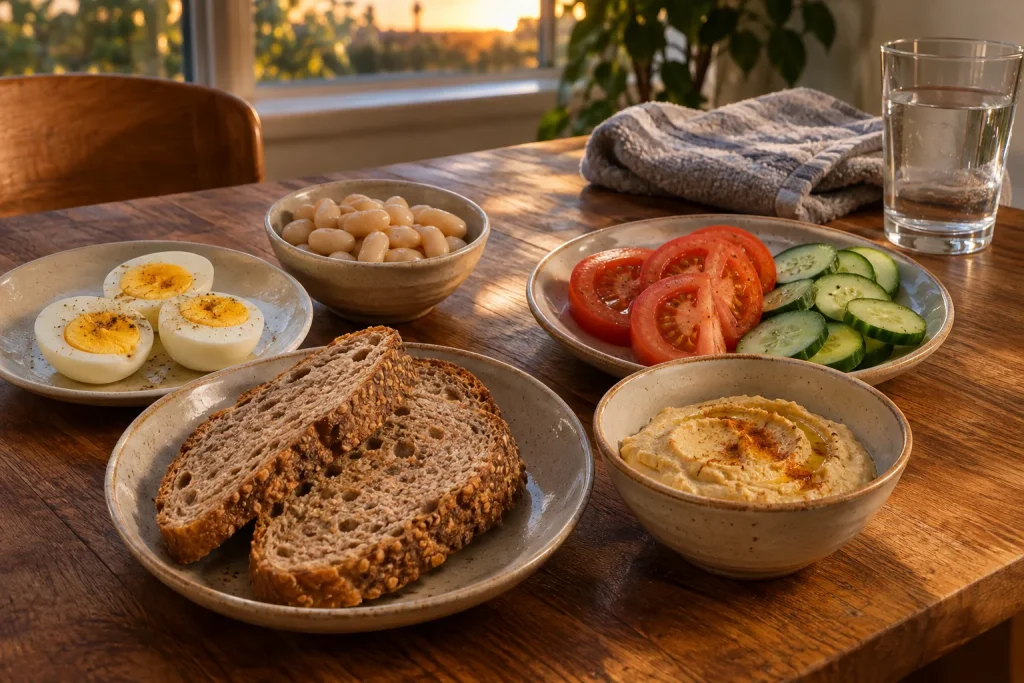
A cold dinner works well at the end of a running evening when it is more than random bites. It can be easy to prepare yet an organised meal: bread or another appropriate base, a chosen topping, vegetables and perhaps a separately served spread. Omitting cooking does not mean disregarding composition, portion or storage. In a good system, you know which element is ready to eat, which first needs washing and which should go straight back in the fridge.
This guide presents meal-assembly formats for adult recreational runners. It is not a personal recovery diet or an identical quantity for everyone. Adapt dinner to your needs, diet and exercise demands. With an allergy, illness or prescribed diet, all ingredients and preparation must be appropriate. These plates are editorial assembly examples, not nutritionally measured sports menus or results of our own sports-performance tests.
First clarify the food’s condition
A no-cook dinner needs elements edible in that form. Cooked canned pulses, dried pulses and frozen products are three different things. The same everyday name does not make their use identical. Read packaging: is heating, thawing or other preparation necessary? Do not include an ingredient requiring cooking according to instructions in a cold plate simply to save time.
Previously prepared food can belong only if appropriately cooked, cooled and stored. A container’s age and history are not replaced by looking good cold. If you do not know when it was made or required refrigeration was interrupted, do not base a quick solution on it. Assembling a cold plate is not a food-rescue task. Instead of uncertain leftovers, choose an appropriate product with verifiable condition.
Bread, spreads and salad may need different storage. Account for these separately when planning dinner. Appearing together in a photograph does not mean they should be piled onto one plate hours earlier. Prepare elements separately, store appropriately and assemble only for eating. This can make texture and handling of leftovers that can be stored again clearer too.
The four-element framework is not a rigid plate rule
Consider four questions separately. What is the base you can hold or spoon? What supplies the main topping? Which vegetables or additions do you want alongside? What connects the flavours? Bread, a suitable spread, vegetables and seasoning may answer them, but another combination can work too. These questions mean neither equal-weight quarters nor nutrient ratios to follow in every situation. The aim is an intentionally assembled meal.
One ingredient can fulfil several roles. A pulse spread may be both main topping and flavour connector. That does not require adding another spread merely to fill every imaginary field. When simplifying, retain attention to composition: quantity, variety and personal suitability matter. Decoration does not replace something you actually need from that dinner.
| Assembly question | Possible answer | What should you check? |
|---|---|---|
| What is the base? | Bread or pitta appropriate for you. | Ingredients, allergens and required preparation. |
| What is the topping? | Ready-to-eat pulse spread, cheese or another suitable element. | Label, opening, refrigeration and individual diet. |
| What adds variety? | Appropriately prepared vegetables. | Washing or ready-washed labelling, clean utensils. |
| What connects flavours? | Separately served seasoning or dressing. | Composition and storage conditions. |
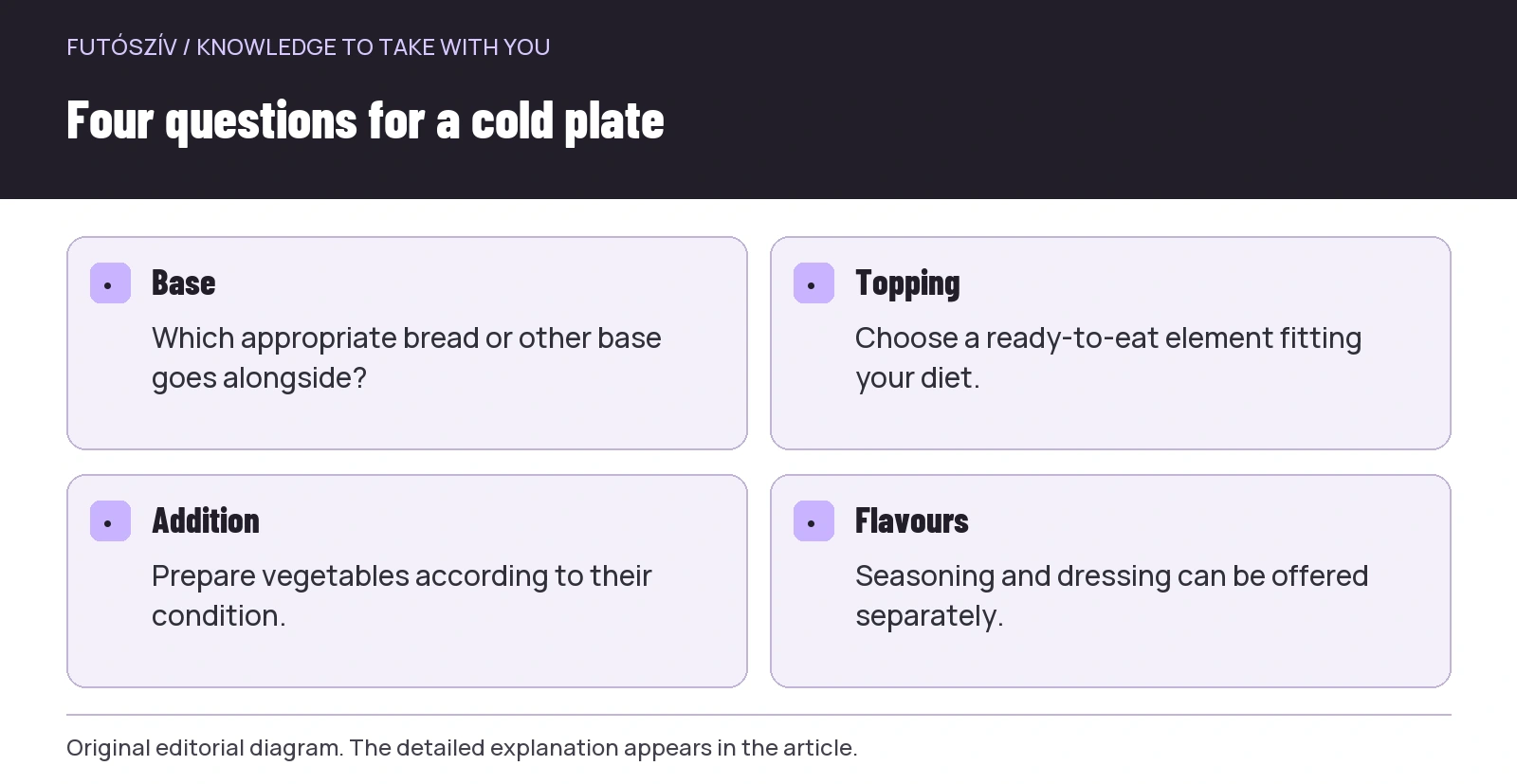 Enlarge diagram
Text version of the diagram
- Base
- Which appropriate bread or other base goes alongside?
- Topping
- Choose a ready-to-eat element fitting your diet.
- Addition
- Prepare vegetables according to their condition.
- Flavours
- Seasoning and dressing can be offered separately.
First format: spread, bread and separate vegetables
Put the spread in a separate bowl and prepare the bread alongside only for eating. Cut vegetables into sticks or bites so everything need not fit in one sandwich. If part is needed later, use a clean utensil to transfer your portion and handle the rest according to product instructions. Repeated dipping into a large shared container is less clear, particularly when several people eat from it.
The NHS pulse-dip recipe pairs a chickpea spread with pitta and vegetable sticks. It also uses yoghurt, so the dish’s name alone does not establish whether a spread is dairy-free or suitable for a plant-based diet. This is a family recipe, not a measured portion recommendation for adult runners. The separately served components provide an idea; check personal suitability separately.
If choosing a purchased spread, read its own ingredients list. Similarly named products may have differing recipes, and homemade versions do not automatically suit everyone either. Sesame, milk or another allergen cannot be identified from colour and texture. Know what went into a homemade plate too. At a shared dinner, communicate ingredients clearly and arrange any separate handling required for an allergic person during preparation, not afterwards.
Second format: a plate assembled from ready-to-eat canned food
An appropriate canned pulse, prepared vegetables and a separate base can become dinner with few utensils. First check the can’s contents and the label’s use instructions. A product in brine and a ready sauced meal give different flavours and textures. If your chosen preparation needs draining or rinsing, have clean equipment ready too. Do not leave experimenting with the can’s liquid and desired texture until everything is in the bowl.
The Food Standards Australia New Zealand canned-food information distinguishes sealed from opened cans. Do not use damaged, leaking, bulging or otherwise suspicious packaging, and do not test it by tasting. Work with a clean lid and utensils when opening. Store remaining contents refrigerated in a clean, covered glass or plastic container, following the label. Unopened-can storage does not automatically apply to opened food.
Initially mix only the vegetables and dressing needed for dinner into the removed portion. This is not a promise of longer keeping time but practical organisation: remaining ingredients can be handled under their own conditions. If everything is mixed, storage of the whole plate must account for every element. An ingredient of uncertain origin should not be combined with otherwise suitable products.
Third format: sandwich toppings arranged side by side
Cheese, suitable spreads and vegetables can be served on separate parts of the plate. This can be convenient when several people want different flavours or you want to prevent soggy bread. Put out the portion of refrigerated products needed for the meal. Keep the whole pack appropriately stored rather than waiting on the counter throughout preparation. Treat serving time as part of product handling too.
Choose one prominent flavour and fit other elements around it. Plain vegetables and bread may suffice alongside a strongly seasoned spread. Making every element assertive does not necessarily add variety, only reduce clarity. This is a matter of taste and composition, not a healthcare rule. Offer seasoning separately so everyone can adapt the shared base to their taste using suitable ingredients.
Do not automatically treat dairy products and plant alternatives as compositionally identical. Read labels and intended uses too. A thin dressing base may not behave as a spread. A well-assembled cold plate needs a few genuinely familiar, suitable elements rather than the most substitutes. If trying something for the first time, explore flavour and texture in a small kitchen version first.
Fourth format: separate small bowls instead of layering
Moist vegetables, soft spread and crisp bread can quickly produce a different texture together than separately. The evening plate need not be layered beforehand. Keep spread in one small container, vegetables separately and bring everything together with bread only when eating. This allows changes during dinner too. It is particularly practical if one family member prefers dipping, another makes sandwiches and a third wants vegetables separate.
No special bowl collection is necessary. Existing clean containers and an appropriately sized plate suffice. The aim is to prevent everything running together and provide room for safe, orderly eating. An overcrowded plate makes clean serving of individual elements harder. If several people eat, use shared serving utensils for the individual components and account for necessary allergen handling during preparation.
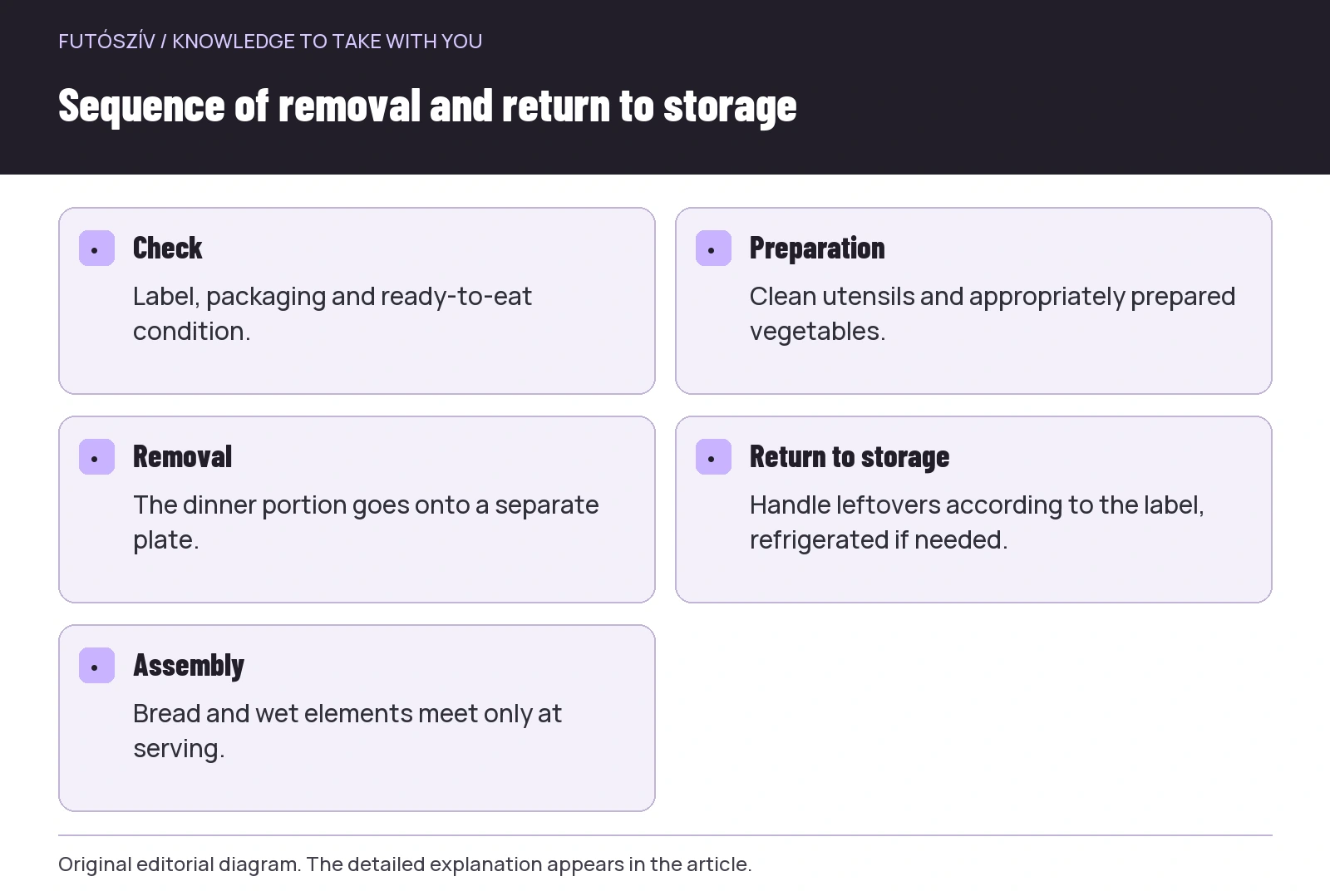 Enlarge diagram
Text version of the diagram
- Check
- Label, packaging and ready-to-eat condition.
- Preparation
- Clean utensils and appropriately prepared vegetables.
- Removal
- The dinner portion goes onto a separate plate.
- Return to storage
- Handle leftovers according to the label, refrigerated if needed.
- Assembly
- Bread and wet elements meet only at serving.
Raw vegetables are not unprepared vegetables
The FDA guide to handling fresh fruit and vegetables recommends washing under running water and does not recommend soap or household washing-up detergent for food. Keep raw produce away from raw meat and utensils contaminated by it. The label identifies packaged ready-washed, ready-to-eat salad. Washing may reduce contamination but does not make every product sterile.
Keep the home workflow simple. With clean hands and work surfaces, prepare vegetables and necessary containers. Do not continue on a dirty board previously used for another raw ingredient. Put washed vegetables in a clean place. This sequence is not the visually striking part of dinner, yet distinguishes a genuinely ready plate from ingredients merely thrown together quickly.
A specific sequence on arriving home
Imagine having appropriate bread, an unopened ready-to-eat pulse spread and fresh vegetables at home. First check product condition and use. Then prepare vegetables, transfer spread into your bowl with a clean spoon and return the rest to storage as instructed. Prepare bread alongside only at serving, adding seasoning at the end. The refrigerated pack spends little time on the work surface, and the plated portion stays separate from the remainder.
If no spread is available, you need not imitate the same meal at all costs. Choose another appropriate ready-to-eat topping and adapt other elements to it. If only products requiring cooking are available, plan another dish. A no-cook solution requires suitable supplies. Honest planning begins with actual ingredients rather than speed claimed in a recipe title.
What should you note for the next shopping trip?
Do not merely write that you need something for a quick dinner. Record a working combination and a substitution: which base, familiar topping, vegetables and separate seasoning. Product storage needs and handling after opening matter, especially if a whole pack rarely gets used. A smaller size may be practical, but decide from your use and the label, not packaging appearance alone.
After dinner, assess whether the meal was sufficient, appropriate for you and easy to prepare. Change quantities or composition if they regularly fail to meet your needs. Absence of cooking is itself neither a quality advantage nor disadvantage. A usable cold dinner is valuable because a few familiar, appropriately handled elements make a real, personally adaptable meal accessible.
Sources and further reading
- NHS: Creamy hummus dip with pitta bread and vegetable sticks
- FDA: Selecting and Serving Produce Safely
- Food Standards Australia New Zealand: Canned foods
How Futószív articles are prepared: our editorial guidelines.