You can still seek your own running routine alongside the diagnosis
With endometriosis, you may run comfortably one day while the same trousers, pace or route feel troublesome another day. Change makes planning difficult, especially when a rigid programme expects identical completion every week. A useful starting point is a routine with space for adapting to symptoms and medical treatment alike.
Running is not a certain cure for endometriosis, and absence of pain does not establish that the condition has disappeared. Equally, diagnosis alone need not make every movement seem dangerous. Current condition, treatment, history and personal experience together shape appropriate exercise demands.
This guide focuses on everyday decisions for runners with an established condition. It does not replace investigation of new pelvic pain or individual postoperative instructions. The aim is manageable movement and a workable help-seeking plan, not another list of what to complete at any cost.
What can evidence let us promise from movement?
The 2022 ESHRE guideline values discussion of non-medical options supporting quality of life and psychological wellbeing. However, the evidence then available did not allow it to confidently recommend a particular non-medical method, including a specified exercise form, for improving endometriosis pain and quality of life. This uncertainty is not a ban on all movement.
New trials have appeared since. They help formulate more precise questions but do not automatically turn everyday running into clinical treatment. A supervised multicomponent programme and an independent long run are different interventions. A favourable study finding does not mean you can achieve the same through more kilometres.
A personal aim may be maintaining movement capability, wellbeing, social connection or completing a chosen distance. State these separately. If running brings enjoyment, it can have value even while treatment still needs coordinating with a gynaecologist and other professionals.
Two newer studies measured different outcomes
In a 2025 randomised trial with eighty-one participants everyone received pain-management education, while one group also undertook supervised and home exercise with pelvic floor muscle training. The programme improved current pelvic/genital pain but not the worst pain over the preceding period. Effects on several other outcomes remained uncertain.
A 2025 secondary analysis of another trial with thirty-one participants found more favourable fatigue and several functional improvements after the nine-week supervised Physio-EndEA programme compared with control. The small sample and secondary analysis mean findings should not be generalised as a certain solution for every symptom and person.
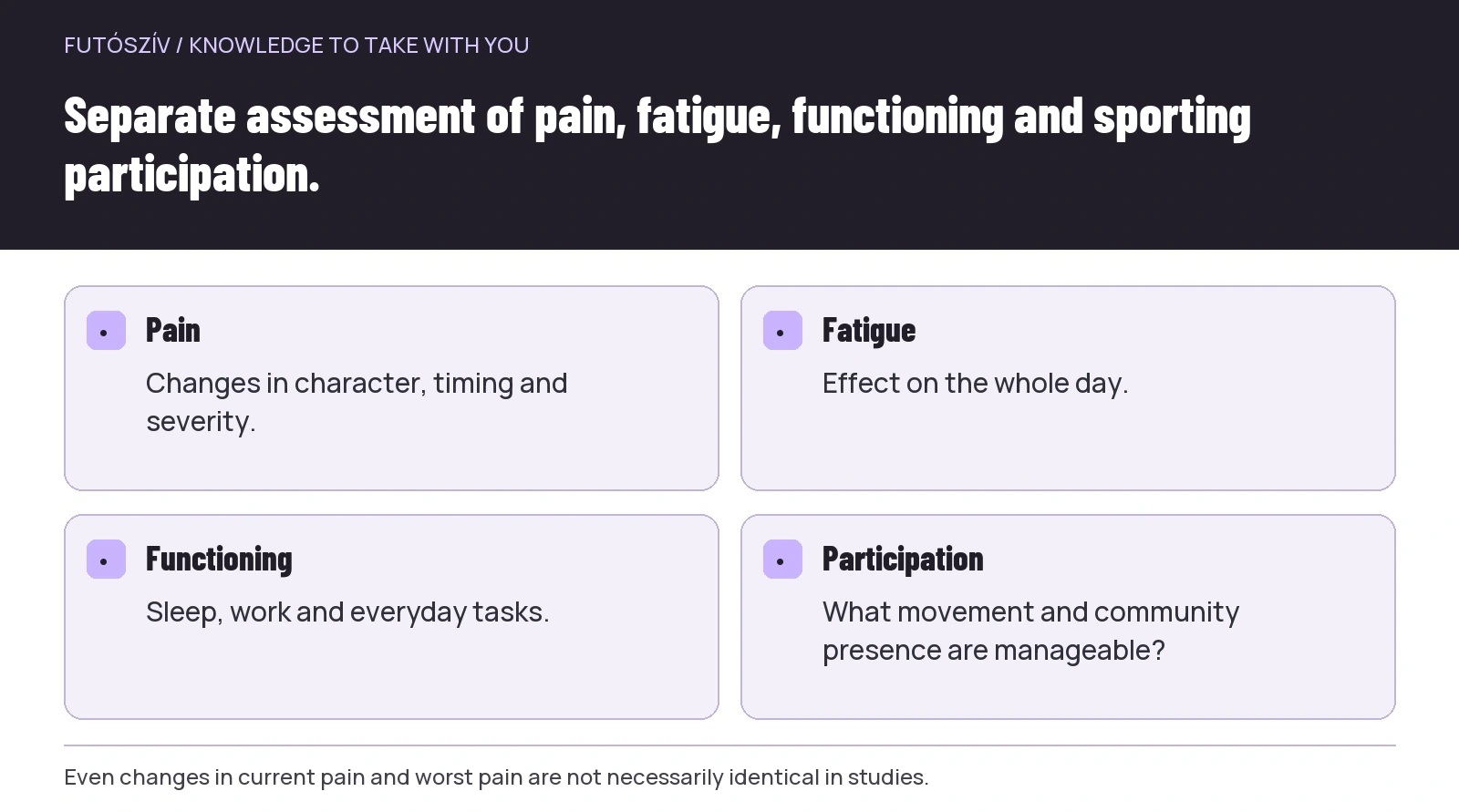
A more useful lesson from the two studies is that pain, fatigue and quality of life are separate outcomes. One area can improve without everything else resolving. At personal follow-up, state precisely where you want help rather than compressing everything into whether you feel better.
 Enlarge diagram
Text version of the diagram
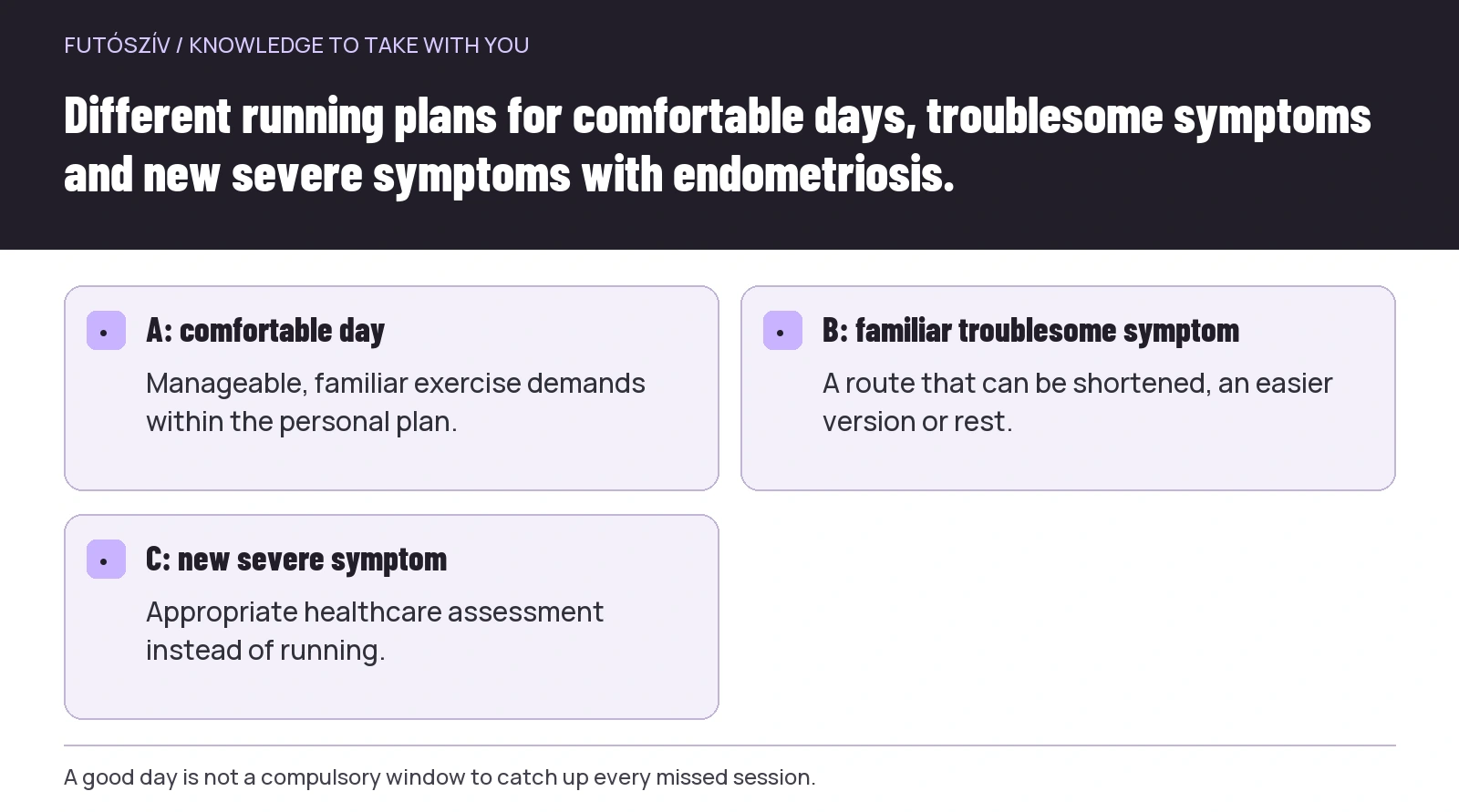
- A: comfortable day
- Manageable, familiar exercise demands within the personal plan.
- B: familiar troublesome symptom
- A route that can be shortened, an easier version or rest.
- C: new severe symptom
- Appropriate healthcare assessment instead of running.
Three programme options instead of a rigid calendar
Option A: comfortable day. Within the personal plan, undertake a familiar, manageable run. Every good day need not replace all missed sessions. A less symptomatic state is an opportunity for consistency, not a compulsory catch-up window.
Option B: troublesome but familiar symptom. Choose a route that can be shortened, easier movement or another time beforehand. The aim is a decision responding to actual condition without improvising before the group sets off. If even the easier version is uncomfortable, rest is acceptable too.
Option C: new, severe or unusual symptom. Healthcare assessment is needed instead of the programme. A previous endometriosis diagnosis does not mean every new abdominal or pelvic symptom has the same cause. Appropriate help particularly matters with feeling unwell, increasing pain or possible pregnancy.
Monitor your actual symptom, not merely the bleeding day
With endometriosis, symptoms do not necessarily fit into a few menstrual days. Treatments can also change bleeding patterns, so an app’s phase colours alone provide little information about exercise tolerance. A short description of actual pain, fatigue and everyday functioning may help more.
After running, note not just that day’s sensation but how the evening and next day went. If a particular route, clothing or exercise demand consistently provokes symptoms, review it. A repeated association is an observation, but you need not independently regard its cause as certain.
A symptom diary helps when sustainable. A few clear sentences often suffice: what was troublesome, what you changed and what followed. If constant attention creates anxiety, seek help simplifying monitoring. Every bodily sensation throughout the day need not become sports data.
Pelvic floor and physiotherapy: individualisation instead of copied exercises
In the 2025 study, pelvic floor muscle training belonged to a supervised, complex programme. This does not mean every runner with endometriosis should perform the same contraction sequence at home. Pelvic symptoms, movement and examination findings may indicate different physiotherapy approaches.
If bladder-control symptoms, painful movement or another pelvic-floor difficulty appears, seek assessment from a physiotherapist experienced in this area in coordination with your treating team. Explain the diagnosis, previous operations and current symptoms. Care is more than a general instruction to strengthen more.
A coach need not diagnose specialist internal muscle function without examination either. They can help adjust exercise demands and follow a professionally developed plan. Cooperation between disciplines helps when you understand why you perform a task and which signals require change.
For bowel and urinary symptoms, keep medical questions alongside logistics
If urgent toilet needs or other digestive discomfort accompany symptoms, choose a shorter loop with accessible toilets. This can reduce organisational burden. A practical route does not replace healthcare assessment of new, worsening or bleeding-associated symptoms.
Do not start excluding several food groups solely because a particular diet helped another runner with endometriosis. A dietitian can help review symptoms and appropriate nutrition together. An increasingly narrow food list should not make energy provision for running uncertain.
Tell your provider clearly about painful urination or bowel movements, blood noticed or a changed symptom pattern. Do not write only bad stomach run in the diary. A precise symptom may represent a different question from general fuelling difficulty.
After surgery, the actual procedure matters
The University College London Hospitals surgical information also shows that endometriosis surgery can differ in extent. Returning after a simpler procedure and after complex surgery involving bowel or urinary structures may differ. Small skin incisions cannot establish internal healing.
At discharge, ask about walking, lifting, strengthening and running separately. The instruction to move may mean gentle everyday activity rather than immediately restarting previous sporting demands. Ask the operating team for clarification if the description is unclear.
Before follow-up, do not copy another patient’s return week from social media. For fever, increasing abdominal pain, wound problems or unusual illness, seek prompt help according to your postoperative guidance. Conditions for returning to sport should belong to personal follow-up.
 Enlarge diagram
Text version of the diagram
- Pain
- Changes in character, timing and severity.
- Fatigue
- Effect on the whole day.
- Functioning
- Sleep, work and everyday tasks.
- Participation
- What movement and community presence are manageable?
Do not merge treatment and training effects into one story
If new medication, physiotherapy and running begin together, later attributing each contribution with certainty may be difficult. You need not find the exclusive cause of every improvement. More important is that providers know the whole plan and symptom progression can be followed.
Do not independently stop or alter medication because a good running period makes it seem unnecessary. Equally, do not keep suspected side effects to yourself. Explain what changed, in what order and how it affects your days. This supports shared consideration.
A running watch cannot measure endometriosis extent or treatment success. Improved pace is welcome but does not replace follow-up. Worse pace does not automatically establish worsening disease either. Clinical and sporting feedback answer different questions.
Keep emotional and community aspects within the plan
With prolonged, unpredictable symptoms, believing you can remain a reliable running companion may be difficult. A group allowing shorter outings without requiring explanations for every adjustment can help. Community participation need not depend on identical pace and distance.
If health circumstances cause persistent anxiety, hopelessness or emotional symptoms substantially burdening everyday life, seek mental healthcare support. This does not mean pain exists only in your head. Both physical illness and its emotional burden deserve care.
A supportive environment should not demand constant positivity. You can love running while feeling angry about a difficult period. The plan can accommodate more modest aims, race changes and shared activities in which running is not currently central.
When is help needed outside the usual plan?
The NHS guidance on pelvic pain emphasises prompt care matched to circumstances for severe or worsening pain, fainting, heavy bleeding, fever and other concerning symptoms. If pregnancy is possible, state this immediately. A familiar diagnosis does not exclude another acute problem.
Clarify beforehand whom to contact for a flare of familiar symptoms and which signs require urgent help. This matters particularly before travel and races. An accessible telephone number or care plan may help more than searching contradictory advice beside the course.
Five elements of a followable routine
- Have a familiar baseline option for comfortable days.
- Have an easier or shorter alternative for troublesome symptoms.
- Link new severe symptoms to a help-seeking plan.
- Include surgery, medication and physiotherapy instructions in sports planning too.
- Assess success through functioning, wellbeing and participation too.
Running with endometriosis need not involve constant proving of yourself. A personal, adaptable routine can allow progress and enjoyment while symptoms and medical plans receive real attention. You can enjoy good days and seek help on harder ones without diminishing your identity as a runner.
Sources and further reading
- ESHRE Guideline: Endometriosis, 2022
- Gabrielsen and colleagues: Supervised exercise and pelvic floor muscle training in endometriosis, randomized trial, 2025
- Salinas-Asensio and colleagues: Physio-EndEA randomized trial secondary analysis, 2025
- UCLH: Surgical management of endometriosis
- NHS: Pelvic pain
How Futószív articles are prepared: our editorial guidelines.