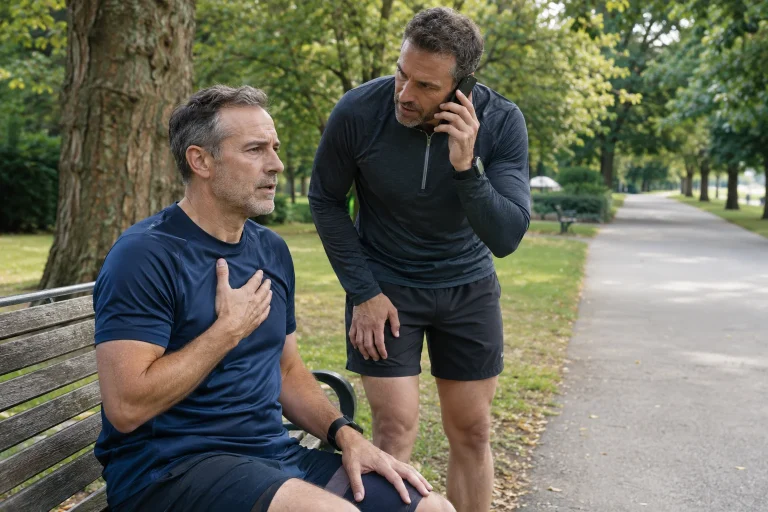
Nausea, abdominal discomfort, fullness or an urgent need for a toilet during running can turn fuelling into a constant uncertainty. A runner buys one new product, then another, while eliminating more foods without understanding what is happening. At that point, address the question with individual help. The aim is not a single miracle remedy but clarifying which health and nutritional factors matter and how to build an appropriate, practicable plan for your circumstances.
This article helps adult recreational runners formulate a request for help. It makes no diagnosis and prescribes neither symptom treatment nor an elimination diet. The general phrase sensitive stomach can cover many situations, so name the specific symptom and its pattern. Running-community experience can be a useful conversation starter but does not replace investigation of your recurring symptoms or a personal dietary plan. A well-framed professional question is a more precise start than another randomly chosen product.
First establish whether the situation is urgent
Sudden severe abdominal pain, vomiting blood, substantial bleeding or black, sticky stools, or difficulty breathing requires immediate emergency care. Do not continue running or attempt to solve the situation with a fuelling experiment. The NHS information on stomach ache treats these as urgent warning signs. Instead of the page’s UK care contacts, use appropriate emergency care where you are and follow on-site healthcare guidance.
Recurring or persistent abdominal pain, bloating and digestive symptoms can also warrant medical discussion even when not currently urgent. If symptoms concern you, seek help. Finishing a run does not prove there is nothing to clarify. Another runner describing something similar does not automatically make your symptoms harmless or due to the same cause.
If unwell at a race, report it and seek help according to the organiser’s medical or safety arrangements. State your precise location, race number and symptom type. Logging and finding product information are secondary then. You need not identify a suspected cause beforehand or prove fuelling was at fault. Describing the symptom and actual situation provides the primary information.
Name the symptom rather than the assumed cause
I cannot tolerate gels may mean difficult opening, disliked flavour, nausea, fullness or another symptom. These are different problems, so clarify your own account. What did you feel, where and when did it appear, how long did it last and did it require changing the run? Describing a symptom does not establish its cause. Precise observation can nevertheless help a professional ask useful questions.
Explain separately whether it happens only during running or in other situations too. Is it associated with a particular intensity, longer duration or time of day? These are not home diagnostic rules but parts of the history. Describe severity in your own consistent words too: noticeable, troublesome, requiring a stop. You need not use an unfamiliar online scale as a medical measurement tool.
Also describe change from your usual condition. Is it new, more frequent or similar for a long time? Were there associated changes in appetite, wellbeing or weight, and is there previous illness or treatment? Share relevant health information with the appropriate professional. Do not automatically derive a reassuring explanation for every change from the running timeline. Individual assessment can determine justified next steps.
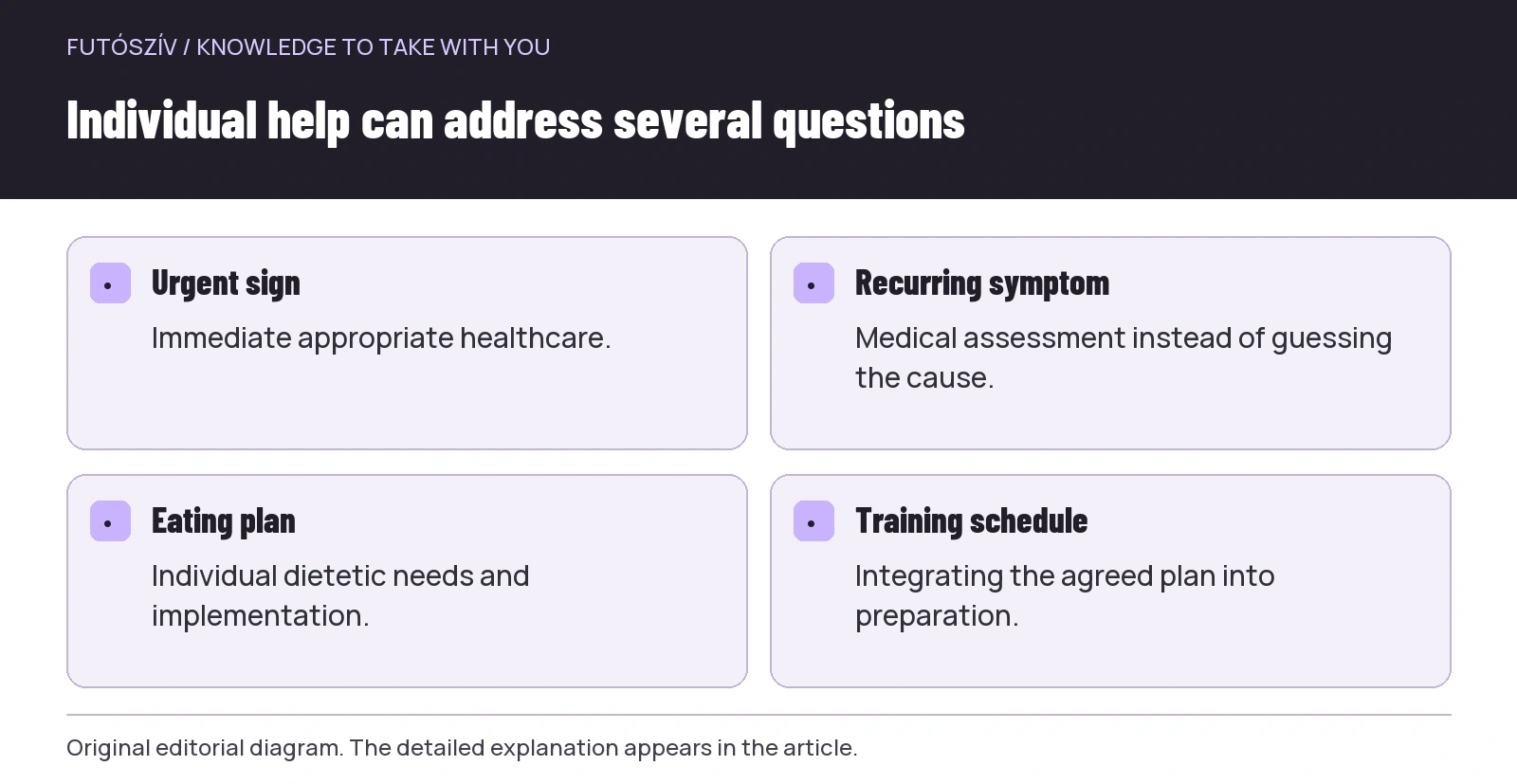 Enlarge diagram
Text version of the diagram
- Urgent sign
- Immediate appropriate healthcare.
- Recurring symptom
- Medical assessment instead of guessing the cause.
- Eating plan
- Individual dietetic needs and implementation.
- Training schedule
- Integrating the agreed plan into preparation.
Why is blaming one ingredient insufficient?
The joint position statement from Sports Dietitians Australia and the Ultra Sports Science Foundation discusses exercise-associated gastrointestinal problems as multifactorial and presents an individualised professional approach. Exercise demands, conditions and individual circumstances may matter alongside food. The document is guidance for professionals; interventions in it need not be copied as a general home recipe.
In your own case, a new food may have coincided with a change in run duration, pace, weather or drinking arrangements. If all happened together, one product name does not supply a definite explanation. Show the whole situation to a professional before the next purchase. Repeatedly jumping between products can also obscure which circumstance remained constant and what actually changed.
Long-term elimination of food groups is a separate decision too. An increasingly long prohibited list developed because of symptoms is not an individualised, supervised dietary plan. If you have already excluded several things, explain this at the consultation. The professional needs to understand your whole day’s eating and restrictions too. The aim is a solution addressing both health questions and adequate provision, not merely replacing the last pre-run food.
Medical and dietetic questions may connect
A doctor helps assess the symptom medically and determine appropriate investigation. A dietitian may address nutritional circumstances, personal needs and an achievable eating plan within appropriate professional boundaries. These forms of support do not replace one another. If the symptom first requires medical clarification, a new fuelling product or general dietary tip cannot bypass it.
In sports-dietetic work, understanding the actual training schedule, daily eating and fuelling opportunities matters too. A professional can clarify how food and drink fit your circumstances and how to practise the plan. Detailed individual intervention is not general online dosing. This article therefore gives no identical quantities or compulsory diet for everyone. Individual help is valuable precisely because it begins with your information and needs.
A coach can be a partner in organising training load and preparation. Explain if symptoms regularly alter training or fuelling practice. Keep professional roles clear: you need not explain a training plan through your own diagnosis, and nutritional questions require appropriate help too. Cooperation needs the specific situation and agreed plan shared, while personal medical details remain within the appropriate circle.
| Question | What help may be needed? | What should you bring to the discussion? |
|---|---|---|
| Urgent illness | Immediate appropriate healthcare | Symptom, location and important known conditions |
| Recurring symptom | Medical assessment | Onset, frequency and accompanying changes |
| Personal fuelling plan | Appropriate sports-dietetic help | Daily eating, exercise demands and product information |
| Integration into training | Discussion with a coach | What is omitted or changed because of symptoms? |
Brief notes before the consultation
Select a few representative occasions and describe the running timeline, specific foods and drinks, and symptom onset. Separate actual information from the plan. If you do not know an exact quantity, mark it estimated or unknown. Bottle capacity does not prove how much you drank, and an opened packet does not always mean the full serving was consumed. Precisely identifying uncertainty supports professional assessment.
Preserve the exact product version or a legible label photograph. Do not combine caffeine, different flavours and differing compositions into a single general line. Recipe version matters for homemade food too. For an unknown product received during running, record only what you actually know. Missing information need not be replaced by online data for a similar packet presented as certain measurement.
Record important circumstances relevant to the question. Route character, exercise demands, weather, a substantial stop or a different daily routine may support the account. You need not save every watch screen. A few specific events and times are easier to review than a long stream of data. If logging creates tension, you can explain the main pattern verbally or in a few sentences during consultation; seeking help does not require a perfect table.
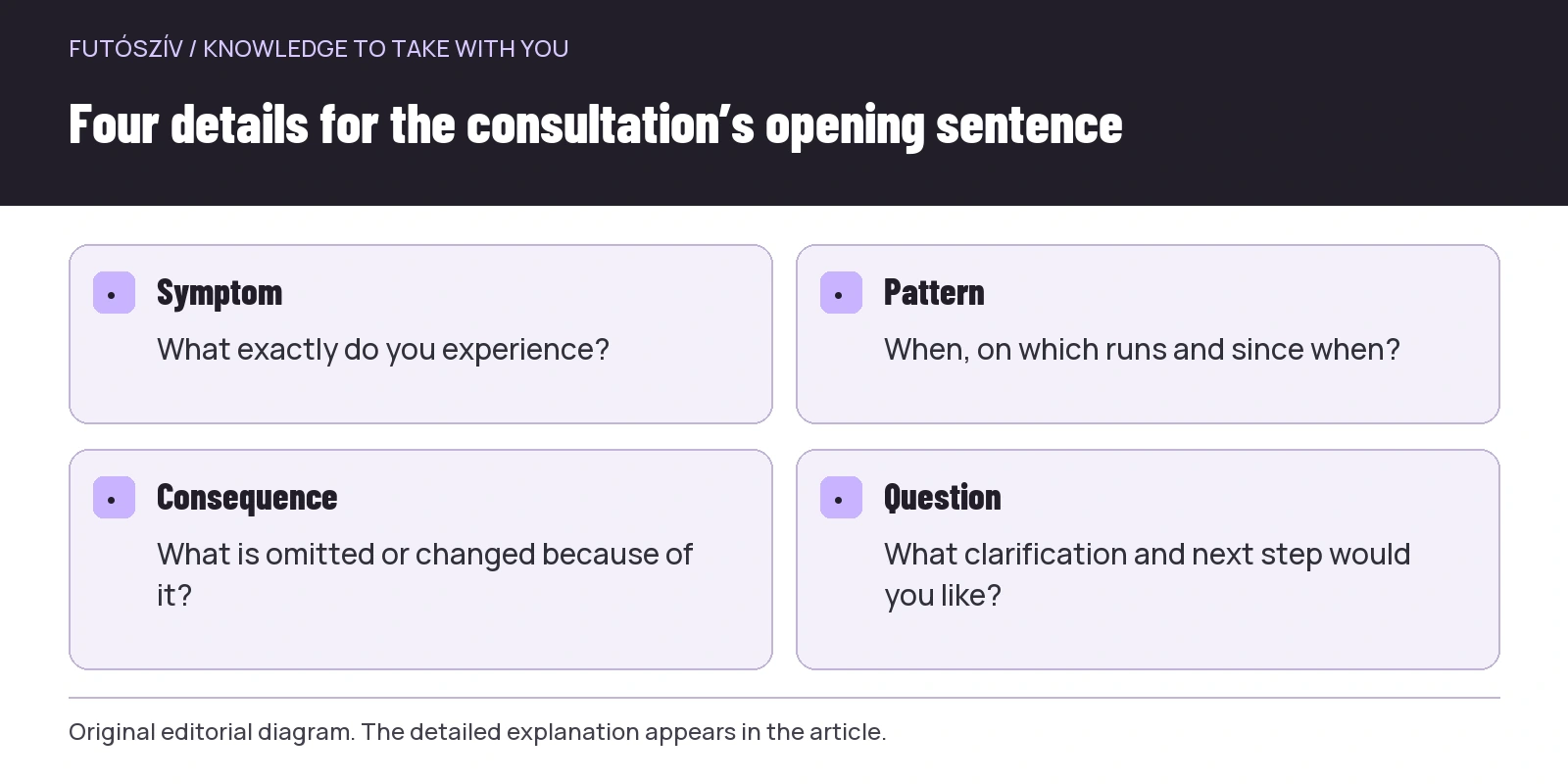 Enlarge diagram
Text version of the diagram
- Symptom
- What exactly do you experience?
- Pattern
- When, on which runs and since when?
- Consequence
- What is omitted or changed because of it?
- Question
- What clarification and next step would you like?
How to formulate a brief, useful opening sentence
A good opening names the symptom, pattern and practical consequence. For example: I have repeatedly had troublesome nausea later in longer runs and could not follow the planned fuelling as a result. This does not establish a definite cause. It helps the professional understand what you want to clarify. The next sentence can add how long it has happened and whether it occurs at other times.
Beginning with a ready-made diagnosis or certain blame of one ingredient is less useful. Explain your own hypothesis too, but separate it from observation. I thought this product might be responsible, so I changed it several times is important historical information. Professional assessment can then account for earlier changes and their uncertainty. You need not prove an explanation found online to receive help.
List your questions too. Is further medical clarification necessary? What notes does the professional request? Within what boundaries can you later practise the individual plan? When should you report back if things do not improve? These questions make next steps understandable. The aim is not a final guarantee for every event from one meeting, but clear individual guidance and follow-up arrangements.
Choose professional experience relevant to your question
The Hungarian Dietetic Association’s National Dietitian Directory provides a search option for finding a professional. When making contact, explain that you have a personal question about fuelling during running and recurring gastrointestinal symptoms. Ask about relevant experience, medical information needed beforehand and how the consultation works. Directory inclusion alone does not mean every professional works with the same sport or question.
Choose online or in-person consultation according to your opportunities and the professional’s working method. Clarify which documents or product details they request and an appropriate sharing channel. Do not send unnecessary health information to a public running group so someone else can predict a diagnosis. Individual support belongs in a suitable confidential setting. Food and training information should be accessible to the extent needed for the professional question.
The next plan needs achievable steps
When receiving individual guidance, ask how it fits your actual working day and race conditions. Where is water, what can you carry, which product is available and when can you eat safely? These details are necessary for usability too. Practising within the agreed professional framework must fit your training plan, rather than involve suddenly increased demands because of the symptom.
Make further observation targeted and time-bounded. Know which experience to report and which symptoms require earlier help. Follow the agreed step instead of independent product changes, and report uncertainty too. An appropriate personal plan does not demand tolerating every discomfort. Addressing health and nutritional questions matters more than executing an imagined trial unchanged.
You handle sensitivity associated with race fuelling well by taking symptoms seriously, describing them precisely and seeking appropriate help. The aim is a safely usable personal plan with room for the whole diet, running and practical opportunities. Notes and product information are tools for this. The endpoint is not the most packets tested or the longest prohibited list, but an understandable next step and preparation matching your health.
Sources and further reading
- NHS: Stomach ache
- Sports Dietitians Australia and Ultra Sports Science Foundation: Joint Position Statement, 2025
- MDOSZ: National Dietitian Directory
How Futószív articles are prepared: our editorial guidelines.