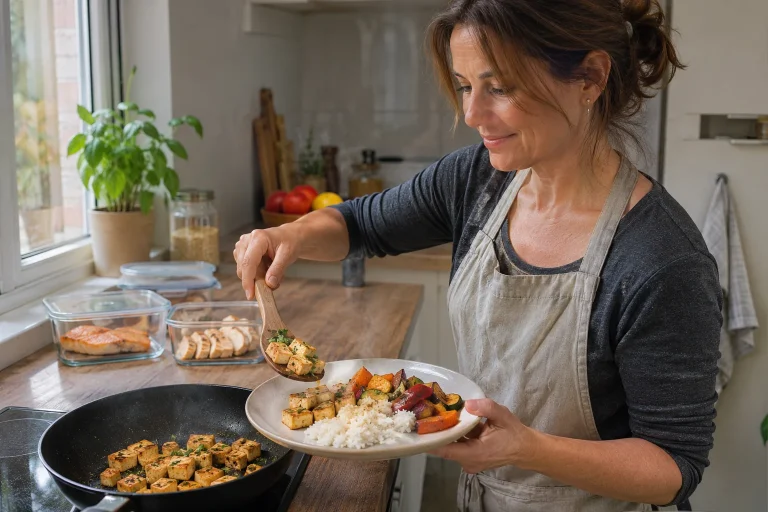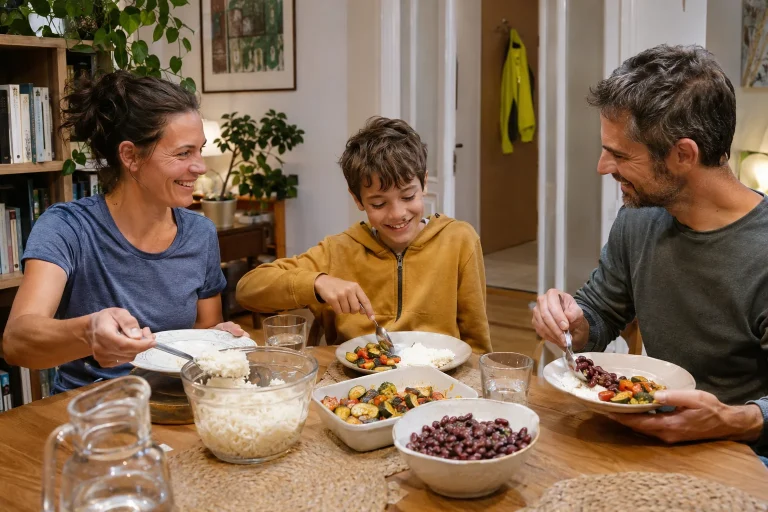
A restaurant meal can be part of a running day: lunch during work, dinner on a race trip or meeting friends after a shared loop. You do not need to declare one dish automatically a runner’s menu. It is more useful to understand the day’s timetable and the dish’s actual combination first. What did you eat earlier, when will you run, what will be on the plate and which details need asking about? These answers can produce a decision suited to your own situation.
This guide helps adult recreational runners with everyday choices, without personal portions or a race diet. With a known allergy, illness or prescribed diet, follow your own professional advice. Restaurant descriptions and online reviews do not replace appropriate information about specific ingredients and preparation. The goal is to arrange a meal you enjoy, fit to your own needs and whose essential details are clear.
Identify the meal’s position relative to running
A shared dinner after running differs from lunch shortly before training. Check the actual timetable before examining the menu. Arriving at a restaurant is not the same as beginning to eat: ordering, waiting and possibly several courses all require time. If training starts at a fixed time, this matters in choosing a venue too. A pleasant but slower shared lunch need not be forced into a tight work break.
Use previous personal experience as one reference for pre-run choices. Familiar food is not made identically everywhere, but familiar ingredients and preparation you can clarify may reduce uncertainty. Before an important event, trying an unfamiliar dish with many new elements can wait for another occasion. This is not a judgement of its quality, but a choice fitting that day’s purpose.
The Johns Hopkins Medicine information on pre-competition nutrition highlights familiar, well-tolerated foods and checking local options beforehand. The useful principle for a restaurant decision is planning: do not look for available food for the first time at the last moment before the start. Make eating time and specific choices identifiable together in the individual plan.
Breaking the menu into components makes it easier to understand
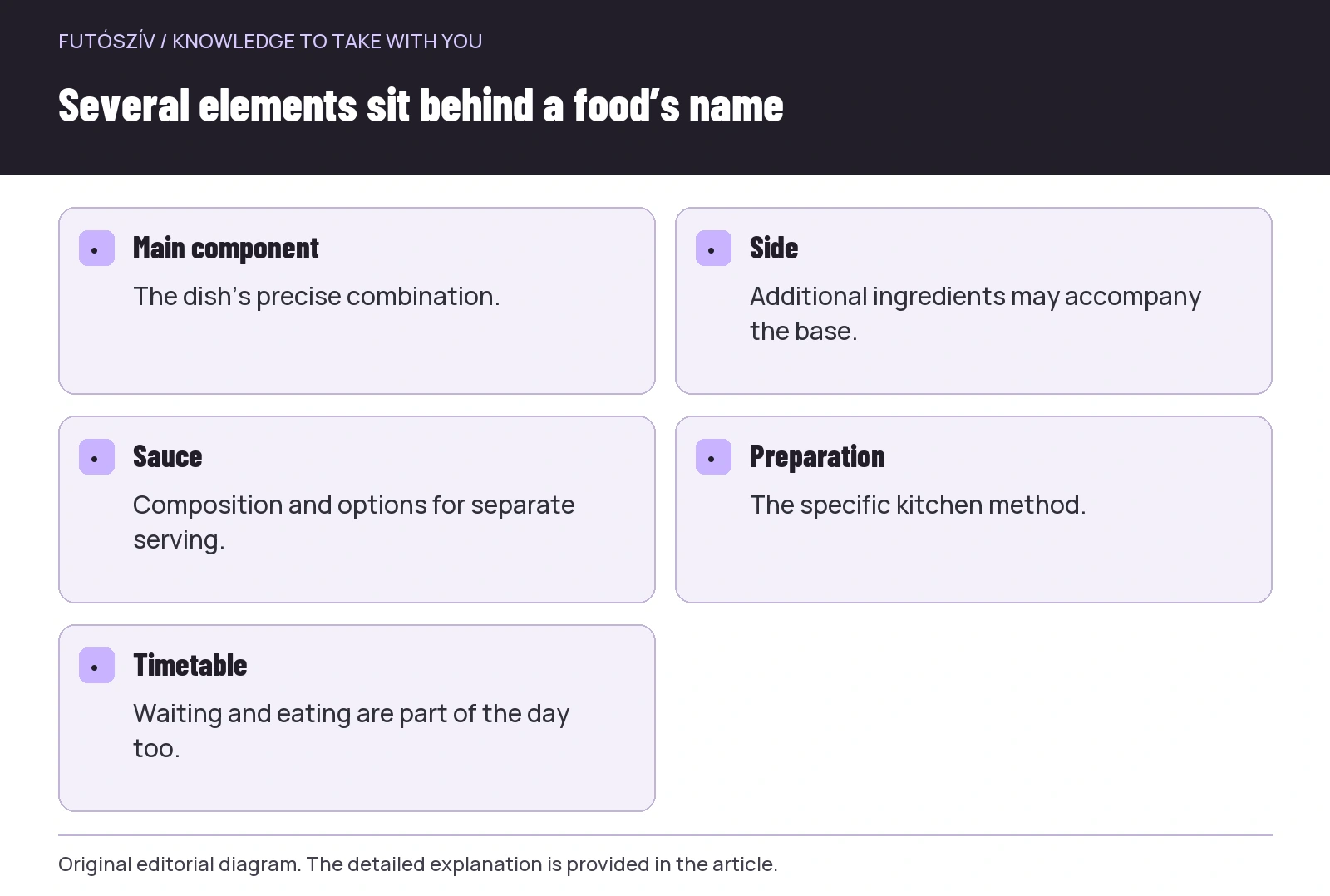
Find the dish’s main component, side, vegetable part, sauce and preparation method. An imaginative name is appealing but may not provide enough detail. If the menu lists ingredients briefly, ask about what matters to you. You need not recreate every recipe precisely at home to choose thoughtfully. But clarify information important to your diet and eating situation.
A side is not necessarily one ingredient. It may also contain sauce, cheese, oil, butter or another addition. A salad’s name does not reveal the full composition of dressing and extras either. These are not automatically good or bad parts, but components of the actual dish. Pasta, rice and potato dish are likewise too broad on their own. Look at the actual combination and fit it within your overall daily eating.
The Food Standards Scotland guide to lunch and dinner out also shows the importance of preparation, sides and separately requested sauce. These are general food-choice references, rather than individual pre-training prescriptions. Seeing a dish as a combination of elements can help with ordering. It clarifies which part suits you and what needs further information.
 Enlarge diagram
Text version of the diagram
- Main component
- The dish’s precise combination.
- Side
- Additional ingredients may accompany the base.
- Sauce
- Composition and options for separate serving.
- Preparation
- The specific kitchen method.
- Timetable
- Waiting and eating are part of the day too.
Ask questions that produce usable answers
“Is this good for a runner?” is too general and may ask the server to make a personal decision without sufficient information. Specific questions include how the side is prepared, what the sauce contains or whether a component can be served separately. Be precise about timing too: approximately when can the food arrive? Staff can explain their kitchen’s possibilities; determining individual sports nutrition needs is not their task.
Make a requested modification easy to understand. Sauce separately or another available side are specific requests, for example. A dish’s advance preparation may mean it cannot be altered, or the kitchen may be unable to meet your dietary condition safely. You can then choose another food or venue. Obtaining appropriate information matters more than ordering the dish you initially wanted at all costs.
Name a preference and an allergy clearly and separately. Disliking a flavour is different from avoiding a specific allergen. Do not conceal the latter in a brief “just leave it out” request. Explain your need clearly and ask for necessary information about preparation circumstances too. Appropriate communication is part of choosing, rather than an awkward diversion before the meal.
| Part to clarify | Useful question | What do you decide? |
|---|---|---|
| Combination | What exactly comes with the dish? | Does it fit your diet? |
| Preparation | How is this side prepared? | Does it suit the present situation? |
| Serving | Can sauce be served separately? | Which format do you prefer? |
| Time | When is the food expected? | Does it fit the timetable before training? |
| Allergy | How can they handle the specific requirement? | Has the choice been clarified reassuringly? |
With an allergy, confirm earlier arrangements too
The Food Standards Scotland information on eating out with allergies emphasises enquiring beforehand, clear conversation with staff and confirmation on site. After an earlier phone call, state the specific requirement again on arrival. Ask about possible recipe or ingredient changes and handling of cross-contamination. If you cannot adequately clarify that they understand and can manage your needs, choose another option.
Follow your own prescribed allergy-management plan during restaurant visits and running too. Visibly removing an ingredient from a dish may not resolve the original preparation problem. Garnishes, sauces and drinks may also be relevant ingredient sources. The British authority page serves here as a practical consumer reference, rather than an explanation of Hungarian catering law. Your own treating professional’s guidance applies to individual safety questions.
With group orders, make food for different requirements clearly identifiable. If several similar dishes arrive, do not swap plates by guesswork. Shared tasting and utensils can affect allergen handling too. The group can know beforehand which detail matters without making the whole outing revolve around it. A clear system can make shared eating calmer as well.
Relate quantity to your own meal
A restaurant portion is not a personal sports nutrition measure. Ask about the dish’s nature and available size, then choose according to your own needs. You need not automatically make the plate smaller because you are in a restaurant, nor is running that day a reason to add every extra. Overall daily eating, load and your personal plan matter together. A generic restaurant photograph reveals little of these.
If a combination does not meet your own complete meal, adapt it with an available addition or another dish. The goal is not a nutrient-counting competition over a menu, but an appropriate, enjoyable choice. If uncertain about your needs, take that question to a calmer sports nutrition consultation. Your whole day and usual eating can provide individual references useful in restaurant decisions too.
For eating immediately before running, consider comfort as well. A substantially larger portion of a familiar food creates a new situation. Toppings and the combined quantity of several courses matter, rather than the main dish’s name alone. Do not tailor your plan to the group member with the biggest appetite or the fastest runner’s order. Individual choice remains at a shared table, without reducing its social value.
Three common restaurant situations on a running day
At a workday lunch, available time and the later run start form the framework together. With a short break, reviewing the menu beforehand or using a familiar venue can reduce choosing time. Include realistic waiting too. If eating is delayed, review afternoon arrangements; the exact original running start is not maintainable in every circumstance. Look for changeable parts of the whole day instead of skipping food.
For dinner before a race while travelling, a familiar, clear combination and calm timing can be advantageous. Do not leave the first restaurant search until late evening after arrival. Check kitchen opening and actual choices, since an open venue does not necessarily serve every dish at every time. Have a thought-out alternative fitting your diet and travel conditions. A good backup is a specific possibility, rather than hope that something will turn up.
At a meal with friends after running, consider social experience and your needs together. Planned post-training food should not remain in an organisational gap that stretches unpredictably. If the group goes somewhere later, plan your own remaining day too. You do not need to choose the same drink or dish because of others. A shared table and different personal orders coexist comfortably.
 Enlarge diagram
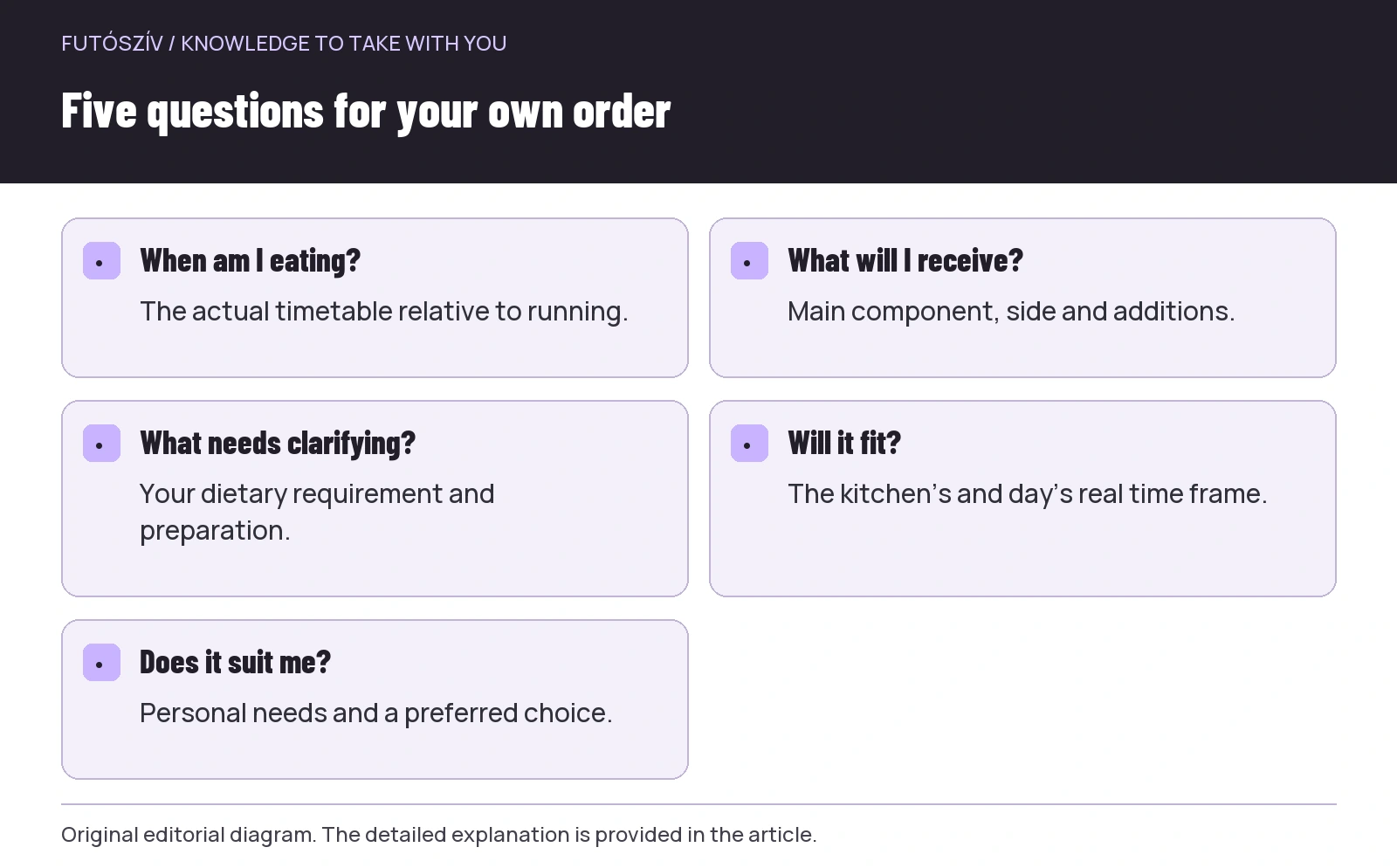
Text version of the diagram
- When am I eating?
- The actual timetable relative to running.
- What will I receive?
- Main component, side and additions.
- What needs clarifying?
- Your dietary requirement and preparation.
- Will it fit?
- The kitchen’s and day’s real time frame.
- Does it suit me?
- Personal needs and a preferred choice.
Drinks and coffee are part of the choice too
When choosing a drink, follow your own fluid plan and health boundaries. A coffee drink’s specific version, size and other caffeine sources that day may matter too. A restaurant gathering should not automatically lead to a new combination untried before an important run. Drink and food timing together belong to the actual meal situation. The server can provide product information; you and, where needed, a professional still determine individual requirements.
An order need not be rated perfect to be thoughtful. You choose from available possibilities according to your own considerations. Ask if an important detail is unclear; if the choices are unusable, take another approach. A restaurant meal is not an exam passed only by counting every ingredient. Essential information, individual needs and food eaten calmly together form a good practical basis.
Afterwards, remember what genuinely helps next time
If a specific dish worked at a venue and service timing suited you too, briefly note the precise version. Still check essential changes next time, particularly with allergies or special diets. Do not declare the entire venue automatically appropriate in every situation from one order. Experience concerns the particular meal; kitchen and menu may change later.
If something failed, name the practical reason: insufficient time remained, an ingredient could not be clarified or the dish differed from expectations. A specific next step may follow, such as earlier booking or a more precise question. Do not diagnose symptoms from one restaurant lunch. Discuss recurring problems with an appropriate professional, describing the experience and circumstances accurately.
Five points before the next order
First, identify where the meal fits in the running day. Second, name the dish’s main elements. Third, clarify ingredients and preparation important to your diet. Fourth, check whether actual waiting fits the day. Fifth, choose a combination you can fit to your needs and enjoy eating. These steps apply regardless of menu length or restaurant style.
A restaurant meal on a running day is not organised by one dish’s name. Your timetable, precise food information, necessary questions and personal choice matter together. Thinking them through beforehand lets the restaurant become a comfortable part of the day, whether eating during a work break, travelling or after a group run. The plan leaves room for enjoyable food while keeping practical details of running and individual needs identifiable.
Sources and further reading
- Johns Hopkins Medicine: Nutrition for Athletes: What to Eat Before a Competition
- Food Standards Scotland: Lunch and dinner
- Food Standards Scotland: Eating out with allergies
How Futószív articles are prepared: our editorial guidelines.