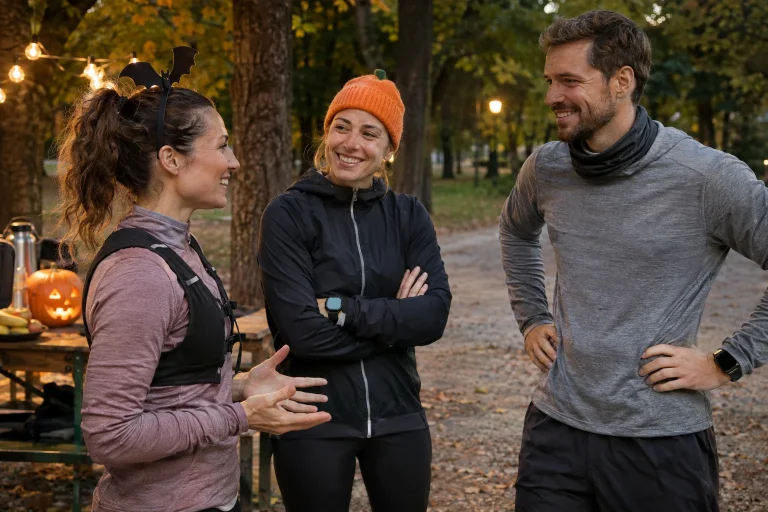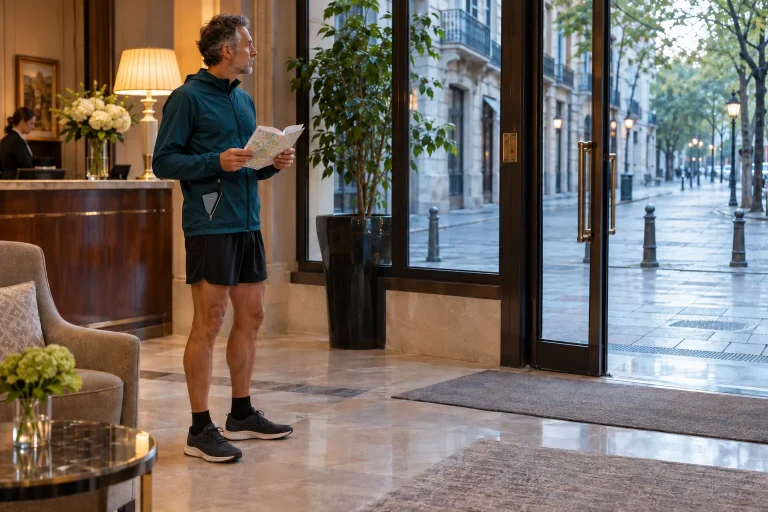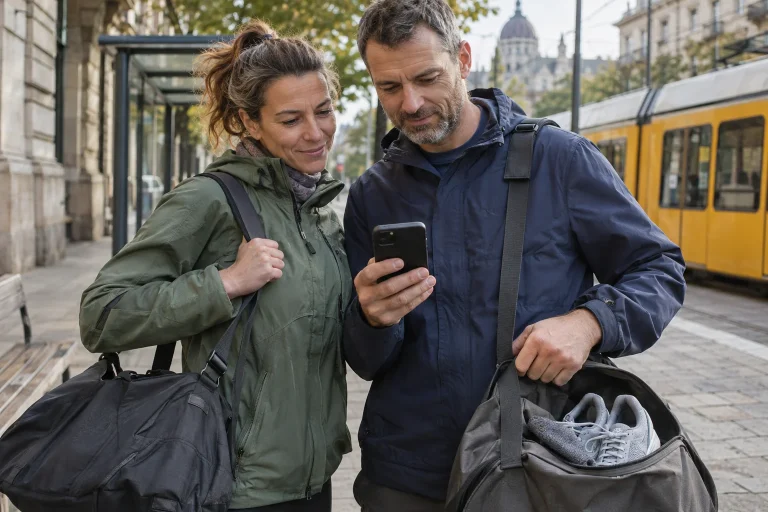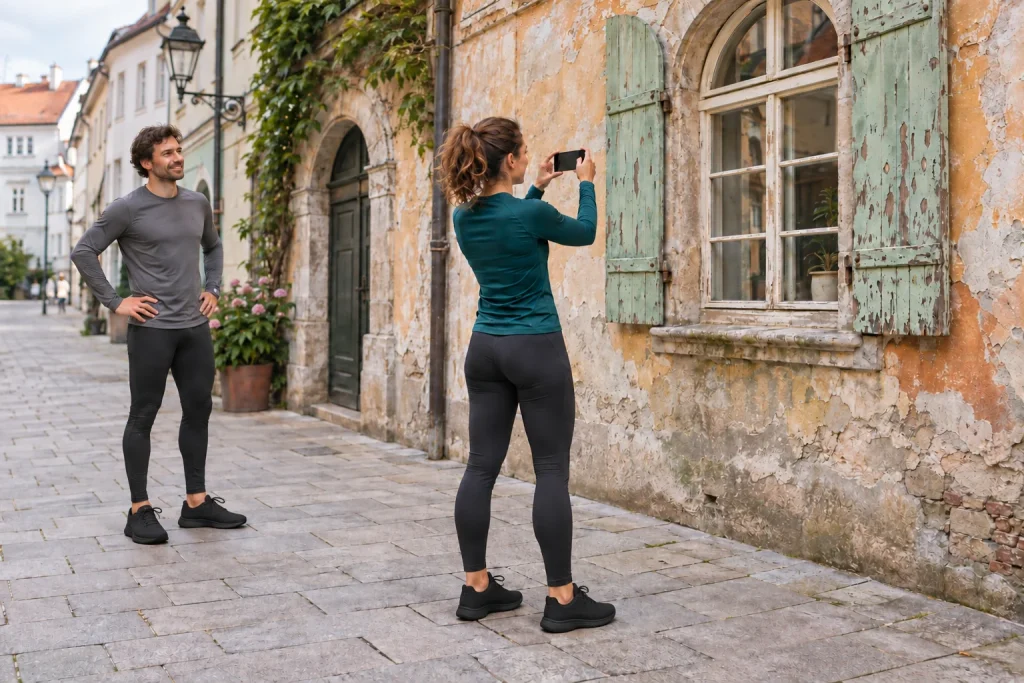
For an exploratory run organised around photography and stops, success does not mean keeping moving time as short as possible. Looking around, taking the picture, waiting for companions and moving between places all belong to the programme. Treating them as interruptions added afterwards can turn the day into continual haste. Building them in from the outset lets running and discovery coexist comfortably.
The following method is intended for our own kind of shared leisure outing among a smaller adult group. It is neither a specific urban route recommendation, race announcement nor nature-photography course. Check usability of places, access and transport separately for the particular day. The aim is to make stops genuine programme elements while keeping running within manageable boundaries.
One guiding idea helps you choose
First choose what the discovery will centre on. It might be a few interesting architectural details, green spaces in a district or a simple theme selected by the group. You need not add every notable point. Too many stops do not necessarily provide more experience; they may mean many transitions and an increasingly tight timetable.
The official Budapest Info material on sightseeing and running offers inspiration for combining the two. A tourism idea, however, is not currently verified access or a group’s personal itinerary. Select particular sections and stops for your own programme, checking relevant circumstances.
Ask others what they expect. One person may want to photograph extensively, another a few shared stops, while someone else sees the day primarily as a run. It is better to learn these differences during planning. An outing built around photography is not the same as continuous training during which a few pictures happen to be taken.
Choose a few main stops and optional points
Give the programme a few stops genuinely tied to the guiding idea. Add one or two optional details only if the group wants to stay and time permits. An optional point should not secretly remain compulsory, with skipping it requiring everyone to manage the organiser’s disappointment.
At every main stop, check what you will actually do: observe, hear a short story, take individual pictures or a group photograph? Activities can require different amounts of space. A pavement or narrow viewpoint may suit passing through without being usable for several people to stop for longer. Assess a stop as shared space, not just a view.
Provide usable, checked connections between points. The shortest line between two attractive places is not always the appropriate route. Traffic, stairs, closures or private land may interrupt the imagined transition. Your own map does not authorise use of a place unavailable under local arrangements.
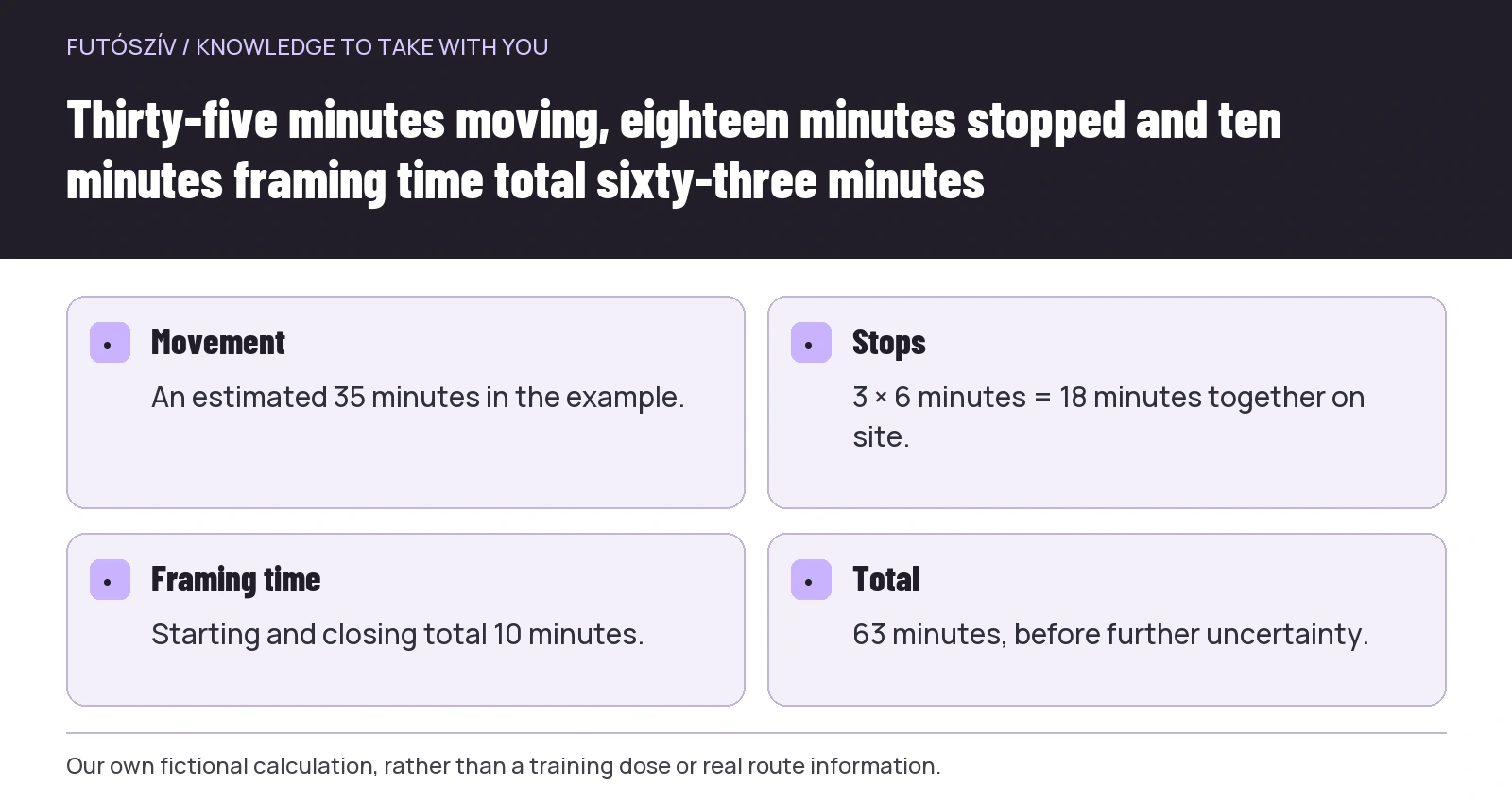 Enlarge diagram
Text version of the diagram
- Movement
- An estimated 35 minutes in the example.
- Stops
- 3 × 6 minutes = 18 minutes together on site.
- Framing time
- Starting and closing total 10 minutes.
- Total
- 63 minutes, before further uncertainty.
Add stops to the total time too
Route length and usual running pace can estimate only movement. Observing, photography, transport transitions and closing together need separate time. Plan the exploratory run in terms of total attendance too. This is particularly important for someone tied to a connection or family task.
The following entirely original, fictional calculation is neither training advice nor real route information. In the example, you estimate thirty-five minutes for a moving section planned as five kilometres. You allow six minutes each for three stops and ten minutes in total for starting and closing. The whole programme therefore appears to take at least sixty-three minutes even without separate uncertainty along the way.
| Fictional programme part | Your planning estimate |
|---|---|
| Moving section | 35 minutes |
| Three stops | 3 × 6 = 18 minutes |
| Starting and closing | 10 minutes |
| Total | 63 minutes |
The table does not prescribe photography time. It shows why calling thirty-five minutes of movement a half-hour shared programme is misleading. Your own situation may involve other numbers and additional parts. Choose stop duration according to participant needs and actual use of the place, rather than copying example figures.
Do not invent the stopping place at the last moment
Anyone wanting to photograph should signal to companions beforehand and step aside at a permitted, suitable place. Stopping suddenly in the middle of a busy running or cycling connection changes other people’s movement too. The group should not automatically crowd onto the same narrow point. Keeping the route clear matters alongside the subject of the picture.
Space is particularly important for a group picture. The photographer should not have to step backwards into traffic, onto stairs or into a prohibited area to fit everyone in. If the point is unusable, the picture can change or be skipped. Another angle, fewer people or a later occasion are valid solutions too. The outing does not demand every planned photo.
Do not turn a familiar running track into a studio either. Other users are not extras for your shared memory and cannot be expected to spend a long time going around you. Follow photographic and access conditions at an event or institution separately. A public attraction and an unrestricted photography area are not the same concept.
Different levels of photographic interest can be planned too
Someone wanting just one or two pictures should not have to wait at length at every point. More detailed photography can receive separately agreed time, or the group can choose a short shared programme after which interested people stay longer. A separate continuation also needs an organised route and ending, rather than arising from people drifting apart on site.
Make the photographer’s role optional and exchangeable. A person not taking photographs is not automatically the operator of everyone else’s equipment, and arriving with a good camera does not mean agreeing to professional documentation. Explain the picture you want and accept someone declining. A shared outing should not turn one participant’s interest into a free service.
Agree about appearing in pictures separately too. Some people prefer photographing details of the place; others want group pictures. Anyone not wanting to stand before the camera now still belongs in the day. Later sharing needs separate consideration of applicable conditions and people’s choices; running together is not permission for publication for every purpose.
In natural surroundings, adapt the composition to the place
In forests, parks or near protected areas, usable paths and local rules are the basis for choosing stops. Do not make a new track for the desired photograph or rearrange plants or objects. An interesting detail can be observed without reaching it at all costs. The limits of your own camera’s capabilities are part of the outing.
The Leave No Trace social-media guide supports environmentally considerate content creation and thought about sharing information. This is not an identical geotagging ban everywhere. A particular place’s sensitivity, local rules and the content shared matter together. Even for a family or friends’ picture, you need not leave the usable area.
Take props away with you. Ribbon, a paper sign or an object used for a photograph must not remain on site or alter a historical or natural detail. The next day’s visitor also wants to see the place in its own condition. The photo’s subject is the memory of being there, rather than appropriating shared space.
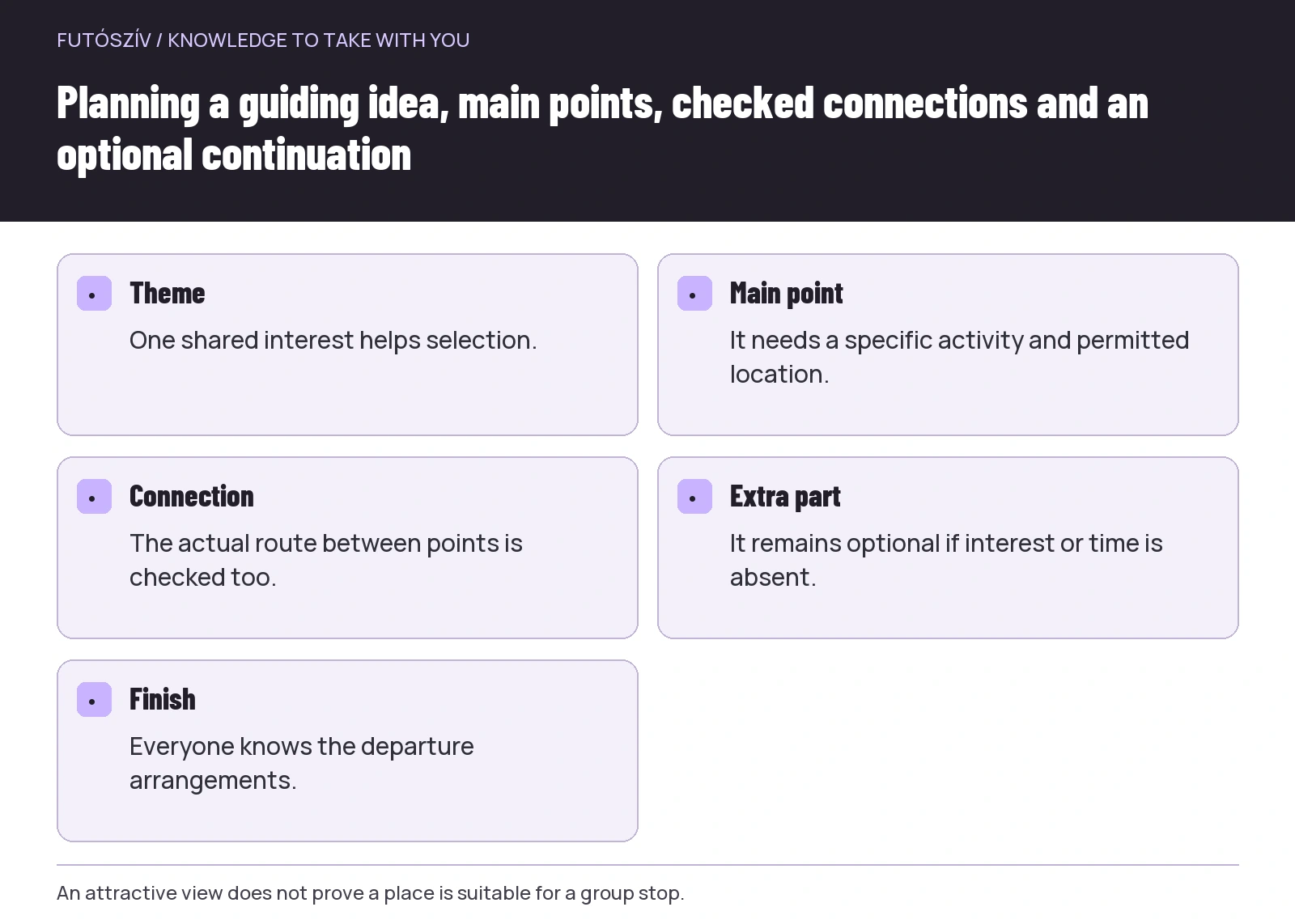 Enlarge diagram
Text version of the diagram
- Theme
- One shared interest helps selection.
- Main point
- It needs a specific activity and permitted location.
- Connection
- The actual route between points is checked too.
- Extra part
- It remains optional if interest or time is absent.
- Finish
- Everyone knows the departure arrangements.
Handle the phone and camera during transitions out of movement
Choose a way of using equipment that you know and that keeps belongings organised. Do not try to swap bag, phone, hat and props while moving. At the stop, establish the place and companions’ movement arrangements first, then take out the device. Leave time to pack away after taking the picture too.
You do not need a new view or setting at every point. In the shared programme, personal technical interests and companions’ time frame matter together. Someone wanting detailed photography can have that as a separate programme part agreed beforehand. The rest of the route should not continually revolve around on-site adjustments of uncertain length.
Adapt equipment power needs to the whole day according to the manufacturer’s description too. A phone used for navigation and necessary communication can have other tasks besides photography. Consider more than the planned number of pictures. If use changes during the day, simplifying the programme can be a good decision; every plan need not be maintained.
An example plan with three stops
The following outline is fictional rather than a real route. The first point is a checked, permitted shared place where the group agrees how things will work. At the second, an interesting shape or detail that can also be observed from a usable path provides the theme. The third offers a short shared closing near the actual departure connection.
Adapt movement between points to the programme agreed together. Someone not wanting a picture can join through observing or conversation. Add the extra photo point only if companions genuinely still want it and it fits the time frame. The day is complete even without the optional part.
Now imagine unexpected crowds or a closure at the second place. A working plan does not require the group to take the same picture at all costs. Skip the point or view another detail from usable space if local rules allow. The alternative should not be an unknown, unchecked shortcut.
Give the ending time and someone responsible for it
After returning or reaching the endpoint, a few organised steps remain: is everyone present, have belongings been packed and where does each person go next? State the end of the shared programme, particularly if some stay separately afterwards. Someone joining the shorter part should not feel obliged to stay until every last unannounced idea is finished.
With fixed transport, add the connection from endpoint to stop or car park to total programme time too. Stopping moving time does not stop the real clock. Checking and sharing photographs can wait until later if departure is the next necessary step. The shared day need not end with creating a post on site.
One agreed, appropriately managed family or group location may suffice for collecting pictures. Do not immediately request every recording from everyone or automatically publish the whole collection. Further use needs a separate decision based on participant choices and image content. Keeping a memory and showing it widely are different tasks.
For the next outing, consider more than the prettiest picture
Note which stop was genuinely usable, where waiting became too long and what connections between points were like. These are practical observations. The best image is not necessarily from the place most usable with a group, and a less spectacular point may have provided the best shared break.
Ask companions about their experience rather than their photographs’ quality. One specific question may be enough: which part would they keep, and what would they shorten next time? Answers may produce a smaller route, another theme or different rhythm. Every outing need not add more points and distance.
An exploratory run with photography and stops is well planned when movement, observation and shared-space use receive equal attention. Pictures then become memories of the occasion rather than compulsory goals directing the group and surroundings. Fewer genuinely agreed stops often make a fuller day than photographing an entire route at all costs.
How Futószív articles are prepared: our editorial guidelines.