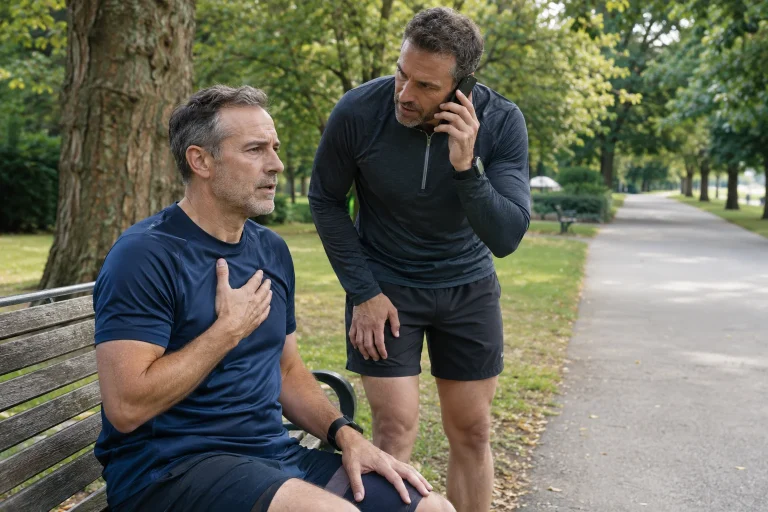
If you feel unwell too, do not analyse your watch
If palpitations do not stop, or chest pain, breathing difficulty, feeling faint or fainting accompany them, stop exertion and seek urgent help. In Hungary, call 112 with severe or ongoing illness. Do not drive yourself to care. Even if these symptoms have stopped, urgent medical consultation may still be necessary; the next run should not be the test.
The NHS guide to heart palpitations also distinguishes recurring symptoms needing assessment from situations involving associated warning symptoms. Use Hungarian assistance options instead of UK healthcare phone numbers. Give the precise location and explain what is happening rather than an app’s automatic label.
This article supports preparation and a medical conversation. It cannot identify your rhythm from a sensation or heart-rate trace. During current illness, seeking help comes before reading, taking screenshots and saving the workout.
Palpitations are a symptom, not a ready-made rhythm diagnosis
Some people feel pounding, others a skipped beat, fluttering or suddenly rapid heartbeat. The unpleasant experience may be brief or persistent, linked to exertion or occurring at rest. Your own wording matters: you need not choose a medical term for a provider to understand what bothered you. “It beat strangely” becomes more usable with a few concrete details.
The 2024 HRS athlete consensus says normal physiological processes and several abnormalities may underlie symptoms. The recommendation on assessing arrhythmias in athletes therefore recommends detailed history, physical examination and a resting ECG when investigating palpitations. Naming a symptom and confirming its cause are separate steps.
Do not judge danger solely from the force of a beat or how frightening the sensation was. A friend having a similar feeling with no problem found is insufficient too. Your history, timing and associated symptoms determine necessary assessment. An earlier examination’s results also need interpreting alongside the current story.
Six questions for describing the episode more precisely
When did it begin and how long did it last? If the time is uncertain, say it is an estimate. How did it begin? Did it switch on suddenly or gradually intensify with exertion? When did it end? Did stopping change it, or was its course independent? These details structure the story but are not home diagnostic rules.
What were you doing? Easy running, a climb, acceleration, standing after finishing and rest are different situations. What accompanied it? Chest symptoms, dizziness, feeling faint or breathlessness are especially important. How often did it happen? Is this one occasion, a weekly pattern or a more frequent change? Frequency can also help organise further monitoring.
A brief note may suffice: “It began suddenly during easy jogging, I stopped, it lasted a few minutes and there was dizziness too.” This says more than a heart-rate reading once appearing high. Gather information when safe and without delaying urgent help.
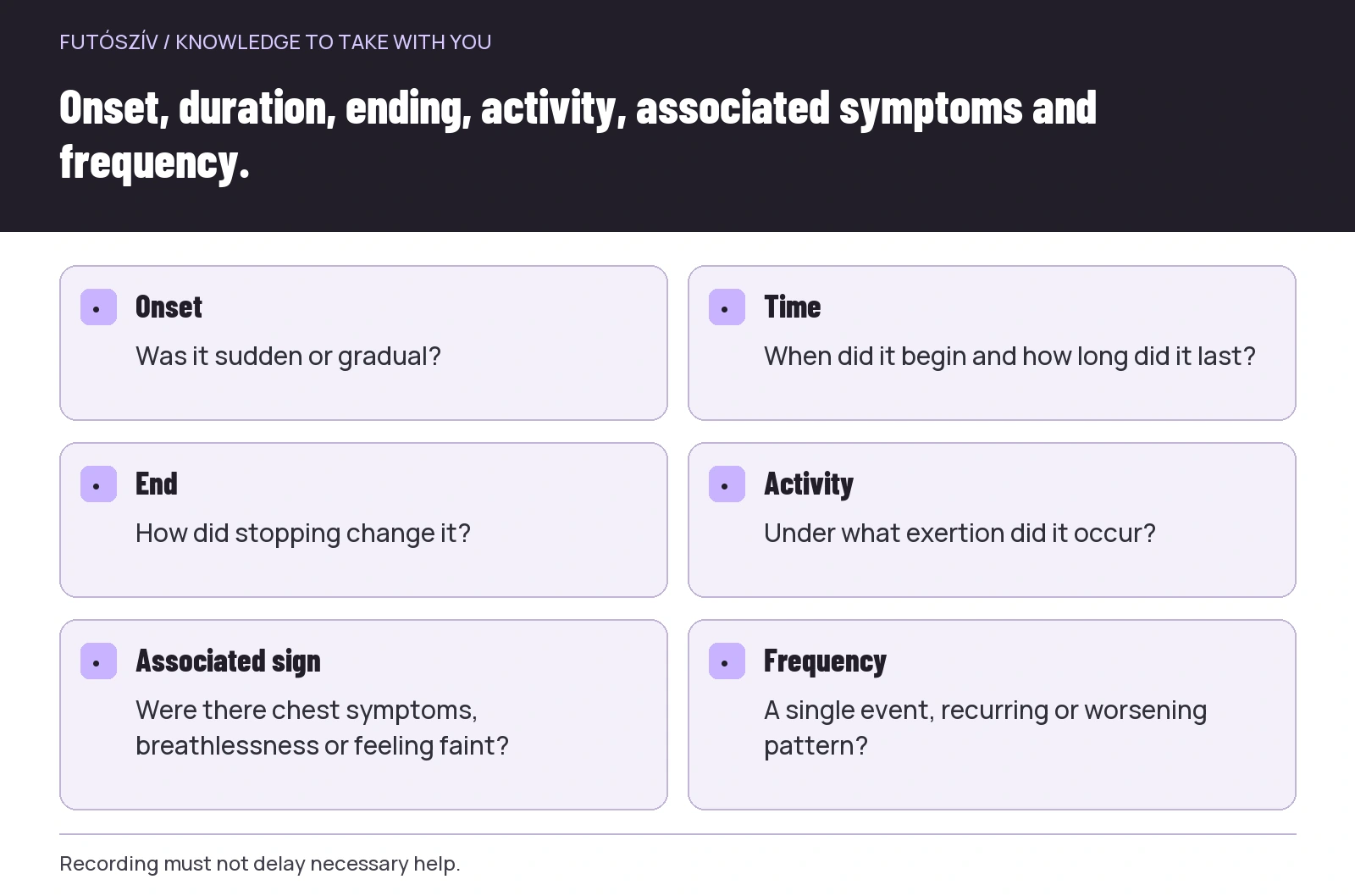 Enlarge diagram
Text version of the diagram
- Onset
- Was it sudden or gradual?
- Time
- When did it begin and how long did it last?
- End
- How did stopping change it?
- Activity
- Under what exertion did it occur?
- Associated sign
- Were there chest symptoms, breathlessness or feeling faint?
- Frequency
- A single event, recurring or worsening pattern?
Heart rate and heart rhythm are not the same information
Heart rate describes how quickly pulsation is detected over a period. Assessing rhythm may need more information. A suddenly high displayed number does not itself explain what happened, while an average may conceal a short episode. Consider consumer devices’ measurement uncertainty during movement too.
According to the EHRA guide to digital devices , artefact and noise need excluding from a device-recorded abnormality before treatment. A wearable may therefore provide a usable recording, but automatic interpretation is not a final medical decision. Good-quality information associated with symptoms and professional review can be valuable together.
If your device has an ECG function, learn intended use and exporting in calm circumstances. Do not search for the menu for the first time while unwell. An “inconclusive” result is not normal rhythm, and a “normal” message does not override severe symptoms. Check usage limitations for your particular model.
Which monitoring fits your own account?
For exertion-associated palpitations, the HRS recommendation discusses testing or monitoring that can help record rhythm during the particular sporting situation. Frequency and how the device can be used during that activity matter when choosing monitoring. This is not a call to provoke symptoms independently.
Tell your doctor if symptoms occur very rarely, relate to particular movement or a previously worn device did not work technically well during running. Targeted information helps select the next method. You need not decide which monitor or test is appropriate yourself or use every possibility at once.
Ask what to do if symptoms recur while wearing the device, how to mark the time and when to stop activity. Monitoring does not make every exertion automatically manageable. Clarify activity instructions during investigation just as you clarify how to send data.
Describe circumstances without turning them into certain explanations
The NHS mentions strenuous exercise, insufficient sleep, stress, some medicines, caffeine, alcohol and nicotine among possible triggers. Palpitations may also occur during pregnancy and menopause. These can be important discussion points, but their presence does not prove new symptoms during sport are harmless.
Record real quantities and timing where known: what you consumed, which preparations you used, how much you slept and whether there was recent illness. You need not defend the image of a “good runner” before your provider. An accurate account allows meaningful consideration of possible connections and other causes.
Do not independently stop prescribed medication because a leaflet lists a side effect. Ask your doctor or pharmacist and describe symptoms. Equally, do not begin a new preparation, electrolyte product or supplement as a home remedy against arrhythmia. Treatment relates to a confirmed or likely cause.
Women need not choose between hormonal and heart symptoms
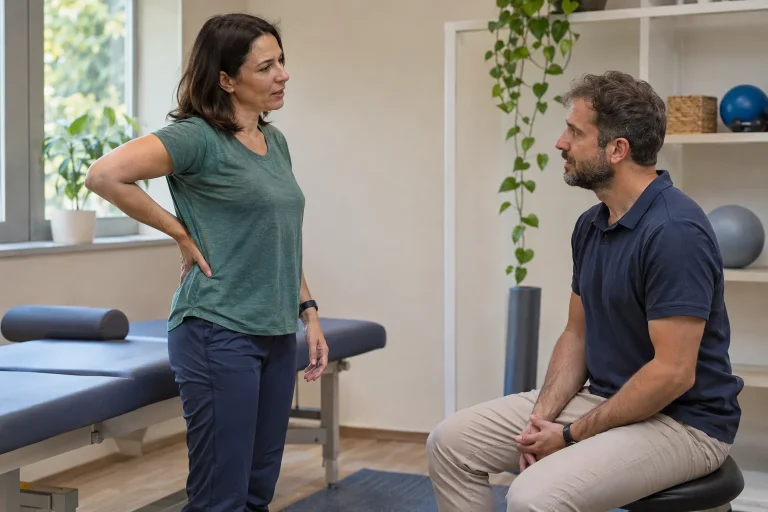
During pregnancy or menopause, it can be easy to attribute everything to hormonal changes. The life stage matters but does not close assessment. Explain what is new about the symptom, how it relates to exertion and whether other symptoms accompany it. Your experience deserves precise questions.
A running group should not respond that this is normal for everyone at that age either. Similar stories may offer social support but are not individual opinions on fitness to participate. With chest symptoms, breathing difficulty or feeling faint, the same urgent decision principle applies regardless of life stage.
At the appointment, request an explanation of which questions results answered and the next step. You need not decide beforehand it is “definitely hormonal” or “definitely heart disease”. Clarifying uncertainty belongs to care, not a choice imposed on you alone.
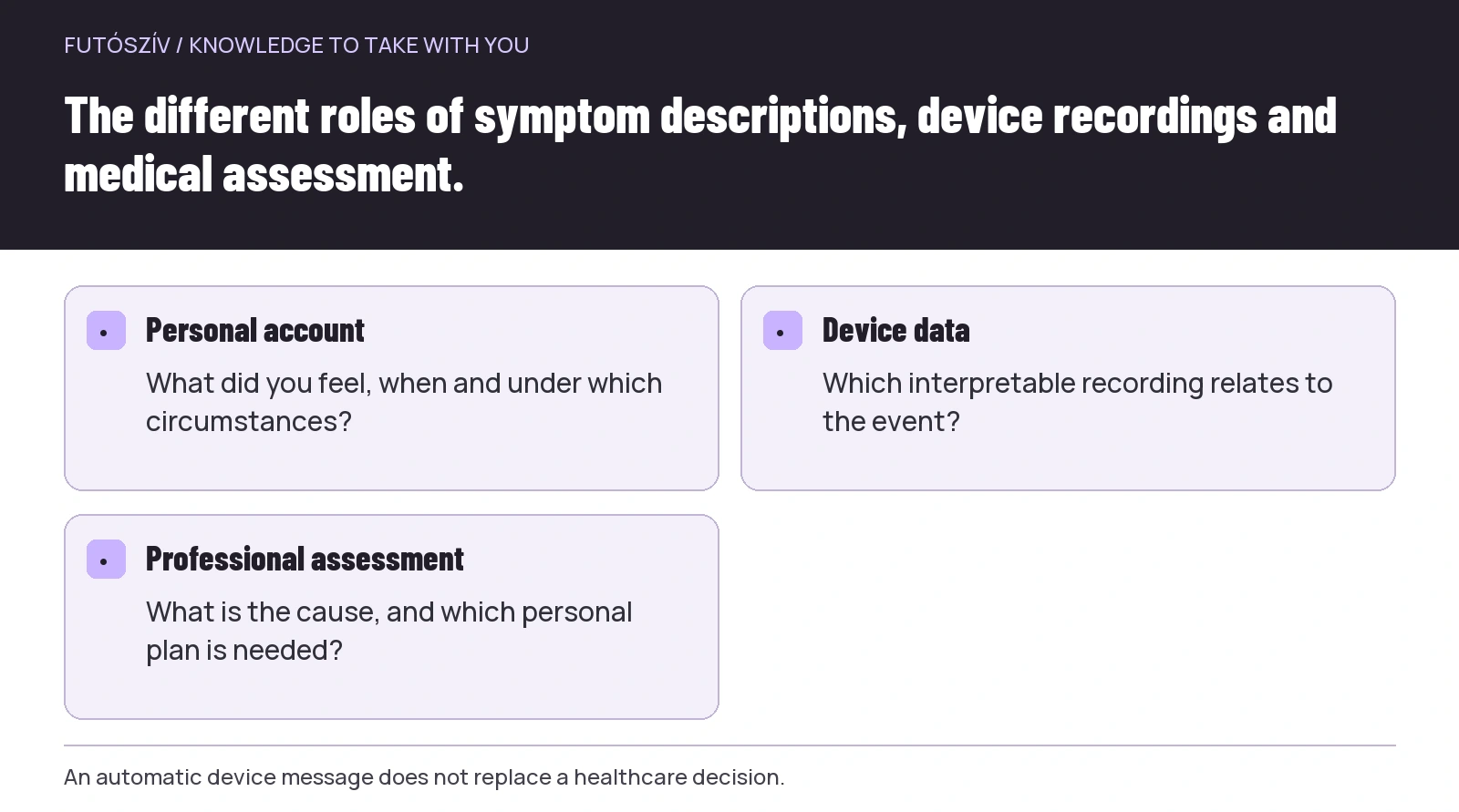 Enlarge diagram
Text version of the diagram
- Personal account
- What did you feel, when and under which circumstances?
- Device data
- Which interpretable recording relates to the event?
- Professional assessment
- What is the cause, and which personal plan is needed?
Have a manageable plan after the first visit too
The NHS information on rhythm problems emphasises that symptoms do not necessarily mean arrhythmia, while recurring or worsening symptoms need assessment. At the end of the examination, ask what is known, what remains unclear and when contact is needed again. Do not automatically interpret “we saw no abnormality today” as reassurance covering every future symptom.
The Sussex hospital patient leaflet also gives separate attention to recurrence, history and associated warning symptoms. Read the post-discharge plan and clarify if no understandable activity instructions were provided. Use general information alongside your own care findings.
If arrhythmia is confirmed, discuss activity and treatment individually. The diagnosis name alone does not determine what running is allowed, and an acquaintance’s different treatment is not a suitable comparison. Ask about the desired sport, competition, review and a personal safety plan.
Working with a coach: a decision framework before data
The coach most needs to know which activity the clinical plan permits, which symptoms mean stopping and when reassessment is expected. Interpreting ECGs or medication options is not their task. If symptoms remain unclear, do not independently agree on a hard test run to “find the truth”.
The training log can include episode timing and the associated exertion, but share sensitive health information only where necessary. The group need not know every test result to accept shortening or missing a session. Respect and concrete safety arrangements can coexist.
Agree with running companions how you will signal a need to stop and who stays with you. Pace or a shared target time should not make reporting symptoms harder. In a good community, taking illness seriously belongs to shared arrangements rather than being an awkward exception.
One brief sheet for the next meeting
Place the most typical episode at the top, followed by recurrence frequency and associated symptoms. Add a list of preparations, known history and your main question. If a recording exists, show the original information with its time, not only a cropped number.
Your question can be specific: what activity may I do until the next examination, how should I record another event and whom should I contact if symptoms change? An understandable answer helps organise the next days. You need not redesign your whole running life at once to make these three questions clear.
The long-term aim is to turn a symptom into an understandable account, targeted testing where necessary and a usable personal plan. Palpitations need lead neither to automatic panic nor automatic dismissal. Recognising warning signs quickly and organised investigation provide the basis for the next decision.
Sources
- NHS: Heart palpitations
- HRS: Expert consensus statement on arrhythmias in the athlete, 2024
- EHRA: How to use digital devices to detect and manage arrhythmias, 2022
- NHS: Heart rhythm problems, arrhythmia
- University Hospitals Sussex: Palpitations emergency department leaflet
How Futószív articles are prepared: our editorial guidelines.