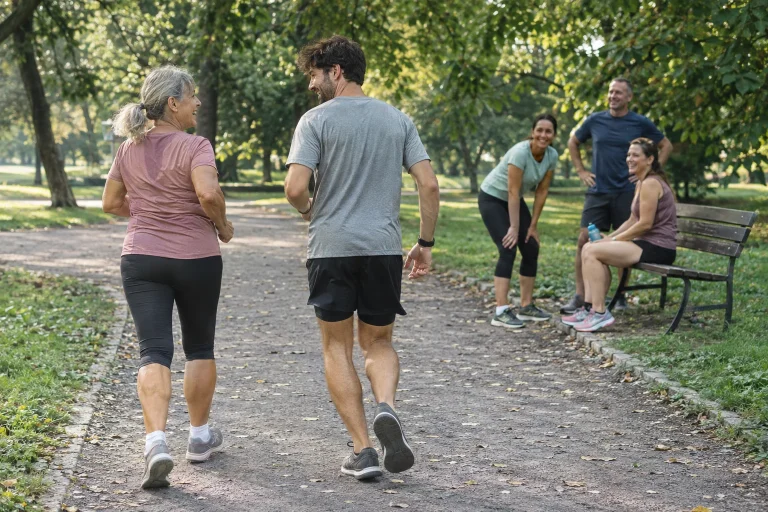
Skipping the photo should be a simple part of club arrangements
In many running clubs, a shared picture is a natural finish. Participants gather, someone raises a phone and a post appears later. In this quick process, speaking up can be difficult for someone who does not want to appear today. The choice becomes real when organising anticipates it and declining is not a separate task of explaining yourself.
This article outlines arrangements for planned community photographs involving adult club members. Image rights, data processing and the lawfulness of a particular use may require separate examination. The practices below support choice and communication; they do not replace the organisation’s appropriate legal and data-protection procedures.
Taking and publishing are two separate decision points
A participant may happily appear in a personal keepsake but feel differently about a public club post or later advertisement. If you compress all this into a single “Would you like a photo?” question, the answer’s meaning remains unclear. Name the purpose of the image and its intended use understandably.
Section 2:48 of the Civil Code in Hungary’s National Legislation Database contains both the main rule and exceptions concerning making and using a person’s image. A specific photograph’s legal classification cannot automatically be settled by saying it was taken in public or includes several people. As an organiser, clarify the appropriate framework for your own use.
At the level of community arrangements, you can simply separate the questions. Will there be a planned picture? On which platform and for what purpose would it appear? Who handles questions or requests? Participants can decide with this knowledge instead of first encountering the intended use after a post has already been published.
Keep advance information brief and specific
The invitation can mention a planned club photograph at the end and name where the related information can be found. On site, repeat the specific purpose and choice before the photo. Participants should not have to infer what will happen from previous posts.
The person taking pictures should be recognisable and understand their task. If several people take pictures, the boundaries of the club-organised process should also be clear. An organiser cannot promise complete control over every passer-by’s or participant’s personal device. They can, however, define expected practice within their own arrangements.
A 2023 NAIH decision examining both recording and publication addresses appropriate data-processing information in a workplace case. This is not a universal template issued for running clubs. The source is a reminder to explain the specific data-processing circumstances rather than use a vague statement merging every use.
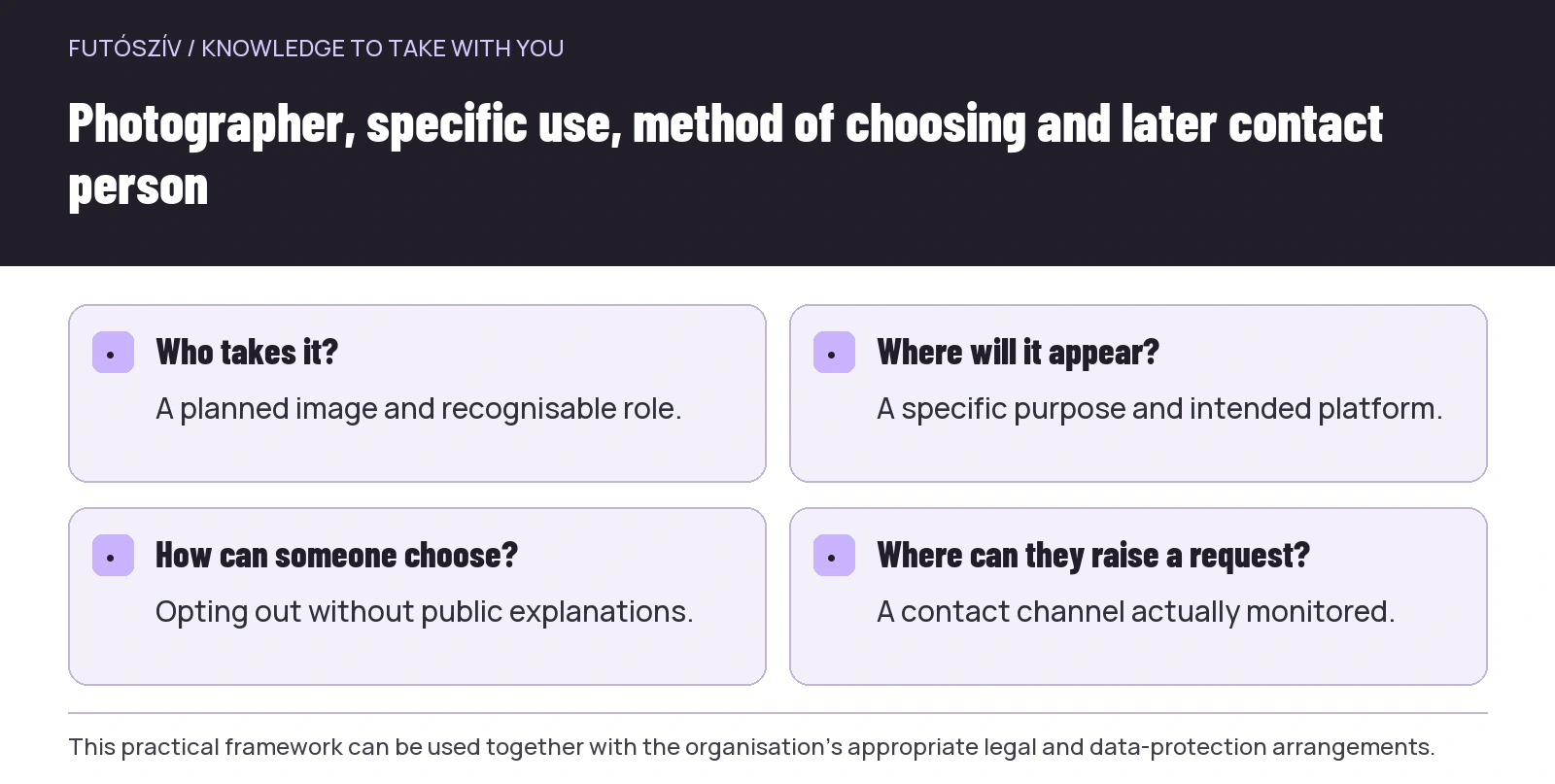 Enlarge diagram
Text version of the diagram
- Who takes it?
- A planned image and recognisable role.
- Where will it appear?
- A specific purpose and intended platform.
- How can someone choose?
- Opting out without public explanations.
- Where can they raise a request?
- A contact channel actually monitored.
The on-site invitation should not put membership at stake
Do not introduce the photo with “All real club members, stand here”. Linking the picture to belonging can create social pressure. Suitable wording is simple: anyone wishing to appear in today’s picture for the named purpose can join the photograph; everyone else remains a participant in the programme.
Opting out should not require giving a reason before the whole group. There may be personal, time-related or other reasons the club need not judge. Respond briefly and naturally without beginning persuasion or jokes.
If you choose a separate point for the photo, make it suitable and understandable for everyone. Someone not wishing to appear should not be left in an uncertain place without closure to the programme. Clarify the running finish arrangements separately from the role of the photography stop.
Address four separate questions in the process
| Question | What needs naming? | Why does it matter? |
|---|---|---|
| Will there be a picture? | The planned image and photographer | Participants understand the situation in time |
| What will it be used for? | A specific purpose and platform | Personal keepsakes and public content do not become blurred |
| How can someone choose? | An understandable, simple signal | Declining does not require a public personal story |
| Where can they raise a request later? | A contact channel actually monitored | The request does not remain buried in comments |
This is an original process overview, not a consent form or complete data-processing document. Legal and administrative solutions need to fit the particular organisation. The four questions support community understanding.
Give the photographer a clear task too
The person taking the picture should know which image is planned and how choices are handled. They should not later have to guess from faces who would have wanted to appear. Agree the process with the programme organiser in advance, including the procedure for handling finished pictures.
Attention to the surroundings and other visitors remains necessary. The group should not occupy an entire passage or enter an area unavailable for use for the photo. Taking the picture is part of the programme, not a separate exemption from the location’s rules.
If someone does not want to appear, the photographer should not capture them secretly or as a joke anyway. Handling the signal should be a natural part of the agreed arrangements. Actual practice makes an honest opportunity to choose credible.
There are other kinds of content besides group pictures
A route detail, a landscape photographed from a permitted location or another appropriately planned detail can show the atmosphere of a shared session. Not every post needs every participant’s face. Consider the content’s purpose together with the chosen image.
A photograph of a shoe, race number or clothing detail is not automatically anonymous either. Combined with other information, it may identify a person, so do not treat a detail photograph as a technical loophole resolving every question. The specific use and organisation’s procedures still matter.
A creative choice can also be to omit the image. An accurate short report or your own illustration can present the programme too. Regular club communication does not justify creating content showing people at every session at all costs.
An edited example of a photograph that is easier to decline
At the end of the programme, the organiser explains that a picture is planned for the club’s next report and reminds participants of the related information. They offer a separate, brief photography part. All participants have already heard the run’s closing information and what they need for the next session.
Those wishing to join gather at the appropriate place for the picture. Those opting out need not give explanations, and others do not question them in turn. The organiser handles taking and publishing the image according to their own procedures rather than automatically distributing it to every member’s personal platform.
This is an original editorial operating scenario, not a legal template. The point is the social framework: the choice is understandable before the photograph, opting out is not leaving the community and the planned use does not remain hidden.
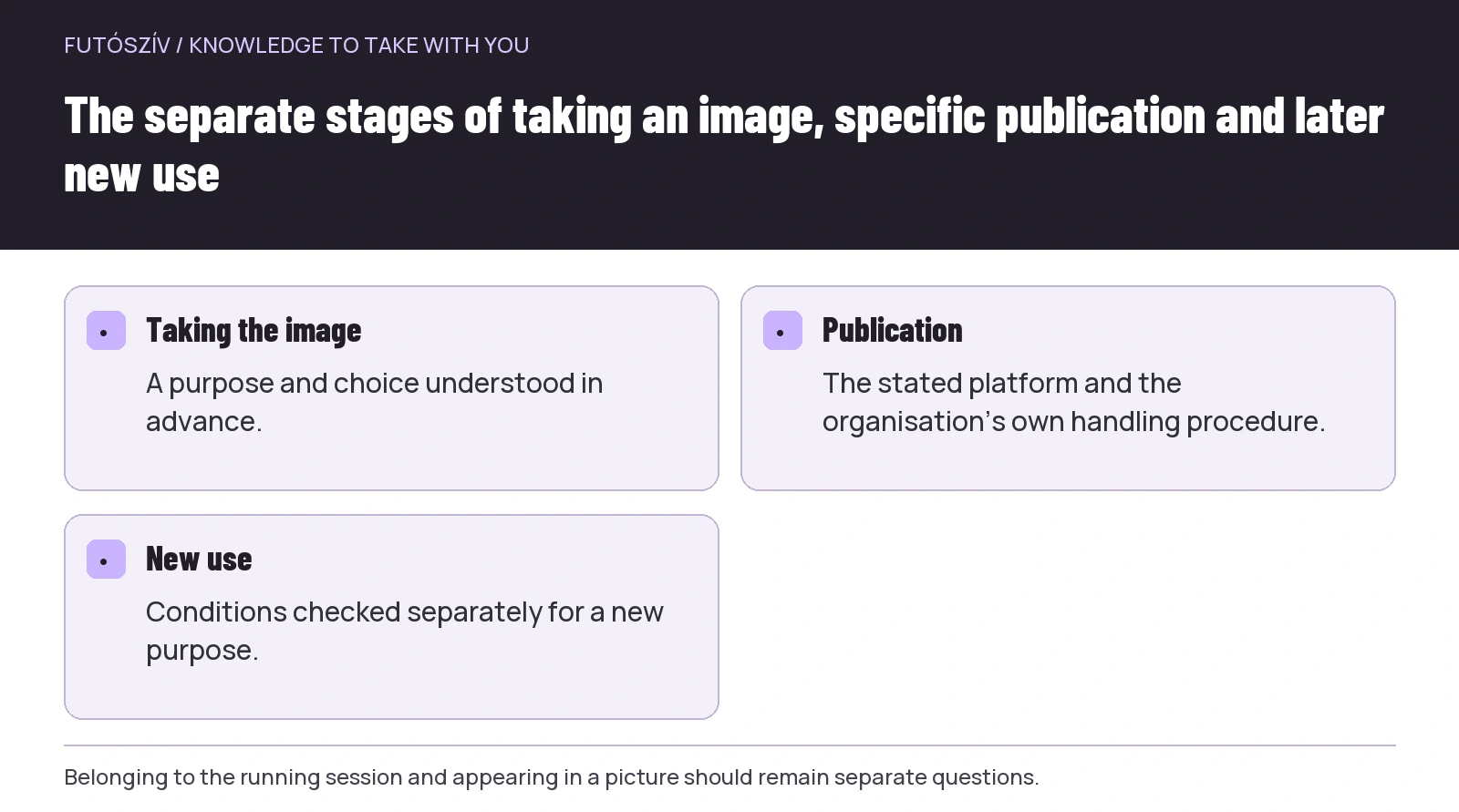 Enlarge diagram
Text version of the diagram
- Taking the image
- A purpose and choice understood in advance.
- Publication
- The stated platform and the organisation’s own handling procedure.
- New use
- Conditions checked separately for a new purpose.
A one-off picture should not quietly become material for a new campaign
Later use of an image made for a report may involve a different purpose and audience. File availability should not imply suitability for all future communication. Examine conditions for a new use within the organisation’s own appropriate procedures.
The date and content of a picture selected from old albums also matter. It may include a former member, the caption may refer to an old programme and access to the location may have changed. A photograph is more than a visual: it is information and a story tied to people and circumstances.
The person responsible for publication should therefore check which image they use, for what purpose and based on which agreement. Organising records need to make necessary information traceable, consistently with the particular data-processing procedures. A shared folder name alone is not permission to use an image.
Discuss resharing within the club too
Publishing a picture on the club’s own page and every participant forwarding it to their own contacts may create different audiences. The group should understand expectations for members sharing and tagging images. The community’s own rule should not remain unstated.
Appearing in a picture does not necessarily mean wanting a name, profile or personal story tagged alongside it. Agree associated information and sharing intentions separately. Do not let a platform’s automatic suggestion decide for the community.
If someone takes their own picture at a session, the organiser can explain club expectations within their own remit. It is not credible to promise that all online onward distribution can be reversed. Decisions before publication and appropriate information are therefore especially important.
Provide real contact for later requests
A request concerning an image should have a known recipient. Participants should know where to identify the particular picture or platform. The club should give a response that can be followed under its own procedures, with the appropriate person handling legal or data-protection questions where needed.
Do not request public justification in everyday communication. Understanding the request may require identifying the specific image and use, but not automatically the person’s personal story. The recipient’s reaction should not label the participant oversensitive.
Describe technical changes and their limitations accurately. Removing an image from a platform you manage differs from copies already reshared to unknown places. The club should state what it actually did and checked rather than promising disappearance from every previous appearance.
Photography arrangements are part of an open community
The England Athletics collection on inclusive clubs also connects experiencing participation and being valued with community arrangements. The source is not a legal photography guide. An original question applicable to club photos is whether participants can truly choose without putting their belonging in doubt.
Reactions from regular members matter here. If opting out is followed by jokes or repeated persuasion, an officially free choice may be harder in practice. Brief, consistent signals from the organiser can normalise appearing in a photograph as a separate decision.
Newcomers learn club customs from returning members’ behaviour too. Respect for choice should therefore appear beyond a document. They should recognise the same arrangements when pictures are actually taken and later shared.
A brief working sheet for the next session
The club’s own sheet should include the photo’s purpose, intended platform, photographer and publisher roles, how participants choose and the channel for later questions. Legal and data-protection conditions need appropriate support. The working sheet makes these procedures usable on site.
After the programme, examine whether the information was understandable, opting out was easy and actual use matched the purpose stated beforehand. If any part was incomplete, choose a specific improvement: a clearer invitation, a separate photography stop or clearer contact arrangements.
Running-club photos can thus preserve the community’s story while participants’ choices remain visible. A good picture and an easy no can coexist when the process is deliberately organised before photography, during sharing and when later requests arrive.
How Futószív articles are prepared: our editorial guidelines.