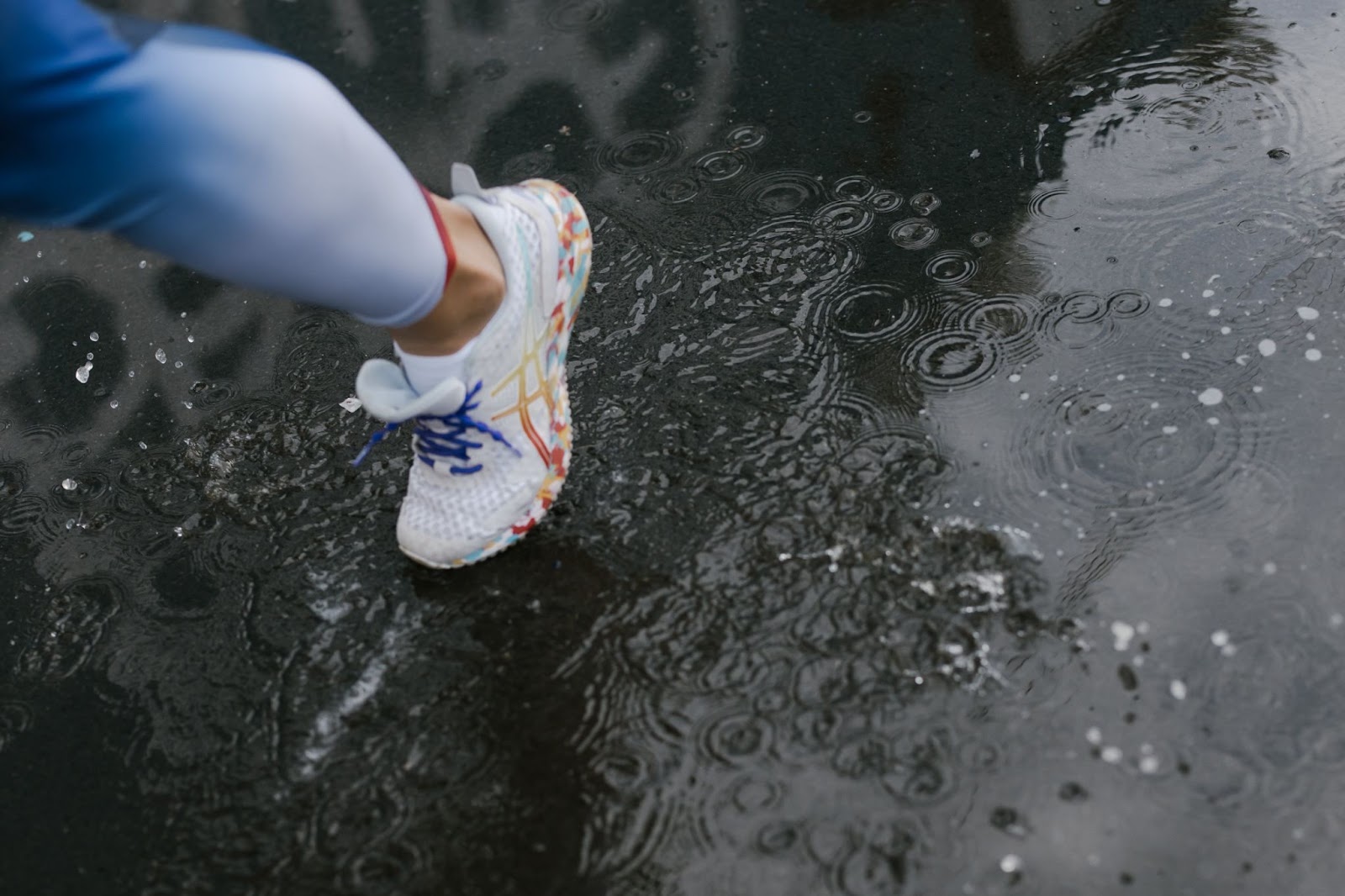
Waterproof running shoes can be useful in wet conditions, such as when running in rain, snow or on muddy paths.
Waterproof running shoes generally provide protection against moisture in two ways:
A membrane: A membrane is a thin, waterproof and breathable layer between the upper and the sole. Water droplets cannot pass through the membrane, but air can.Editorial clarification · 22 November 2026. Water-vapour transmission and air permeability are different properties. A breathable membrane can pass water vapour while remaining windproof; exact behaviour depends on the particular material structure. Source
A waterproof covering: This is a waterproof layer covering the upper. The covering is generally made from waterproof fabric or silicone.
Waterproof running shoes can be made from many different materials, including leather, synthetic materials and mesh. The choice depends on your individual preferences and running needs.
If you are looking for waterproof running shoes, consider the following:
- Fit: Waterproof running shoes should fit just as well as non-waterproof running shoes. It is important that they are comfortable and do not slip off your feet.
- Support: Waterproof running shoes should support your feet just as well as non-waterproof running shoes. It is important that they suit your running style and needs.
- Weight: Waterproof running shoes are generally heavier than non-waterproof running shoes. It is important to choose a comfortable pair that is not too heavy.
Popular waterproof running shoe brands: Nike, Adidas, Asics, Saucony, Brooks
How Futószív articles are prepared: our editorial guidelines.