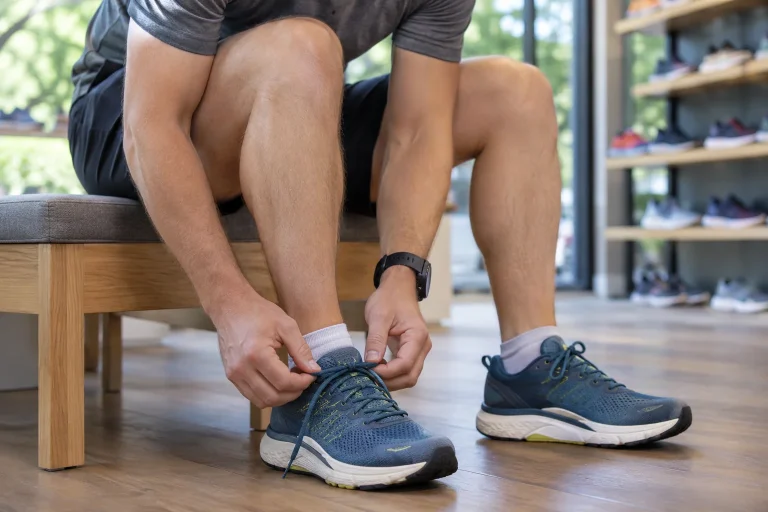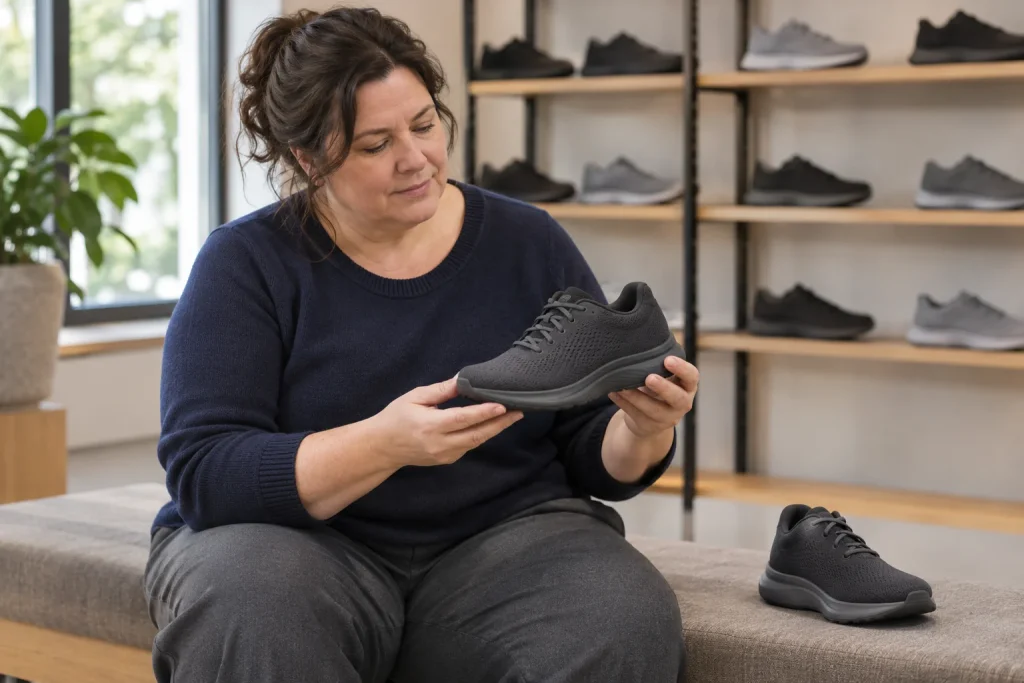
Softness is often the first easily observed property in a shoe shop. You press the sole, put the shoe on and one feels pleasantly yielding. When seeking running shoes at a higher body weight, advice may quickly follow: you definitely need the most cushioning. Wanting comfortable, reassuring equipment is understandable. The question cannot, however, be settled simply by choosing the sole labelled softest.
Softness felt by hand, comfort experienced on the foot and shoe stiffness measured in research are different data. Whether injury occurrence differs between two shoe versions in a study is another question. Your own choice also includes fit, actual task and previous symptoms. One characteristic cannot be expected to solve the whole situation.
If you currently have new or persistent foot or leg symptoms, shoe searching should not replace assessment. Sudden severe pain, substantial swelling, altered shape or inability to bear weight may be urgent. The NIAMS sports-injury information explains why such signs should not be tested through repeated new shoes and pain-provoking trials. Finding appropriate equipment and clarifying symptoms are complementary tasks.
What did the cushioning study compare?
In Malisoux and colleagues’ randomised study of 848 healthy recreational runners, two shoe prototypes differing in cushioning were allocated randomly. Running and symptoms were followed for six months. Injury meant a physical complaint reducing or interrupting running for at least seven days. The study therefore involved defined participants, two particular versions and its own endpoint.
Participants were also grouped by body mass using separate medians for men and women. This research classification was neither a BMI cutoff nor a medical category. ‘Heavier runner’ served comparison within the sample. It did not mean every person with a larger body or obesity in everyday terms appeared as a separate study group.
The paper’s results showed higher injury risk overall in the group receiving harder shoes. The favourable association of greater cushioning was detectable in the lighter subgroup; the estimate remained uncertain in the heavier subgroup. This does not prove soft shoes ineffective or harmful for heavier runners. Nor does it establish that any softest shop model gives them certain protection.
Why is a group result not a personal shoe prescription?
The research question differs from the shopping question. A study compares two particular prototypes; you choose among many products differing in several properties at once. A current shoe may have another upper, shape, width and overall design. A matching softness label does not mean trying the same equipment used in the study.
Your body mass does not replace your whole history either. It does not reveal recent running volume, surface, previous injury or where a shoe presses. Research groups help examine one detail without describing every difference important in everyday choices. A more precise question is what we know about this characteristic and what still needs clarifying for you.
Shop advice can have value when the salesperson listens to your purpose and fitting experiences. Selecting a shelf solely by pointing at your body type is different. You can ask: ‘Which specific property makes you recommend it, and what other size or design could we compare?’ This supports understanding the choice, rather than examining the professional or salesperson.
 Enlarge image
Fit has its own place alongside softness
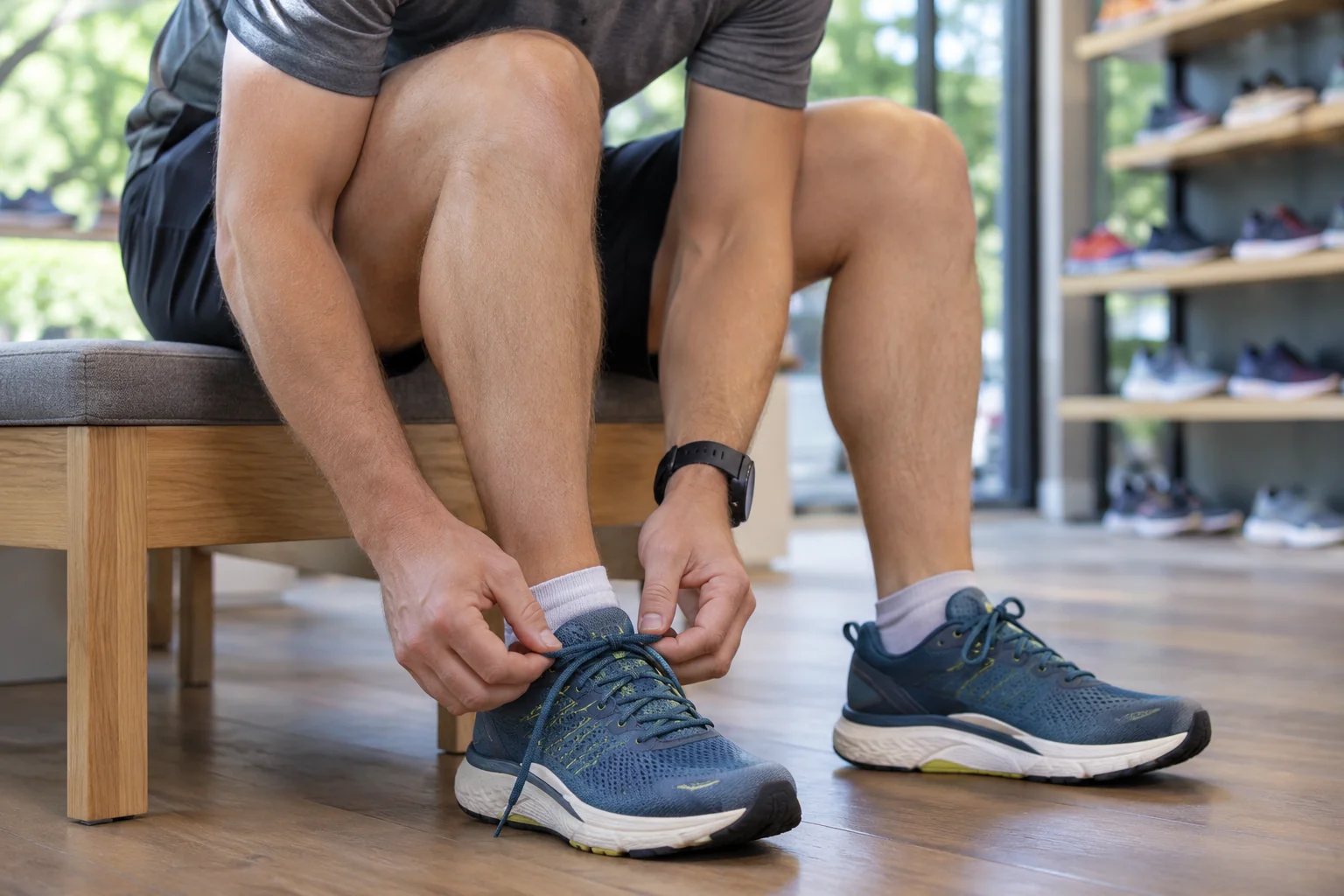
A shoe with a pleasant sole can still be too narrow, too long or insecure at the heel. The AAOS fitting information highlights size variation between brands and styles. Shape suited to your feet, appropriate width and actual fitting therefore say more than automatically choosing a previously familiar number.
If width is the problem, greater length is not necessarily the solution. Adding length may change movement within the shoe while its shape remains unsuitable. Ask whether another width or design is available. You need not accept tight shoes for a soft sole or justify why a style does not fit.
Your own running socks can support consistent fitting. Check both feet and do not judge only while seated. In the shop’s permitted trial area, observe sensations through movement currently appropriate for you. If running now provokes symptoms, you need not jog to make a purchase; resolve the health question separately.
An organised shop comparison can provide more information
Focus on a small number of clearly distinguishable candidates at a time. Describe specifically to yourself or the salesperson where and what you feel: pressure from the upper, forward sliding, a pleasant sole or an uncertain feeling. Useful details then accompany a general ‘good’ or ‘bad’ impression. You need not know every technical sole material to name a fit problem precisely.
Do not turn trying shoes into an exhausting test. The aim is not choosing the fastest shop lap or loudest foot strike. If repeated trials make sensations hard to distinguish, stop. Buying shoes is not a competition; knowing which property you actually experienced matters more than immediate choice.
A useful brief note includes exact model and version, size and width, a clear comfort advantage and remaining question. Do not devise an injury-prevention score. Notes help distinguish observed information from impressions later. Beside ‘soft’, for example, write ‘still pressed on the top of my foot’, so an initially favourable feeling does not erase the problem.
Language also changes between research and advertising
Advertising may extend ‘protection’, ‘gentler’ or ‘for larger runners’ to every situation. Examine the support: laboratory data, user opinion or actual injury follow-up? These are different information. Measuring how compressible a material is differs from asking which symptoms people experienced while wearing the whole shoe.
Anyone promising freedom from injury through one product promises too much. NIAMS lists several injury factors, including previous injury and rapid changes in load. Equipment may matter, but does not switch off other circumstances. Buying comfortable shoes is therefore no reason immediately to undertake much more or harder running.
A more expensive model is not automatically more personalised either. State your budget beforehand and request several fitting options within it. Available width, exchanges and understandable trial rules may also matter. You need not uncomfortably overspend because body size led to one product being presented as the only solution.
Do not change everything at once on your first occasions
If chosen shoes suit your current activity plan, initial occasions can aim at everyday familiarisation. You need not choose a new route, greater distance, faster pace and new equipment simultaneously. Numerous changes make events harder to describe later. This is not a home research protocol, but a simple way to make experience more traceable.
Treat overall shoe comfort separately from emerging symptoms. Pain appearing towards the end of a longer occasion should not automatically become ‘it needs breaking in’. Let location, nature and severity guide the next decision, with professional assessment when needed. You need not repeat the same painful distance to be confident about your experience.
Check warranty, exchange and return options under the particular shop’s conditions, preferably before payment. Outdoor use or removing labels may affect options; no single rule can be asserted for every shop. Personal observation and commercial handling are separate tasks. A refused exchange does not prove symptoms unimportant or shoes certainly appropriate.
 Enlarge image
Where do old shoes and previous symptoms fit?
A formerly comfortable pair can start a useful discussion: describe what you liked and why you seek another. Even the same name on an updated model does not guarantee identical feel or cut. Familiarity can inspire questions without requiring blind loyalty to a product family. Trying the new version on your own feet still makes sense.
Mention previous injury or individually prescribed insoles both when choosing shoes and during medical discussion. Do not randomly add several insoles to make soft shoes softer. An accessory can alter fit, and an online idea does not replace individual instructions. The aim is understanding how things work together, rather than stacking every available layer.
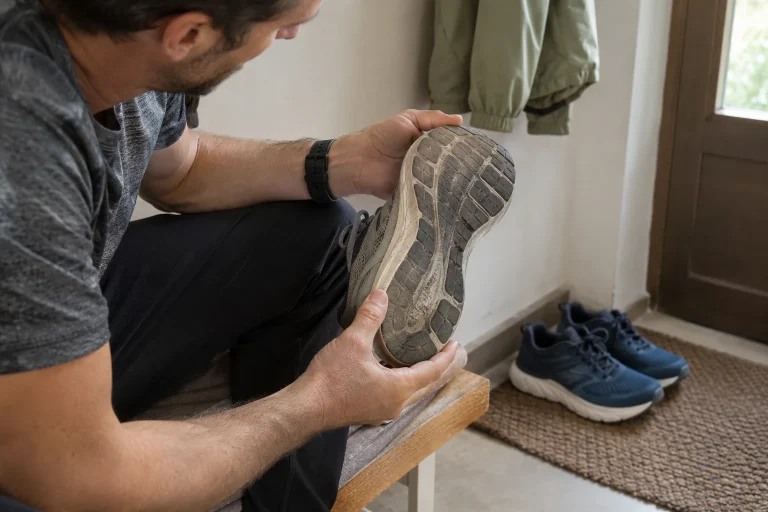
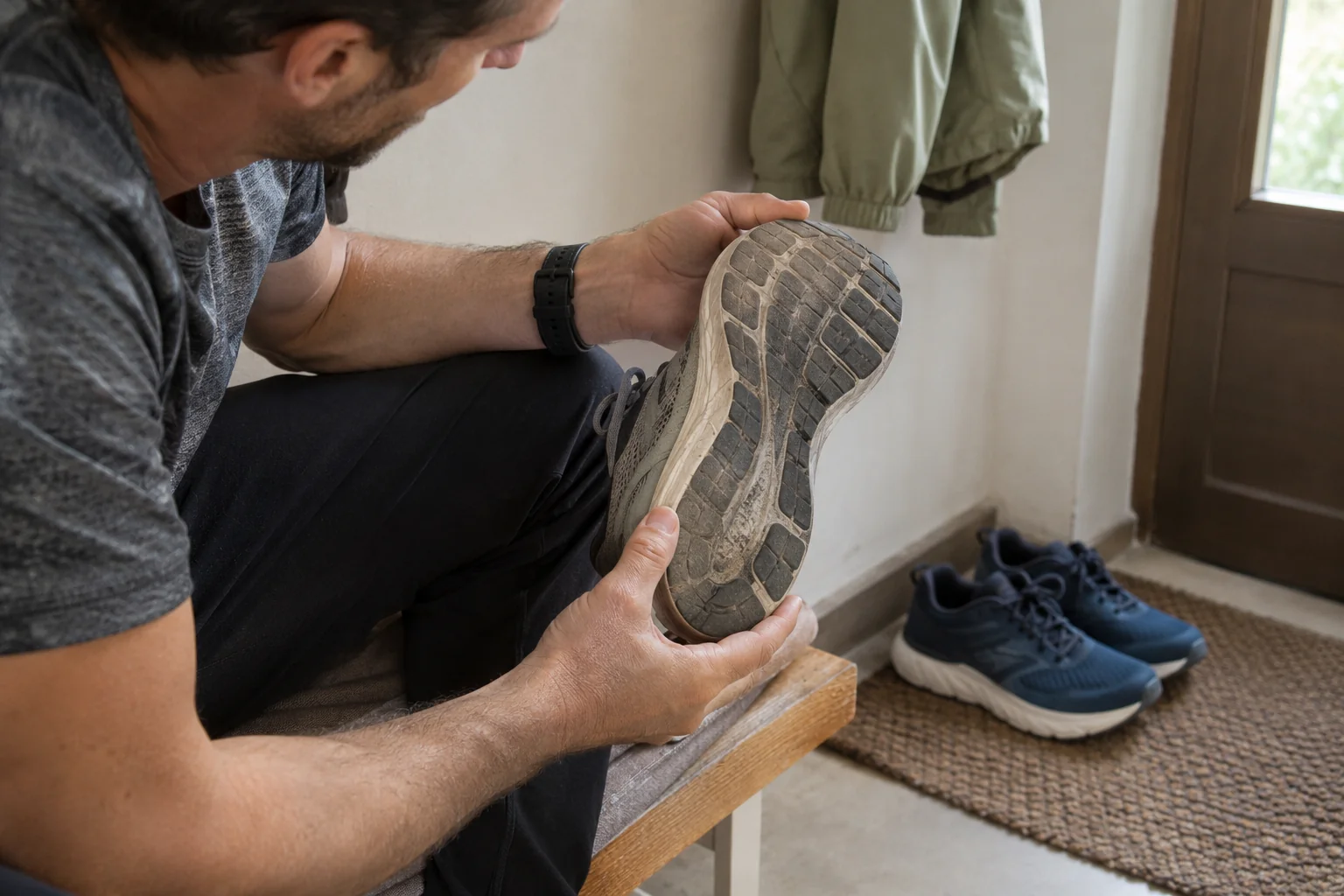
Old-shoe condition and changes in running may also belong to the history. External wear can be observed, but does not diagnose foot function alone. Do not judge all movement or necessary healthcare from a single sole photograph. If symptoms recur with new shoes, reviewing symptoms and demands may take priority over repeated purchases.
What should you retain from the softness question?
Cushioning may matter, but ‘more means greater certainty’ oversimplifies. Research can offer questions and guidance for shoe choice, rather than a personal guarantee. Instead of seeking the model advertised as softest, calmly comparing a few genuinely fitting options may be more useful, informed by current activity and symptoms.
The shop discussion then concerns something other than judging your weight. The questions are which shoes provide appropriate room, what you experience in fitting and what remains unclear. Take comfort seriously without giving it the promise of preventing every injury. Equipment selection and activity planning together form a more meaningful framework than maximising one sole characteristic.
A good decision may also mean not buying today. If every pair presses, symptoms prevent a meaningful trial or only an unaffordable product is shown, seek another place or occasion. Precise information from your body and considered choice do not unnecessarily delay starting: they help prevent a vague promise replacing actual suitability.
Sources
- Malisoux and colleagues: a randomised shoe-cushioning trial, PubMed
- The original paper on the publisher’s site
- NIAMS: Sports Injuries
- AAOS: Shoes – Finding the Right Fit
How Futószív articles are prepared: our editorial guidelines.