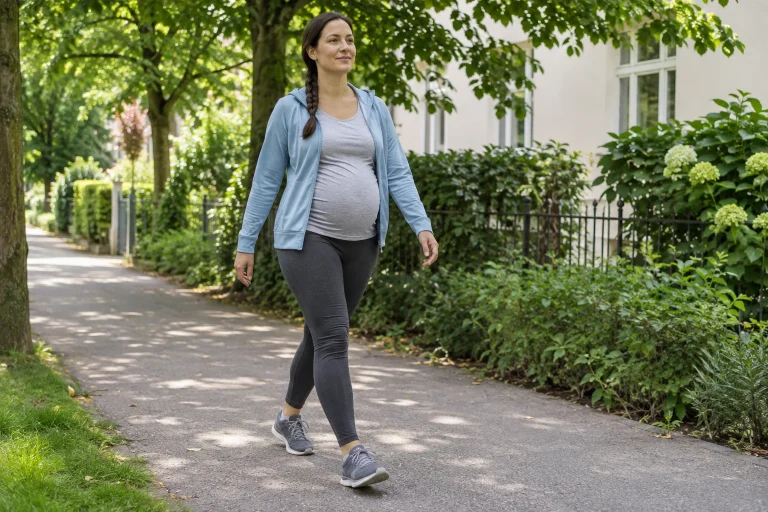
The opening sentence of pregnancy activity guidance is often encouraging: activity is beneficial in a healthy pregnancy, and many familiar forms of movement can continue. As a runner, it is easy to read a single personal message into this: my own plan must be fine, then. Yet guidance concerns particular people, conditions and activities. “Who is it for?” is as important a part of the statement as the recommended amount of activity.
A healthy population is not a value judgement, a club for good runners or a label earned through an earlier race result. It defines the scope of the guidance: the circumstances in which its general recommendation can be interpreted. Learning to find this framework makes it easier to ask your maternity care professional specific questions, without having to choose alone between encouragement read online and different advice given because of your personal situation.
Find the intended audience before the numbers
The CDC page on activity during and after pregnancy discusses moderate-intensity activity for healthy pregnant and postpartum women. The intended audience and the intensity need to be read together. The statement does not say that any sport is equally appropriate in any pregnancy condition, nor does it call every form of activity running.
A useful reading order is to look first at the subheading and introduction, then at the conditions, and only afterwards at duration or intensity. The first two parts are often precisely what a social media post leaves out. If advice consists only of a highlighted number, find the original document. A sentence on a shared image can be quoted correctly and still mislead when the people it concerns disappear from view.
The same question matters in research. A study of previously inactive people with uncomplicated pregnancies provides a different reference from a small study of elite athletes. Knowing participants’ characteristics does not make a finding worthless; it shows which question it informs more directly. It is not enough to locate your similarity to participants simply in the fact that they were pregnant too.
“Healthy” is not a self-completed classification
The ACOG professional statement links the general encouraging message to the absence of medical or obstetric complications and contraindications, and emphasises clinical assessment before recommending an exercise programme. This is not equivalent to feeling well or having exercised for years. Your medical history and the condition identified during care are also part of the picture.
The everyday statement “There is nothing wrong with me” usually describes how someone feels. A condition specified in a guideline may have a more precise meaning. You do not need to decide independently from this article which category you belong to; it is useful to know which question needs clarification. For example: “Given my currently known condition, does this general recommendation apply to me, and what adjustments are needed for my own sport?”
Labelling is unhelpful in the other direction too: a diagnosis or a special care consideration does not automatically mean that all activity is prohibited. An individual decision is not always a complete yes or a complete no. A particular activity may be modifiable, subject to another condition or require further assessment. Interpret the specific situation with your care professional rather than judging yourself through the word “healthy”.
Recommendation, contraindication and individual plan: three separate levels
A general recommendation describes what may support the health of a defined group. A contraindication is a circumstance in which an activity cannot be undertaken or can be considered only after particular assessment. An individual plan is the practical implementation of the decision applying to you. These build on one another rather than replacing one another. An individual plan may be justified even when it is not an exact copy of a highlighted sentence in the guidance.
The Canadian SOGC/CSEP pregnancy guideline, for example, discusses absolute and relative contraindications separately. The latter term does not grant permission to experiment alone; it signals the need for professional discussion of benefits and risks. A list found online is not a way to reclassify your own diagnosis and apply the rules to the load you would prefer.
| Level | What does it answer? | What does it not answer by itself? |
|---|---|---|
| Population-level guidance | For whom is what general activity beneficial? | Can you run tomorrow with your own current condition? |
| A contraindication or special consideration | When is a different decision or more detailed assessment needed? | How should you manage the condition at home? |
| An individual care plan | Which activity suits you, and under what conditions? | Will the decision remain unchanged with a new symptom or finding? |
 Enlarge image
Physical activity is broader than your usual running session
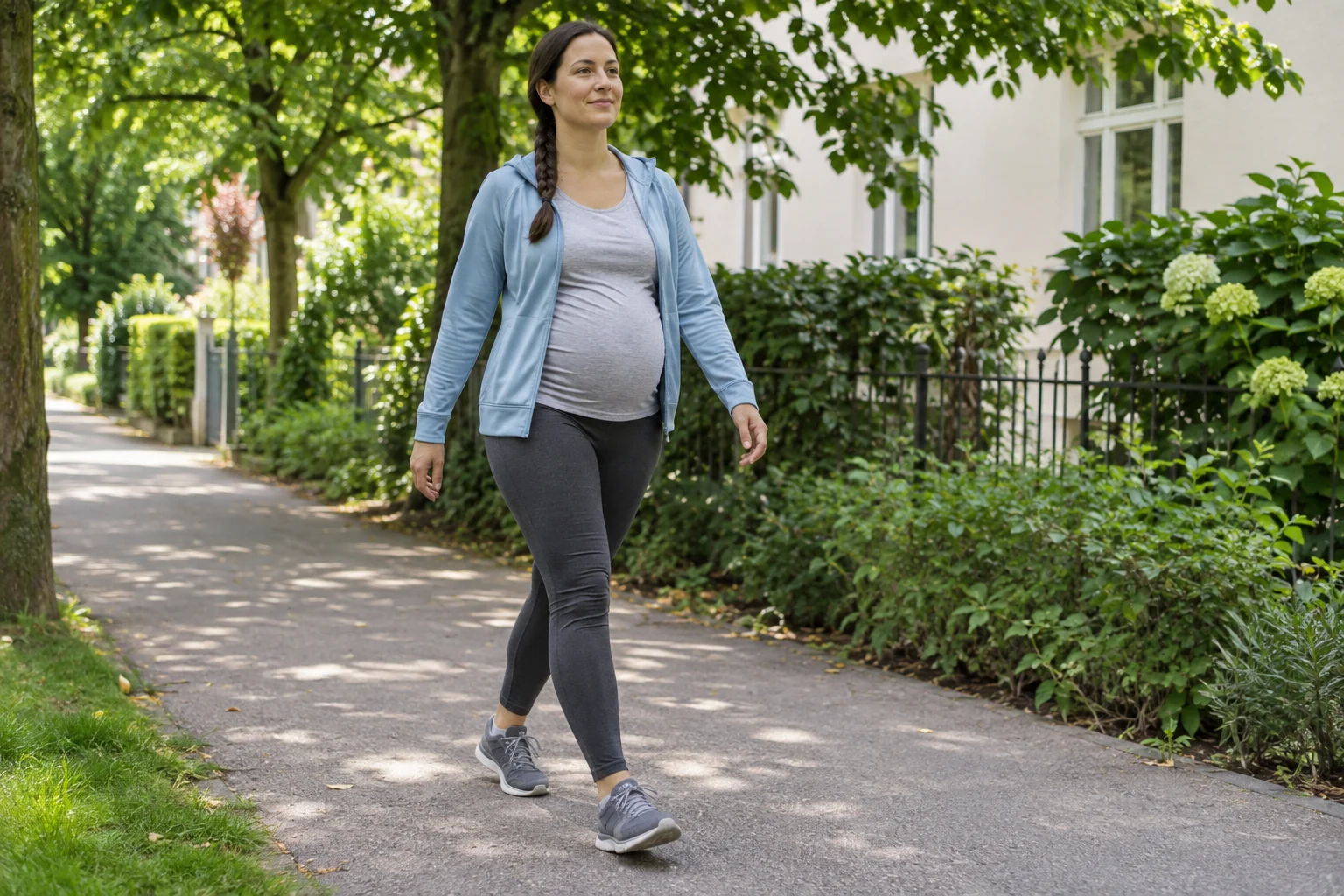
Guideline statements about physical activity cannot be translated directly into a run over a particular distance. The NHS page on exercise in pregnancy mentions several activities, starting a new activity gently and taking previous activity into account. Your own question should therefore be more detailed than “Am I allowed to move?” A particular running situation contains more decisions than a general statement about activity.
It can help your maternity care professional if you describe the programme in everyday language. Is it a short, flat route near home or a long forest loop? Are you going alone or with someone? Is it easy to stop? How much travel and organisation are involved? These are not permission or prohibition criteria in themselves, but parts of the real situation without which the question remains too abstract.
The alternative is not necessarily giving up running as a permanent decision about identity. Within current individual boundaries, another form of activity, a shorter outdoor outing or a temporary pause may be appropriate. The answer does not measure the athlete’s worth. A task established for one life stage need not be treated as a verdict on your entire future sporting life.
Previous activity is background, not permanent permission
Both the NHS and CDC distinguish between previously established activity and activity being started for the first time. This does not mean, however, that every detail of a familiar programme remains appropriate without change. Describe the history specifically: what you did before, what you do now and what changes you have experienced. A sporting background is important context, but does not replace your current condition.
The comparison “I used to run much more than this” can easily divert the conversation. The clinician may not need to know how much the load has fallen compared with your former peak, but how the current activity fits your condition now. Even a programme that is small relative to a past maximum may need separate discussion.
If a new symptom, finding or care circumstance has appeared since the first discussion, report it. The earlier answer was based on information known at that time. Reviewing it does not mean someone previously gave poor advice; it means the circumstances underlying the decision have changed. Being able to follow an individual plan includes knowing which changes require you to make contact again.
A questionnaire can help you ask questions, but is not a sports medical certificate
The CSEP pregnancy activity questionnaire was designed to help identify who needs medical advice before starting or continuing activity, and to reduce unnecessary uncertainty for most healthy pregnant people. Use it according to that purpose: as an aid to understanding and preparing a conversation. It is not a self-issued certificate approving every running situation.
Do not tailor answers to the outcome you want. If you are unsure about a term, ask rather than automatically choosing the answer that lets you move on faster. The language and healthcare pathway of a foreign questionnaire may differ from your own care. The Hungarian article does not replace the official document or turn its questions into a test with its own scoring system.
Such a tool becomes practical help when the question it raises reaches the appropriate professional. You can write yourself a short list of parts you cannot interpret. That differs from creating a diagnostic checklist at home. The aim is to make the conversation more precise, not to carry out professional assessment independently.
How should you read the strength of research evidence?
The Canadian guideline indicates evidence quality and recommendation strength alongside its recommendations. These are related but distinct questions: how certain the available knowledge is, and how strongly a step can be recommended after weighing the considerations. A “weak recommendation” does not mean activity is definitely harmful; “high quality” does not mean an outcome applies to every individual without exception.
As a reader, you do not need to write an independent methodological critique. You already gain a great deal by distinguishing a synthesis of research from one person’s account. A pregnant elite athlete’s social media video may show one possible experience, but does not reveal the examination, care and individual assessment behind it. The camera does not check your personal conditions.
The date is worth noticing too. A guideline has an edition, and later professional work may refine details. If two apparently credible sources differ, do not automatically choose the boldest or strictest sentence. Take the precise question to your care professional: why is there a difference, and which consideration matters in your situation?
 Enlarge image
Three examples of using scope correctly
The first reader has not run before and now wants to begin a running programme based on a general pregnancy activity target. The useful question is which activity to start and under what individual conditions. The recommendation need not be read as an obligation to try a new, intensive sport. Encouragement to be active and the specific arrangements for starting running can be discussed separately.
The second reader has run for years and previously discussed continuing. A new medical circumstance has now arisen in their care. They can remember both the earlier discussion and the population-level recommendation, but must take the new circumstance back to the clinician. Their task is not to decide alone whether a complication fits within the website’s word “healthy”.
The third reader has received an individual adjustment while others in the running group continue to quote the familiar general recommendation. The two are not necessarily contradictory. The group knows a reference intended for a broad population; the clinician has also considered the specific condition. The reader does not need to prove their findings to the group in order to follow their own plan.
Leave the individual discussion with an answer you can use
You can bring three short things to the conversation: a factual description of your existing activity, new symptoms or questions, and the specific passage of guidance you do not understand. The professional is then not forced to answer a general “Is everything allowed?” question. Nor do you have to leave guessing whether the answer concerned walking, your previous running or a competition plan.
Ask under what conditions the particular activity can continue, what needs changing and when another discussion is needed. Also clarify what to do with a new symptom; an urgent problem is not a reading question to put aside for the next check-up. General sources support informed understanding, while individual guidance makes present action clear.
Reading scope carefully can ultimately give your thinking more room. You do not need to apply every general piece of advice blindly to yourself, nor interpret pregnancy as an automatic ban on activity. A good question is specific and open: how can this knowledge be applied to my own current situation? The answer can develop alongside your care, while running remains an important part of life without overriding everything else.
Sources
- NHS: exercise in pregnancy
- CDC: activity for healthy pregnant and postpartum women
- ACOG: physical activity during pregnancy and the postpartum period
- SOGC/CSEP: the 2019 Canadian pregnancy activity guideline
- CSEP: the purpose of the pregnancy activity questionnaire
How Futószív articles are prepared: our editorial guidelines.