Porridge is a convenient breakfast when you like its texture, know how to prepare it and find it fits your eating needs together with its additions. It is not compulsory runner food or one identical recipe for everyone. The same base can produce very different dishes with different oats, liquids and toppings. This article clarifies kitchen choices: reading packaging, the effect of preparation order, what to keep separate and avoiding a disappointing breakfast that has become too thick or thin. Examples are food ideas for healthy adults, not personalised sports diets or clinical recommendations.
For the base, check the product’s own instructions first
Oats come in differently processed forms with differing preparation needs. Check the exact product, ingredients and instructions on the package. Do not automatically copy a procedure for quick-cooking flakes onto a product with another texture or preparation requirement. Choose cooking time and necessary liquid for the particular base. Record the type used in your proven recipe too rather than writing only oats. A later product change can then more readily explain a different texture.
For flavoured ready-made products, the ingredient list reveals what the base already contains. It may not need the same additions as a plain version. With a known allergy or special diet, suitable product selection is a separate condition not overridden by the general name porridge. Assess personal ingredient suitability according to your professional instructions. Kitchen variety works within that permitted range. You need not include every topping another person uses in your bowl.
Hot porridge and a refrigerated overnight version have different workflows
For hot porridge, follow cooking or other preparation appropriate to the product, then serve with chosen additions. The NHS porridge recipe , for example, shows a separately cooked base with yoghurt and fruit added when serving. This is a specific family recipe, not a determination of every runner’s portion. From a kitchen-organising perspective, it illustrates preparing the base and toppings in separate stages. Every element need not spend the same time in the saucepan.
An overnight version needs an appropriately chosen product, a clean container and refrigeration. The Health Canada overnight oats recipe describes resting mixed ingredients in the fridge and treats serving with fruit as a separate step. This is not a dairy-containing bowl left out overnight at room temperature. Follow the particular recipe and ingredient instructions. The refrigerated version is convenient because fewer actions remain in the morning, not because food-safety tasks disappear.
 Enlarge diagram
Text version of the diagram
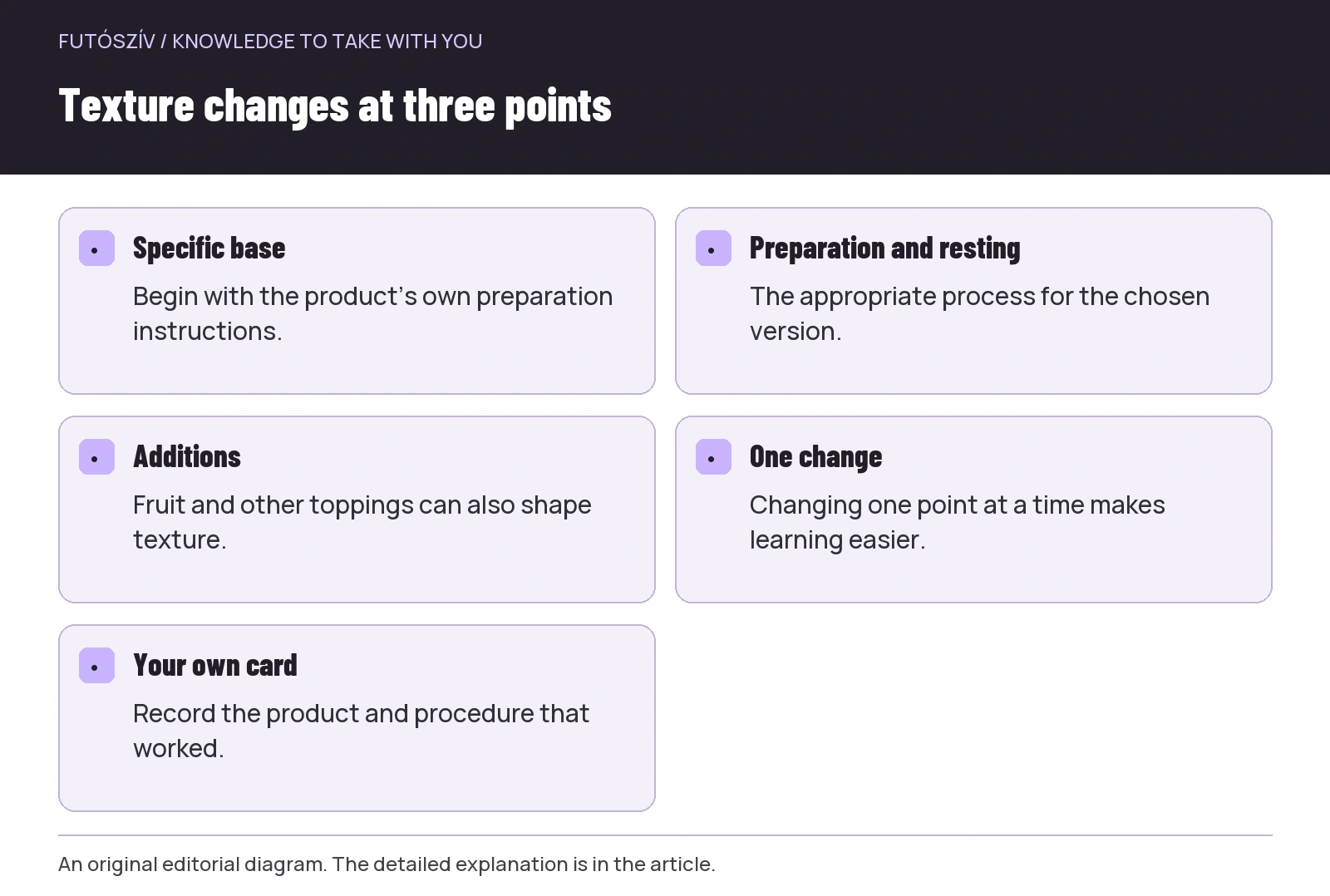
- Specific base
- Begin with the product’s own preparation instructions.
- Preparation and resting
- The appropriate process for the chosen version.
- Additions
- Fruit and other toppings can also shape texture.
- One change
- Changing one point at a time makes learning easier.
- Your own card
- Record the product and procedure that worked.
You shape texture at three separate points
The first is the ratio of the chosen base and liquid according to its preparation instructions. The second is preparation and resting. The third is an element added later: the texture of fruit, yoghurt, seeds or another topping. Changing everything together makes the reason for different porridge hard to understand. Begin with a familiar base and change one kitchen characteristic at a time. This is not a scientific laboratory test, just making your recipe more predictable. Aim for a texture you enjoy, not one compulsory level of creaminess.
If it is too thick when serving, adjust texture with an appropriate amount of liquid suitable for the product and meal; Health Canada also mentions such adjustment for its version. If too thin, first check whether prescribed preparation and resting actually happened. Do not automatically add large amounts of new base to finished food if that ingredient requires cooking. Corrections should remain within permitted handling of the specific product too. Record the experience for next time rather than guessing anew every morning.
Give the topping a purpose
One topping may add flavour, another texture, an appropriate meal element or simple variety. You need not add every fashionable ingredient at once. Keeping a crunchy addition separate until serving is often practical if permitted by the ingredient and recipe. Use fruit according to necessary cleaning, preparation and any cooking instructions. Do not assume frozen products are automatically ready to eat: packaging and appropriate food-safety guidance matter. Attractive presentation does not take precedence over these conditions.
Dairy or an alternative is a personal and dietary choice; examine differing products’ compositions separately. One drink is not necessarily an equivalent replacement for another merely because their colours resemble each other. With an individual diet, clarify appropriate substitutions with a professional. The base and toppings make a good breakfast for you when the whole combination fits your needs. A kitchen recipe is not a personalised quantity prescription. Many elements added as decoration do not automatically resolve every nutrition question either.
Four original flavour ideas for a familiar base
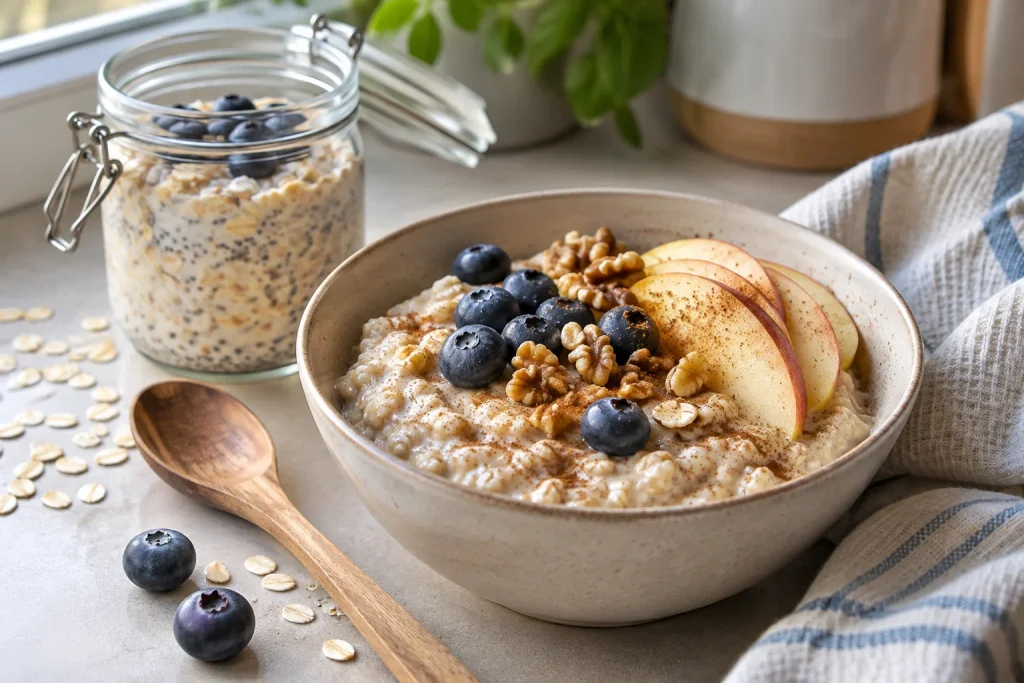
For an apple-and-cinnamon direction, add appropriately prepared apple and cinnamon to taste to your base. Some fruit may cook with it according to the recipe, while another appropriate portion can provide a different texture at serving. For cocoa and banana, mix cocoa carefully using your recipe, then add appropriately prepared banana mashed or in pieces as you prefer. These are editorial combinations, not results of our own kitchen testing or recipes promising sports performance. Particular quantities fit the base and personal needs.
For pear and vanilla, appropriately handled pear and chosen vanilla flavouring provide another character. For a tart-fruit version, choose fruit suitable for you whose handling and use you know. Add crunch only if it fits your diet and is available in appropriate condition. You need not buy a separate large package for every idea. Start with ingredients already available, enjoyed and suitable, and keep successful versions on your breakfast list.
| Flavour direction | What changes? | What is worth keeping separate? |
|---|---|---|
| Apple and cinnamon | Fruit and seasoning within your base. | An appropriately handled topping providing a different texture. |
| Cocoa and banana | Cocoa flavour and the chosen fruit form. | Fruit added at serving, if preferred that way. |
| Pear and vanilla | Another favourite fruit and flavouring. | An element intended for fresh assembly, stored appropriately. |
| Tart fruit | The character of fruit fitting your diet. | A suitable crunchy addition until serving. |
A pre-run bowl need not match a relaxed breakfast
The Sports Dietitians Australia pre-exercise guide emphasises individual timing, familiar food and digestive comfort. A larger breakfast with many toppings is not automatically appropriate immediately before running. Fit the choice to personal circumstances, time and needs. This is not a reason to omit fibre or entire food groups generally but to assess the occasion separately. The whole everyday diet and a specific meal close to training can be different questions.
If planning porridge before a race or longer run, learn your personal solution beforehand under appropriate conditions. Do not add several new ingredients on event morning for assumed benefits. Record the base type, preparation and personal comfort experience with a proven recipe. A sports dietitian can help with individual portions and plans around running. Breakfast convenience does not override needs, while a fashionable sporting name does not prove a particular bowl suits everyone either.
 Enlarge diagram
Text version of the diagram
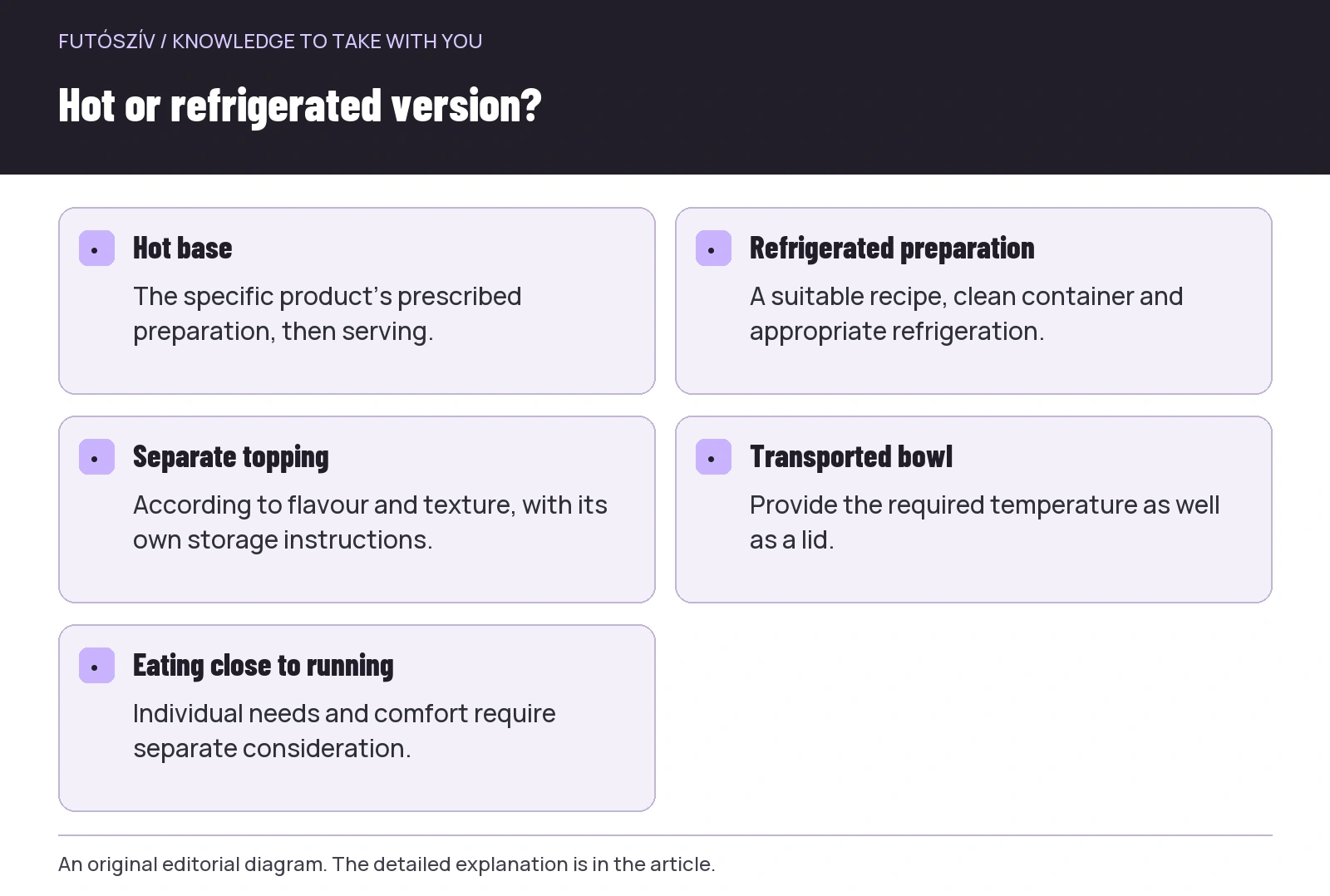
- Hot base
- The specific product’s prescribed preparation, then serving.
- Refrigerated preparation
- A suitable recipe, clean container and appropriate refrigeration.
- Separate topping
- According to flavour and texture, with its own storage instructions.
- Transported bowl
- Provide the required temperature as well as a lid.
- Eating close to running
- Individual needs and comfort require separate consideration.
Make the previous evening’s arrangement complete
If preparing an appropriate chilled version, plan handling of the container and ingredients too. A bowl needing refrigeration should go in the right place, while toppings kept separately for tomorrow follow their own product instructions. Label contents and preparation time if household containers could easily be confused. The Nébih menu-planning material makes prepared-food handling and storage conditional on requirements. A breakfast bowl does not become an independently, indefinitely storable product. Do not automatically make a whole week of every version without knowing the specific safe procedure.
If organising only equipment and dry ingredients ahead, morning cooking remains necessary but searching may disappear. That too is meaningful preparation. You need not make the whole dish the previous day if the fresh version is more convenient and preferred within your time. Both can fit the weekly system. Decide from the actual workflow, not because overnight preparation seems more fashionable. A good recipe is repeatable in your kitchen and fits the morning with necessary handling.
When packing, space inside and refrigeration both matter
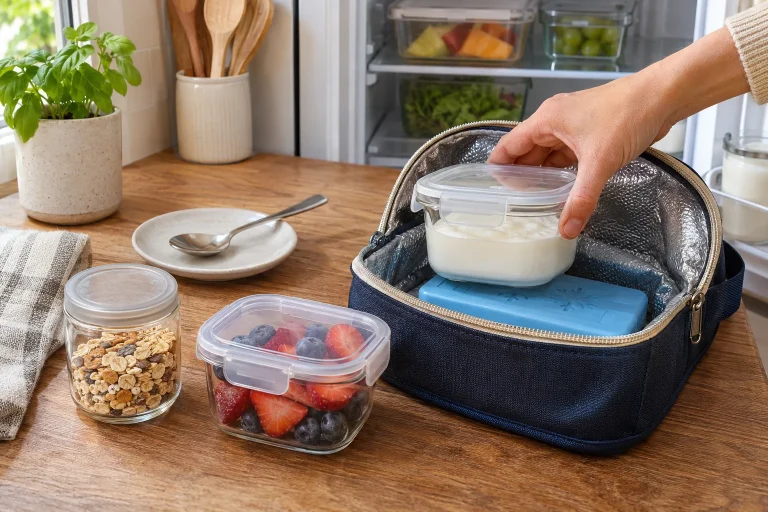
Choose an appropriate food container in which the bowl can travel securely, with room for elements added at serving if needed. For ingredients requiring refrigeration, provide prescribed transport and storage conditions. A closed lid is not a cooling solution. A crunchy topping can wait in a separate small container if consistent with its own instructions. A spoon and actual eating place should also belong to the plan, especially when heading to work. An attractive jar is no advantage if heavy or inappropriate in the real situation.
After travel and serving, clean the container appropriately for next use. Do not leave it for days in a running bag with food remains and moisture. The complete system includes preparation, storage, eating and container care. If one step regularly causes problems, improve it specifically. Breakfast at home or another packaging format may fit better. Porridge is a convenient option, not a compulsory meal for which every part of your routine must change.
Make a brief basic-recipe card
Include the particular oat product, appropriate basic procedure, preferred texture and a few favourite toppings. Adapt quantities to your eating needs and recipe; do not treat the card as portions prescribed for everyone. When changing products, check its package first and adjust where necessary. Your system preserves what worked without making the previous version an eternal rule. A kitchen observation concerns your own tastes and workflow, not predicting other runners’ performance.
The main outcome of varied porridge is not many new ingredients or complicated presentation. It is a known base, preferred texture, appropriately handled ingredients and a combination suited to your needs. Hot or chilled versions, separate toppings and simple flavour ideas serve this goal. If it works for you, the dish can have a convenient place in a running week; if you prefer another breakfast, its appropriate system can be developed too. A good breakfast works in actual use, not only in a photograph.
Sources and further reading
- NHS: Porridge with yoghurt and berries
- Health Canada: Classic overnight oats
- Sports Dietitians Australia: Pre-exercise fuelling
- Nébih: Menu planning without leftovers
How Futószív articles are prepared: our editorial guidelines.