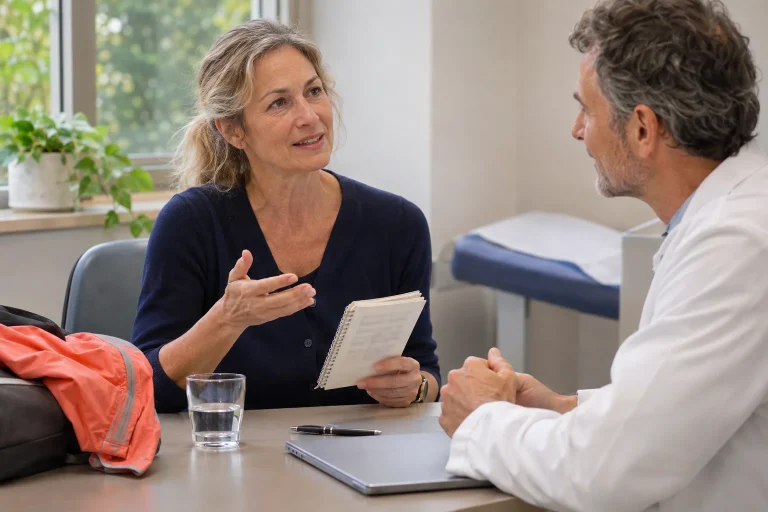
You managed the task shown in a video, and the screen promises that you are in excellent shape. It feels good to find something easy. Trouble begins when you use those few seconds to draw conclusions about a longer run at the weekend, a race or the insignificance of a new symptom. The result of an online challenge and the individual assessment needed for running answer different questions.
This article provides no home test of fitness to exercise. It helps you read such a video or score, understand the uses of an appropriately applied measurement and recognise where a promise exceeds what the result can actually establish. A good result need neither be spoilt nor inflated into medical permission.
A new symptom matters more than an earlier successful test
With severe chest pain, serious difficulty breathing, fainting during exertion or a sudden neurological symptom, do not use another internet test to decide whether you are all right. Urgent help may be needed. The NHS information on fainting and shortness of breath also highlights situations requiring immediate care. An earlier good result does not make these harmless.
Less sudden but recurring dizziness, new unsteadiness when walking or a marked change compared with familiar activity also provides different information from having completed a coordination task last week. Keeping the chronology helps: what went well before, when did the change begin and in which situations does it occur? This new information should not be hidden behind an old score.
Repeating a performance task can easily push the original question into the background. If you become dizzy when standing up in the morning, for example, holding a position in the afternoon does not clarify the cause. Both events can be true at once. The second does not automatically refute the first or justify ignoring it on the next run.
First name what you actually measured
Holding a particular position, a sit-to-stand task and walking for several minutes are different performances. How the task was performed belongs with the result: the support, surface, starting position, instructions received and person interpreting the measurement. Without these, “I passed” covers too much. It does not reveal which task you performed under which conditions.
This distinction matters for later comparisons too. If you held on during one attempt but not another, the videos may appear similar while the task differs. If you timed it differently or followed different instructions, the difference cannot simply be called progress. Measurement provides useful feedback when you know what you are comparing.
Standardised professional assessments specify conditions and interpretative limits precisely so the result has a defined meaning. A social media video sometimes retains only the eye-catching movement, leaving out the question and conditions of the assessment. Similar movement alone does not make a video challenge an assessment of equal value.
 Enlarge image
A health indicator, a prediction and permission are three different claims
A measurement may be associated with other health characteristics. It can contribute to a professional assessment and help research understand differences between people. This does not mean every later event in one person’s life can be predicted. Still less does it establish that the person can safely undertake any chosen running load.
A useful example is the original 2022 study reported by Araújo and colleagues. It examined data from 1,702 participants aged 51–75 and found an association between performing a particular balance task and later mortality. The study did not establish fitness to run, test the effect of practising at home on lifespan or identify who could enter a race.
When such research becomes a video title, the most important word can easily disappear: association. A different later outcome in the group with better results does not establish that practising the test alone would cause improvement. The authors also identified factors not controlled for. A striking headline does not resolve that uncertainty.
Inferring personal lifespan or a permanent limit on ability from a weaker result is an equally possible misunderstanding. An average association in a study group does not describe one person’s fate. An observed difficulty may be information needing clarification, but is not grounds for self-blame or a verdict revealing every movement opportunity in the years ahead.
The running question includes the load you plan
“Can I run?” is incomplete by itself. A familiar short, easy jog, restarting after a long break and a steep race in hot weather are different plans. A brief online task describes none of those conditions. A pre-run decision therefore involves current activity, history, present symptoms and chosen demands together.
The 2015 ACSM professional paper highlighted three areas when considering pre-exercise health screening: current activity; symptoms and certain known diseases; and intended intensity. What matters here is this difference in thinking, not applying an old algorithm at home. An online coordination score does not replace that consideration of several factors.
Nor does this mean every older person needs separate permission for every gentle everyday activity. Necessary discussion and assessment depend on the individual situation. Good information does not look for one prohibitive gate; it clarifies what is warranted for the particular person planning that activity.
How can you check a video’s big promise?
First look for the original source in the video description. Guidance from a healthcare organisation, a study summary and another video are not the same thing. If the creator cites research, check who participated, which task was measured and what the study actually asked. These three details alone may reveal that the promise concerns something different from the original finding.
The next step is how the conclusion is worded. “An association was found” and “prevents” are not interchangeable. Nor is assessment by a professional the same as a challenge completed independently in front of a screen. If the video omits precisely these details, a confident presentation does not supply them.
- Which group did the original study concern, and how similar is it to my situation?
- Which outcome was measured: a task, a disease, a later event or a training change?
- Does the creator claim the same thing as the source, or add clearance to run and a personal prediction?
This is a reading aid, not another scored health test. There is no number of answers above which a video becomes medically credible. If the original source cannot be found or its meaning is unclear, the conclusion can remain uncertain. You do not have to try something immediately to decide that its promise is not adequately supported.
Even good measurement has a defined role
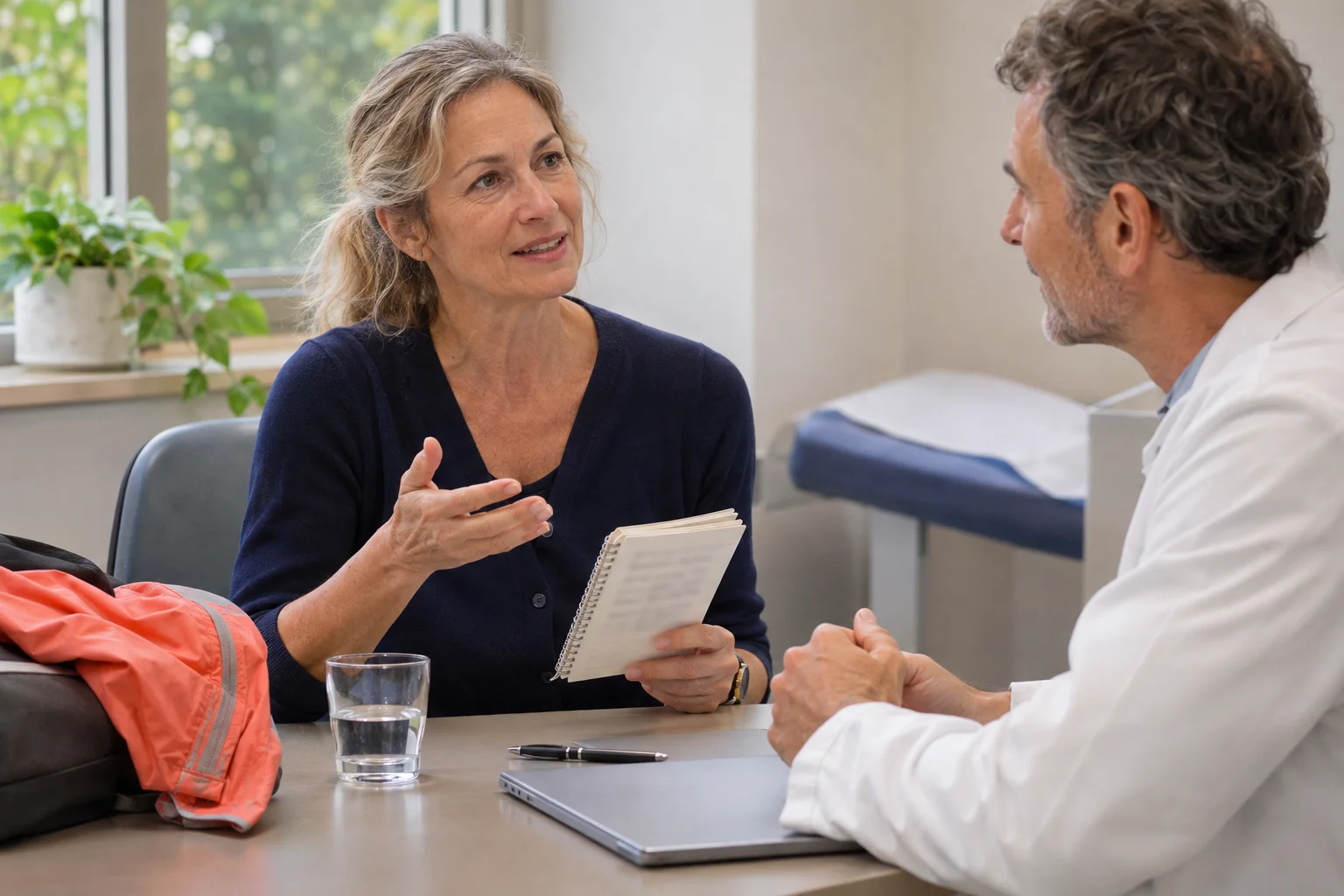
Naming the limits of professional functional assessments precisely does not reduce their value. An appropriately selected task can help understand a specific difficulty, plan support or follow a defined change. Its role differs, however, if an isolated cutoff is used to infer a person’s entire physical condition or guaranteed freedom from falls in every situation.
The 2025 NICE falls-prevention guideline does not recommend using falls risk prediction tools to predict an individual’s risk of falling. This is not a rejection of all gait, balance or strength assessments. The same guideline gives them a place in professional assessment alongside history and other individual circumstances. The distinction lies in the question and interpretation.
When a professional performs an assessment, it is therefore worth understanding how they use the result. “Which task currently shows difficulty?” differs from “Will I definitely fall?” “Has execution changed since the previous session?” differs from “Can I safely do every sport?” A precise purpose makes measurement useful; an unlimited promise tends to obscure it.
 Enlarge image
Two everyday situations with the same on-screen result
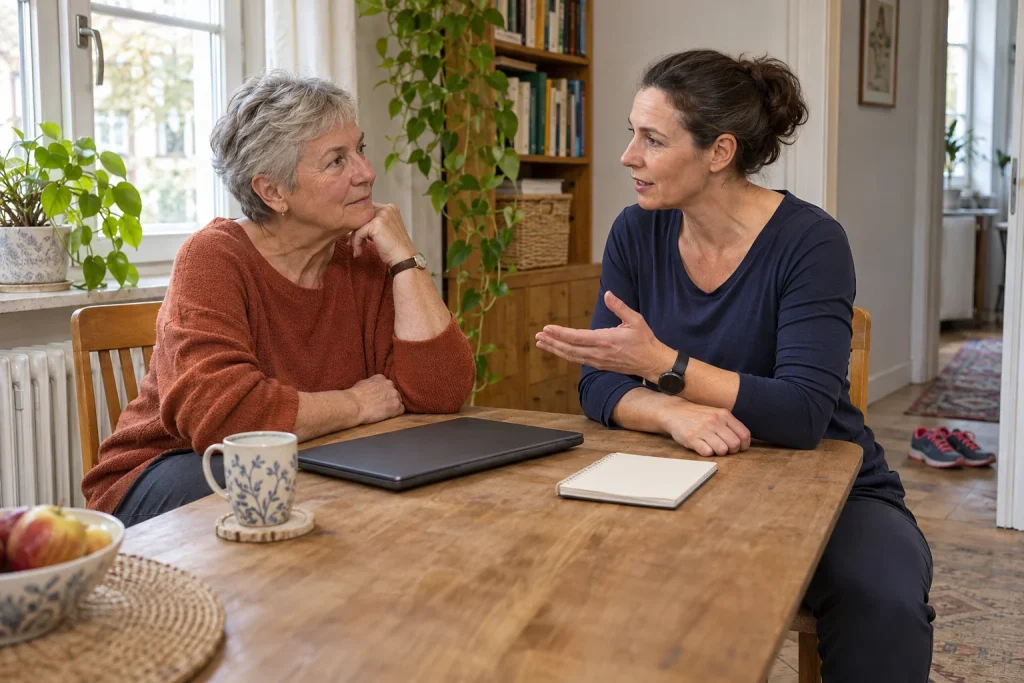
Imagine two fictional people given the same favourable rating by an online challenge. One has been doing familiar, symptom-free activities for months and watched the video only out of curiosity. The other wants to return after a prolonged illness, experiences new unsteadiness and plans a long trail run at the weekend. Their shared rating does not erase the difference between the situations.
For the first person, the result may simply feel like a success. It need not create pressure for a new goal or an immediate increase in running load. For the second, the post-illness condition, new symptom and planned outing are separate questions needing clarification. If the video result is used to push them aside, the information’s role reverses: it serves avoidance rather than understanding.
The example contains no rule that a person with a better result must always run and one with a worse result must never do so. A useful decision returns to the real question: what activity do you want, from which starting situation, and is there a change requiring individual help? A general congratulatory message does not answer that.
What should you keep from the result, and what should you leave out?
If you have already completed a task, its name and your actual experience can be described meaningfully. For example, which movement was easy, which felt uncertain, whether support was needed or symptoms appeared. The video’s label of a “younger body” or “perfect fitness” contains fewer useful details. Observation is more valuable than a promotional judgement.
Do not try to prove a good result under more dangerous conditions: removing support, closing your eyes, attempting it while tired or piling on new challenges. Making a success video is not more important than safety. If movement is uncertain or causes symptoms, the next useful step is appropriate interpretation of that difficulty rather than more repetitions.
The sense of success from a screen can remain without becoming a personal medical certificate. The result belongs to a particular task. Meaningful thinking about running can be based on your current condition, planned activity and relevant individual information. The more precisely you separate these, the fewer tasks you expect one number to perform.
Sources
NICE NG249: falls assessment and prevention, 2025; Araújo and colleagues: original cohort study of one-leg standing and mortality, 2022; Riebe and colleagues: ACSM pre-exercise health screening, 2015; with a later correction; NHS: fainting; NHS: shortness of breath. Checked: 21 November 2026. The two-person example is an editorial illustration, not a real patient’s story.
How Futószív articles are prepared: our editorial guidelines.