A membrane running shoe may help with a task where protection against water arriving from outside is an important part of the choice. Yet a single membrane name does not determine the whole experience of use. Upper and tongue design, the collar opening, socks, the actual route and moisture inside together shape what you experience while running. Waterproof construction and an open shoe top are separate questions: one property does not remove the other’s entry route.
This guide helps you understand the system rather than declaring a membrane or mesh option compulsory for every runner. It shows which documentation to seek, what you can calmly observe on your own shoe and how to frame a question about wet socks. The examples are not our own waterproofness tests or permission to run through deep puddles, streams or unknown wet terrain. Choosing a safe route remains a separate decision.
Look at the whole shoe construction, not only the technology’s name
Gore presents several footwear technologies within its own system, including differently constructed solutions. Alongside the shared aim of waterproofness and vapour permeability, the particular shoe’s construction remains product-specific. Identify the exact model and version for your own choice. Do not automatically regard a membrane version and another-upper version of the same shoe family as identical in every detail either. Similar names do not replace the particular version’s description and a comfortable fitting.
The manufacturer’s testing description also shows the importance of the whole construction: Gore identifies how the upper, lining and laminate work together and describes tests of finished footwear. This is the manufacturer’s account of its own quality assurance, not an individual assessment of your used shoe. It illustrates how incorporating a membrane and making the whole shoe function are connected design tasks.
When reading specifications, list the intended use, named waterproof construction and conditions stated by the manufacturer. Do not exchange a claim about a merely water-repellent upper for a claim that the whole shoe is waterproof. If wording is unclear, ask about the particular model. Understanding the precise property helps you choose for the situation you actually want to address, rather than a general image of a ‘winter shoe’.
The collar opening can provide a different route for water
Where the shoe is open at the top, water entry is a different structural question from passage through a continuous upper. A footwear manufacturer’s example, the PRABOS questions and answers page, also names this among possible causes of wet socks. The page concerns footwear generally, not a test of a selected running shoe. It supports the conceptual distinction: liquid entering from above need not automatically be regarded as membrane failure.
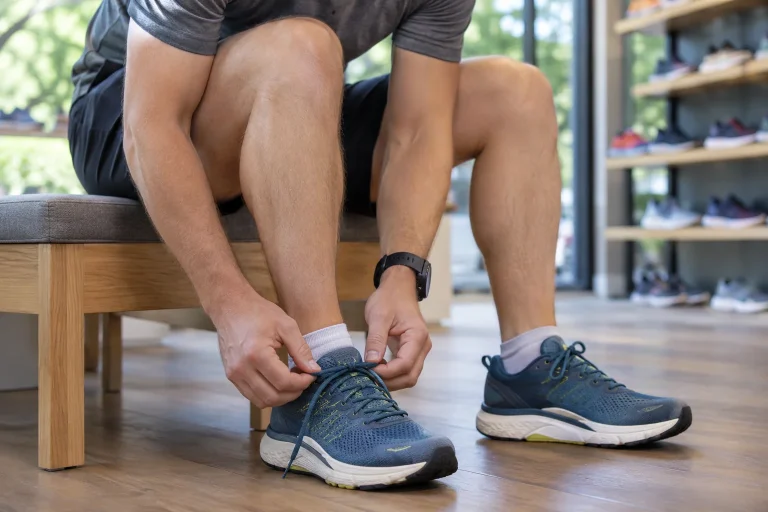
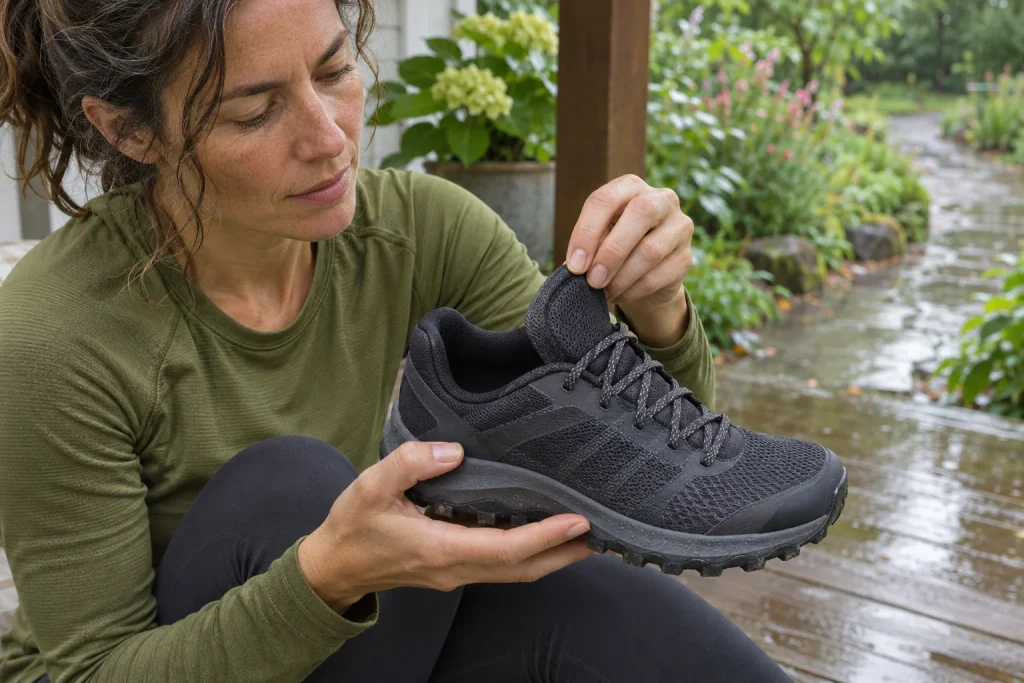
With the shoe dry, examine where its collar opening is and how far the tongue’s side construction extends. What does the particular manufacturer state? Wearing it with your own foot and sock, observe how the parts sit during natural movement. You do not need to fill the shoe with water or deliberately soak it. First, understand the construction: where does the system close and where does an opening remain that you need to consider in actual use?
The meeting point of trouser hems and other accessories is part of your own combination too. If using gaiters, check their exact purpose and compatibility separately. An accessory designed against debris is not automatically a waterproof seal. Interpret the whole outfit through specific documentation and your own comfortable fitting, rather than inferring from another name that an open shoe top ceases to matter in every situation.
 Enlarge image
Water vapour escaping and liquid water draining are separate processes
Vapour permeability in membrane footwear descriptions concerns water vapour escaping. This is not the same task as liquid water already being inside the shoe. Do not therefore assign the same expectation to both situations. The name of a vapour-permeable feature does not by itself tell you how, or how quickly, water entering from above can be removed from that particular shoe.
Gore’s own comfort testing of finished shoes also focuses on the whole construction working together to allow vapour through. The testing description separately considers ensuring upper materials do not wick water above the lining. These are controlled tasks described by the manufacturer; they do not provide a drying time for your own run. Read the product’s conditions of use and care just as you read its technological benefits.
If your sock became wet, the first observation question is when and where you noticed it. Was there a situation in which water could reach the shoe’s top opening? What did the outer upper and interior show? The answer may remain uncertain. The point is not to read the possible route of liquid and a functional claim about escaping vapour as two names for the same process.
A wet sock leaves several possible causes open
PRABOS’s general information mentions sweat or condensation as possible causes alongside damage and water entering from above. One wet sock therefore does not on its own prove a particular membrane fault. This does not exclude a real fault either: if you experience a recurring or clearly describable phenomenon, ask the particular shoe’s manufacturer for an appropriate checking step instead of inventing a certain cause.
For your own observations, separate the outer material, the inside of the shoe and the affected part of the sock. If you checked only at the end of the run, do not claim certainty about when moisture appeared. You can describe the environment of use and your starting condition. A specific timeline helps: did you begin with dry shoes and socks, or put on something still wet from earlier? These are different starting conditions for comparison.
You do not need to validate your assumption with a stress test at home. Filling the shoe with water, rinsing under high pressure or picking at the inner layer may create a new condition without reproducing what happened during the run. You can make a factual description and photograph, then follow the appropriate manufacturer or retailer process for further examination. This makes assessment of the real problem clearer too.
A short wet section and a persistently wet outing are different tasks
Before choosing, name your own environment. Occasional wet surfaces on a usual urban route can raise different questions from an outing where equipment stays wet for longer. We assign no automatic shoe type to either: the particular product’s intended use, condition and your comfortable use matter. Defining the task helps avoid expecting one appealing property to solve every situation.
When comparing membrane and mesh versions, look beyond claims against water. Appropriate fit, outsole design suited to the planned surface and whole-shoe comfort are separate questions. Waterproof construction does not establish grip on a particular surface, just as a more open upper does not automatically make a shoe appropriate for every warm outing. Your choice list should therefore include several distinct practical tasks.
On an uncertain or dangerous wet section, changing the route may matter more than trying the shoe’s feature. Unknown depth, flow or ground conditions are not resolved by waterproofness appearing in a footwear description. This article gives no crossing technique and rates no particular puddle as safe. Equipment supports an appropriate outing; it does not replace judging the environment’s risks.
Socks and shoes go on your feet together
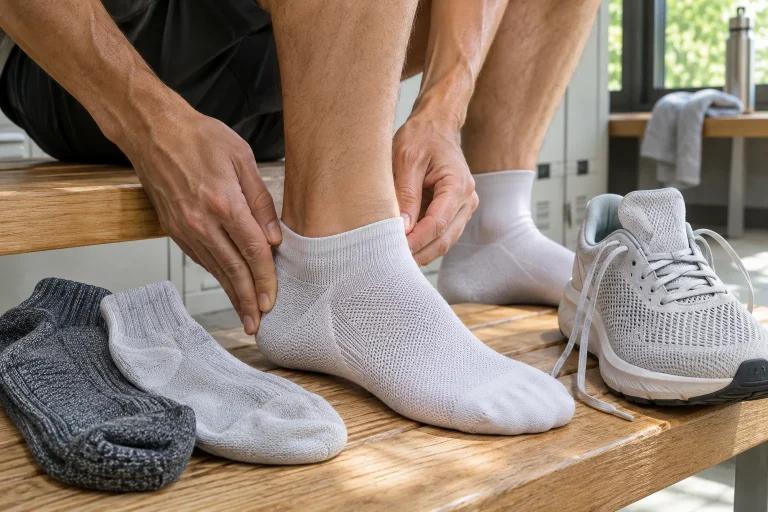
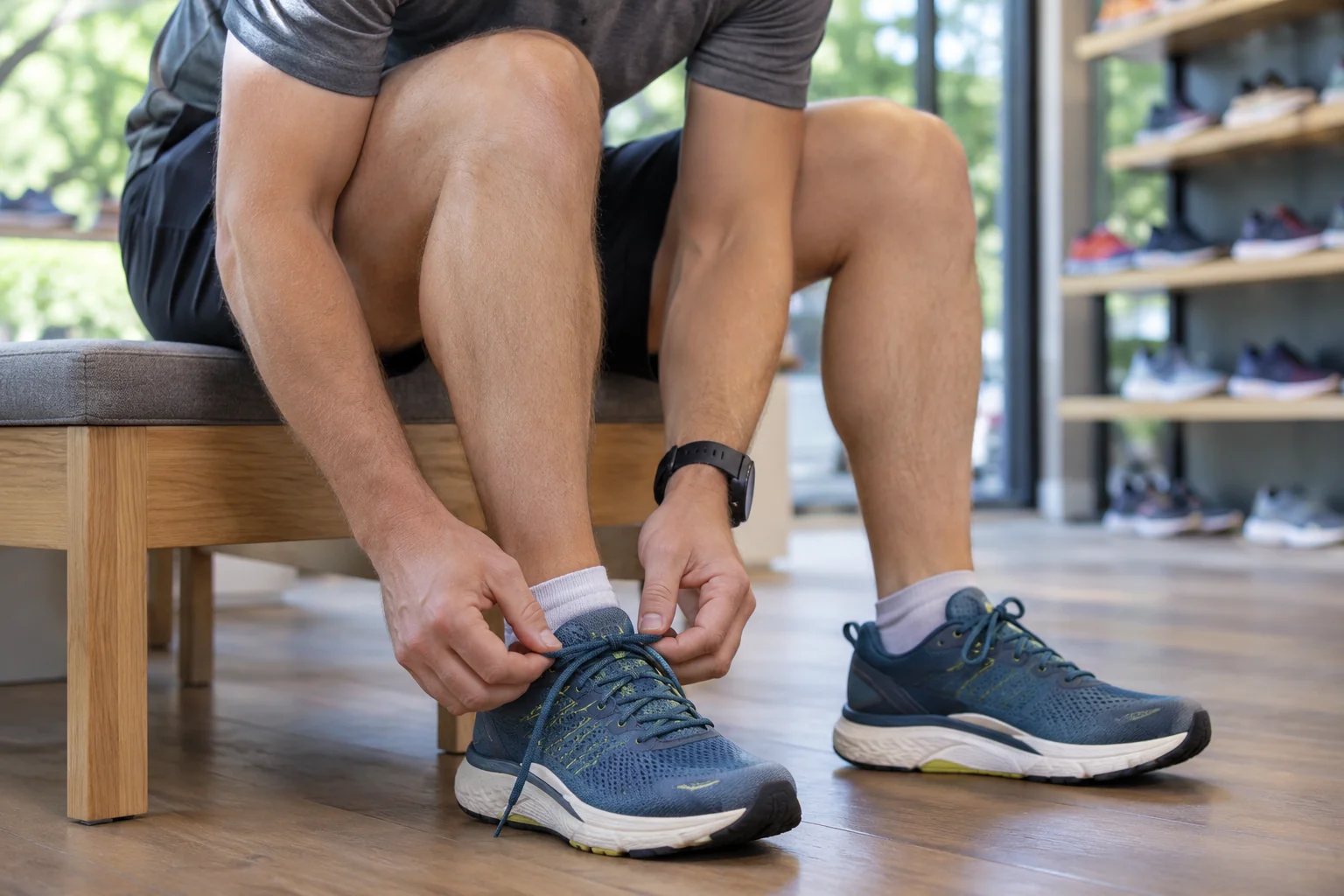
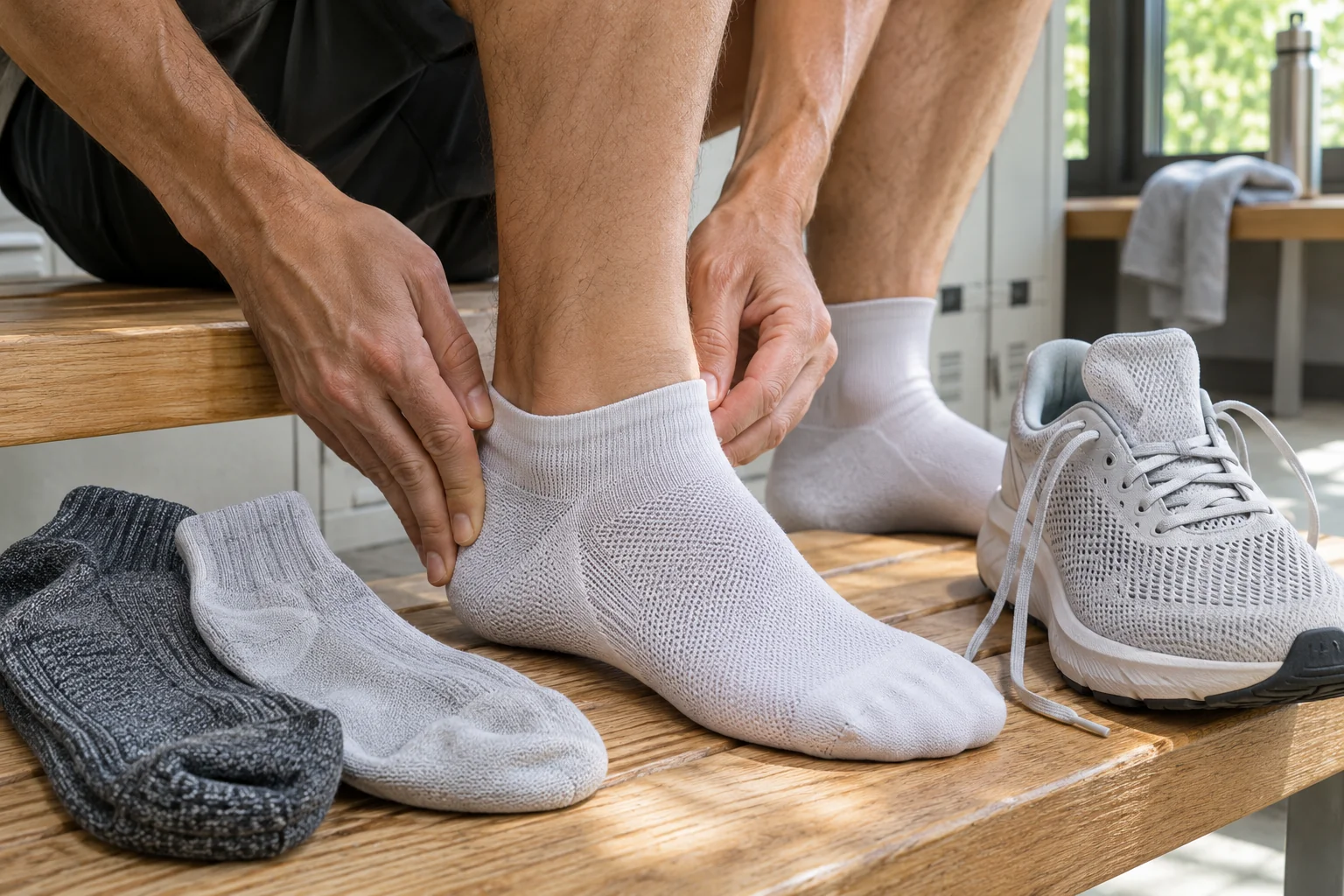
For your own fitting, wear the sock you actually intend to use. Thickness and fit may influence remaining room in the shoe and how the whole combination feels. This is a separate task even if the membrane technology description is detailed. A good material claim does not answer whether that particular size fits comfortably with the planned sock. Make the first calm fitting a realistic combination.
A dry starting condition also gives a useful basis for observations here. If the sock or shoe is already wet, do not try to infer definite new water entry from its post-run condition. Naming the condition before use is a simple but important detail. Your note may need only the shoe version, sock and starting condition; no sweat amount guessed from feeling is needed to ask a meaningful question later.
If chafing, skin problems or other symptoms recur, do not attribute them solely to the membrane name. Appropriate fit and your individual condition may need separate attention. This article does not diagnose skin or foot symptoms; observing equipment helps when the real problem is not reduced to a single technology label. Seek appropriate individual professional help if needed.
 Enlarge image
After use, adapt care to the particular shoe
Gore’s footwear care guide also asks you to follow the manufacturer’s own instructions and mentions natural drying at moderate temperatures and avoiding direct heat, among other points. Given the particular shoe’s materials and construction, use your own model’s description as the starting point. The aim is restoring and preserving a known condition, rather than the quickest unknown heat treatment. Do not automatically copy advice for another type.
The outer surface’s water repellency and the whole shoe’s waterproof construction remain separate concepts here too. If the manufacturer recommends a surface treatment, check the specified product type and procedure. An arbitrarily selected coating does not automatically repair a membrane. Equally, outer material becoming wet does not by itself establish the internal system’s condition. Pair the specific observation with the appropriate care or checking step.
Before the next use, check whether shoes and socks are genuinely in appropriate condition. Remaining wet in a bag is a different starting point from a carefully prepared dry combination. The brief check also helps interpret your own experience: moisture left from the previous outing does not become confused with what you notice on the new loop. A good usage routine connects preparation and subsequent care.
A precise selection question offers more than a general ranking
Frame your decision as a specific task: on what surface, in what kind of wet environment and with which combination would you use the shoe? Then look for the exact model’s purpose, description of waterproof construction and an opportunity for a comfortable fitting. There is no need to put all running shoes in a single membrane-versus-mesh ranking. A sound comparison places properties relevant to your own task side by side.
If examining a problem with an existing shoe, the question might be: ‘I started in this dry condition with this sock; I noticed moisture in this area after this outing. What check do you recommend for the particular model?’ This is our own editorial enquiry example, not an assertion of a fault already proved. The manufacturer can then request further details or offer an appropriate next step from the actual condition and use.
A membrane shoe’s advantage is most interpretable when you know which water route it addresses and in which construction you use it. Keeping vapour escape, the open collar and whole-shoe fit separate prevents expecting one component to perform every task. Precise model information and your own calm fitting together offer a starting point for the run you actually plan, alongside separate consideration of the environment’s safety.
Manufacturer sources and our own examples
The technological framework comes from the overview of Gore footwear technologies, examination of the whole system from the Gore description of finished-shoe testing, and care information from the Gore footwear care guide. A general manufacturer example of possible reasons for wet socks is the PRABOS questions and answers page; we do not use it as a running shoe recommendation. Checked: 21 November 2026. The situations and enquiry example are our own editorial explanations; we claim neither our own waterproofness testing nor a product ranking.
How Futószív articles are prepared: our editorial guidelines.