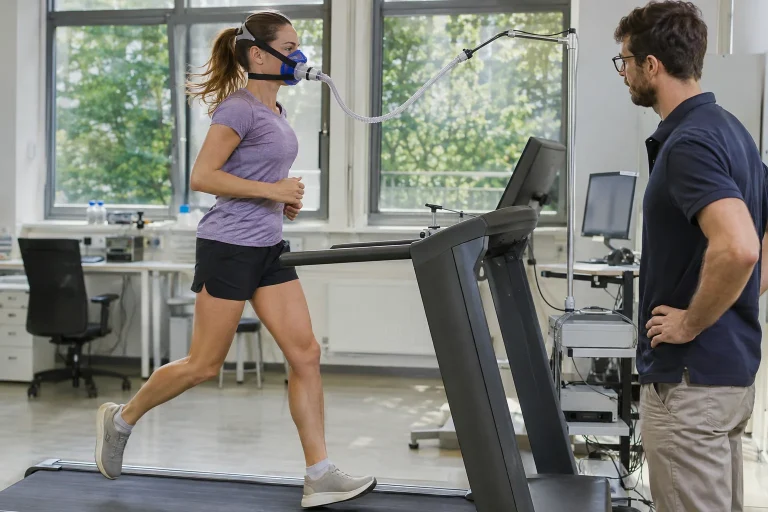
Your app says leg stiffness has increased. Another article says Achilles-tendon stiffness matters in running. Are they discussing the same property? Not necessarily. A model describing the whole limb as a simple spring and one tendon’s force–elongation relationship examine movement at different levels using different methods. Their shared word can easily hide that distinction.
A runner’s first useful step is identifying what was measured. What became stiffer: a laboratory surface, a shoe, a whole-leg spring parameter or tissue? Which force was related to which deformation? The explanation below separates these concepts through original calculations and three original studies. It does not rate a tendon from a watch number; it helps you ask the question correctly.
Stiffness always describes a relationship between two quantities
In simple mechanics, stiffness shows the deformation associated with a change in force. For an ideal linear spring, k = F/ΔL, where F is force and ΔL elongation or compression. A real tissue’s force–deformation curve is not necessarily linear, so the range and method used to determine its slope matter.
Stiffness can be expressed in N/m or N/mm. Compliance describes the inverse type of relationship: deformation for a given force. Already, distinguish the term from an everyday sensation. ‘My calf feels stiff’ is a subjective experience, not this kind of mechanical measurement. A simple unit conversion cannot connect the two statements.
An object’s material property and the stiffness of its whole structure can also differ. Longer and shorter elements made of the same material can elongate differently under force; cross-sectional area matters too. When reading about tendons, check whether the reported quantity is whole-structure stiffness, a material property or an estimated parameter over a particular loading range. The everyday image of a ‘harder material’ does not cover every measurement variable.
The leg spring is a simplified picture of the whole limb
In a spring–mass model, the body can be represented by a point mass and the supporting limb by an effective spring. Leg-spring stiffness may derive from the model’s force and compression relationship. It encompasses the whole movement’s result: joint positions, active muscle function, tissue elasticity and timing together. The leg spring is not one anatomical component that can be isolated in an image.
The geometric points chosen to determine spring-length change belong to the model. Vertical stiffness calculated from vertical lowering of the body’s centre of mass is not automatically identical to leg stiffness calculated from effective leg-spring shortening. If an article switches between them, reread the definition. The qualifier before ‘stiffness’ and the formula’s denominator represent real differences here.
In our example, model peak force is 2000 newtons and selected leg-spring compression is 0.05 metres. Their ratio is 40,000 N/m, or 40 kN/m. In another model, shortening of 0.04 metres at the same force gives 50 kN/m. Calculated stiffness increased. These two numbers do not yet tell us how a particular tendon’s force–elongation relationship changed; we calculated whole-movement shortening within a model.
 Enlarge image
Tendon stiffness requires examining that tendon’s deformation
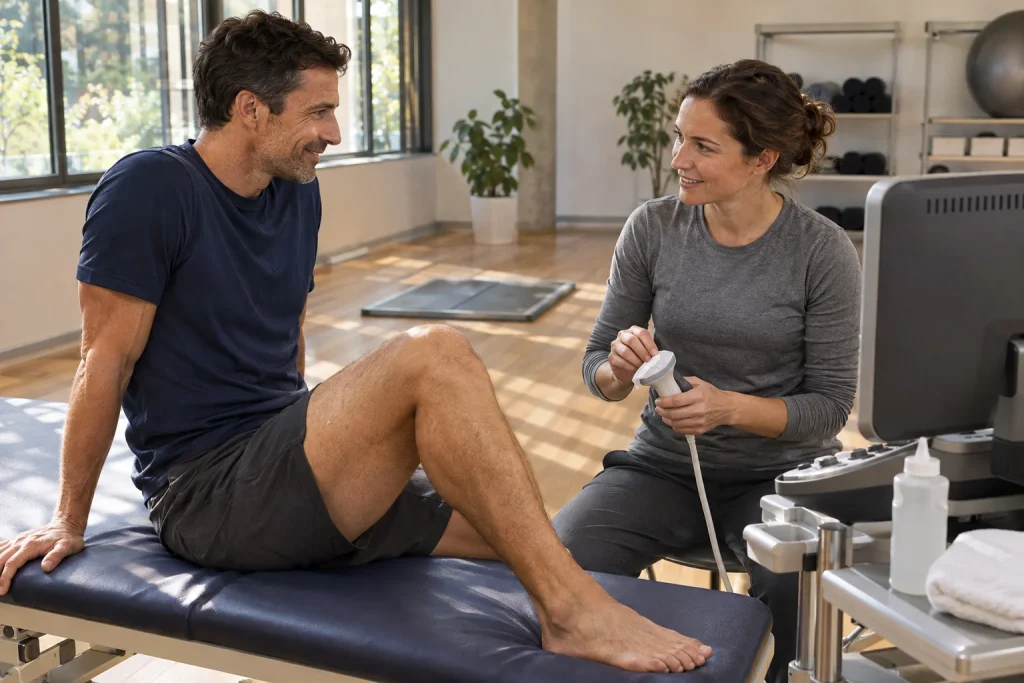
A tendon’s structural stiffness involves its associated force and change in length. The method must therefore address how anatomical landmarks are tracked, force is estimated and the loading interval selected. Ultrasound can help track tissue movement, but an image alone does not automatically provide all required force information or full mechanical behaviour.
In an original example chosen to be linear, 1000 newtons produces 5 millimetres of elongation. The ratio is 200 N/mm, or 200,000 N/m. Do not rank the previous leg-spring value of 40 kN/m and this 200 kN/m as ‘better’ and ‘worse’. Different systems, length changes and mechanical roles underlie the denominator. Identical units do not make two parameters measurements of the same thing.
Loading method, repetitions, the range examined and processing matter in a tissue assessment too. Following a result over time requires a reproducible protocol. ‘I feel stiffer today’ or ‘a different number appeared on the watch’ does not replace that measurement. Your sensation, a model metric during running and targeted tissue assessment can provide interesting information alongside one another.
The whole system can adapt when the surface changes
In Kerdok and colleagues’ original experiment, eight men ran on five laboratory surfaces with controlled stiffness. As the surface became more compliant, calculated leg stiffness increased while support mechanics were largely maintained; energy demand also changed within the range examined. This illustrates the whole person–surface system’s behaviour. Soft grounds are not all identical, and natural surfaces do not all provide the same elasticity or energy return.
Consider an elastic, energy-returning track and loose sand. Both can be called soft yet behave differently. ‘Soft’ does not tell you how much deformation energy returns, how deep the sinking is or whether the shape of support changes. Surface stiffness and energy loss are separate questions. Controlled laboratory-surface data cannot therefore be transferred to any route through one adjective.
Naming the setting in your training log helps: which track, speed and shoes accompanied the estimated leg-stiffness change? If all three changed, the watch difference is not pure tissue-change monitoring. The whole system performed a different task. The observation can still help, provided the explanation matches that level.
Stiffness calculated from contact time also depends on a model
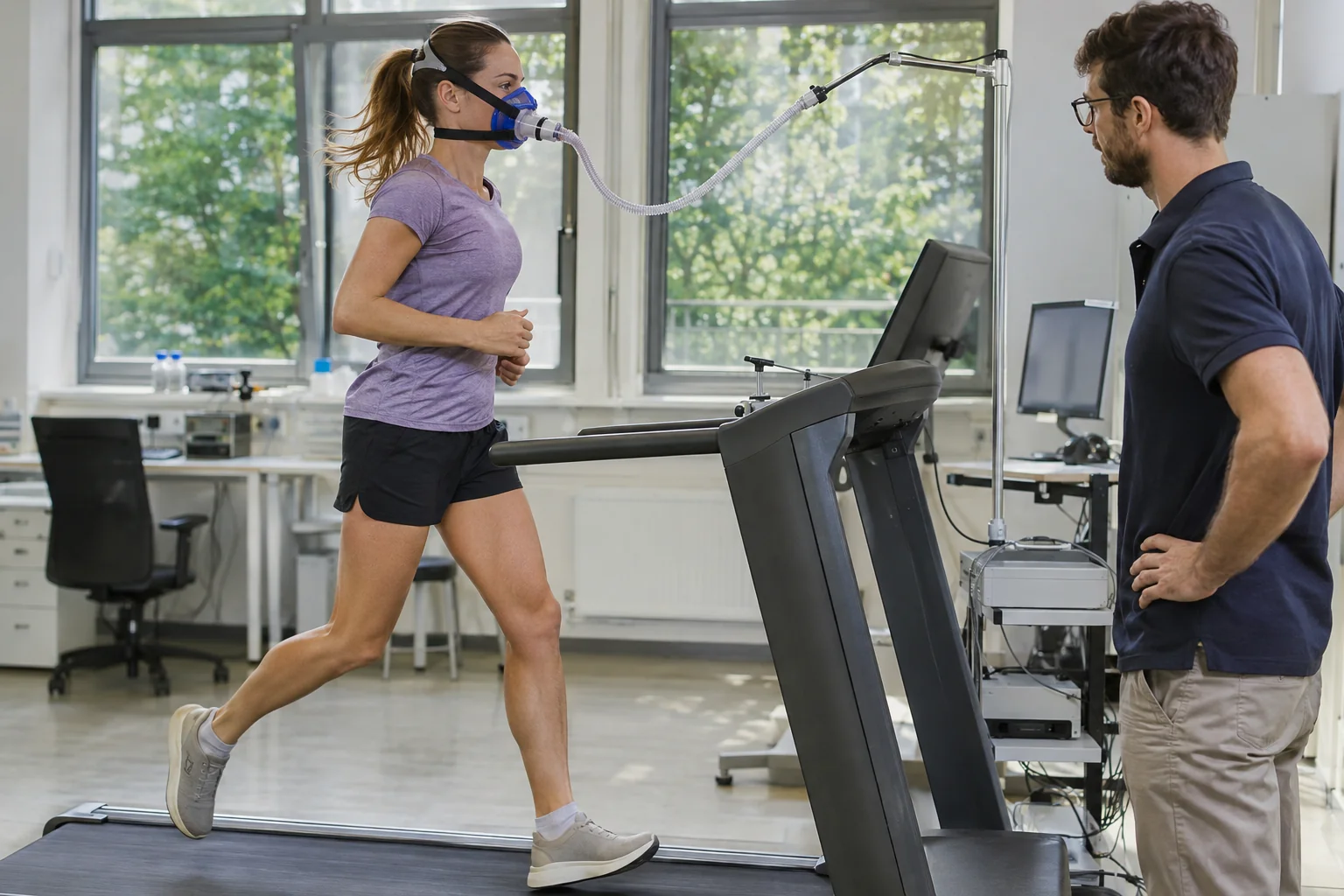
In Moore and colleagues’ study, contact time and step frequency were used to estimate leg stiffness. Ten trained runners used several modified-contact-time conditions at the same speed and fixed frequency. Stiffness and metabolic cost showed an individual minimum. A higher number therefore did not simply mean a better result in every situation.
When a wearable calculates stiffness from timing, contact-time and frequency estimation errors can enter the result too. A contact measured as shorter may change the chosen formula’s parameter even without a targeted tendon-material assessment. Knowing the formula and inputs behind the display matters more than a general congratulatory label beside the number.
Your own check can ask three questions: which stiffness does the device report; from which measured or estimated inputs; and how consistent is it in the same running situation? If the manufacturer does not define it clearly, do not automatically rename it Achilles-tendon stiffness. Following a complex model indicator and determining a particular tissue’s condition are different tasks.
Elastic energy: more storage does not automatically mean better running
An ideal linear spring stores energy as ½ × k × ΔL². In our example, an element with stiffness of 200 N/mm elongates by 5 millimetres at 1000 newtons and stores 2.5 joules. An element half as stiff would elongate by 10 millimetres under the same force and store 5 joules. This shows why increasing stiffness is not the same as increasing energy stored at a given force.
Actual running involves more than the quantity stored. When does force arise? How do muscle-fibre length and shortening velocity change? When does energy return? Tissue behaviour and active function fit together. The simple spring example is therefore neither a training target nor advice to seek the most compliant or stiffest tendon possible.
In Uchida and colleagues’ muscle-driven simulation, tendon compliance was varied to examine estimated running metabolic cost. Individual muscle responses differed: fibre operating length and shortening mattered too. The model identified a favourable operating range, but not a tendon-elongation target to follow at home. Adjusting a simulation parameter and deliberately changing human tissue are separate stories.
 Enlarge image
What might changing data mean in a runner’s everyday life?
Imagine a runner using a firmer level track on Monday and an elastic athletics surface on Friday, also running faster. Estimated leg stiffness differs. This first reveals differences between situations, not measurable transformation of Achilles-tendon material within four days. To follow a personal model metric, sections recorded on the same route at similar speed with the same device provide clearer comparison.
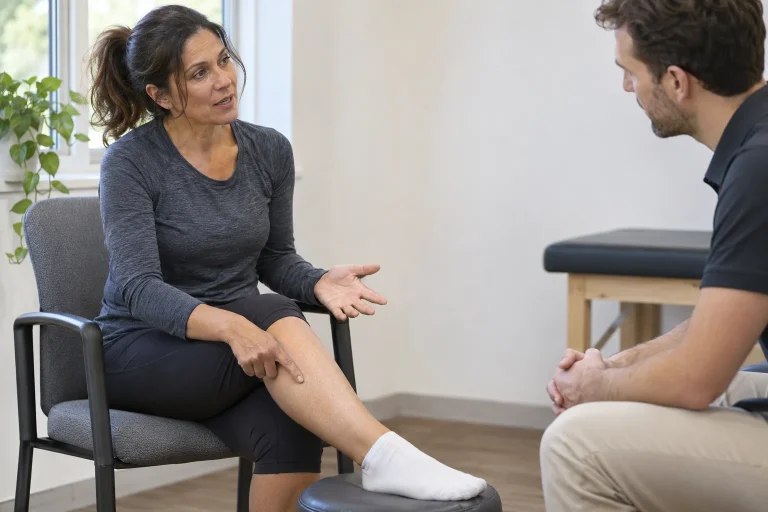
In another situation, a runner feels new pain above the heel and sees another number on the display. The symptom is separate information, not confirmation of the stiffness metric. Pain location, onset, relation to loading and functional changes matter for appropriate assessment. The device number does not determine the tissue causing symptoms or automatically authorise usual training to continue.
A useful coaching conversation therefore does not begin with one universal goal of ‘increasing stiffness’. It first identifies the running task and metric. The next question may concern technique timing, load distribution or simply recording quality. More precise language genuinely supports a more practical decision here.
Separate systems in three lines
When taking notes from several research papers, use three columns: object measured, deformation and method. The leg spring involves a whole-limb model, the tendon a specific tissue and the surface the support. Units can be converted, but physical systems do not merge. A good comparison aligns definitions first and magnitudes afterwards.
- Leg stiffness: a selected mechanical model parameter describing whole-limb behaviour.
- Tendon stiffness: a defined characteristic of that tissue’s force–elongation relationship.
- Surface stiffness: a separate property of ground or track deformation under force.
- Subjective stiffness: the runner’s experience, not automatically a mechanical measurement.
Muscles, tendons, joints, shoes and track function together in running. Retain that in the language too. Next time you see stiffness data, ask which system’s response under which conditions it describes. The number can then help explain movement without implying something about tendon condition that the method never examined.
Sources
- Moore and colleagues: contact time, estimated leg stiffness and metabolic cost.
- Kerdok and colleagues: running on laboratory surfaces of different stiffness.
- Uchida and colleagues: tendon-compliance effects in muscle-driven running simulation.
How Futószív articles are prepared: our editorial guidelines.