A narrow or apparently crossing footprint pattern and tibial loading are not linked by one simple video sign. Original research estimated stresses using force measurement, three-dimensional movement and a bone model. We follow that calculation pathway with an original mechanical example to clarify what is measured, what is modelled and why the result is not a personal injury prediction.
A footprint image and calculated bone stress are separate data
A pattern that looks crossing or narrow is a visual observation. Tibial stress, in contrast, is a mechanical quantity estimated through several measurement and calculation stages in the research discussed. No single direct reading connects the two. A rear-view frame does not reveal stress in different parts of the bone, even without colour coding.
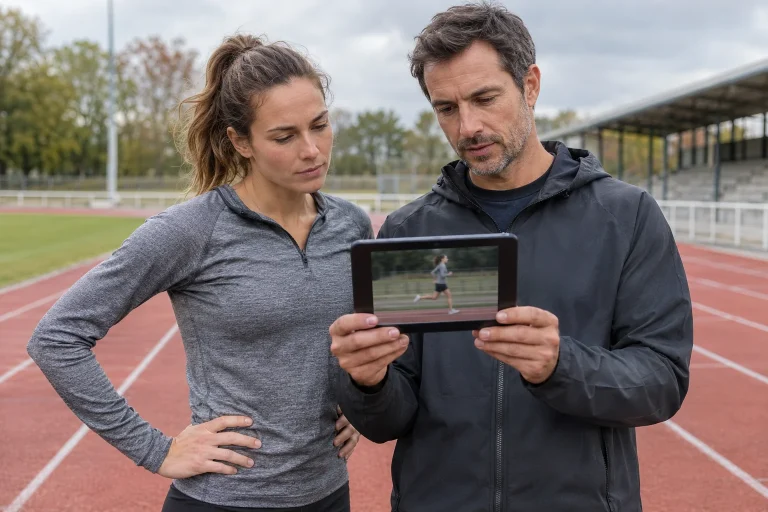
Step width also requires specified points and direction of travel. Shoes appearing one in front of the other on a screen do not necessarily represent a consistently measured lateral distance. Camera view, a turning route and foot direction contribute to the image too. Interpreting a model therefore begins with precise definition of input movement data.
The useful question is not whether the video looks dangerous. Instead, understand which measurements, body model and assumptions led researchers to a mechanical estimate for bone. This perspective makes the study interesting: it reveals the computational pathway for a possible relationship. It does not become an individual bone diagnosis merely because its title concerns runners.
What did the original tibial model examine?
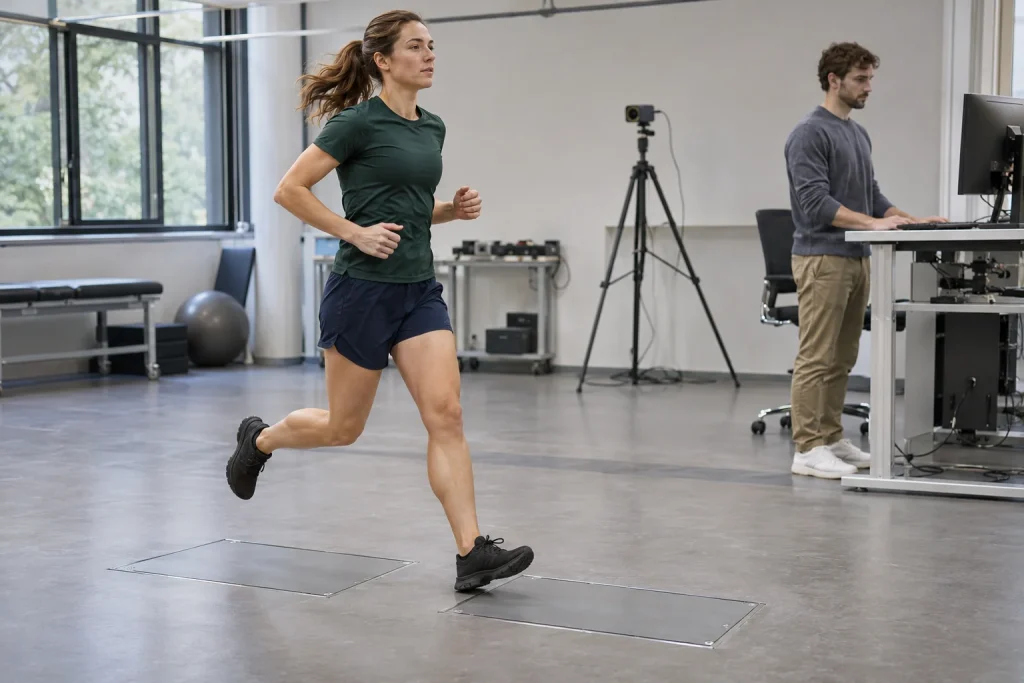
The research by Meardon and Derrick compared usual, narrower and wider step widths in fifteen runners. Participants ran at their chosen five-kilometre running speed, with three-dimensional movement and force data collected. Width changes were defined relative to leg length. This was a specific experimental task rather than an exercise recommended to every reader.
Bone stress was estimated using inverse dynamics, musculoskeletal modelling and a beam-theory approximation. The tibia was represented as a hollow elliptical model while participants’ anthropometric and movement data were also used. Wider steps were associated with lower calculated compressive, tensile or shear stresses in the bone regions examined. The conclusion applies under the standardised bone model’s assumptions.
The study therefore did not simply observe whose shin hurt or count new fractures over time. Its outcome was model-estimated mechanical stress. This is valuable information in its own right without requiring a stronger clinical claim. To understand the method, keep direct measurements, quantities calculated from them and the question of what the estimate can be used for separate.
 Enlarge image
Four stages in the calculation pathway
First, movement is recorded: positions and movements of body points and segments used in analysis. Second, external forces are measured, for example with a force plate. Time alignment matters because force and body position must belong to the same instant. Individually clear recordings are insufficient if they describe different steps in the calculation.
Next, inverse dynamics calculates joint-level mechanical quantities from movement and external forces. A musculoskeletal model adds assumptions to estimate how muscles and loads acting on bones may contribute. Individual muscle activity is not always directly measured input. Model construction and the selected solution therefore contribute to the final result.
Finally, the bone model calculates stress from the applied loading and assumed geometry. Bone shape, cross-section and loading direction matter at this stage. The full chain contains direct measurements and estimated stages. Taking the result seriously means visibly retaining that difference rather than naming every stage a single video that measures bone.
Why does geometry matter under the same force?
An original deliberately simplified example explains stress. Under purely axial force, average normal stress is force divided by area. One thousand newtons over three hundred square millimetres gives approximately 3.33 newtons per square millimetre, or 3.33 megapascals. The same force over two hundred square millimetres gives five megapascals. Area differs, so stress differs too.
This does not calculate a runner’s actual tibia. Real bone is not a simple homogeneous column loaded uniformly, and running can involve bending and shear too. The example only shows why knowing one force number is insufficient. Without assumptions about geometry and the loading situation, tissue stress does not automatically follow.
A standardised hollow ellipse may be a useful research approximation for the comparison, but is not identical to each participant’s bone reconstructed from detailed individual imaging. Scaling a model with individual data does not mean every anatomical property was directly measured. The degree of personalisation is a matter of extent rather than a simple yes-or-no label.
A smaller calculated peak differs from a lower fracture probability
Bone stress is a mechanical outcome; pain is a symptom; injury or fracture is a clinical event. These concepts may connect, but are not interchangeable. Lower calculated stress in an experiment does not mean the same percentage reduction in personal injury risk was measured. That would require a different study question, follow-up and appropriate clinical outcome.
A peak from one instant of loading does not independently summarise an entire running life either. Movement repeats, history and bone condition may differ. Saying this does not aim to dismiss all models. A model helps examine a particular mechanical relationship. A longer-term health history need not be read into it as though directly followed too.
This article’s simple stress example gives no safe megapascal threshold either. It cannot permit home loading or be applied to your own tibia by visual comparison. The calculation clarifies a concept. Clinical meaning involves symptoms, examination and individual background, rather than merely the smallest number isolated from a model.
Step width can also mean changes at other joints
The other study modifying step width in thirty healthy runners also found differences in hip, knee and rearfoot characteristics. This reminds us that changing lateral footprint position affects more than input to one bone model. Running movement is a connected system rather than a collection of isolated numbers.
Assessing your own technique change therefore cannot consist of one desired metric decreasing while every other question is set aside. Movement manageability, rhythm or perceived comfort may differ. These need not automatically become health problems, but should remain in observation. A fuller picture helps avoid turning one study result into an overly narrow individual goal.
A wider step is therefore not a universal correction command. The laboratory change was a defined task, while personal movement modification is a separate decision. First understand which problem or performance question you want answered. The calculation can provide interesting background, but cannot prescribe the direction or amount of change in your usual footprint pattern without assessment.
 Enlarge image
What can a phone-based movement model do that a single video cannot?
The 2023 OpenCap paper calculates movement and dynamic quantities using several phone views, pose estimation and biomechanical simulation. This is an important technological development, but does not mean any arbitrary single-camera running recording directly measures internal bone stress. Several processing and modelling stages remain behind the system’s results too.
Validation presented in the paper concerns specific tasks and outcomes. It cannot automatically extend to every sporting movement and tissue. If a service displays an impressive coloured bone diagram, ask which data, model and verification produced it. Detailed visualisation alone does not prove an individual estimate’s accuracy.
Useful technology and critical reading coexist well. A model can reduce measurement-equipment requirements while assumptions and interpretation limits remain important. The question is not whether phones can ever produce valuable data, but which specific claim of a method has been checked. Do not entrust interpretation of your shin symptoms to a general technology promise.
With symptoms, their history matters more than the footprint label
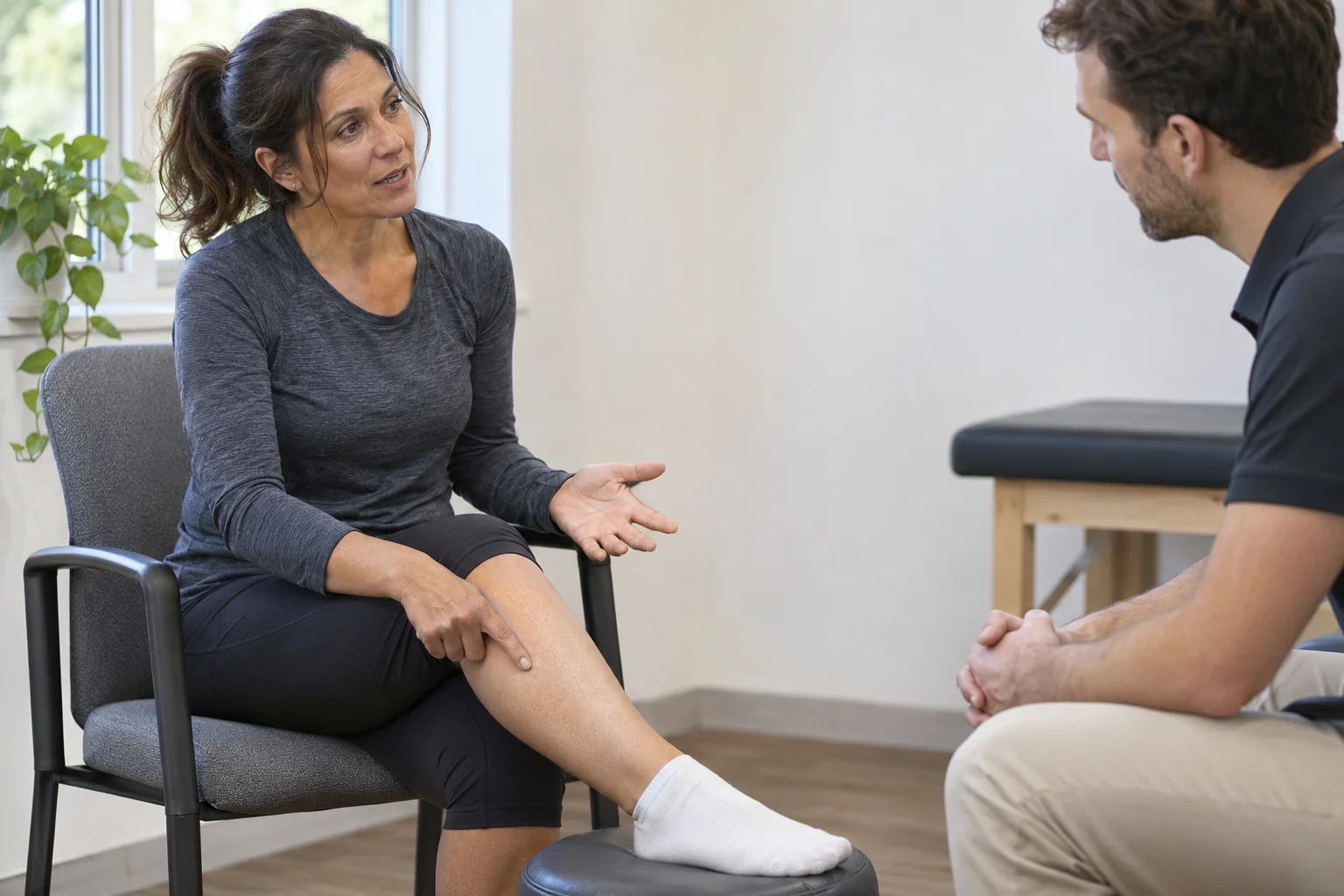
The AAOS information on bone stress injuries emphasises healthcare examination for recurring activity-related bone pain. Continuing to load through pain can worsen matters. Early X-rays may even appear normal, making joint interpretation of symptoms and examination findings important. Footprint footage does not replace this.
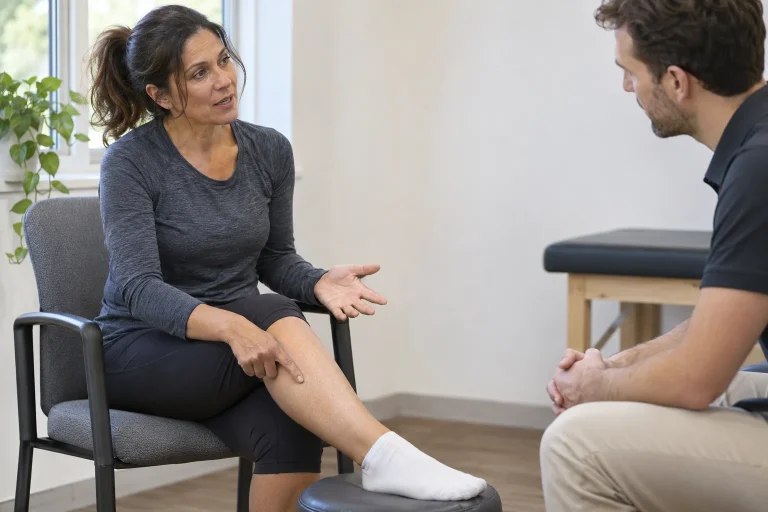
For discussion, describe when symptoms began, which task brings them on and whether daily movement changed. Do not start with an online video diagnosis that crossover steps must be the cause. Accurate timing and specific functional experience give more usable information. Movement appearance may contribute to the whole assessment without every symptom being tied to one visible sign.
A bone model therefore helps explain how a step change may relate to calculated mechanical stress. It does not automatically measure pain or give a personal fracture probability. Separating measurement, modelling and the clinical question preserves research value and puts your decision on a more precise footing: choosing information appropriate to the real question.
Sources
- Meardon and Derrick: step width and modelled tibial stress.
- Brindle and colleagues: width changes and lower-limb biomechanics.
- Uhlrich and colleagues: OpenCap and phone-based estimates of movement dynamics.
- AAOS OrthoInfo: assessment of bone stress injuries.
How Futószív articles are prepared: our editorial guidelines.