When researchers calculate less positive knee work in a stiffer running shoe, it seems natural to say the shoe “saved” that work. The full story also requires looking at other joints and foot movement. A lower value at the knee may accompany a greater contribution elsewhere or different timing. A shoe shapes the entire movement system’s operation, rather than switching off one joint.
This guide begins with specific stiffness experiments, then uses our own numerical example and comparison framework to explain the research. It is neither a purchasing ranking nor instructions for modifying shoes at home. It asks what mechanical redistribution may lie behind an appealing knee measurement and what further evidence would be needed for comfort, performance or injury protection.
Why compare the same shoe with a stiff insert?
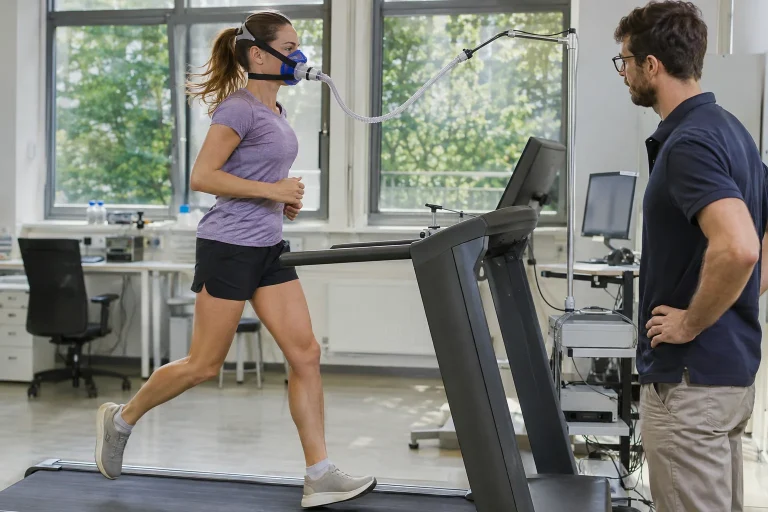
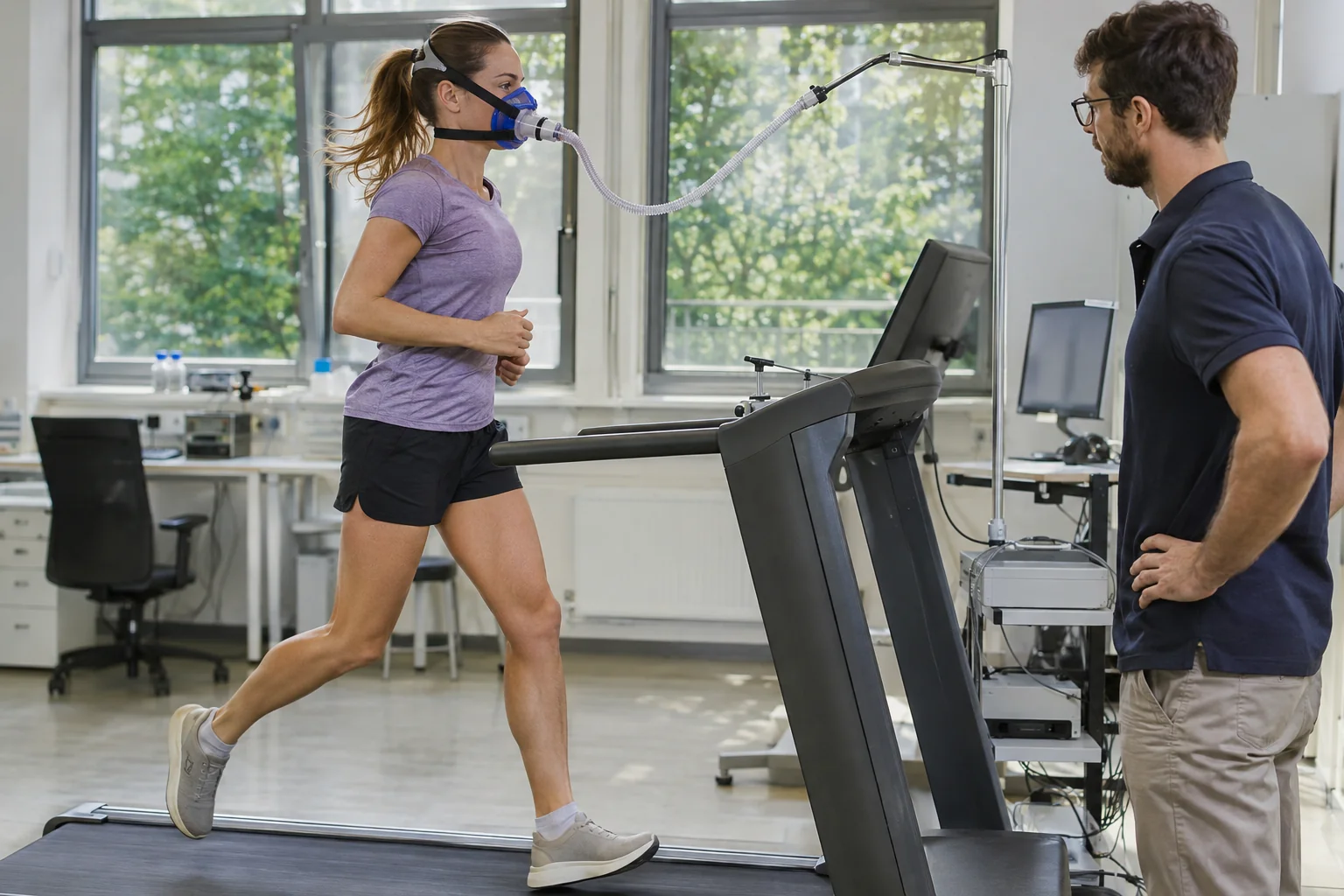
In Cigoja and colleagues’ original study, thirteen male recreational runners ran in the same shoe under two conditions: control and a carbon insert increasing bending stiffness. Running speed was 3.5 m/s, with force and movement data recorded. The stiffer condition produced more positive and less negative work at the toe-base joints, and less positive work at the knee. The specific finding was redistribution of joint work.
This research design can keep many shoe characteristics shared. It answers a different question from comparing two different retail models. In that case, foam, stack height, upper, sole curvature and mass may all change. If the entire shoe changes, the running response cannot unambiguously be assigned to one component. Always read precisely what was compared.
Adding the insert does not make every other property perfectly identical either. In the related research’s full methods, the two shoe conditions weighed 225.67 and 289.10 grams. Our subtraction gives a difference of 63.43 grams. This is an important detail about the test conditions: the modification’s mechanical and physical characteristics must both be named. The stiffer condition’s result does not cleanly prove that every component of any modern carbon-plated shoe would act identically.
A research protocol and a recommendation for use are different genres. A controlled insert in an experiment is not an invitation to put a rigid sheet into an everyday shoe at home. Sole fit, foot position and construction matter together. For readers, the experiment’s value is a clearer examination of a mechanical question, rather than copying the modification.
The foot may do more while the knee does less work
The joints at the bases of the toes are called metatarsophalangeal joints, or MTP joints. Foot and shoe deformation during running also affects their surroundings. Read knee measurements alongside foot and ankle curves. Extracting the largest percentage reduction from a table is insufficient if another column shows a different contribution.
Positive joint work is positive net joint power integrated over time. It is not directly measured muscle calories. In the same movement task, net work distribution may change between joints while the entire system’s energy requirements remain a separate measurement question. “Less at the knee” can be a precise mechanical statement; “the whole runner uses this much less energy” requires another result.
Our fictional example compares positive work at three locations, normalised to body mass. These numbers are neither research findings nor ideal proportions. They simply show how a local decrease can coexist with an unchanged sum of three selected columns.
| Our illustrative location | Condition A | Condition B | Change |
|---|---|---|---|
| Knee | 0.35 J/kg | 0.30 J/kg | −0.05 J/kg |
| Ankle | 0.30 J/kg | 0.32 J/kg | +0.02 J/kg |
| MTP | 0.02 J/kg | 0.05 J/kg | +0.03 J/kg |
| Sum of selected columns | 0.67 J/kg | 0.67 J/kg | 0 |
Positive knee work fell by approximately 14.3 per cent in the example, yet the selected three values’ sum remained unchanged. This is not the whole body’s total energy requirement, and says nothing about negative work. It makes tangible why redistribution matters when highlighting a decrease at only one joint. Local and whole-system conclusions are different.
 Enlarge image
Arch and muscle–tendon-unit motion can change too
The related crossover study analysed estimated arch and muscle–tendon-unit function. In the stiffer condition, arch deformation was smaller and several characteristics of shortening in the modelled units differed. The authors referred to the earlier protocol, so the two publications should not automatically be added together as two entirely independent sets of participant evidence.
Modelled shortening of a whole unit is different from directly measuring every muscle fibre’s movement. The fibre and series elastic element may behave differently. A unit shortening more slowly does not fully establish which component changed by how much. A biomechanical model can answer several questions, but separating internal subprocesses may require other measurements.
This adds nuance to the foot–shoe relationship. A stiff element does not simply add its own energy to a person functioning unchanged. The runner’s movement, ground contact and foot deformation may also reorganise. A useful explanation therefore examines the system: which movement changes and timing accompanied the different work? This makes the result more specific than simply saying “plated shoes make you faster”.
The full methods may also identify which elements come from direct marker tracking, which from geometric estimates and which from further division of force data. Runners need not recreate the software. It is enough to know that a curve is not a simple photograph inside a muscle. “Estimated” and “modelled” in the description carry real information.
Plate placement can produce a different response too
In fourteen male recreational runners, Flores and colleagues compared placement of a stiff element within a shoe. A higher position beneath the insole and a lower position between midsole and outsole produced different movement and moment measurements. At the speeds tested, the higher position also produced less positive knee work than the lower one. Stiff-element placement was therefore part of the specific design, rather than an incidental detail.
The retail “carbon-plated” category is consequently too broad to assume one mechanical effect. A plate’s shape, length, location and surrounding materials together form a structure. Whether a stiff element is present is merely the first line of description. Two shoes sharing a material name can show different bending behaviour and different running responses.
For our own structural analogy, imagine a flexible sheet supported at different points. The same sheet may move differently depending on where force is applied and transferred. This is not a shoe model, but a reminder that a material name is not a full structural description. In shoes, sole geometry and the loading path matter too.
In practice, seek descriptions discussing the whole construction. Always match a laboratory finding to the condition actually tested. If a study used a flat insert, do not automatically rename it as testing every curved racing shoe embedded in different foam. This precise matching prevents mechanical explanations becoming overly general purchasing promises.
Which questions can a short measurement answer?
A laboratory trial creates a bounded situation, studying movement at specified speeds, shoe conditions, surfaces and recording procedures. It can reveal immediate differences. Adaptation over several weeks, fatigue in the second half of a marathon and long-term injury rates are separate research questions. Different time scales require different data collection.
Your own reading exercise can be a two-column note. On the left, record what was actually measured, such as net knee work at a given speed. On the right, put what you would like to know: will long runs be more comfortable, will pain decrease or will your target time improve? Evidence must build the connection between the columns. Without it, the second question remains open.
This does not make the first finding uninteresting. Mechanical redistribution can provide explanations, initiate new questions and help understand different running responses. Research becomes more valuable when its conclusions are described precisely. An exaggerated promise of injury protection or universal time savings adds nothing to the meaning of measured knee work.
If symptoms prompt you to seek different shoes, comfort and symptom history are independent information. A smaller knee-work curve does not establish a reduction in the symptomatic tissue’s entire load. The runner’s circumstances and symptoms belong in the appropriate assessment question. Shoe research can be part of the discussion without becoming a personal diagnosis.
How can you compare two findings without attributing everything to the plate?
First distinguish a controlled modification from differences between complete shoes. Then check whether the same people ran in both conditions, how order changed and whether pace was comparable. Within-participant comparisons can reduce the contribution of differences between people, but do not automatically make the sample representative of every runner.
- Shoe: the same model modified, or two entirely different constructions?
- Physical properties: are mass, sole geometry, foam and bending behaviour known?
- Task: which speed, surface and measurement period were used?
- Outcome: positive, negative or net work, and at which joint?
- Further question: were energy demand, comfort or long-term consequences measured separately?
Second, read the whole table. Alongside a knee reduction, find ankle and MTP values and movement timing. Third, separate group averages from individual responses. An observed average difference does not promise every runner changes equally or in the same direction. A detailed figure often reveals more than a highlighted percentage.
Finally, distinguish the purpose of your everyday trial from the laboratory result. You can observe comfort, fit and experience in your usual running situation. You need not claim a personal joint-work measurement from this. An honest diary distinguishes what you felt, your pace and what you know only from another study. Together, these three kinds of information are more useful than a story in which one component explains everything.
 Enlarge image
Look at distribution before savings
The precise answer to the title’s question is conditional: less positive knee work may accompany a different role for the foot, changed arch and muscle–tendon function and altered timing. Further measurement determines any net benefit for the whole body. Redistribution is not automatically a gain or loss, but an observable mechanical change.
When reading a new shoe study, begin with: “Which work decreased, and what else changed?” This immediately opens up the whole movement system. Knee, ankle and foot perform the running task together; shoe design enters this operation. A good explanation starts with the specific measurement and extends only as far as the result genuinely supports.
Sources
- Cigoja and colleagues: bending stiffness and redistribution of lower-limb joint work.
- Cigoja and colleagues: related muscle–tendon and arch modelling.
- Full methods of the muscle–tendon research, shoe conditions and earlier protocol.
- Flores and colleagues: investigation of stiff-plate placement within a shoe.
How Futószív articles are prepared: our editorial guidelines.