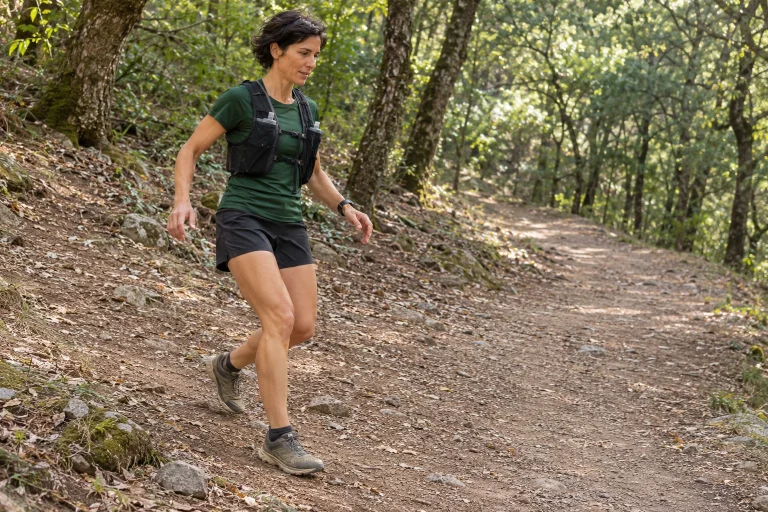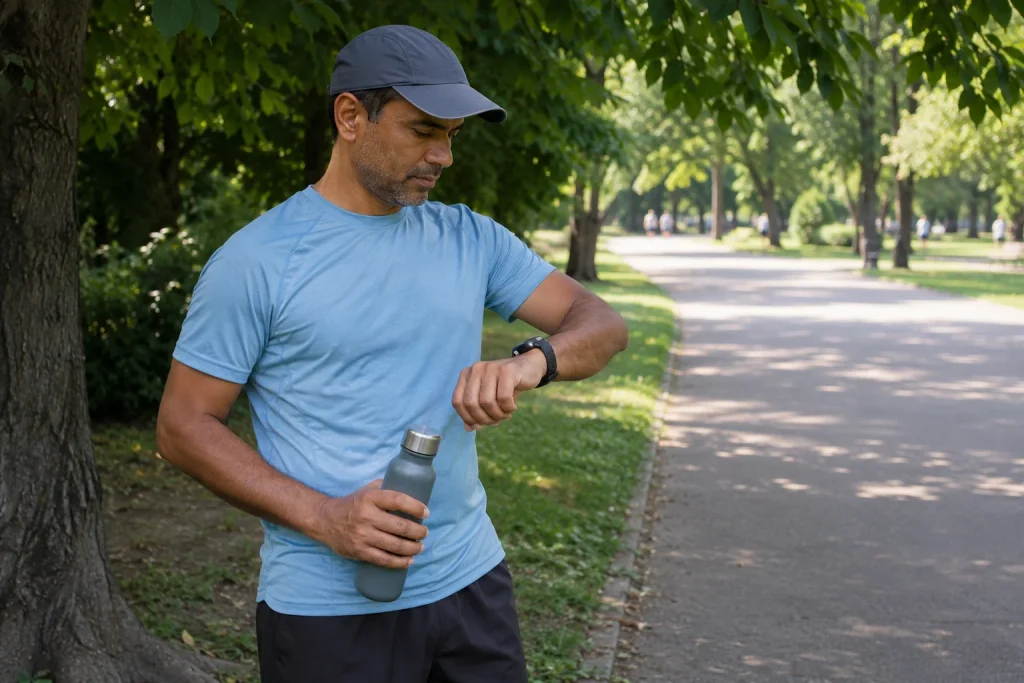
On the first hot day, the same park route and pace can feel entirely different. Heat is an additional load that willpower or a larger bottle cannot neutralise. Adaptation can help, but develops gradually and does not make you invulnerable. Sound preparation includes recognising when to shorten, choose another time or abandon outdoor training.
This article provides general information, not an individual heat-training programme. Previous heat illness, heart, kidney or other chronic disease, pregnancy or medication affecting temperature regulation may require personal medical advice. Do not change medication yourself for running.
Heat means more than air temperature
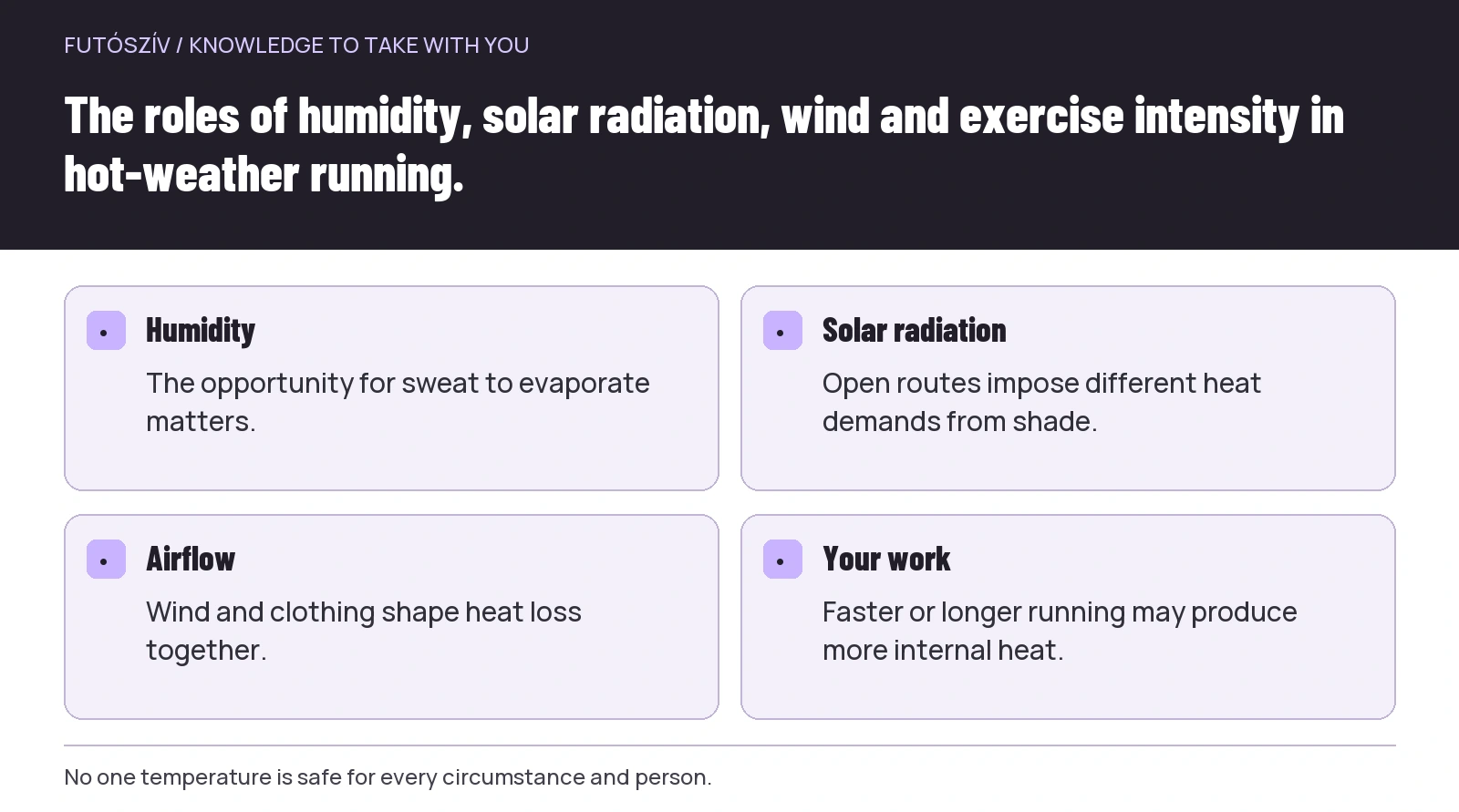
Humidity, solar radiation, airflow and clothing together influence losing the heat produced while running. A shaded breezy loop differs from still, sun-exposed asphalt. The same thermometer reading therefore does not always mean the same risk.
Your effort also contributes. Faster or longer work may produce different heat from brief easy activity. A cool-weather plan need not be completed at unchanged pace in heat.
The IOC consensus on sporting events in heat emphasises assessing environmental conditions, sporting tasks and organisational measures together. Recreational runners also benefit from avoiding decisions based on temperature alone.
What does adapting to heat mean?
Repeated, appropriately dosed heat exposure can produce physiological and perceptual adaptations involving circulatory response, sweating and thermal sensation. Their extent and timing vary between people.
The professional recommendations by Racinais and colleagues discuss gradual acclimatisation as an important tool for athletes preparing for heat. They do not require every runner to seek extremes deliberately. Procedures depend on goals and individual background.
Adaptation does not eliminate heat illness. Previously tolerable loops can become demanding with illness, inadequate sleep or different weather. Daily decision points remain after acclimatisation too.
Why forcing your usual pace is a poor first step
Harder-feeling running in heat is not automatically fitness loss; surroundings changed. Judge the comfortable outing’s purpose by effort too, slowing or shortening as needed.
A short familiar loop allows observation of responses during and afterwards. You need not start in the hottest hours or on the longest route.
The CDC athlete guidance highlights gradual effort, cooler times and rapid responses to illness. These are simpler and more controllable starting choices than increasing heat exposure at any cost.
 Enlarge diagram
Text version of the illustration
- Humidity
- The opportunity for sweat to evaporate matters.
- Solar radiation
- Open routes impose different heat demands from shade.
- Airflow
- Wind and clothing shape heat loss together.
- Your work
- Faster or longer running may produce more internal heat.
Heat exposure counts within preparation too
Do not add an acclimatisation programme to the full old schedule as though without consequences. Running, heat and recovery shape total demands together. Opportunities to rest between days matter as much as exposure itself.
Avoid increasing distance, fast work and time in heat simultaneously. Many changes obscure your responses. Traceable small steps help interpret experience.
Do not copy specialist research heat procedures without assessment. Overheated rooms, extra clothing or passive hot environments can add demands requiring appropriate professional support. Suffering is not a quality measure of adaptation.
Choose a route you can leave
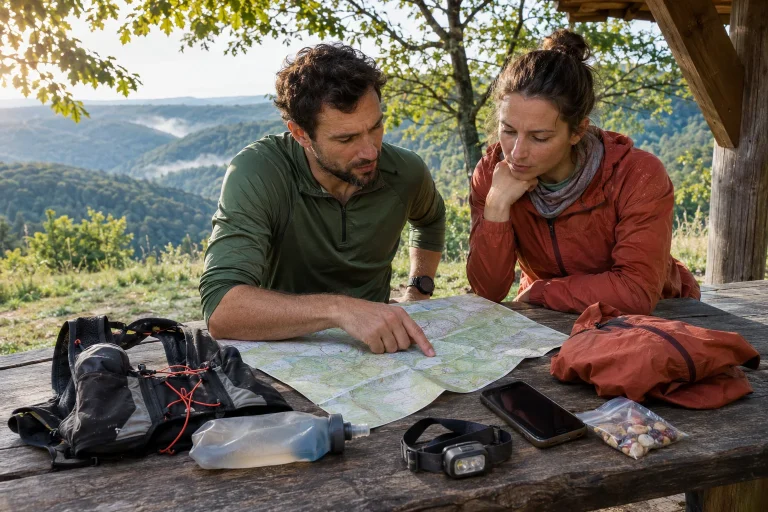
Shortenable loops are particularly useful in heat. Locate shade, drinking water and nearby cool places. Exits can matter more than a beautiful continuous map line.
Becoming unwell halfway along a long out-and-back can make returning difficult. Short loops or nearby sections leave more choices. Remote trails also require communication and accessible assistance plans.
Where appropriate, tell someone your route and expected return. Keep a working phone accessible. On group runs, clarify responsibility for people falling behind and how the outing can be stopped.
Clothing and sun protection are practical matters
Choose comfortable, tested clothing. Adapt hats, glasses and sunscreen to surroundings and product instructions. Equipment is not intended to preserve an unchanged plan in any heat.
Observe wet-clothing rubbing, bottle access and bag obstruction. Testing needs no race effort; several shorter outings can reveal organisational faults.
Verify mandatory event equipment from current organiser information. Comfort and rules matter together. A previous year’s list may differ from today’s.
Fluids: plan, without unlimited forced drinking
Needs vary with individual, environment and effort. Another runner’s hourly amount is not your prescription. Acclimatisation can change fluid-loss patterns too, so interpret previous experience alongside circumstances.
Unlimited drinking is not a general safety solution. Very long events or particular health situations may require an individual strategy. A sports-experienced dietitian or doctor can refine organisation and personal requirements.
Separate available route water from what you carry. A dry fountain or unavailable station changes the programme. Have an option manageable with less time outside.
Adaptation does not remain unchanged forever
The review by Daanen and colleagues examined decay and reacquisition of heat adaptations. Different adaptations may change differently, and earlier experience does not provide indefinite protection.
After a long period running in cool conditions, do not use last summer’s loads when travelling somewhere hot. Humidity, radiation and routines may differ too. The first run should explore conditions rather than prove readiness.
Race travel may justify a professional environmental adaptation plan beyond this general article. Organiser warnings and health history remain relevant.
 Enlarge diagram
Text version of the illustration
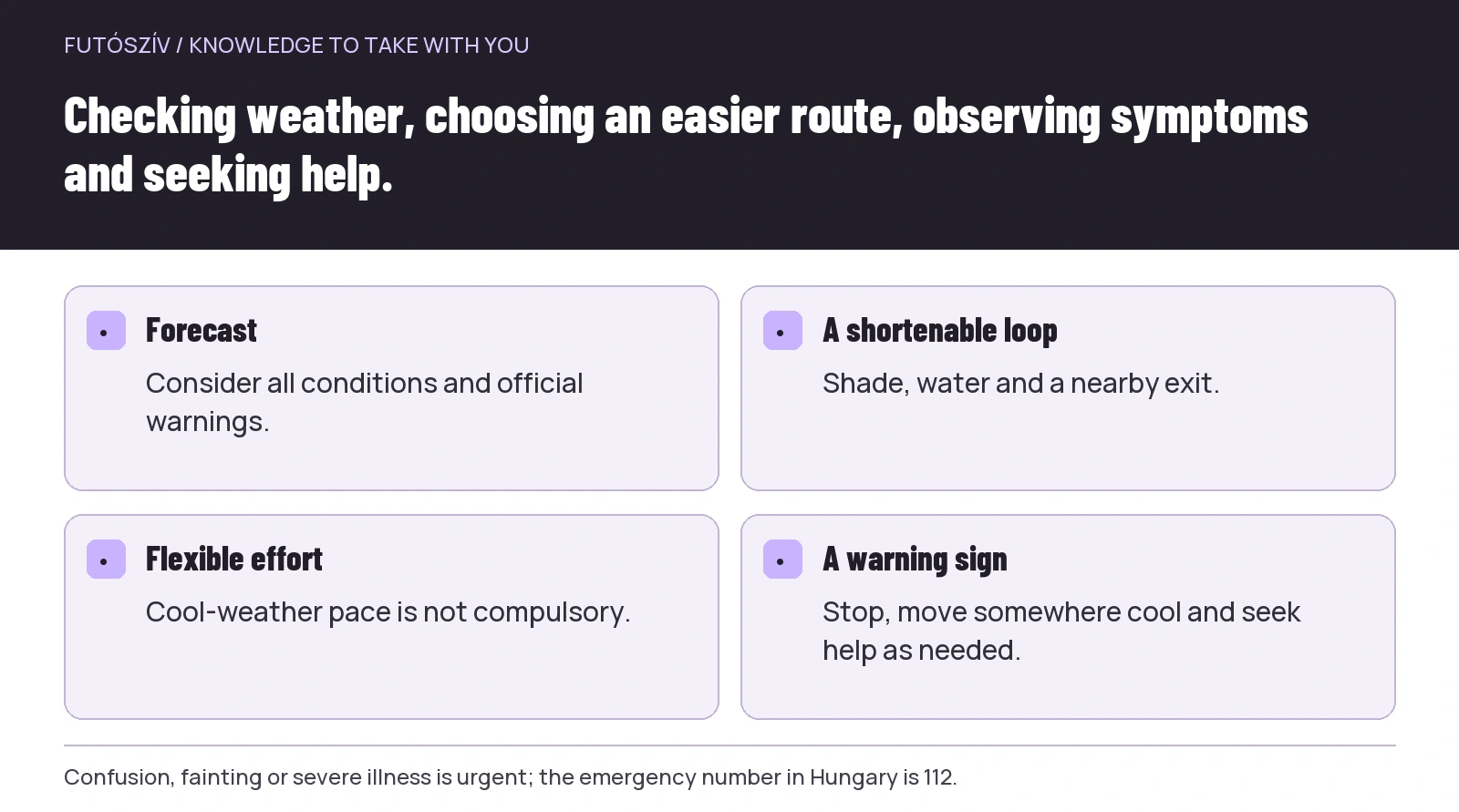
- Forecast
- Consider all conditions and official warnings.
- A shortenable loop
- Shade, water and a nearby exit.
- Flexible effort
- Cool-weather pace is not compulsory.
- A warning sign
- Stop, move somewhere cool and seek help as needed.
Which signs mean stopping?
Stop exercise and move somewhere cooler for severe weakness, dizziness, headache, nausea or unusual illness. Do not let planned distance or group pace delay decisions. Significant or unresolved symptoms need healthcare help.
The National Weather Service health overview treats confusion, slurred speech, fainting and altered consciousness as possible signs of severe heat illness. Urgent help is needed; in Hungary call 112. Do not leave the person alone; begin cooling and safe assistance immediately.
Do not force an unconscious or confused person to drink. Healthcare professionals should assess the situation and further action. Heatstroke can occur with sweating, so absence of dry skin is not a reassuring exclusion.
Organiser decisions are part of race safety
A moved start, shortened distance or stopped event is not an obstacle to bypass through determination. IOC event guidance also values environmental monitoring and organiser measures. Follow announcements even after previous runs in similar heat.
Prepare for waiting too: where is shade and water, and how do you get home after changes? Prolonged sun exposure before running and standing in heat afterwards count towards total outdoor time. Do not dismiss a partner’s request for help because you still feel well.
Previous heat illness requires an individual return
After severe heat illness, do not begin from a general few-day acclimatisation list. The ACSM expert consensus treats recognition, treatment and return to sport separately as medical matters.
Describe exactly what happened, care received and intended future sporting conditions. Agree follow-up and gradual-return conditions with your care team. Previous race results or good general fitness do not replace this.
What to record about hot-weather running
Alongside distance, note time of day, shade or exposure, approximate weather and perceived difficulty. Record shortening or stopping. Its reason may matter later more than the missing portion of the plan.
Look beyond the best outing. Seek patterns across similar situations and accept that indoors or another time may suit better under some conditions. A useful heat routine also means adapting to circumstances.
Sources and checking
This article cites international sports-medicine consensuses, a heat-adaptation research review and primary CDC and National Weather Service information. It provides no unassessed heat-training protocol or universal fluid quantity. Individual risk and previous heat illness require medical advice. Sources checked: 18 November 2026.
How Futószív articles are prepared: our editorial guidelines.