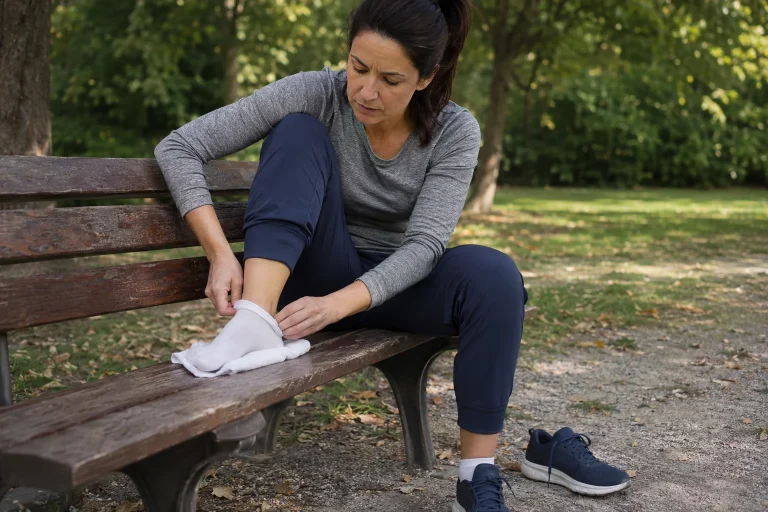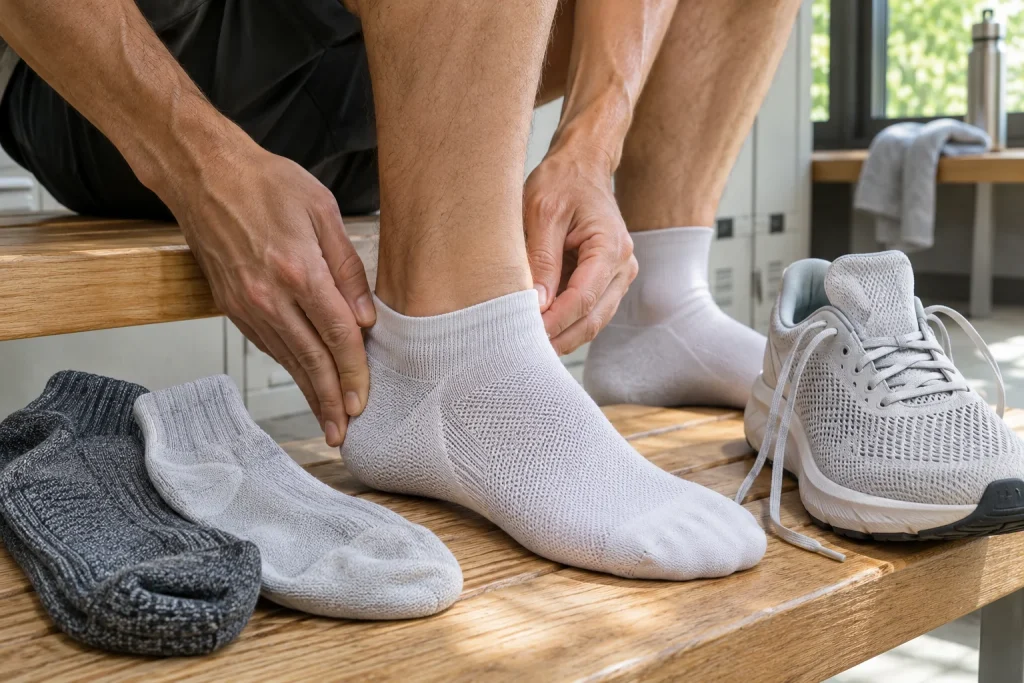
Running socks often receive attention only after a burning spot develops at the heel or toes. Yet this thin layer directly contributes to comfort inside a shoe. It does not work alone: foot shape, shoe fit, moisture, duration and trapped dirt shape the situation together. Even a “blister-free” label cannot guarantee every circumstance. Better selection uses a consistent trial system, assessing socks in the shoes and similar tasks in which they will later be worn.
What happens when rubbing begins?
A friction blister is not simply evidence that your skin is too sensitive. Repeated mechanical loading and circumstances matter together. The DermNet dermatology information explains pressure, contact and movement. For runners, the practical question is where unwanted movement or pressure arises and why. Is the heel slipping, the sock folding, the toe box tight or sand inside? Cases differ, so one universal product cannot solve them all.
Notice a warming, burning or sensitive spot early. Suppressing it until the finish may make simple adjustment less helpful later. Stop somewhere safe, inspect shoe and sock, remove small debris and check obvious folds or slipping. Every mild sensation need not imply a serious problem, but increasing rubbing is not a necessary part of training. Equipment should not require training your skin to endure poor fit.
Size means more than being able to pull it on
A loose sock may bunch inside the shoe; a small one may pull toes or stretch uncomfortably. Position the heel section at your heel rather than under the sole or high on the ankle. Check toe seams and shaping. Smooth fabric after dressing, then take a few steps without and with shoes. The package’s size range is a starting point, not proof the cut suits your foot. Similar-sized feet can have different shapes.
The cuff should prevent slipping without uncomfortable constriction. Ankle style and height relate to the route and shoe edge too. A very low sock edge may meet precisely where the shoe collar touches; a higher cuff changes contact. Small stones and plant debris entering on trails matter too. Do not choose height solely for photos. Actual contact points become clear in your own setup.
 Enlarge diagram
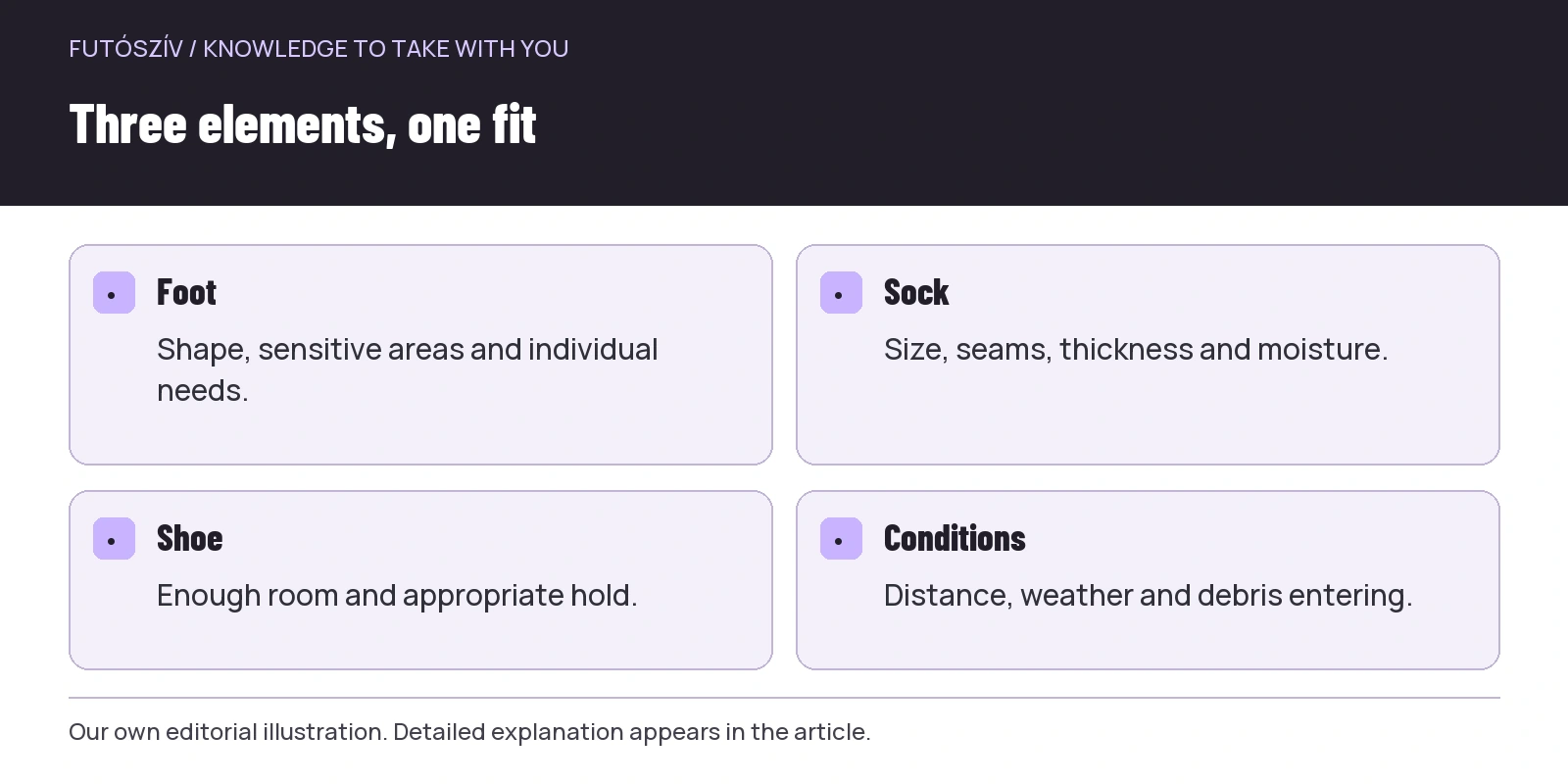
Text version of the illustration
- Foot
- Shape, sensitive areas and individual needs.
- Sock
- Size, seams, thickness and moisture.
- Shoe
- Enough room and appropriate hold.
- Conditions
- Distance, weather and debris entering.
Thicker socks need more space too
Cushioned socks may feel pleasant but leave less free room in the same shoe. If the toe box is already tight, thicker fabric may not improve comfort. Wear intended socks for shoe fitting. With new winter or long-run socks, recheck toe space, pressure over the foot and lacing. A thinner option may ease one pressure point while allowing movement elsewhere. Assess thickness with shoes rather than as a standalone “more is better” property.
Cushion placement matters too. Check thicker areas and whether reinforcement edges meet a troublesome contact point. Foot movement and sock position change during running, so a product soft in the hand may not stay comfortable inside shoes. When comparing models, avoid changing shoe and route simultaneously. This clarifies which difference produced the sensation. The aim is not collecting socks, but identifying one or two working combinations.
Material is useful information, not the whole story
Fibre content influences moisture management and wear, but structure, thickness and fit matter too. The original running study comparing acrylic and cotton socks found differences in blister formation between the constructions tested. Do not turn that into a guarantee for one fibre in every product and on every foot. A particular older comparison is not a present-day brand ranking. Research is a valuable reference, but buying requires examining the whole sock.
Wool blends, synthetics and zoned knits can feel different. Observe what stays comfortable in your own weather and run duration. A material name does not promise complete dryness: rain, soaked shoes or prolonged use can leave the system wet. Seek specific care and use information. “Antibacterial”, “technical” and “professional” do not tell you how something fits. Distinguish marketing terms from observed function and documented properties.
Moisture needs a plan, not necessarily a miracle product
For longer running, consider whether changing socks is possible if the setup becomes soaked or very uncomfortable. A dry spare helps only when properly packed and accessible. Water, sand or debris remaining in the shoe means a change alone may not solve everything. Check the whole system. The NHS blister guidance mentions changing socks for sweaty feet alongside appropriate shoes and sport-specific socks. You can organise this before your own long run.
Do not first combine unfamiliar powders, creams, tapes and thicker layers immediately before a rainy race. Several changes obscure what helps and harms. Even a reliable method needs its appropriate conditions. For products on skin, ingredients, sensitivity and instructions matter. Not every home remedy suits damaged or irritated skin. Document a recurring problem’s exact location and circumstances instead, seeking professional help where needed.
Double socks and individual toe designs
Some runners seek comfort through double layers or toe socks. These are constructions to consider, not universally required equipment. More layers occupy space, move differently and change shoe fit. Toe-by-toe dressing and seams require attention too. Try anything new first on a short run that is easy to stop and inspect skin afterwards. Do not discover at a long, remote event that the solution creates a pressure point for you.
Multiple approaches do not necessarily provide additive protection. A thick sock, tight shoe and extra tape together create a different situation from any alone. Sock experiments may not fix an ill-fitting shoe. Keep one clear observation question: did rubbing at that heel point lessen without new pressure elsewhere? This keeps results interpretable. If every change moves pain elsewhere, pause the shopping cycle and reassess overall fit.
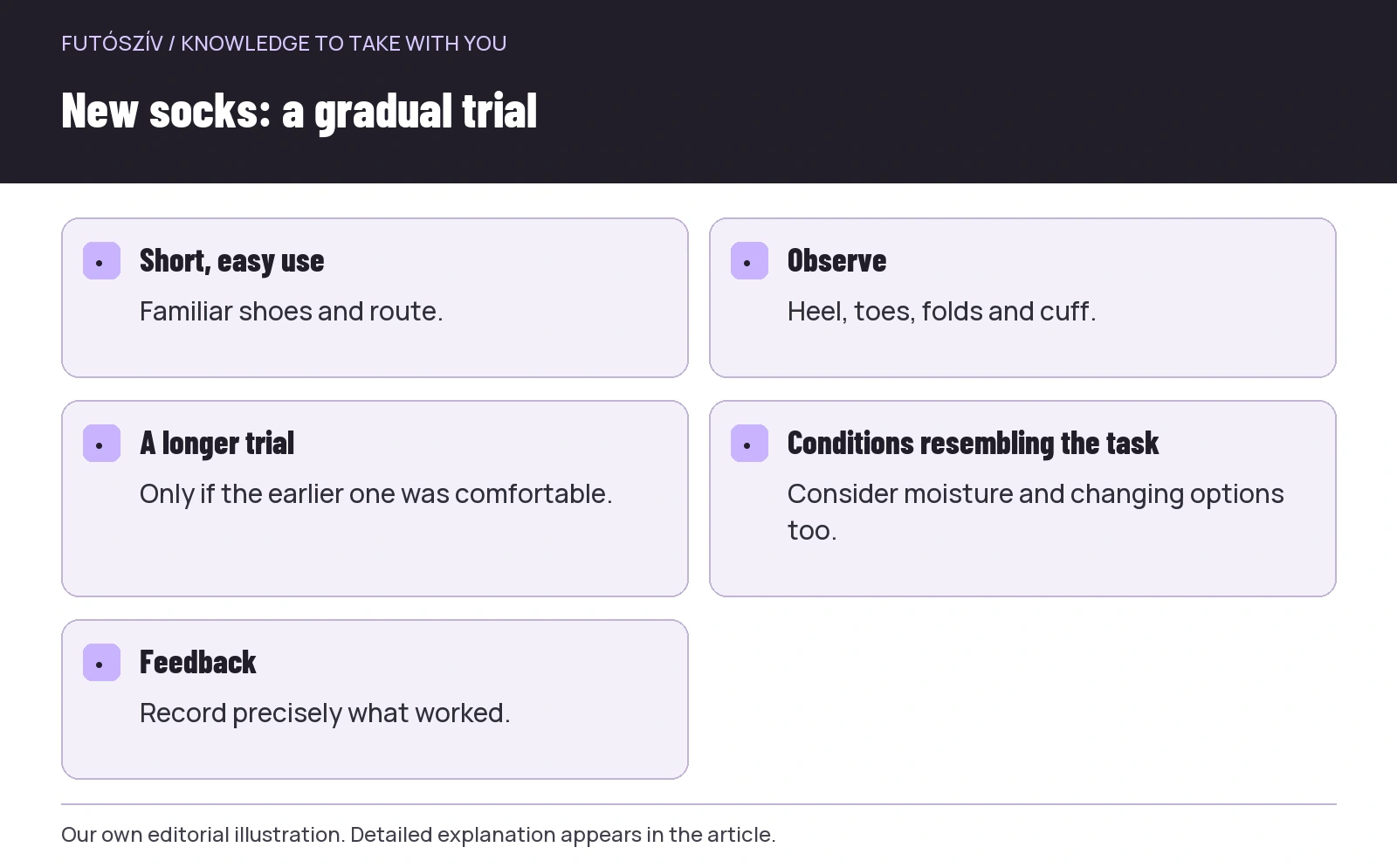 Enlarge diagram
Text version of the illustration
- Short, easy use
- Familiar shoes and route.
- Observe
- Heel, toes, folds and cuff.
- A longer trial
- Only if the earlier one was comfortable.
- Conditions resembling the task
- Consider moisture and changing options too.
- Feedback
- Record precisely what worked.
Do not judge tape from one success story
Research has examined taping to prevent blisters. The original Pre-TAPED II study assessed targeted paper-tape prevention in a multi-day ultrarunning setting. Read findings with those conditions rather than making unlimited promises for every distance, skin and adhesive. Correct application, sensitivity and space inside shoes can matter. This article therefore gives no universal taping recipe, emphasising considered trials beforehand instead.
An existing blister and prevention are different situations. The NHS advises against bursting a blister yourself or removing its covering skin; it describes protection and cleanliness. Seek healthcare help for infection signs, severe pain or recurring or unusual blisters. Diabetes, reduced sensation or other foot risks may require specific individual foot-care guidance ; general running tips do not replace it. Foot condition takes priority over a race plan. Choosing socks is not wound-care advice.
| Problem | What to check first | Avoid this automatic response |
|---|---|---|
| Heel rubbing | Heel slip, sock position and shoe collar | Thicker socks without checking anything |
| Toe pressure | Toe room, seams and forward sliding | Calling discomfort compulsory breaking-in |
| Fabric bunching | Size, cut, dressing and wear | Tighter laces at any cost |
| Worse after soaking | Moisture, debris and changing options | Adding new products on race day |
Your own trial in three stages
First wear socks in familiar shoes for short, easy movement. Observe heel position, toes and cuff. The next run can be a little longer if the first worked, keeping route and shoes familiar where possible. Only then assess conditions resembling longer or wetter intended use. This is equipment-trial logic, not a rigid training plan: few new variables at once make useful experience easier to gather.
After running, write more than “good”. Specify shoes, weather and approximate use. Mark any pressure-point location and adjustments. Do not attribute recurring symptoms solely to fibre: lacing, shoe shape and route may also have changed. Precise notes build a reliable system sooner than successive impulse purchases. The outcome may be that old socks are suitable, simply in different shoes.
Washing, drying and checking condition
Wash according to the label, checking heel and toe for folding or deformation. A stretched cuff, thinning sole or hard, damaged seam can alter wear. Minor colour changes do not require disposal, but take functional wear seriously. Cleaning aims for hygienic comfort, not original shop appearance. If a sock stays put only when rolled or wedged inside the shoe, reassess its suitability.
Keep reliable pairs distinguishable from everyday socks or those assigned another task, avoiding random choices when rushed. Before a long event, check the spare too: the same model, correct size and genuinely usable condition? “I have socks” is not enough information. A working foot–sock–shoe system need not be expensive, but it is consistently tested. The best feedback is not needing to think about socks while running.
Sources and further reading
- DermNet: friction blisters
- Herring and Richie: sock fibre composition and blister formation
- NHS: blister treatment and prevention
- Pre-TAPED II: targeted paper-tape blister prevention
- NHS England: care of the higher-risk diabetic foot
How Futószív articles are prepared: our editorial guidelines.