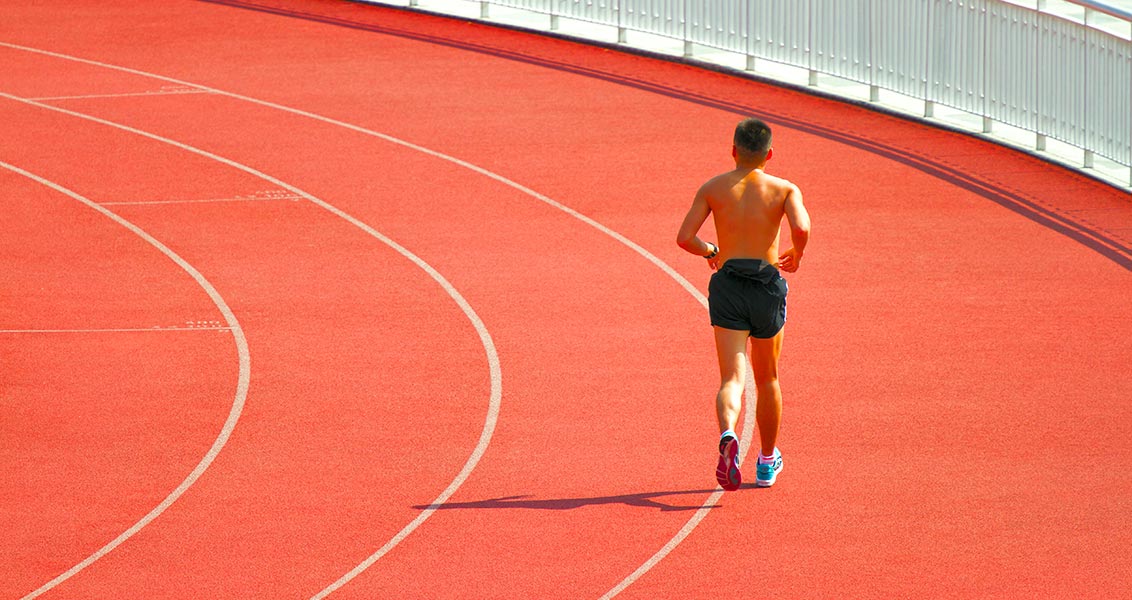
Running technique has a major influence on efficiency and injury-free running. Different running styles require different techniques, so runners should adapt technique to their own style.
Running styles are generally divided into two broad groups: midfoot striking and heel striking.
- Midfoot-strike running
Midfoot striking is the natural running style, in which the runner lands on the middle of the foot. It is the most efficient style because it distributes the runner’s weight evenly across the foot. It also puts less strain on the knees and ankles than heel striking.Editorial clarification · 22 November 2026. No single “natural” style can be declared the most efficient for everyone. Changing foot strike is not an established universal way to improve economy or prevent injury. Source
Characteristics:
The runner lands on the middle of the foot.
The leg is slightly bent as it contacts the ground.
The hips tilt slightly forwards.
The arms move alongside the body.
- Heel-strike running:
The runner lands on the heel. This is less efficient than midfoot striking because weight is placed mainly on the heel. It also puts greater strain on the knees and ankles.
Characteristics:
The runner lands on the heel.
The leg is straight as it contacts the ground.
The hips tilt backwards.
The arms move backwards and forwards.
There are also other running styles, such as reverse running, an oblique running style and running with an extreme forward lean. These are rare and are generally used only by experienced runners.

How Futószív articles are prepared: our editorial guidelines.