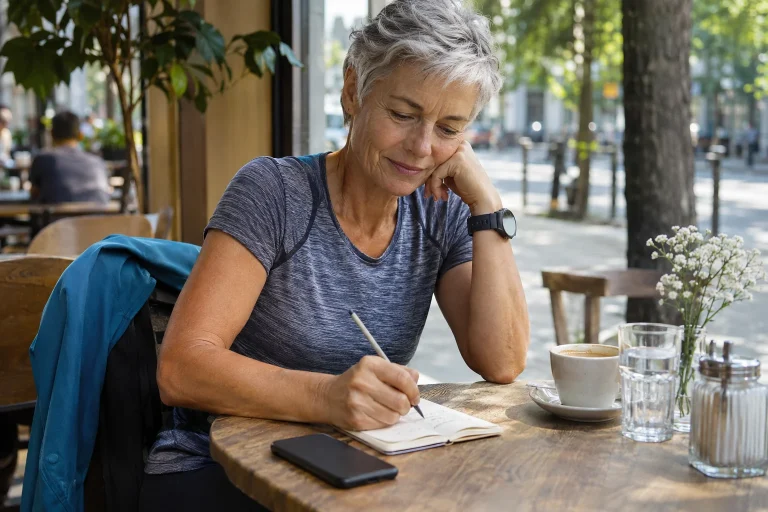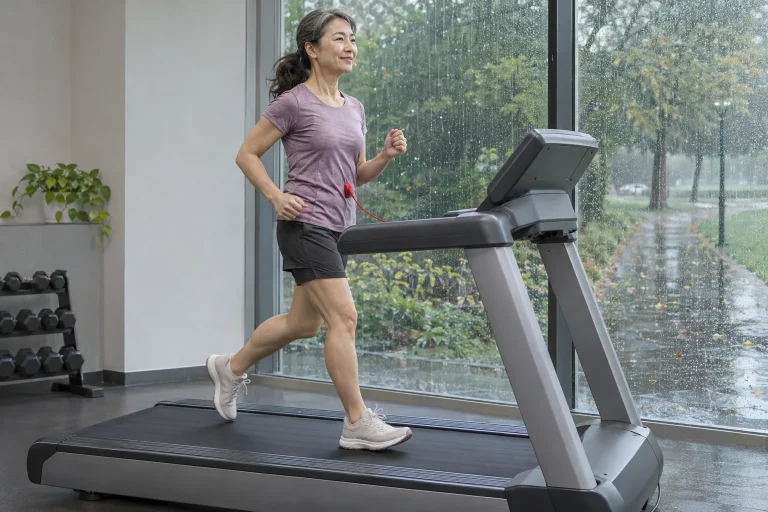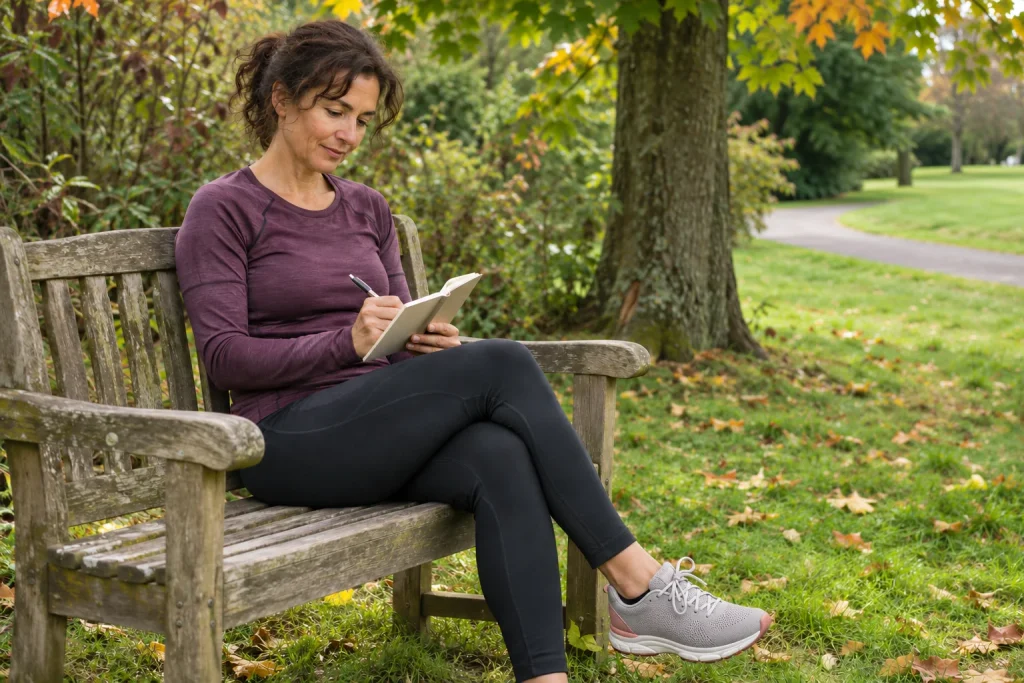
During a run, a good title, family activity or different approach to a work problem unexpectedly occurs to you. It feels as if the knot you struggled with at the desk loosens between steps. This can be a valuable personal experience. An idea arising during movement does not, however, imply that running makes everyone more creative or that it will be better than a version considered calmly later. When discussing movement and thinking, distinguish generating ideas, finding a correct solution and learning new information.
An idea appearing is not yet a solution checked
Finding ten unusual uses for an empty cardboard box calls for different thinking from producing one correct answer to a calculation. In the first task, varied directions can be valuable. In the second, accuracy, following conditions and checking take priority. Everyday creativity can encompass both, but an experiment needs a specific task and assessment rules. Leaving these out of a research account makes an appealing claim much broader than what was measured.
Runners can recognise this in their own situation. Three possible routes for a shared weekend outing may take shape on the way. Travel, opening hours and participants’ needs still need comparing at home. A new training idea can likewise be interesting without automatically becoming an appropriate plan because it occurred while moving. Its place of origin is not a quality seal. Freedom to generate ideas and careful later selection can coexist.
What did the much-cited walking study examine?
Oppezzo and Schwartz’s 2014 study examined walking and idea generation in four experiments. These included treadmill walking, sitting and outdoor conditions. Tasks involved inventing alternative uses for objects, solving related-word problems and creating analogies. Walking favoured idea generation opening in several directions, but did not establish general superiority on every thinking task. In one experiment, some advantage remained in responses given while seated after walking.
This study concerned walking. The word treadmill can mislead: using the equipment does not necessarily mean running. The paper should therefore not be rewritten as proof that a fast running workout produces the most good ideas. Familiar percentage claims also need caution: the proportion of participants who improved is not the same as an equivalent increase in ideas’ number or quality. Without knowing the task and reference, an appealing number can conceal rather than explain the finding.
Environment and movement itself are separate questions
When a better thought occurs in the park, many things change relative to your desk. You are elsewhere, seeing different things, receiving different notifications and doing a different task. Fresh air or scenery alone does not explain every personal experience either. Experiments matter because they try to examine certain circumstances separately. The walking study’s outdoor conditions served this separation too, rather than simply asking whether being outside felt more pleasant.
You need not set up a laboratory to find a change of environment useful in everyday life. Naming the experience more precisely is enough: looking for new directions was easier during a relaxed park walk. This says more than “nature solves everything”, while leaving room for a quiet room to work another time. A city pavement, crowded track and technical trail require different attention. These should not be swept under one label of “thinking outdoors”.
 Enlarge image
During running, navigating traffic remains the first task
Generating ideas does not make a junction safer. Traffic, uneven ground, other users and monitoring your movement need real-time attention. An interesting thought is no reason to look at a phone screen for long while moving or become absorbed in dictating a complex note. If recording it matters, first stop somewhere you do not obstruct others or stand in vehicles’ path. Preserving the thought can wait a few calm moments.
A closed sports track does not remove that priority. Others may overtake, change direction or use lanes for different purposes. Calling movement creative time does not exempt you from local rules. If the environment requires constant vigilance that day, move brainstorming to a seated rest afterwards. This does not make the outing less valuable. An uninterrupted inner monologue is not a condition for a successful run.
Why are learning outcomes and creativity different?
In Winter and colleagues’ 2007 crossover study involving 27 healthy participants, different exercise conditions and rest were compared in relation to learning new words. Learning was faster after the intense running condition. This was a specific learning situation rather than a free idea-generation test. Researchers also examined physiological variables measured in blood, but their associations do not establish that one substance demonstrably produced better performance.
Side by side, the studies teach conceptual precision. One focused on generating different ideas; the other on acquiring new words. They do not give runners a recipe to switch to maximum intensity before a difficult decision. Experimental exertion is not general training advice, and a learning advantage does not establish every intensity as suitable for everyone. An everyday task does not require physical demands for which you lack appropriate preparation or safeguards.
You can brainstorm around a question without performance pressure
One personal option to try is choosing a brief, open question before setting off. For example: what other ways could the club’s shared meeting be organised? This differs from compulsorily dwelling on it throughout the route. The question can simply be a reminder; if your attention moves elsewhere, you have not failed. Movement belongs in your day even when no new idea appears. Research does not turn time intended for rest into compulsory production.
It is equally reasonable not to want to think about work. Running time can be time away from tasks, conversation or simply movement. “Make every minute useful” can easily remove the freedom that made you set off. Creative ideas can be occasional by-products. Every loop need not be justified with a successful thought, and your companion need not join a brainstorming session merely because you are moving together.
The roles of a short note and later editing
Once stopped safely, a few keywords may be enough to recall the direction later. You need not write finished text immediately. “Shared start – two routes – meet at the end” is not yet an organisational plan, but retains the idea’s core. At home, add participant feedback, location checks and practical constraints. Note-taking is a personal tool, not a compulsory step established by these experiments.
Respect others’ information when recording notes too. A work, family or health story from a shared run does not become freely shareable content because you find it inspiring. If a companion’s remark generated the idea, ask consent before quoting them by name or publishing it. Creativity grants no special permission to pass on confidential conversations. Often the general thought can be preserved without identifying details.
What should happen to an idea that feels exceptionally good?
A solution arising en route sometimes seems complete because it has not yet met the details. A new running-event plan can seem wonderful until venue permission, accessible entry or organisers’ capacity enters the discussion. This does not refute its value; it marks a second phase of work. You can preserve enthusiasm while identifying what needs checking and whose opinion is still missing.
This particularly matters for ideas about your own training. A sudden decision to increase distance or enter a race may be emotionally appealing, but current workload, available time and health circumstances also belong to the decision. A creative suggestion need not be acted on that day. “I will consider this later” preserves the possibility without turning immediate enthusiasm into an obligation.
 Enlarge image
How can you discuss this with running companions?
Sharing personal experience can be simple and precise: sometimes a thought takes shape for you while moving. This does not imply that someone else must work the same way. Some find new directions through conversation, others quietly, others while writing. Before shared brainstorming, clarify whether the other person wants to discuss that topic at all. A shared loop is not automatically a free work meeting, and silence is not indifference.
When collecting ideas together, separate suggesting from judging. First hear which possibilities another person sees, then examine feasibility calmly. This is an organisational choice, not a psychological law derived from running. It can help prevent a faster-talking companion closing every direction before others speak. A shared activity’s value need not be measured only by the number of ideas voiced.
The limits and value of personal observation
If curious about your patterns, note when useful thoughts appeared: walking, after running, in the shower or on a quiet morning. Distinguish ideas actually used later from those that merely seemed exciting. This is not a controlled experiment, because tasks, tiredness and surroundings also change. It may nevertheless help build a personal working routine with room for movement and subsequent reflection.
You need not score your creativity. If recording becomes another expectation, you can leave it out. Walking research offers interesting evidence in a precisely defined idea-generation situation; runners’ experiences are more varied. The useful lesson is that thinking can have several settings and phases. An idea can arise on the way and become a reliable decision later through sources, feedback and careful checking.
Sources
Oppezzo and Schwartz: Give your ideas some legs, 2014 – four walking experiments with different thinking tasks.
Winter and colleagues: High impact running improves learning, 2007 – exercise conditions and learning new words; not a creativity study.
How Futószív articles are prepared: our editorial guidelines.