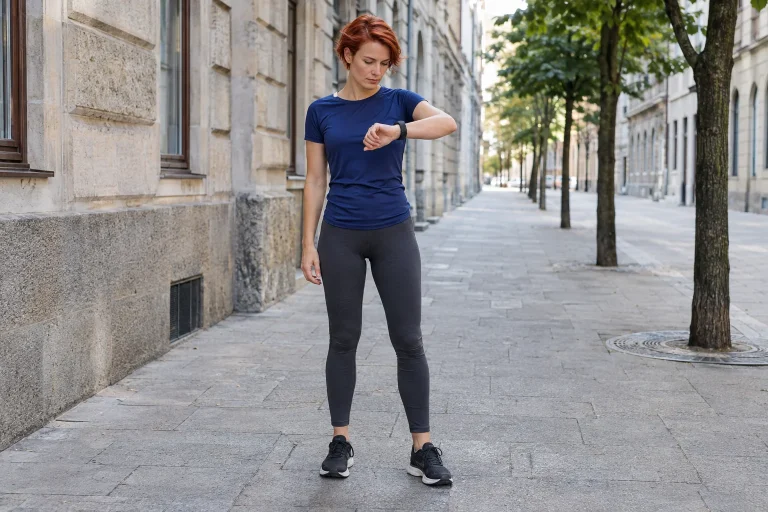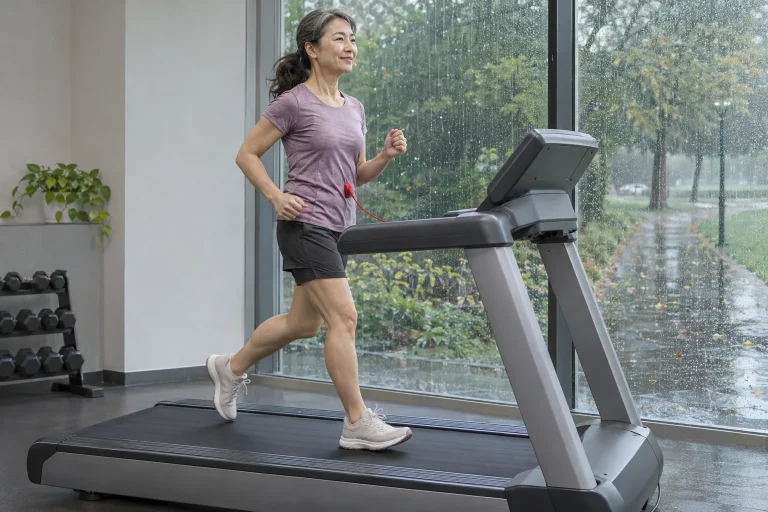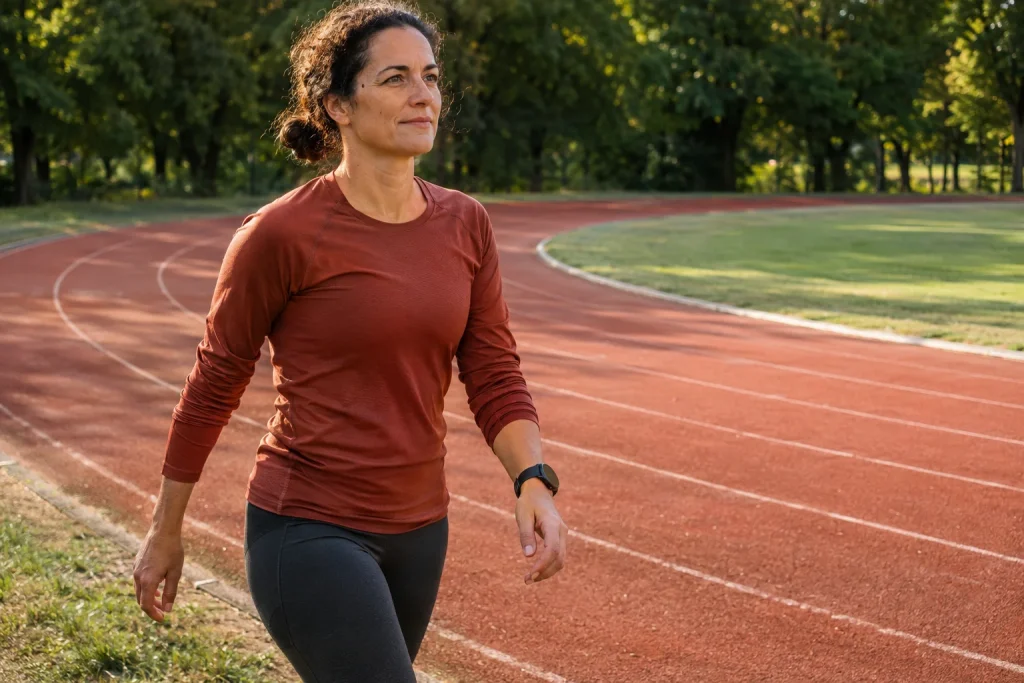
Some runs find a pace that fits your day: you feel the movement without struggling at every step, and continuing feels good. At other times, a few faster intervals change the whole experience. The relationship between exertion and running pleasure is therefore more than a theoretical question. Researchers have examined endocannabinoids, brain receptor signals and personal ratings of state at different intensities. Their findings are interesting, but show different things. A chemical response, an immediate pleasant feeling and a run’s personal value are not three names for one scale.
Pace is a number; intensity is relative
A kilometre split describes how fast you moved, but alone does not reveal how demanding that run was for you. Studies therefore do not always compare simple speed values. They may relate exertion levels to an individual physiological characteristic. That does not turn “moderate” as used in a study into a shared pace label for a friendly running group. Two people moving at the same minutes per kilometre may not be exercising at the same intensity in the study’s sense.
In a running group, everyday conversation makes this easy to observe. One person says they were working pleasantly; another says they struggled to keep up throughout. These are not laboratory measurements, but show why shared pace is insufficient to describe an experience. Think, for your own example, of the same route on two days. The display can show similar results while the run feels different. Treat pace data as one part of the story rather than a translation of the entire inner experience.
Nor should research intensity percentages immediately be copied into your watch. First establish the reference used, how it was determined and what activity participants performed. Numbers relative to different formulas and physiological characteristics do not mean the same thing. A consumer device’s zone colour is not a direct display of the endocannabinoid concentration measured in research. A coloured band may be useful sporting information, but does not replace a molecular measurement of running pleasure.
What did the treadmill experiment at different intensities show?
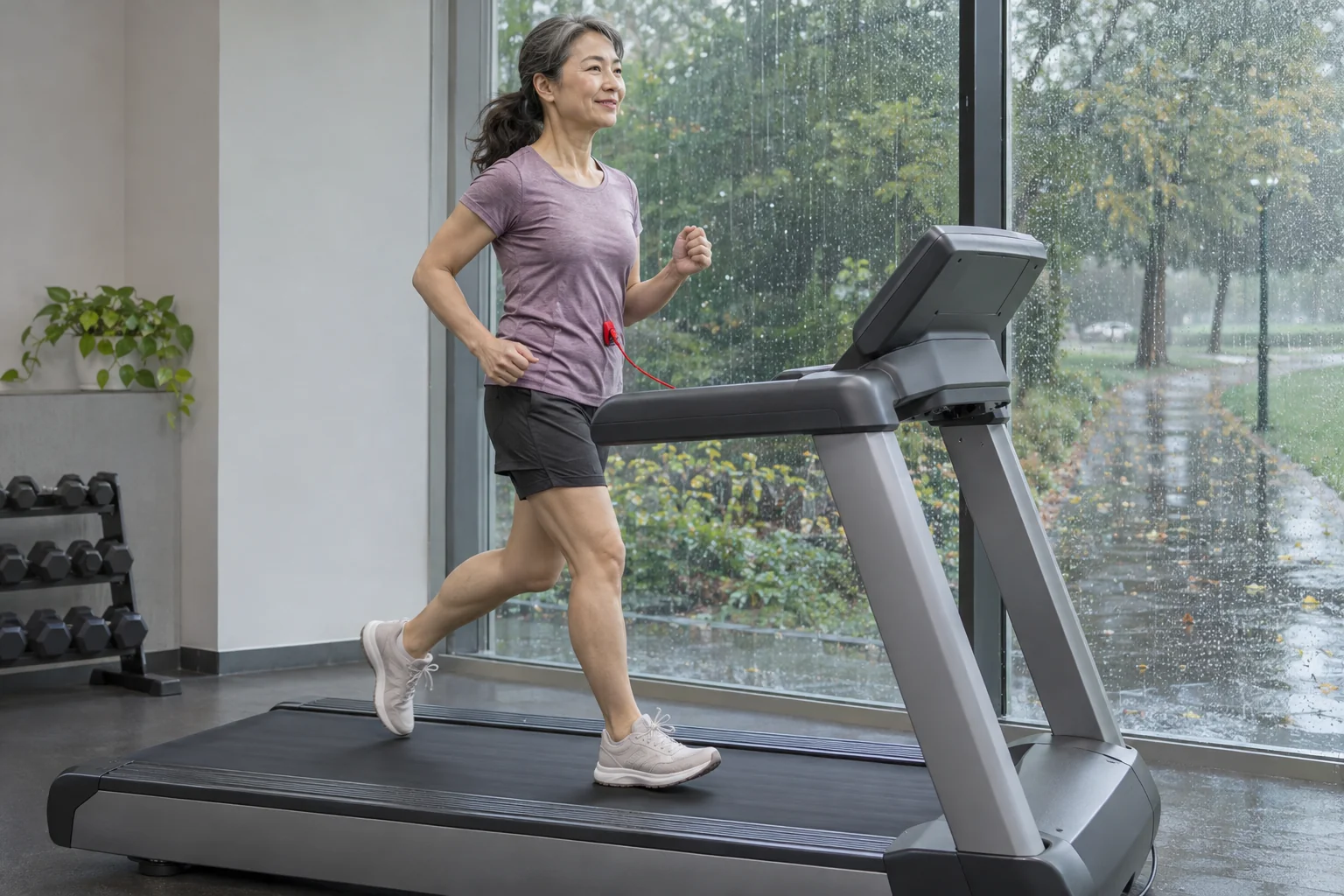
Raichlen and colleagues examined circulating endocannabinoids after four treadmill conditions of differing intensity in recreationally trained people. The paper, published online in 2012 and in a 2013 journal issue, found significant changes at moderate exertion, but not at very low or very high levels. The authors emphasised accounting for intensity in this research. The key idea is not that faster running produces a larger response. The finding instead showed that, within the range studied, a simple continuously rising relationship could not describe the chemical change.
It would be easy to turn this into one ideal middle value. Yet conditions separated in an experiment do not cover every possible pace for every person. Participant selection and programme duration also belong to the study. An article announcing “the exact heart rate of happiness” adds a personal conclusion that does not automatically follow from the comparison. The study’s value is clarifying the relationship between intensity and the measured response, not creating a pleasure programme configurable on every watch.
The relationship between blood concentration and an experienced pleasant feeling must also be asked about separately. A substance increasing is not itself the participant’s account of experience. If the latter was recorded too, results can be compared, but do not become the same data. After a run, enjoying movement alone cannot tell you a molecule’s level either. Your pleasant feeling can still be an accurate personal experience; it simply describes the outing in a different language from a laboratory result.
 Enlarge image
A newer low-intensity study added another detail
In Yabe, Ando and Koyama’s 2026 random-order crossover study, thirty healthy young adults completed two one-hour cycling sessions at different intensities. AEA and 2-AG were measured repeatedly, and feelings assessed before and after activity. Negative affect decreased after the low-intensity session, while the overall circulating endocannabinoid response was not uniform. The authors also pointed to certain within-person temporal associations. The paper’s title uses stronger mechanistic language, but the measured correlation alone should not be treated as definitive proof of cause.
This study involved cycling, so it cannot directly determine your own running pace. It nevertheless adds an important detail: a more favourable experienced state and an average molecular response do not necessarily tell the same story. An older finding should therefore not be fixed as a ready-made answer for every later exercise situation. The new study does not replace the earlier one; it adds different participants, activity and timing to the question.
For your own running, this suggests a useful thought: a more pleasant or less tense state need not depend on a molecular signal being “high enough”. You can describe the change you experience in your own words. If someone claims only a particular exertion level is worth anything for mood, ask which human outcome and study conditions support that assertion. A biochemical graph alone does not grade your activity’s personal value.
A stronger receptor signal does not necessarily mean a more pleasant experience
In a human PET study, Saanijoki and colleagues compared the brain opioid system’s response during moderate aerobic and high-intensity interval exercise conditions. They recruited twenty-two healthy recreationally active men. Receptor-availability changes associated with more intense exertion were also linked to negative emotional changes. In the moderate condition, more favourable feelings did not accompany the same group-level receptor response. This measured opioids, not endocannabinoids, so it must be treated as a separate finding. It illustrates why a stronger biological response cannot simply be translated as “more pleasure”.
In everyday language, an “endorphin rush” often explains every strong sporting experience. Research asks more precisely which receptor signal, exertion and experienced state changed together. The system’s role may be more complex than dispensing pleasant feelings in proportion to speed. Recognising this removes the need to describe an unpleasant experience as a compulsory waiting room for a reward certain to arrive later. A scientific finding does not prescribe struggling through feeling unwell.
Intense training may have reasons connected with sporting goals, but these are separate from chasing running pleasure. Evaluating a planned workout can involve purpose, suitability and perceived exertion. “Today did not feel pleasant” can be important feedback in a conversation with your coach. Molecular research does not require you to suppress it. An unpleasant feeling and a dangerous symptom are also different; evaluating the latter must not be reduced to a question of mood.
The experience of choice can also be part of pace’s story
Lind and colleagues compared two treadmill sessions in twenty-five previously inactive middle-aged women. In one, they chose their speed; in the other, a slightly higher speed was prescribed. Pleasant affect remained more stable in the self-selected condition and decreased in the prescribed condition. The research measured the experience of exertion rather than endocannabinoids. It offers separate data showing why pace-related experience deserves examination from the human side too. The study’s difference is not a personal rule for increasing speed.
After treadmill sessions of differing intensity, Rose and Parfitt also asked nineteen women why they felt as they did. Responses involved perceived ability, interpretation of exertion, attention and a sense of control. Measured pleasant–unpleasant state and participants’ explanations thus complemented one another. This does not prove everything depends on determination. Rather, it shows why one pace figure or molecule name cannot reveal an entire experience.
For our example, imagine a group run where a companion unexpectedly speeds up. You might happily join them, or struggle along for fear of falling behind. The same external change of pace can mean different things to you. Before the next outing, discussing its shared purpose and the option of splitting up may therefore help more than seeking a molecular explanation for last time’s unpleasant experience. This is an organisational and communication option, not a guaranteed mood-improvement technique.
How can you observe experience without making another contest?
Self-observation can be a simple description of a few words. What was starting like, how did moving feel and what did you feel after finishing? These moments need not be squeezed into one overall grade. An outing’s start may be awkward, its middle pleasant and its end tired. This is personal experience, not a faulty measurement. Understanding research’s different measurement times also helps prevent the last feeling alone from becoming the name for your whole run.
| Your question | What should you describe? | What should you not use it for? |
|---|---|---|
| How did it feel? | Specific words for a pleasant, neutral or difficult experience. | Do not infer an assumed molecular level. |
| What was the situation? | Route, company, expectations and pace changes. | Do not name one factor as a certain cause. |
| What would you like next time? | A practical change you can discuss. | Do not make exceptional euphoria a compulsory outcome. |
If you regularly share these observations with your coach or running companion, explain the programme’s purpose too. A relaxed social loop, training planned for a sporting goal and exploring a new route may begin with different expectations. An experience report need not make every outing identical. It can instead help you notice what worked, where planned and experienced situations differed, and which question deserves discussion beforehand. Your watch need not take on a laboratory role for this.
 Enlarge image
A pleasurable pace is a question rather than a universal number
Studies of different intensities show that bodily responses do not simply increase with speed. Different signalling systems and human feelings can also produce different patterns. It is therefore more interesting to ask how a chemical response and experienced state relate to a particular activity situation than which heart rate band contains happiness for everyone. A more precise picture is no less human: it leaves room for individual differences and for the same runner returning home with a different experience on different days.
After your next pleasant run, you need not prove that you found a molecular optimum. Knowing what felt good and what you want to retain is enough. If no special feeling arrived today, that does not make the activity worthless. Running pleasure is not a compulsory reward automatically received for a correctly set pace. Research helps us understand different responses; your actual condition, goals and experiences remain the most immediate starting point for your own sporting experience.
Sources
- Raichlen and colleagues: Endocannabinoid signaling and intensity
- Saanijoki and colleagues: Opioid release after high-intensity training
- Yabe and colleagues, 2026: Low-intensity exercise and endocannabinoid dynamics
- Lind and colleagues, 2008: The affective impact of exercise intensity
- Rose and Parfitt, 2007: Individual differences in affective responses
How Futószív articles are prepared: our editorial guidelines.