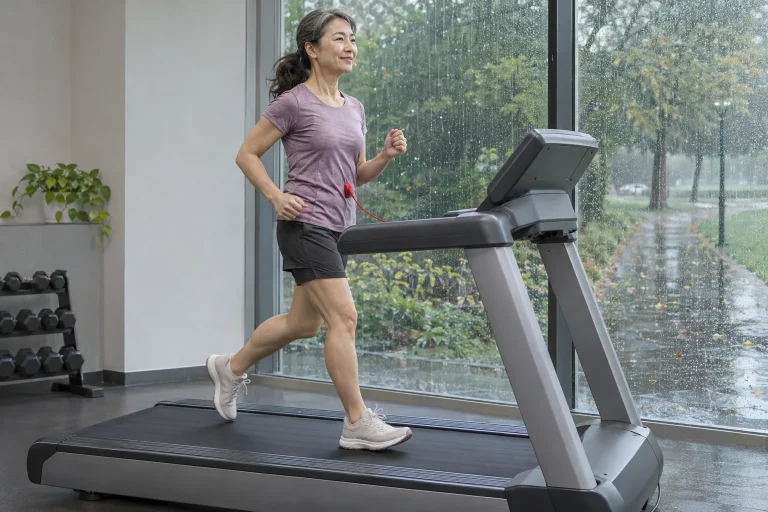
Why can moving sometimes feel so good? From inside, the question is deeply human: you remember the route, weather, relief or pleasure of running with someone. Other species can nevertheless help investigate its biology. A mouse’s wheel and a person’s treadmill session are different experiences, but both may inform particular processes. The interesting story of runner’s high is how animal behaviour, human reports and molecular measurements complement one another.
A broad experience is divided into smaller research questions
‘Runner’s high’ can mean many things. One person feels liberated, another less tense, another pleasantly quiet. Explaining the entire collection in one experiment would be difficult. Researchers therefore ask narrower questions: does a behaviour change after exercise, is a signalling system associated with it, or does an intervention alter the effect? Precision does not diminish experience. It identifies which part of the broader story is being examined.
NIH information on animal research says model selection must be justified by biological similarity and relevance to the question. A model is not a ‘miniature human’, but a system used to understand a particular process. Think of a model running track: it can illustrate the route, but cannot tell us the wind in the finishing straight. This is not a biological research method, but an analogy explaining that useful models have defined purposes.
When reading an animal experiment, first find what was made observable. Distance travelled, choice of location or response to a stimulus can all be concrete data. ‘Became happy’ or ‘calmed down’ are interpretive everyday statements. Seeing the relationship clearly helps you learn more. The aim is to understand precisely which aspect compares with the human question, rather than dismiss animal behaviour’s importance.
What did the mouse running-wheel experiment examine?
Fuss and colleagues’ 2015 study examined behavioural and biochemical changes after voluntary running in mice. Anxiety-like behaviour was assessed in a dark–light test among other procedures, while pain sensitivity was measured separately. Pharmacological and genetic interventions investigated endocannabinoid receptors. Findings indicated that CB1 receptors in specified neurons mattered for reduced anxiety-like behaviour after exercise; changes in pain sensitivity involved other receptors and sites too. The research supplied new information separating biological components of the experience.
In the dark–light test, researchers can record how animals use the two spaces. Behaviour is measurable and the design repeatable. Yet no verbal report tells us what the mouse feels. The study also notes the difference in directly examining euphoria. ‘Anxiety-like behaviour’ is therefore not needless complexity: it preserves inference from specified animal behaviour, rather than substituting for a human questionnaire.
The intervention’s value is that researchers examined more than association between two measurements. They tried to isolate a proposed pathway: does the change remain when a selected system component functions differently? Imagine investigating one branch of a wiring diagram. The analogy does not claim the nervous system is a simple switchboard. It illustrates how observation and targeted experimental change can inform different questions.
 Enlarge image
Why can a behavioural sign not simply be renamed a human feeling?
People can also explain why a run felt good. Alongside movement rhythm, a long-unseen friend, familiar landscape or personal meaning of completion may feature. An animal behavioural test cannot reveal these details. It can still contribute to understanding a biological mechanism. The questions operate at different levels: one investigates a testable signalling relationship, while another includes a person’s lived and described experience.
A NIMH methodological publication likewise emphasises how species, intervention and outcome characteristics influence a non-human model’s relevance. This explains why methods matter beyond a paper’s title. Both situations containing ‘exercise’ is insufficient. Which process is made comparable, and what remains another study’s task? Biological similarity provides a testable bridge, rather than automatic complete identity.
As a reader, use a simple reinterpretation: instead of ‘running made mice happy’, find the sentence describing actual measurement, such as time spent in a space or response to a stimulus. This does not settle philosophical debate about animals’ feelings. It clarifies the paper’s result. Human findings can then be placed alongside it more accurately without calling different endpoints identical.
The human experiment adds experiential reports
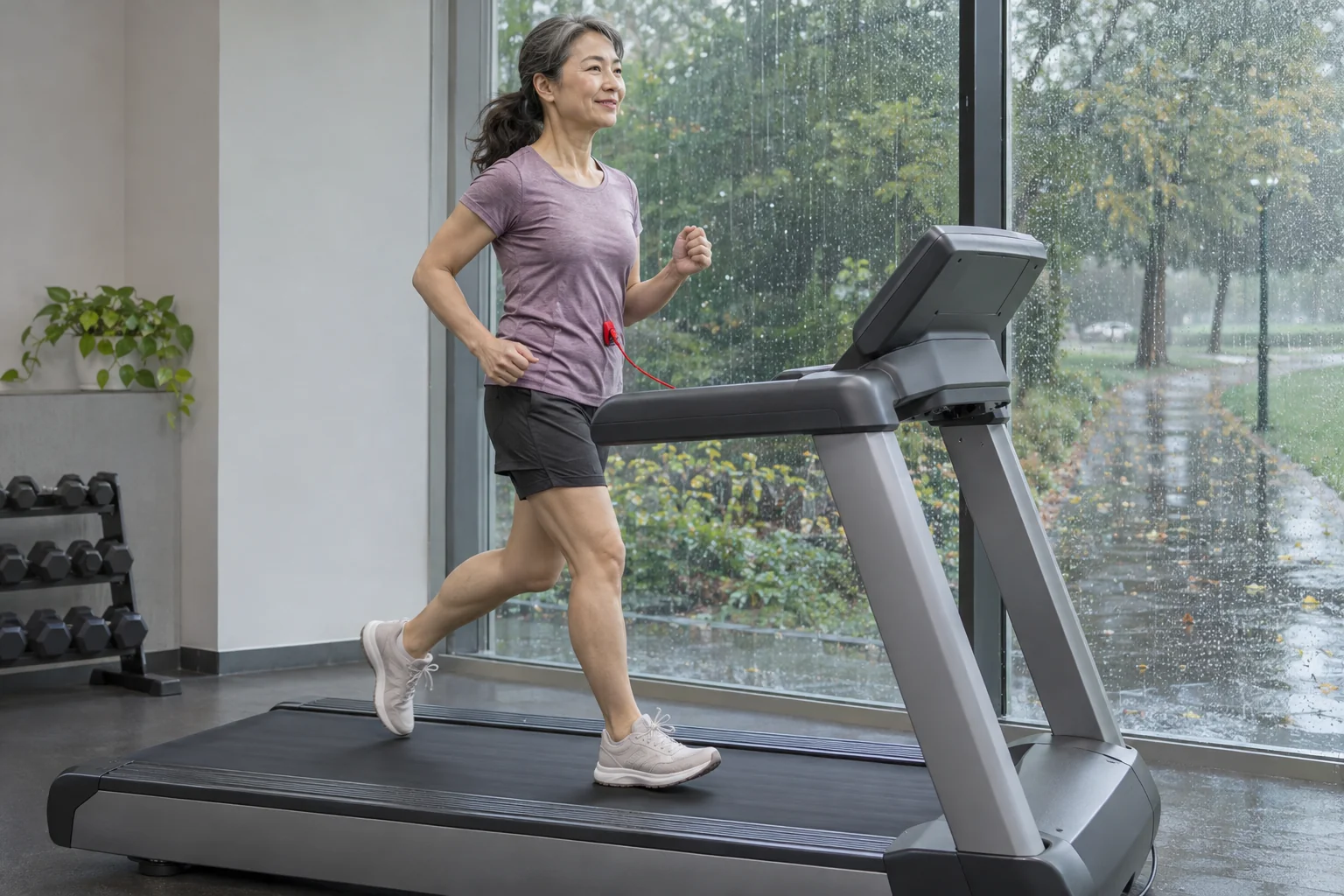
In 2021, Siebers and colleagues conducted a randomised, double-blind, placebo-controlled study with 63 people. Moderate treadmill running under naltrexone opioid-receptor blockade or placebo was compared with walking. Blockade did not prevent increased post-run euphoria or reduced anxiety; endocannabinoid concentrations were also measured. This addressed whether human opioid signalling was necessary in that situation. It did not copy the mouse procedure or check every earlier animal finding at once.
Human participants could assess their state. Experienced euphoria and anxiety changes could therefore appear as independent data. Responses naturally depend on the question and timing. A short self-rating is not a complete life history, but adds something an animal behavioural sign cannot provide identically. The approaches do not compete to generate the same data; they contribute differently to understanding.
The experimental medicine is not a home-testing idea. The paper describes a scientific design with specified participants and controlled conditions. The lesson is how experienced change, blood measurements and manipulation of a selected pathway differ. Including all three does not reduce the entire running experience to one molecule. Multiple data types instead allow more detailed questions.
Comparing species opens another window
Raichlen and colleagues’ 2012 study examined circulating endocannabinoids before and after treadmill exercise in humans, dogs and ferrets. An exercise-related increase in humans and dogs, alongside a different ferret result, informed investigation of endurance activity’s evolutionary context. The authors proposed a reward-mechanism hypothesis. This differs from a receptor’s causal role or an individual’s euphoria. Cross-species comparison directed attention towards variation in exercise biology.
Retain the evolutionary interpretation as a hypothesis. Similar molecular signals in two species under particular conditions do not directly reveal an entire past selection process. The study supplies data for considering an idea. It opens questions about patterns in other species, exercise conditions or measurements. The scientific story remains interesting by showing why a new relationship was proposed.
Species comparison does not assign a personal task. A possible evolutionary background to endurance movement does not mean everyone must enjoy the same sport or feel good at the same distance. ‘Born to run’ may be a slogan, but is no individual health or psychological assessment. A cross-species experiment does not determine today’s exercise possibilities for you. Evolutionary questions and personal choices have different scales.
Three windows onto the same broad phenomenon
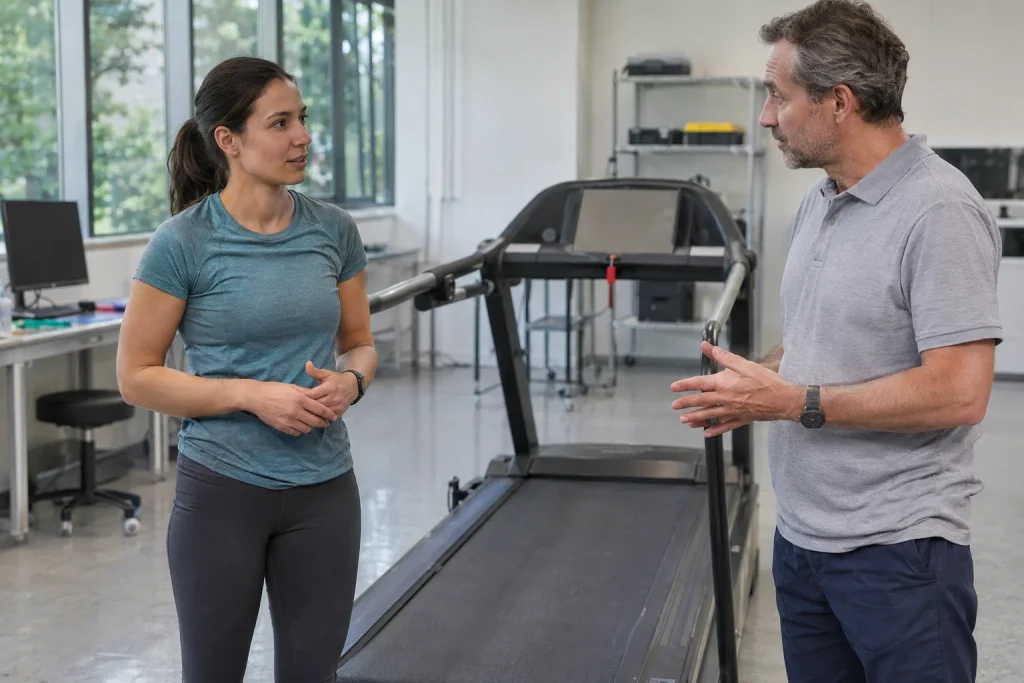
Imagine three research windows. One opens onto animal behaviour and targeted biological intervention. Another concerns human experience and controlled conditions. The third places species’ responses alongside one another. None shows everything, and each serves a different task. Ask which observation supports which claim and which next question requires another approach.
| Approach | What does it add? | Which distinction should remain? |
|---|---|---|
| Animal behaviour and receptor research | A selected biological pathway’s relationship with measurable behaviour. | A behavioural sign is not a verbal human experience report. |
| Human experiment | Personally assessed feelings and a specified intervention’s result. | The design does not examine every run and every person. |
| Species comparison | Similarities and differences informing a broader biological question. | An evolutionary hypothesis is not a personal sports prescription. |
Find the window when reading news. A headline about human feelings supported only by mouse behaviour omits a step. Claiming a receptor is indispensable from human blood measurements also jumps to a different question. General distrust is unnecessary. Name the missing comparison or intervention precisely. The real result becomes more valuable when not burdened with questions it never examined.
 Enlarge image
At the end of the research chain, a person still runs
Your experience can contain many details. A run may be memorable because of company, preceding thoughts or what getting outdoors meant. These need not be opposed to biology. Examining one bodily process differs from telling a whole personal event. A laboratory result can add explanatory detail while your lived story remains your own.
Mouse experiments can therefore teach us about specific mechanistic questions; human studies provide data on experienced states and interventions; species comparisons inform broader biological hypotheses. Understanding runner’s high grows richer when these questions connect. We need not call every result identical to recognise a coherent research direction. Nor must your next good run be justified by animal findings: a pleasant feeling is real experience, even if its complete biological explanation requires several separate studies.
Sources
- Raichlen and colleagues, 2012: Wired to run
- Fuss and colleagues, 2015: A runner’s high depends on cannabinoid receptors in mice
- Siebers and colleagues, 2021: Exercise-induced euphoria and anxiolysis
- NIH: Why animals are used in research
- NIMH: Considerations regarding animal neurobehavioral approaches
How Futószív articles are prepared: our editorial guidelines.