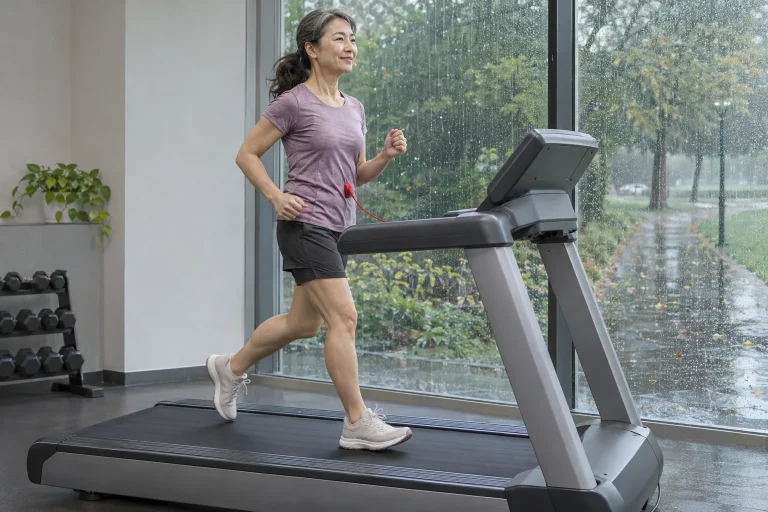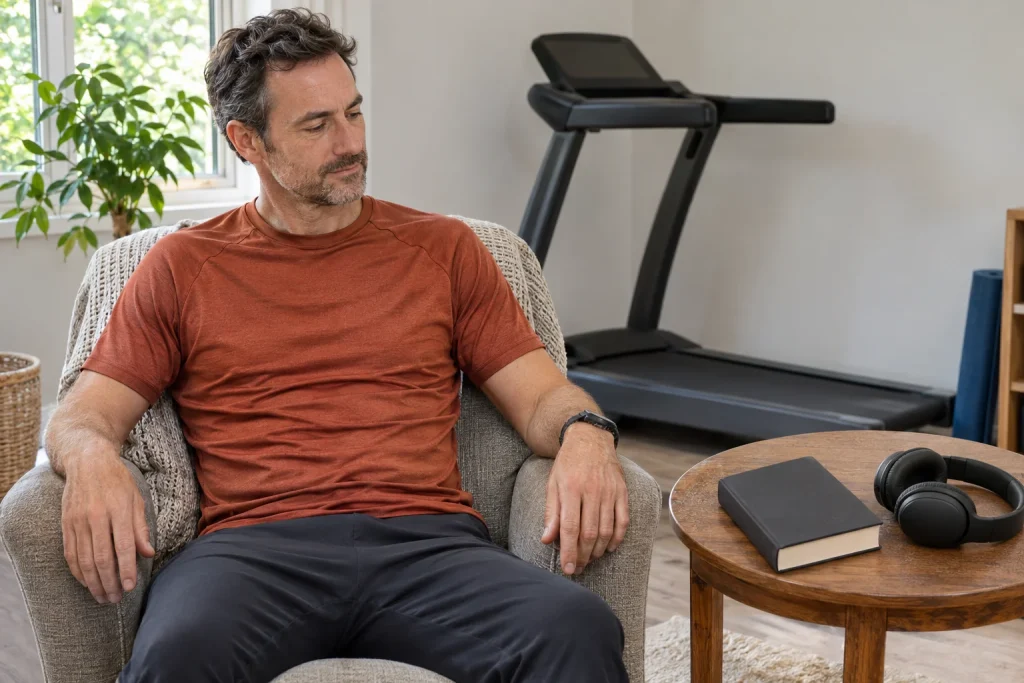
An exciting audiobook’s next chapter can sometimes make starting activity easier than thinking about distant health benefits. Pairing a desired experience with another activity is the idea studied as temptation bundling. The everyday example is simple: save a story for movement so the session includes immediate enjoyment. This differs from rewarding yourself after running.
The idea appeals, but can be interpreted too strictly. An audiobook should not become a hostage forcing exercise through pain, and rest is not a punishable omission. Look at what the original field experiment measured, how effects developed over time and how flexible personal use might follow. The aim is understanding an optional idea, not tying every pleasure to movement.
What did the field experiment combine?
Milkman, Minson and Volpp assigned 226 participants to three conditions. One group could access engaging audiobooks at the gym; another was encouraged to restrict access voluntarily; a control had different conditions. The main behaviour measured was gym attendance. Full bundling initially increased visits, but the advantage weakened over time, especially around the university Thanksgiving break. The study did not measure running pace or marathon results.
The field setting matters because actual gym use was recorded, not merely whether participants liked the idea. But results came from that access arrangement and institution. They do not mean every audiobook-listening runner will increase movement equally or permanently. Attendance differs from measuring actual exertion, enjoyment and health change.
Restricting audiobook access was a research tool. Personal use does not require external monitoring, locked devices or sanctions. The study examined an option; everyday runners need not turn every detail into a compulsory programme. Ask whether pairing actually makes the session easier and leaves freedom to change.
Immediate experience and later benefit
Many reasons for activity become visible later. A favourite story can interest you now. Pairing’s practical idea is to add something attractive in the present to an activity you want to undertake. This does not claim running is inherently unpleasant or everyone moves only for rewards. Many enjoy movement itself.
The two occur together rather than settling an account afterwards. Hearing a chapter only after completing a prescribed distance differs from enjoying it during a walk or easy movement. In one, the session itself can become more pleasant; in the other, performance becomes a condition for reward.
The personal goal need not be more movement. You may want less negotiation around starting or pleasant accompaniment for an existing session. These differ from research attendance. Name what you want to try beforehand so an irrelevant measure does not decide the idea’s value later.
 Enlarge image
Why does genuine interest in the content matter?
A popular book is not automatically your favourite. An easy story or revisiting a known work may suit you. Personal interest is central: movement is paired with something you would choose for its own sake. Listening only because someone calls it motivating can become another duty.
Frith and Loprinzi’s short treadmill-walking study with twenty students compared self-chosen and assigned media too. It measured several emotional outcomes separately, with music, video and other content not performing identically on every metric. That differs from bundling gym attendance. Content choice and experience cannot simply be exchanged with movement frequency.
An audiobook need not be educational, sporting or valued by others to be personally enjoyable. But a complex story may demand attention that does not fit the activity. This is no reading or sporting failure. Choose other content, an easier section or no listening.
Initial enthusiasm and fading over time
Trying a new idea has its own appeal. The day feels different, something awaits and seeing how it works is interesting. If novelty later weakens, that does not mean you did it wrong. The original experiment did not find an unchanging advantage every week. Lasting effects are a separate question not settled by early enthusiasm.
Interruptions can change the framework too. Travel, work, illness or a routine change may alter how listening and movement fit. You need not restart the old rule unchanged. Personal use matters through helping real life, not maintaining the same system under every circumstance.
If it helps less, ask whether the book lost appeal, movement became harder to arrange or you no longer need the connection. These differ. Not every change is poor motivation, and stricter restrictions are unnecessary. Ending the trial can be a reasonable outcome.
Rest should not cost you a lost reward
Pairing becomes burdensome if access rules override everything. You may need rest but exercise only to continue the book. The originally helpful idea then fits poorly. Content does not justify setting aside symptoms, fatigue or individual loading considerations.
Allow exceptions beforehand: listening on rest days, while travelling or when movement is unmanageable. This does not morally break the system; it is not an exam. Safety and realistic routine matter more than a voluntary media rule. The idea should adapt to you, rather than you to it at all costs.
You do not need evidence to justify rest for an audiobook. If every exception creates guilt or compulsion, loosen or abandon the pairing. This article recommends neither reward withdrawal nor self-punishment. Adding enjoyment makes sense when it improves the relationship with movement.
An episode’s length should not set exercise duration
A story rarely matches the time you want to move exactly. A nearby chapter ending does not require extending the session. Listening can pause and resume later. Every plot turn need not become exercise volume, and finishing a chapter need not determine a workout’s success.
Strict timing can interfere another way: assigning every section a precise distance turns the book into another measuring tool. That differs from enjoyable accompaniment. Keep the relationship flexible. One session may include a short excerpt; another may favour quiet or environmental sounds.
If the story absorbs so much attention that movement and surroundings are hard to follow, continue elsewhere. Gym-attendance findings do not establish safe content use on every route or machine. Awareness of the real situation cannot be traded for the next exciting sentence.
 Enlarge image
A gentle personal trial
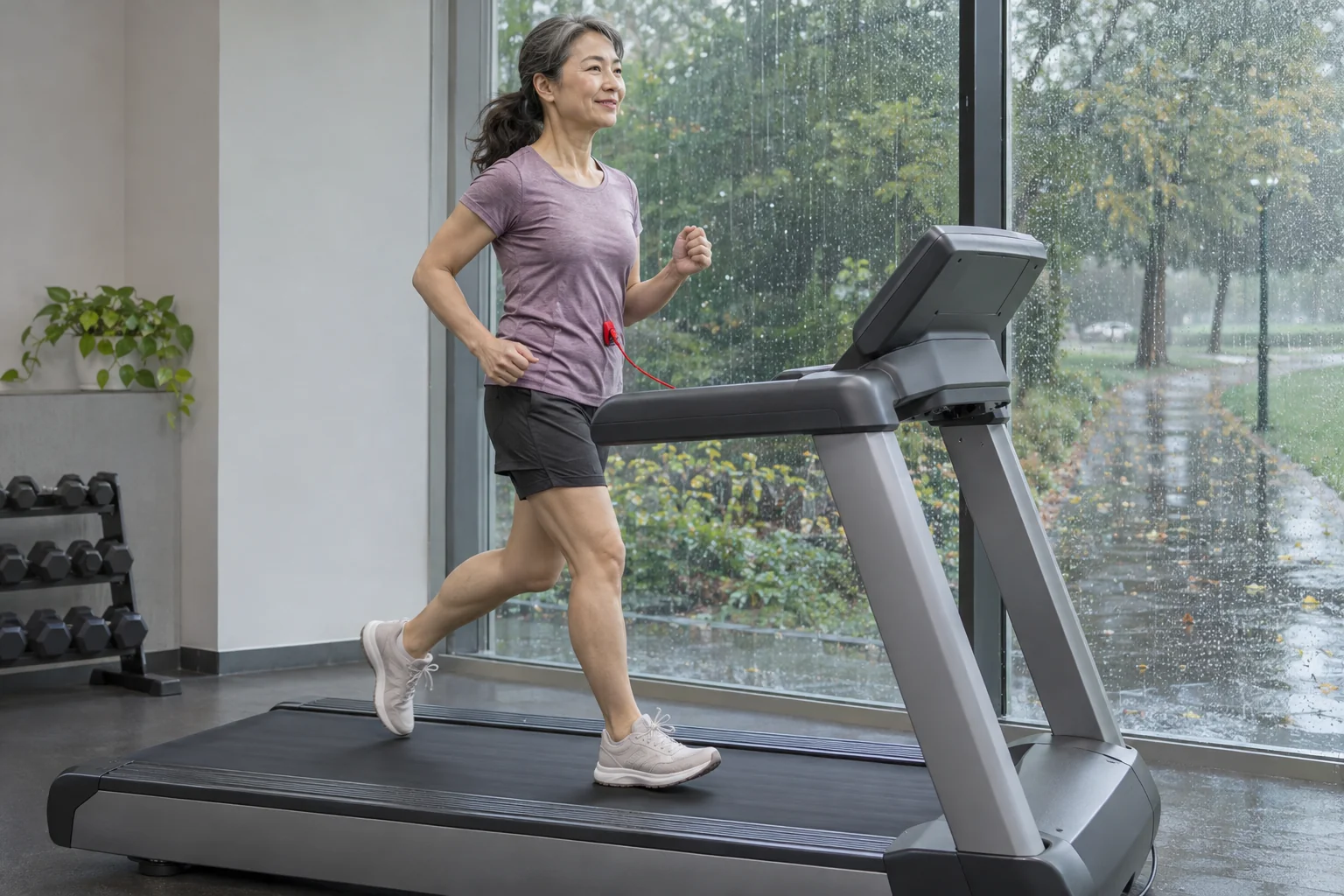
If curious, choose an activity setting already manageable and content genuinely interesting. Add no new loading target. Ask simply whether starting was easier and doing both together pleasant. You need not reproduce the study’s visit count.
Set playback while stable before leaving and stop appropriately to change it. Outdoors, traffic and environmental signals take priority; indoors, safe equipment operation does. Volume and attention demands should not exclude these. A day or location may suit movement without the story better.
Recall the experience briefly afterwards if wanted; notes are optional. Discovering that audiobooks suit walking, rest or travel better is also a result. Your trial neither proves nor disproves the whole method. It shows how this form fits you.
The favourite experience can remain freely available
Returning to a story after interruption may matter too. Frequently losing the thread can make restarting require more effort than enjoyment added. Shorter independent episodes or saving the book for calmer circumstances may fit. This is practical adjustment: do not stop less often or omit necessary breaks for a difficult story.
Not every pleasure must become an earned reward. Listening can be valuable leisure by itself, and running can offer its own experience. Pairing is one optional organisational idea. Enjoying them separately later does not remove abilities gained in movement or choosing content.
Preserve freedom between research methods and humane personal use. An initial effect on gym visits is interesting, not an order to run more. The next chapter can add pleasure while rest, interruption and change remain possible. Pairing can then support you rather than create another debt to yourself.
Primary sources
Milkman, Minson and Volpp: Holding the Hunger Games Hostage at the Gym: An Evaluation of Temptation Bundling, 2014. A randomised field experiment on gym attendance with effects weakening over time; not a running-performance study.
Frith and Loprinzi: Experimental investigation of exercise-related hedonic responses to preferred and imposed media content, 2018. A short walking-and-media experiment with separate emotional outcomes. Flexible-use examples are editorial suggestions, not validated individual treatment or results of documented medical review.
How Futószív articles are prepared: our editorial guidelines.