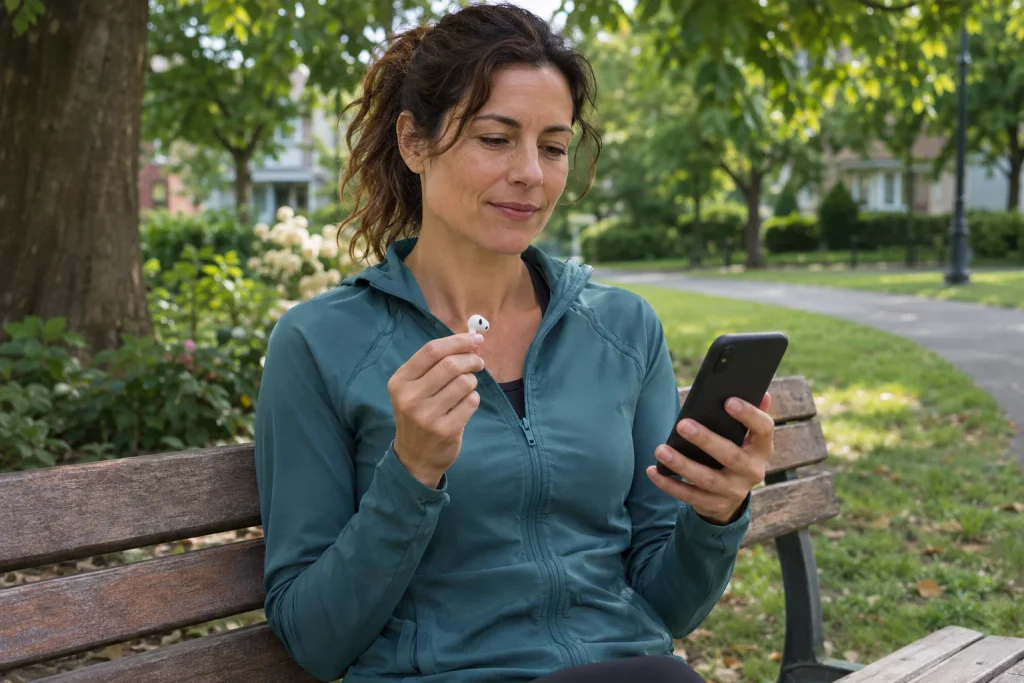
A popular running playlist can be full of lively tracks yet leave you waiting for it to end. Your own selection, however odd to others, may be one you enjoy starting. The difference need not lie in beats per minute. Choice, familiarity, personal meaning and fit with the occasion are separate questions. Not everyone needs the same music to feel like moving.
One interesting research question is what preferred content offers compared with assigned content. This is difficult to separate fully from song characteristics: choosing your list changes not just freedom of choice, but usually the music itself. This article explores that complexity without exaggerated performance promises, compulsory styles or music prescribed for every session.
Preferred content and assigned content pose different questions
Frith and Loprinzi’s laboratory study of twenty university students included personally chosen and researcher-selected music, videos and phone-call conditions. Seven of eight sessions included short treadmill walks; individual pace followed the first session. Both music types involved changes in affective measures, but not every feeling changed alike. Heart rate and perceived exertion did not differ significantly between walking conditions.
This was neither a large running race nor a long-term training programme. Interpret preferred and assigned content within the sample and setting. The authors suggested choice may matter for enjoyment, but did not establish autonomous choice alone caused every difference. Different songs and content occurred in the conditions.
The everyday lesson is not that your list is always measurably better. Personal liking is not a trivial detail in a movement environment. If a popular selection feels unpleasant, your taste need not be corrected. You may also find a favourite in someone else’s list; choice and content are not a simple yes–no distinction in daily life either.
Freedom of choice and song properties change together
You usually select your music for reasons. You know its mood, like the instruments or associate a memory. Compared with someone else’s assigned song, tempo, style, lyrics, familiarity and the decision experience may all differ. After a better session, separating each contribution is difficult.
‘My music works better for me’ may be an accurate personal summary without proving an independent effect of autonomous choice. Separating that needs carefully designed research. You do not have to prove it at home for everyday use. Recognise several possible ingredients without selecting one all-explaining cause.
Freedom may also mean not choosing music. A recommended list is convenient when you do not want to search; another day your selection feels right. Choice should not become another duty to organise perfect music before every outing. Simplicity, or silence, can belong in a practical solution.
 Enlarge image
Motivating, pleasant and familiar are different descriptions
A song may be pleasant without encouraging faster movement. It may be familiar but too intense today, or new yet enjoyable. ‘Motivating’ does not identify one musical property. When recommending a playlist, explain what it gives you: momentum, mood, a memory or simply company through sound.
The movement’s purpose can change which content fits. You may want something different for an easy, calm outing than another workout. A favourite song’s momentum need not be followed with extra load. Music can provide surroundings while your condition and manageable task still define the exercise.
Familiarity can carry personal history. A song may recall a trip or earlier run, but also a memory unwelcome that day. Not every emotional response needs analysis, and a favourite need not always feel identical. A playlist can change with the occasion rather than permanently certify taste.
What does an elite treadmill music experiment show?
In Terry and colleagues’ laboratory experiment with eleven elite triathletes, athletes ran with music selected as motivational, a neutral musical counterpart and no music. They synchronised movement to the beat in musical conditions. Some performance and physiological measures were more favourable with both music types than without, while affective responses were more positive with motivational music. Neutral music was therefore not inferior on every outcome.
This differs from everyday playlist convenience. A small elite sample, rhythmic synchronisation and laboratory task do not transfer automatically to beginners or occasional runners. The study supplies no compulsory cadence, guaranteed gain or need for an exhaustive trial to find music. Different outcomes instead highlight precise interpretation.
Liking music and movement-related changes therefore need not coincide. You may enjoy a song without running better, and rhythmic content may produce a favourable research-task result regardless of how emotionally uplifting it is. Personal choice does not require sports-science validation for every favourite.
What if the gym chooses for you?
You cannot always choose background music in shared sports spaces. Volume, style and repetition can shape the experience even when not your reason for attending. Being bothered does not make you less motivated. Another time, area or a simple conversation with staff may offer practical options where possible.
Others enjoy not having to choose and the room’s own atmosphere. A shared space may have no ideal selection for everyone. Specific needs help: volume or constant repetition, for example. This gives more guidance than calling others’ taste bad or your own unsuitable for sport.
Personal earphones are not automatically a solution everywhere. Preserve awareness of environmental signals and safe equipment use, and respect venue rules. You need not cover an unpleasant soundscape with an even stronger layer. Music can remain an optional addition you may omit.
Build a playlist without too many rules
Start with a few songs you enjoy rather than immediately planning a perfect workout length or arc. A shared mood is possible without matching every track to one tempo. Change a distracting or unwelcome song later. Personal usability can matter more than fitting a popular running-music recipe.
Prepare playback before movement. Searching, reading messages or constantly handling a screen adds tasks while running. Stop somewhere suitable and safe to change it. This article does not recommend blocking traffic or environmental signals; favourite content need not overpower everything to be enjoyable.
If selection takes too much time, simplify with a few saved lists, a familiar album or a music-free session. Freedom does not require constant new content. A run does not fail because the best song did not play, and a playlist need not become another optimisation project.
 Enlarge image
Volume and safety are not motivational contests
Music feeling more energetic does not justify ever-higher volume. Loudness does not reliably measure commitment, and ignoring surroundings is not sporting performance. Preserve awareness particularly in changing outdoor situations. If audio makes that difficult, choose music-free movement.
Following rhythm should not outrank manageable movement. You do not have to continue to a song’s end despite pain, illness or uncertainty. Attentional distraction as a research term does not mean disregarding bodily and environmental warnings. Keep enjoyment and safety together.
Handle headphones and other devices according to their instructions and the situation. This article does not claim one design is safe in every environment. Even the best playlist cannot solve practical device-use issues; consider them separately.
Liking need not become a measured advantage
Enjoying movement more with your list is an understandable choice in itself. You do not need to claim certain heart-rate reduction or performance improvement. Research helps explain why outcomes deserve separate study, but personal enjoyment does not require validation by watch data.
Another person’s different list does not disprove yours. Sharing recommendations can be playful: this is what I like or tried, while you may prefer something else. Taste need not determine running identity or suitability. Silence, a familiar album and a new selection can coexist in one runner’s week.
Choice may matter, but consider it alongside content, familiarity and situation. Personal music is not compulsorily better, nor assigned music necessarily worse. Playback fitting real needs and safe movement can serve its purpose without proving a scientific effect at every start.
Sources and limitations
Frith and Loprinzi: Experimental investigation of exercise-related hedonic responses to preferred and imposed media content, 2018. A twenty-person laboratory study of short walking and media conditions; it does not separate every component of preference and autonomous choice.
Terry and colleagues: Effects of synchronous music on treadmill running among elite triathletes, 2012. A rhythm-synchronisation experiment with eleven elite athletes, not a general training recipe. Playlist examples are original editorial suggestions; this article is neither our own device test nor the result of documented medical review.
How Futószív articles are prepared: our editorial guidelines.