One component of a green environment can be studied separately
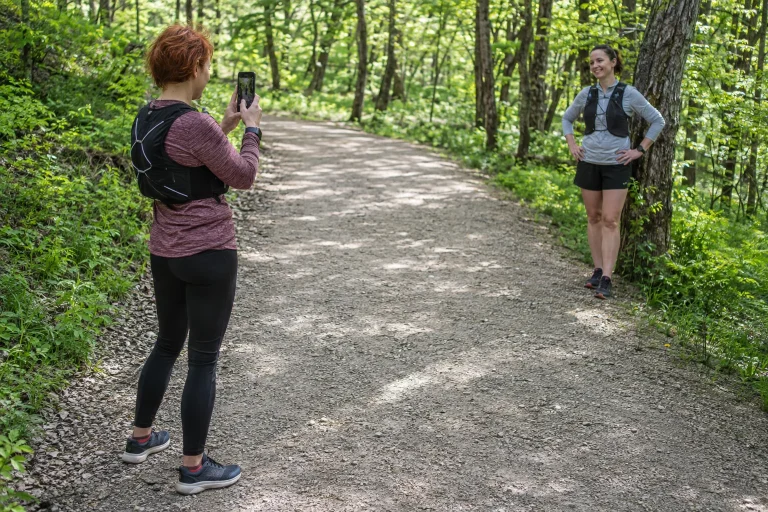
Running in a park, you see trees, feel the ground, hear the surroundings and carry out a task simultaneously. If the overall experience is positive, it is difficult to establish how much came from movement, the place’s meaning or simply the view. One interesting question in green-exercise research is therefore not whether every minute in nature is good, but which smaller components can be examined separately.
A colour experiment narrows that question. Showing differently coloured versions of the same landscape during a similar activity can approach one visual component. The setup is artificial, but that artificiality helps isolate the difference. Afterwards, however, findings must not be passed on as though the same experiment tested real forest running, a long race or wearing a green shirt.
For a runner, research can also provide more precise language for experience. Lower perceived effort, a more favourable mood and identical physical work are separate claims. None needs to become one outcome replacing everything else. This article presents a small controlled colour experiment and explains how to avoid enlarging its findings into broader running advice.
Three video versions, three short cycling tasks
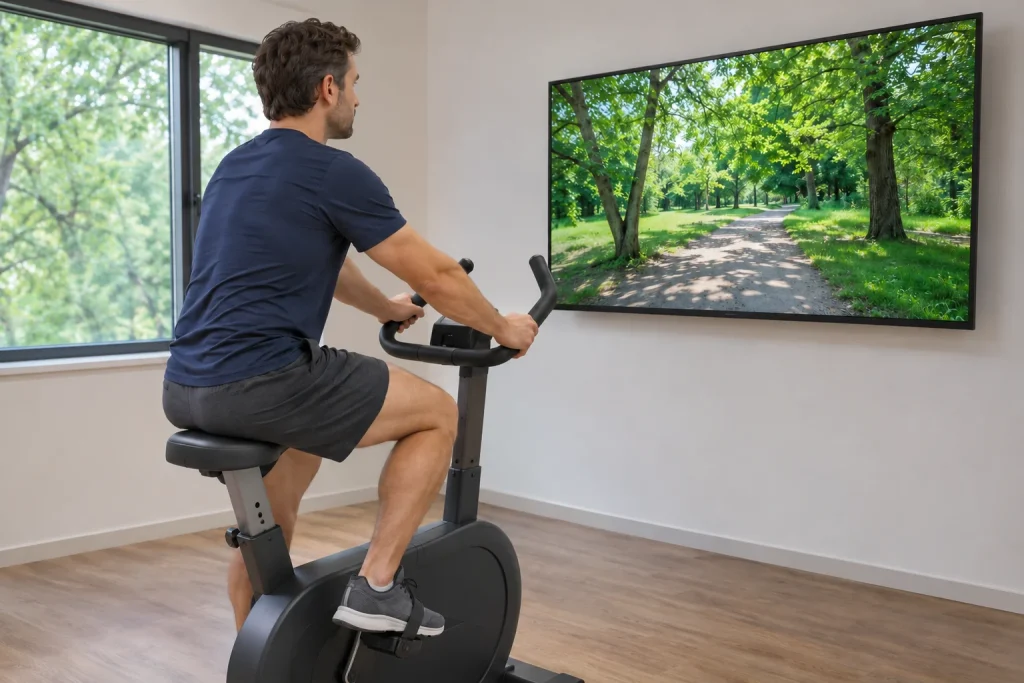
In Akers and colleagues’ 2012 study, 14 participants completed three five-minute bouts of moderate-intensity cycling. They watched versions of a rural cycling-route video: the original green view, greyscale and a red-filtered version. Order was counterbalanced. With the original green version, they reported lower total mood disturbance and perceived exertion than in the other two conditions.
The small sample and short task are integral to interpretation. This was not a months-long running programme or a search for a dose suitable for individual prescription. It asked a controlled question about the colour of a view. The lesson is not a universal rule that exercise always feels easier against a green background. It suggests that one simple visual component may relate to how effort is experienced.
Not every mood subscale differed. Anger was higher after the red condition, while several other mood components did not differ between conditions. Keeping only the favourable summary can lose this nuance. Everyday “better mood” can therefore mean more than the particular questionnaire and analysis actually supported.
Why does it matter that participants saw versions of the same landscape?
Showing one group a pleasant park and another a busy junction changes many things together: visual complexity, movement, familiarity and meaning. Modifying a landscape with a filter lets researchers ask about a narrower visual property. This narrowing is a strength of laboratory comparison, even if a coloured scene resembles everyday running less closely.
The controlled change also raises interpretive questions. A red-filtered landscape can look unusual, and perceived naturalness may differ alongside colour. This should remain a possibility rather than a ready explanation. Research design is not merely a miniature copy of reality. It makes some differences clearer without fully resolving others.
On your own running route, such filters are not neatly separated. Autumn foliage, evening light or summer shade may coincide with different surfaces and temperatures. One experiment cannot establish a simple purchasing or route-choice rule based on vegetation colour. It is more useful to recognise that views may contribute to experience while other circumstances still matter.
 Enlarge image
Perceived exertion is not another name for work completed
Perceived exertion concerns how difficult a task feels. Physical work is instead described through characteristics such as load, duration and movement. An identically set task need not feel the same in two environments or on two days. Feeling easier does not establish that the body is under no load. A pleasant view does not automatically justify increasing pace.
In our illustrative example, you prepare for the same short, easy workout twice, but watch a calm landscape one day and a disturbing programme the other. You may remember their difficulty differently. This does not prove the image caused the difference: sleep, daily demands or room conditions may have changed too. It helps describe the completed task separately from personal experience.
Feeling is useful feedback while running, but not the only information. Route safety, symptoms, the task’s purpose and your condition still matter. Pain or feeling unwell in pleasant surroundings does not become ignorable because the overall run is enjoyable. Research findings are not intended to help use environment to suppress every uncomfortable bodily signal.
Does recognisable form matter alongside colour?
A later 2023 study separated tree form and green colour during cycling in 76 healthy young university students. The four conditions were a green tree, grey tree, formless green and formless grey. Form, colour and their combination related to different investigated outcomes. The paper also cautions that nature’s appearance may not be described by a single colour label.
This does not simply repeat the first experiment with more participants. It divides the visual scene differently and asks other questions too. Calling every result the same “green effect” can lose the distinction between recognisable natural form and colour. Runners need not believe one component alone matters. A more precise conclusion is that visual experience may have several layers.
On an everyday route, form might mean a canopy, landscape depth, a visible trail or the rhythm of an avenue. These are examples for describing our surroundings rather than compulsory scenery derived from the paper. A safe, accessible city route need not lose value because it differs from an experimental green tree. Actual usability and personal experience can inform choice together.
Why does this not recommend green clothing or a green wall?
Changing the colour of a viewed landscape differs from wearing a green running shirt. The visual field, attention and the object’s meaning differ. A cycling video cannot directly support a sportswear performance promise. Nor is repainting a room proven to recreate the same conditions. An identical colour name does not make the investigated and recommended situations equivalent.
If a product recommendation cites such an experiment, look for the leap. The source may compare people, short tasks and specific images, while the recommendation promises lasting mood improvement or faster running. A citation alone does not connect those claims. Check whether the product, use and outcome inferred were actually tested.
You can naturally choose colours for clothing or a room according to taste. No supposedly scientific reason is required. Personal preference, visibility, convenience and the setting are meaningful considerations in themselves. The distinction is that a preferred colour is not presented as proven psychological treatment or a training method that works for everyone.
Beside a treadmill: visual comfort and attention
For indoor running, consider screen placement and safe use before its content. A pleasant landscape is unsuitable if it requires an uncomfortable head turn or prevents awareness of surroundings. The cycling colour experiment is not a treadmill-operation guide. The particular machine’s instructions and your loading situation remain separate questions.
A comfortable visual setting might be a neutral wall, window or calm screen image, depending on preference and what works in the space. You do not need to keep seeking supposedly stronger stimuli. Change content if distracting or demanding too much attention. This is a simple use decision rather than replication of the experiment. Let the environment support the task instead of adding another required performance.
In a short personal note, separate the view, task and how you felt. This does not prove screen colour changed the feeling, but can help identify recurring discomfort. You cannot control all circumstances at home, nor need you. A clearly named experience is often enough to make a later outing more comfortable.
 Enlarge image
Outdoors, a real route requires more than a pleasant background
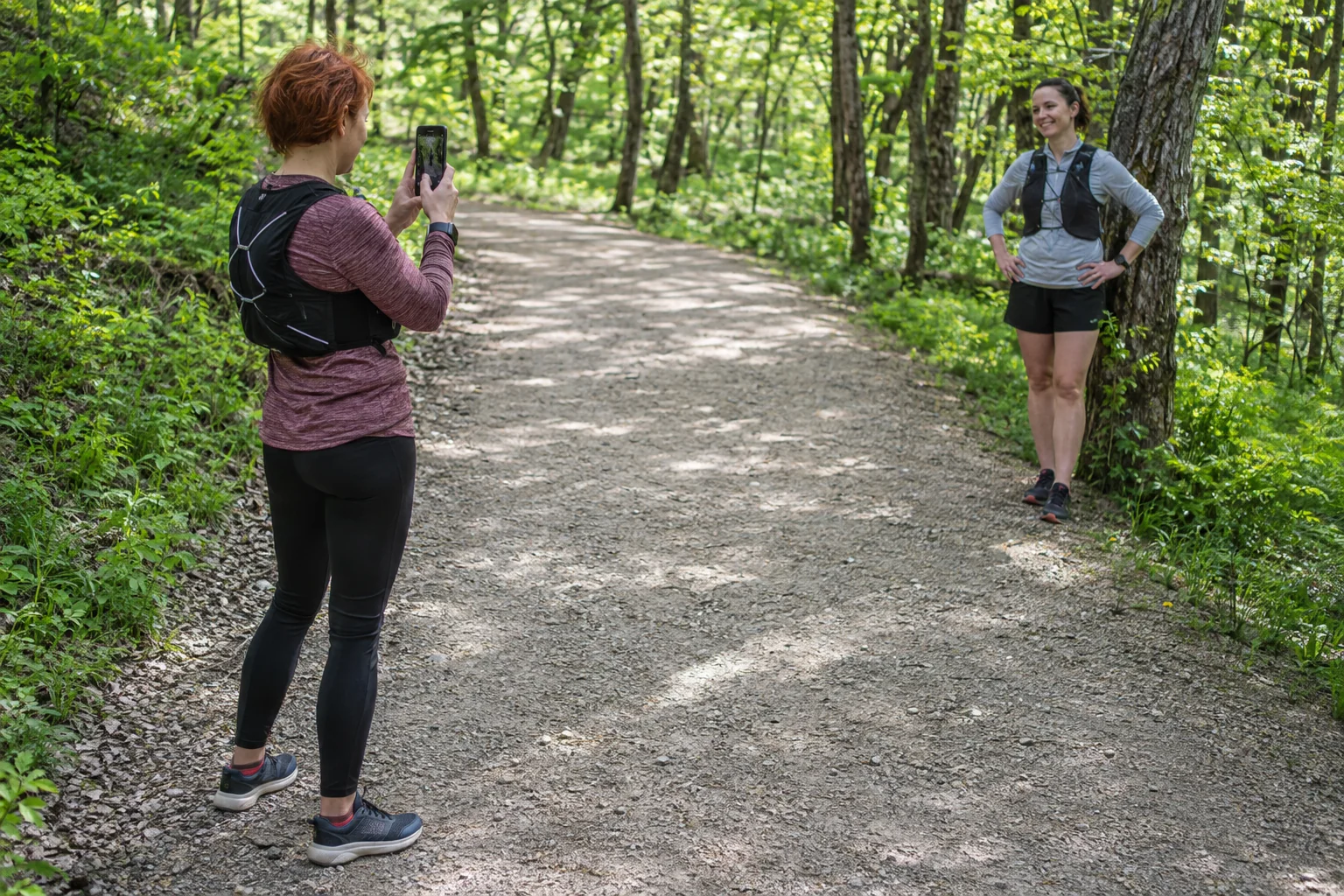
Outside, views cannot be entirely separated from using space. A beautiful trail with poor visibility demands different attention from a simple park path. Shade, width, other users and getting home may matter practically at least as much as vegetation colour. Research does not rank every natural and built route. Suitability depends on your task and available options.
Autumn or winter surroundings need not be labelled less valuable because green leaves are fewer. Other forms, light and memories can contribute. The controlled 2012 videos did not compare seasons. Findings from a red-filtered scene therefore cannot automatically describe a reddish autumn forest. Similar hues can mean different things in different real situations.
After trying a route, a few specific questions are enough. Was the place easy to understand? Was there attention left for scenery? Which section was pleasant, and where did progress need more concentration? These create personal use criteria rather than a universal experimental recipe. Searching for a good running place remains helpful when every outing need not deliver an expected emotional result.
Four quick checks for a research story
First, identify participants and task. Fourteen people cycling briefly provide different evidence from long-term follow-up of many runners. Second, find what was changed: colour, form, the whole place or several factors? Third, identify the outcome: mood scale, perceived exertion, an attention task or actual sporting performance? Fourth, ask what the result does not cover.
These questions do not aim to dampen scientific curiosity. They let an interesting, narrow finding be valued in context. Colour is a visual component that can be studied, and running experience is complex. The useful connection is more precise discussion of environment while preserving individual choice and different experiences.
Primary sources
We checked the sources on 21 November 2026. Both studies used cycling tasks and are not described as running-race tests. Practical examples are our editorial explanations. Images are generic AI illustrations, not original research images or documents of our own laboratory work.
- Akers and colleagues: Visual Color Perception in Green Exercise: Positive Effects on Mood and Perceived Exertion, 2012
- Zhang and colleagues: Form and color visual perception in green exercise: Positive effects on attention, mood, and self-esteem, 2023
How Futószív articles are prepared: our editorial guidelines.