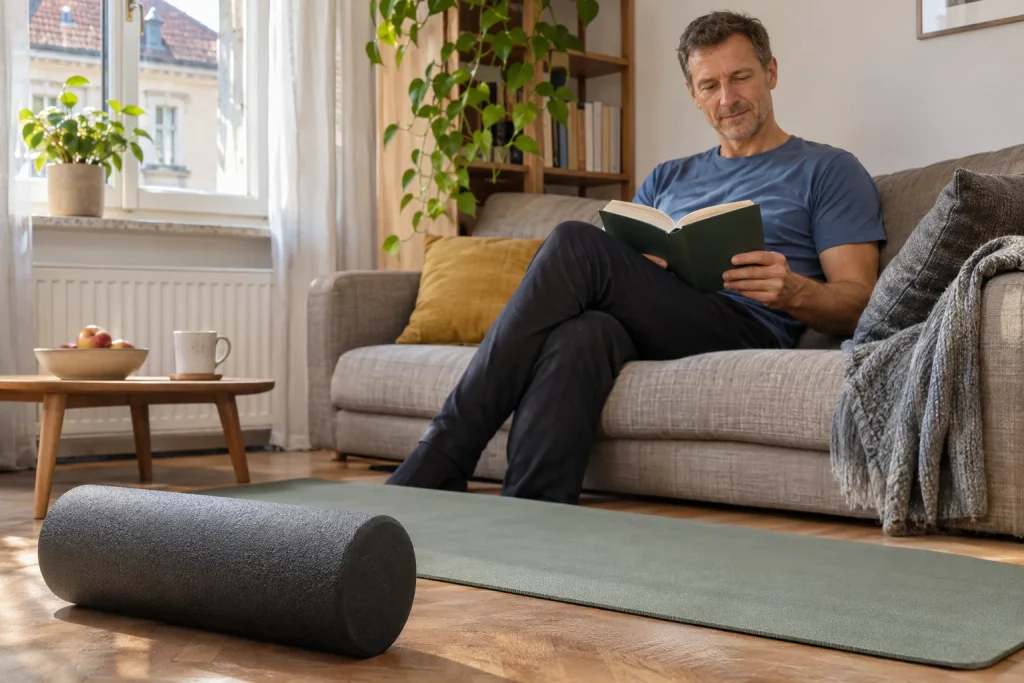
A foam roller is simple, but promises about it are often broad. Some people enjoy a more comfortable muscle feeling after running; others expect better performance in the next session. Research treats these as separate questions. Less soreness can matter even without an improved running time, while a greater range of motion does not automatically mean faster tissue healing. Information becomes useful when we know who was studied, after which exercise and what was measured.
Four original studies illustrate what foam-rolling findings mean for everyday runners. This is neither a compulsory recovery task nor a painful self-treatment schedule. Laboratory loading and timing are specified to clarify the conclusions’ limits, not for you to copy. Findings in healthy participants selected for research are not an individual judgement of suitability for a current symptom.
First, define what you mean by recovery
“My legs felt better” can mean several things. Standing up is less uncomfortable, movement seems easier, you reach farther in a test or a sporting task actually produces another result. Studies need to define these separately. A soreness rating, a range-of-motion measurement and a time-trial result do not replace each other even within the same paper.
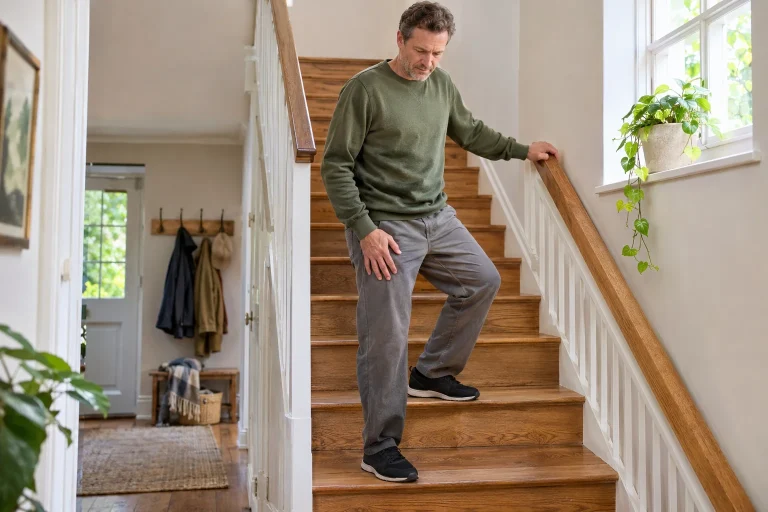
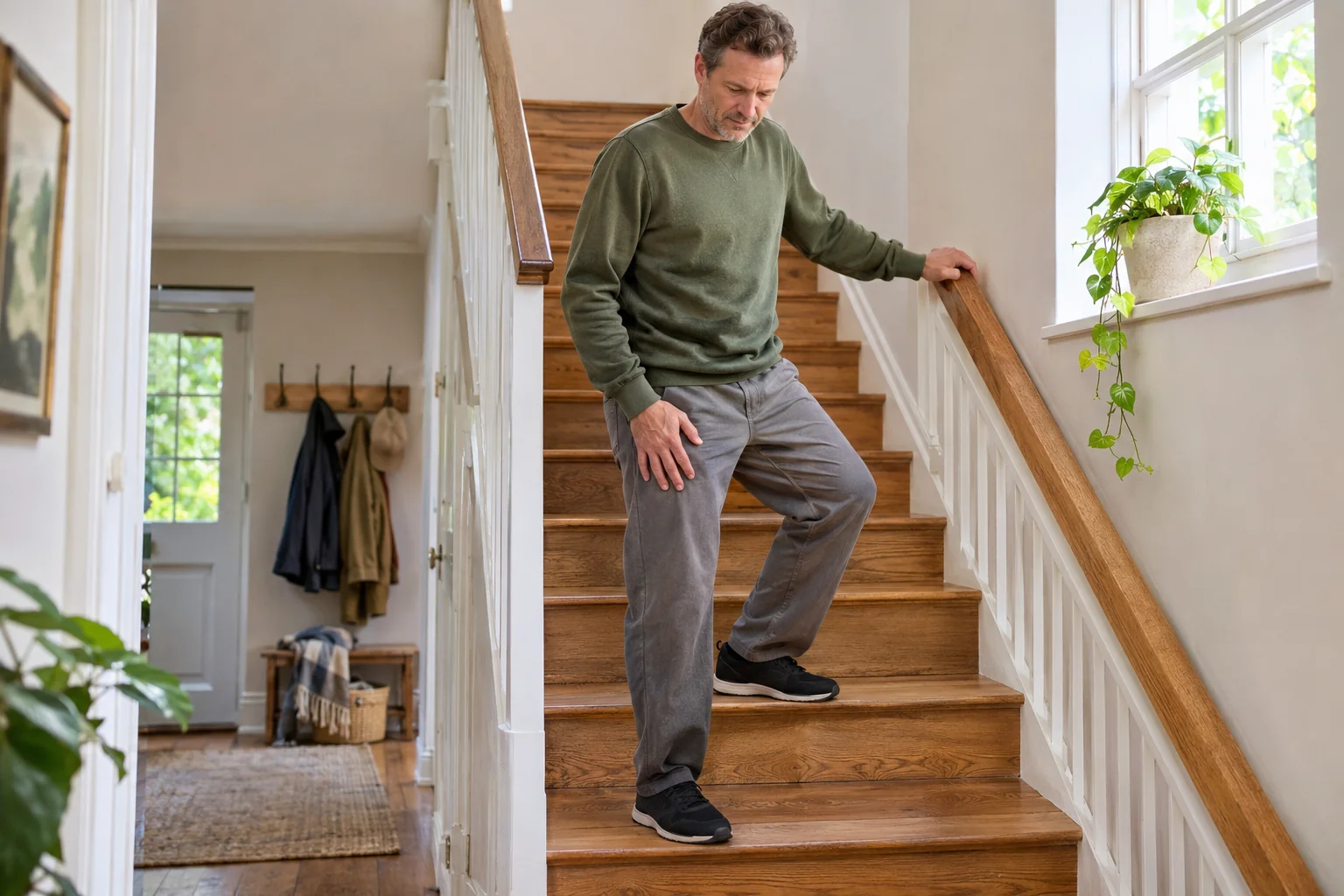
A subjective measure is not unimportant data. How stairs or an ordinary movement feel in your legs can matter greatly. Research must avoid quietly renaming that as a different outcome. A participant reporting less discomfort does not alone establish that all muscle function has recovered. Equally, unchanged running time does not erase the significance of greater comfort.
A useful opening question is: “Which outcome do I want an answer about?” Deciding suitability for a later workout differs from choosing a more comfortable evening routine. Current condition, possible injury and load matter to the former; personal preference may have a role in the latter. Keeping them separate reduces the chance of attributing every recovery task to one enjoyable tool.
The post-squat study did find favourable outcomes
In MacDonald and colleagues’ 2014 randomised trial, twenty men with at least three years of strength-training experience were assigned to rolling or control groups. High-volume squatting provided the load, with follow-up over several days. The rolling group showed less soreness and more favourable range of motion; some functional measures also improved. Not all measurements changed in the same direction, however.
The study also examined electrically evoked and voluntary muscle-contraction characteristics. Several evoked measures changed unfavourably while other outcomes improved. This matters in research often summarised as “rolling helps recovery”. The actual questions are which function, measurement time and comparison showed a difference. A title or summary sentence cannot reveal the complete outcome pattern.
A control group meant researchers did more than observe participants feeling better over time, an important strength. Yet twenty strength-trained men do not represent every runner. Muscle loading through squats differs from a long trail race, an easy jog or a post-injury period. The study provides useful data when kept within its original context.
Pearcey and colleagues’ 2015 study involved eight healthy, physically active men who completed rolling and no-rolling conditions on separate occasions. It also examined recovery after strength exercise. Pressure-related soreness and several dynamic performance measures showed more favourable changes. The very small sample makes it particularly important not to read this as a guarantee across all ages, health conditions and running programmes.
 Enlarge image
Running after exercise also needs running-specific research
In D’Amico and Paolone’s 2017 study, sixteen trained men received foam rolling or passive rest between two eight-hundred-metre treadmill runs separated by half an hour. Running time, stride length and hip movement were among the measurements. That setup found no significant performance benefit from rolling. It answered a specific question about repeated exertion over a short interval.
The study does not prove that rolling can never help anyone. It shows why favourable soreness findings several days later cannot automatically become immediate performance improvement between runs. Nor should a non-significant finding be called an exact zero for every possible effect. Sample, exercise, timescale and measured task together define the question answered.
Another pilot study in trained distance runners compared rolling with sham compression clothing after downhill running; eight participants completed the analysis. Soreness and running measures were examined two days later. Soreness reported during movement favoured rolling, but changes in running performance showed no significant difference. Findings for soreness at rest and during movement were not identical in every analysis either.
The study’s title calls rolling an effective recovery tool, while the detailed results tell a more precise story. One sensory outcome is favourable alongside running measures without a demonstrated difference. This is not contradictory for a runner. More comfortable movement and an unchanged time-trial result can both be real, helping put expectations of the tool into proportion.
The same word can hide different comparisons
In a parallel-group study, separate people receive different conditions. In a crossover design, the same participants try both conditions on separate occasions. The latter can reduce some between-person differences, but order and previous exercise experience can still matter. Order handling and time between occasions are therefore important. A crossover study of eight participants still contains eight people’s data, rather than a population multiplied by the number of measurements.
The control condition matters too. Passive rest, no rolling and clothing thought to be another treatment are different comparisons. The distance-running pilot did not test genuine compression treatment: comparison clothing addressed part of the expectation effect. Do not report it as proving rolling superior to every compression product. Precisely defining the control is part of the claim’s meaning.
| Research question | Example of the measured outcome | What should it not automatically become? |
|---|---|---|
| After strength exercise, followed over several days. | Soreness and some functional measures. | Complete recovery after every run. |
| Between two eight-hundred-metre runs. | The next run’s time and movement characteristics. | Every longer-term recovery goal. |
| Two days after downhill running. | Soreness during movement and running measures. | Injury healing or guaranteed improvement in finishing time. |
This table does not rank the studies. It prevents different questions becoming a yes-or-no vote. Favourable sensory findings in one study and no detected performance difference in another can coexist without deleting either from the account. Look for the question closest to your goal while retaining differences in people and circumstances.
Measurement timing forms part of a result’s meaning
The immediate feeling after rolling, stairs the next day and a sporting task days later concern different times. A study measuring changes two days later cannot establish an immediate pre-start performance effect. A short break between two efforts cannot determine the whole following week. Timescale is not a minor methods footnote; it is part of the question answered.
Change over time also needs comparison. A muscle becoming less uncomfortable after days of soreness does not establish the contribution of one intervention. Study control conditions aim to address this problem. At home, it is perfectly valid to say something felt good to you. Keep that a personal account rather than using the same story as general physiological proof.
Rolling time and loading in research describe the particular experiment. They do not mean you must roll for that duration or to that discomfort level for it to “work”. The studies alone do not establish one optimal home dose necessary for everyone. A favourable finding under a shorter condition does not prove greater benefit from longer, harder or more painful use.
Possible injury is not soreness to force into a research protocol
The studies used participants selected by predefined conditions and controlled exercise. A new pain at home cannot be classified as the same situation on that basis alone. The NHS information on sprains and strains treats increasing pain, significant swelling and inability to bear weight as signs needing healthcare assessment. If injury is suspected, do not use hard rolling to prove the area is merely stiff.
Discomfort while rolling is not a diagnostic test either. A tender spot does not identify the tissue involved or imply it needs increasingly strong pressure to “release”. With a known condition, recent injury or uncertain symptom, ask an appropriate professional about individual suitability. This article gives no injury-treatment technique, required pressure or pain threshold.
Do not use a better feeling as sole clearance to return either. A less uncomfortable movement can leave the planned workout question unresolved. The studies themselves measured sensation and function separately. That distinction also helps everyday decisions: describe what changed without inferring suitability for loading that was never assessed.
 Enlarge image
Keep the tool and the claim in proportion
If a video or product description promises rapid recovery, unpack it. Who was studied, after what load, compared with what, measured when, and what changed? Ask separately about soreness, movement and sporting results. “Research proves it” alone does not establish that the specific promise was actually investigated.
A roller can be an optional, enjoyable addition if appropriate for your condition. It does not require a story that something must be restored with it after every run. Evidence gains value through detail: some conditions showed better soreness and certain functional outcomes, while other tasks showed no demonstrated benefit. That more precise picture is worth keeping alongside the foam roller.
Sources
- MacDonald and colleagues: Foam rolling as a recovery tool, 2014
- Pearcey and colleagues: Foam rolling for delayed-onset muscle soreness, 2015
- D’Amico and Paolone: Recovery Between two Eight Hundred Metre Runs, 2017
- Lee and colleagues: Foam rolling in trained distance runners
- NHS: Sprains and strains
How Futószív articles are prepared: our editorial guidelines.