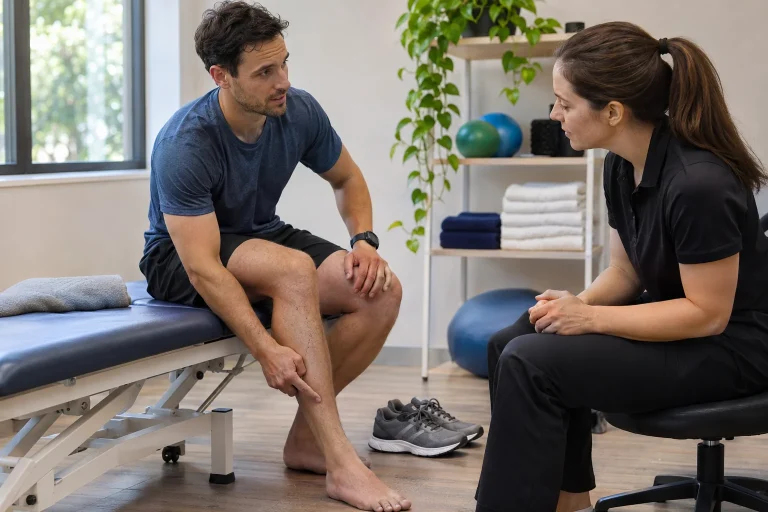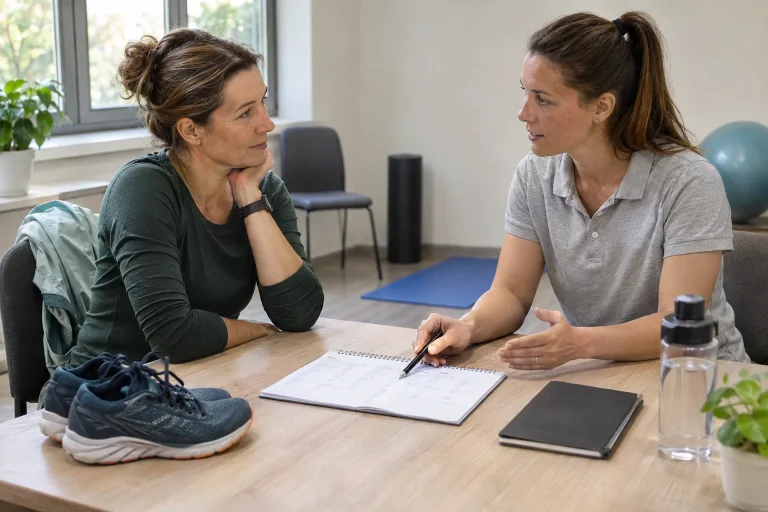
After a few quieter days, your foot no longer hurts around the home. This may be an important change, and it is understandable that running immediately comes to mind. Returning after a bone stress injury, however, cannot depend simply on counting symptom-free days. What happened to the bone, where the affected area lies and which tasks are symptom-free together shape the individual plan.
If new severe pain, inability to walk, a change in shape, a hot and swollen foot, fever or chills develop meanwhile, seek urgent medical help. The NHS treats these as specific warning signs. A previously established injury and rehabilitation already begun do not automatically make every new change part of the expected process.
The calendar shows elapsed time, rather than every condition for healing
Time matters in recovery, but the same duration does not mean an identical condition for everyone. Two runners may have spent the same number of days without running while having injuries of different locations and severity, receiving different plans and managing different tasks now. The same date therefore does not automatically mean equal capacity for loading. Another person’s return week is not your deadline.
The AAOS also relates differences in care and healing time to injury location and severity. Different bones and conditions cannot fit into one break applicable to everyone. A calendar helps organise reviews and follow the process, but does not replace clarifying the next step in your own condition.
If an expected date appeared in a previous plan, ask whether it was an estimate, a review or a planned opportunity for progression. These are different meanings. A review date is not necessarily the date for a full return to running. Clarification helps prevent an organisational reference from becoming a compulsory sporting achievement.
Where is the injury, and why does this matter?
The 2025 international Delphi consensus treats anatomical location as an important factor in bone stress injury care and return to sport. Complication risks can differ between bone sites. This is clinical risk assessment, rather than a home map for assigning your painful point to a high- or low-risk category.
It is worth knowing which area was identified in the assessment and what the finding means for your plan. You do not need to memorise technical terms, but it may matter that you do not follow a programme for another foot bone. “My foot was injured” may be too broad to safely apply an acquaintance’s advice to your own situation.
Nor should severity be estimated from pain on a single day. Individual examination and necessary imaging together can help interpret the condition. You need not compare recovery with the most severe online story, but early relief does not establish that every restriction has ended either. Your assessed injury determines the next task, rather than the number of reassuring or frightening examples.
What kind of day was that symptom-free day?
“It didn’t hurt today” is important, with the day’s activities added alongside it. Were you sitting at home, following the offloading plan or completing everyday tasks already permitted? Absence of symptoms does not indicate the same condition in every environment. This does not diminish relief; it gives it a more precise meaning.
If less pain appeared partly alongside reduced loading, do not immediately infer that previous running is tolerable. Comfort in changed circumstances informs you about the current situation. It is not a promise covering every larger task too. Describe the same already permitted everyday circumstances clearly during follow-up, rather than inventing a new test.
Observation does not require a separate pain test. You do not need to walk beyond what is permitted or hop to make a symptom-free day “strong enough evidence”. Experience from ordinary life and the individual plan provides useful information. The task should not become an examination in which improvement feels legitimate only after trying to bring the pain back.
 Enlarge image
Healing, function and returning to running are related, but not identical
Monitoring the bone’s condition is a healthcare question. Walking and other daily tasks also need assessing, but do not always reveal everything about greater sporting demands. Running has its own repetitive loading. These need not compete with each other. Understand which stage the individual plan has reached and what the next step is for.
The NIAMS relates rehabilitation after injury to rebuilding function, strength and range of motion. Symptom relief is therefore not necessarily the only goal of care. A professional adapts the particular task and sequence to your condition; a general article cannot select exercises, repetition counts or a day to start running.
The Delphi consensus discusses participation level, symptom-free daily and sporting tasks, and clinical functional assessment alongside injury characteristics in return-to-sport decisions. This combines several considerations rather than creating a home clearance form. A decision context from elite sport cannot automatically be copied into a recreational runner’s week of work and family responsibilities.
| Consideration | What is worth understanding? | Why is it insufficient alone? |
|---|---|---|
| Elapsed time | When did the process begin, and when is the review? | The same day count does not mean the same injury condition. |
| Symptom | In which permitted situation have symptoms eased? | Rest at home is not running load. |
| Function | Which individually agreed task can be completed? | One successful task does not cover every sporting demand. |
| Follow-up | What determines the next change? | A review is not necessarily a full-return date. |
Rebuilding is not making up missed workouts
When individual assessment allows a change in load, the next task starts from your current condition. An old training plan is not necessarily an appropriate starting point simply because you completed it before. Pre-break distances and paces belong to your sporting history. They do not require the first returning session to approach them.
Planning can include work and travel demands too. A day with more essential walking may change the organisation of the week compared with a quieter period. Describe this in advance to make the plan workable. Essential tasks should not become invisible simply because they do not appear as running workouts in an app.
A group run or approaching race creates an organisational demand, rather than a condition for healing. If the group plans only a long route that is difficult to leave, compare that with your current plan. Not every invitation suits rebuilding. Social connection can be maintained separately without independently changing activity guidance for the event.
Addressing the background is not finding one shoe or vitamin
The international consensus regards the background to bone stress injury as multifactorial, including bone health, loading and energy availability. This is not an identical dietary prescription for everyone. Individual assessment can identify which factors need attention and whether further professional support is required. One supplement cannot replace understanding the condition.
If eating adequately alongside sporting and everyday energy demands is difficult, you can mention it without committing to a weight goal. Nutrition questions are not restricted to one body type. The article does not calculate calorie needs or prescribe vitamin doses. The point is to keep potentially relevant health background within follow-up alongside a plan that might otherwise focus only on mechanics.
New shoes or technology can also appear to offer a quick solution. A product cannot replace individual permission for loading after injury. If planning different footwear, treat it as part of the current plan rather than adding an unnoticed extra change. A more expensive device does not itself establish that a previously restricted running task has become appropriate.
Describe functional changes at the next review too
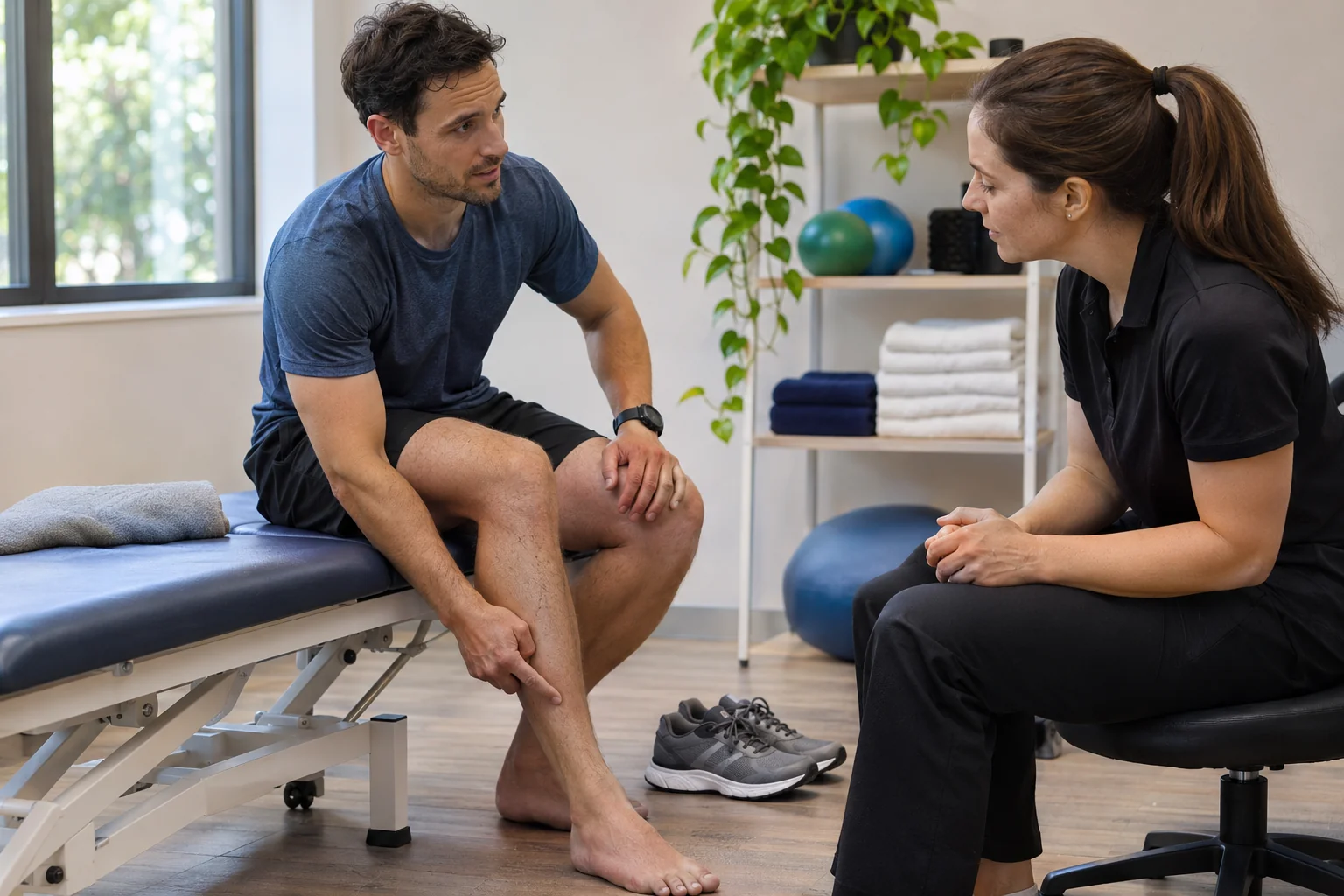
A few concrete examples may be enough: an agreed home task is more comfortable, a work situation remains difficult, or a new sensation appeared during a previously tolerated task. You need not record every hour and step. The aim is for the clinician to understand your real day and relate changes in condition to it.
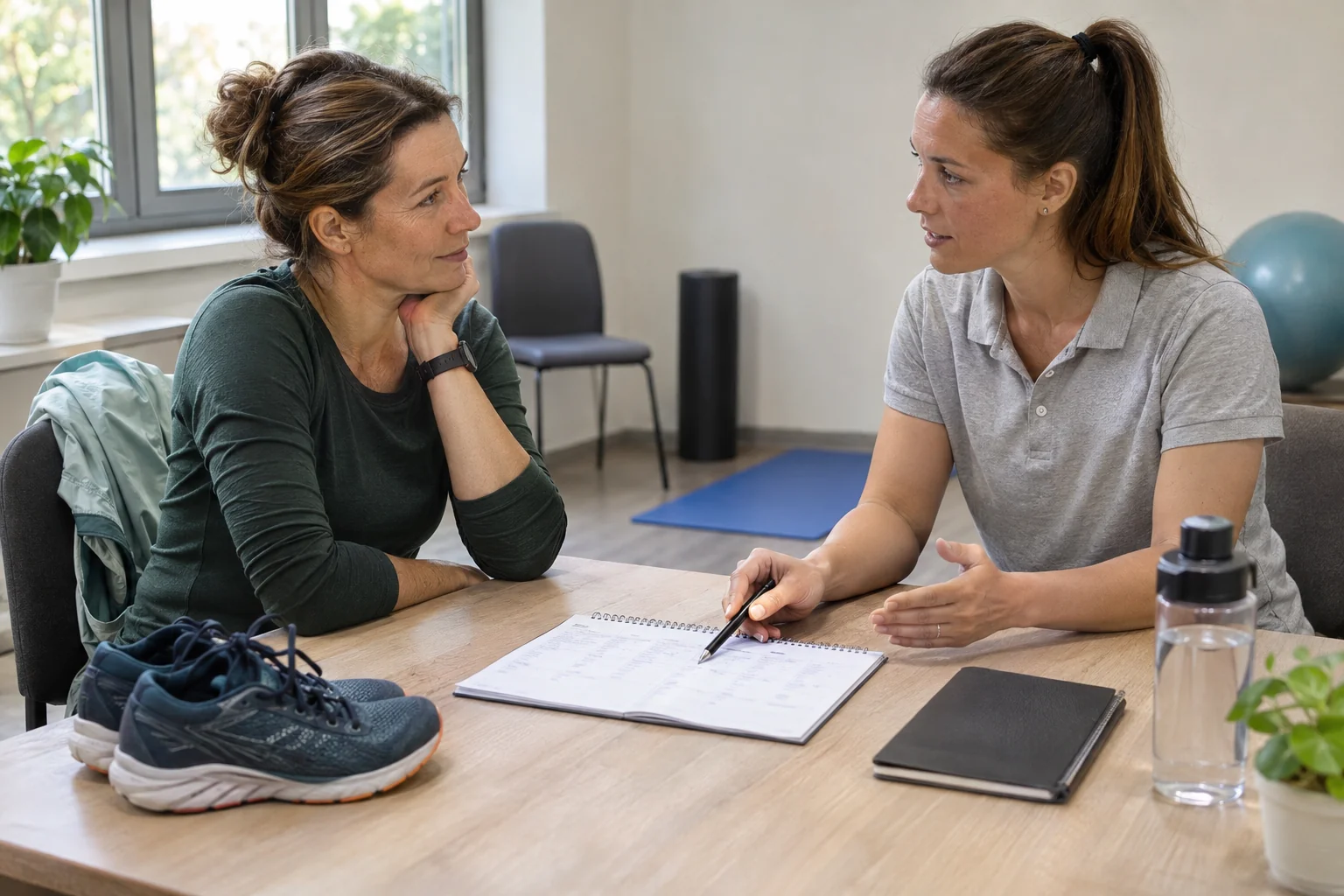
Say if guidance was unclear. Being unable to complete a task differs from not understanding what was required. Advice about travel or work arrangements that cannot be implemented may need clarification. You need not silently switch to a self-designed alternative unrelated to the assessed injury.
The AAOS also warns about possible consequences of returning too early and emphasises following the plan. This need not mean fearing all movement. It means clarifying current condition and an appropriate task matters for an individual decision. Understandable follow-up can provide direction instead of fear or haste.
 Enlarge image
What if symptoms return?
Do not automatically dismiss a new symptom as insignificant adaptation, but do not immediately turn it into a final verdict on recovery either. Describe the agreed task during which it appeared and how it changed. The NIAMS does not recommend working through an injury’s pain. Continuing a painful run is unnecessary to establish what happened.
The plan should make clear whom to contact, how, and which changes call for earlier help. A new severe sign may remain urgent even if the next review is distant. An earlier symptom-free period does not oblige you to conceal current symptoms. Rehabilitation follow-up becomes more accurate by including actual changes, rather than making progress look linear at any cost.
You do not need to prove you perfectly controlled every possible circumstance before reporting back. Life after injury remains real life with changing tasks. New information can lead to a modified plan or reassessment. This does not necessarily mean all previous progress is lost; it means understanding and adapting to the current situation.
A useful return question goes beyond counting days
“How many days until I can run?” is understandable but often provides too little information. A more precise question asks what determines the next task for your injury, what follow-up is needed and how this fits daily responsibilities. You do not need to become an expert. What matters is understanding the plan’s purpose and next step.
You can still regard a symptom-free period as meaningful experience. It need not be devalued because it is not every condition by itself. Symptom relief, functional change and professional injury assessment together can describe the process. Review and rehabilitation do not aim to question improvement, but to interpret what can safely follow in your own situation.
Let the calendar remain an organisational aid. Returning after bone stress injury also involves location, severity, current function and individual circumstances. A clear plan neither gives everyone the same date nor organises making up missed runs. It helps explain how care, everyday life and later sport can build on one another within your assessed condition.
Sources
- AAOS: bone stress injury location, care and follow-up
- NIAMS: rehabilitation and seeking help after injury
- Hoenig and colleagues: international bone stress injury Delphi consensus, 2025
- NHS: urgent warning signs with foot pain
How Futószív articles are prepared: our editorial guidelines.