The display looks precise, but energy is still an estimate
After a run, your watch shows 487 kilocalories, while another app reports 562 for the same loop. These two whole numbers can suggest that one device has accounted for the body’s work like a miniature utility meter. A sports watch, however, calculates from sensor signals and personal data. It does not directly track how much energy was released in the muscles in a given minute. The question is which decisions this estimate is adequate for, and where we would be claiming more than it can provide.
A calorie value can be a convenient summary when you want to view activities in one system. Judging whether you were roughly more active between two weeks is one task; matching the exact energy content of a particular lunch to a workout is another. The latter assumes much narrower error bounds. Start interpretation with the intended use: are you reviewing a log entry, comparing devices or trying to build your eating around one number?
The numerical examples below are illustrative calculations, not results from device testing or eating instructions. They make the distinction between field definitions, measurement error and later use visible. Where specific research is discussed, the device generation, participant group and exercise protocol define the claim’s scope. A result for an old watch is not automatically a certificate for a brand’s entire current range.
First, identify the energy values you are comparing
Total and active energy are not interchangeable labels. Active energy generally means the estimate assigned to activity above resting expenditure; the total may also include the resting component for the stated period. The particular app’s description matters because field labels and exports can differ. Apple’s current guide, for example, describes the Activity Move ring in active calories, while workout history can also display total calories.
Imagine a one-hour workout summary showing 400 active and 460 total kilocalories. The difference in this example is 60 kilocalories. If another interface imports 460 while you read 400 in the first, no sensor error is needed for a 15 per cent difference: 60 divided by 400 is indeed 0.15. Compare fields with the same definition and duration before examining accuracy.
The daily total and workout total are not independent energy items either. If daily activity already includes the run, adding its calories again counts it twice. In your own table, give the field’s source, time window and type separate columns. Do not automatically add a “morning run” number to “today’s total” as if it were an event beyond that total. This is an accounting question that a better sensor cannot solve for you.
 Enlarge image
The personal profile and movement signal work together
The Apple measurement guide lists height, weight, sex and age among the personal details used to calculate calories. Appropriate wear and selecting the right workout type matter too. This does not mean every profile field acts as a simple visible multiplier, or that identical heart rates imply identical energy expenditure in everyone. The settings screen cannot reveal the manufacturer’s full model.
As a practical check, make sure your own current details are in your account, rather than a previous user’s profile remaining on the device. It also matters not to record outdoor running with a profile intended for another activity. But there is no justification for adjusting the weight field until a calorie number you like appears. That would adapt the input to the desired answer and leave the later log impossible to verify.
Improving heart-rate data and improving calorie estimates require separate evidence. A chest strap may provide a cleaner heart-rate signal where wrist data is faulty, but the energy algorithm still uses its own relationships. Correct input may be necessary for a better estimate, yet does not validate the entire calculation chain. “The device read heart rate well” must not become “the runner used exactly this much energy”.
What does the laboratory measure, and why does the type of running matter?
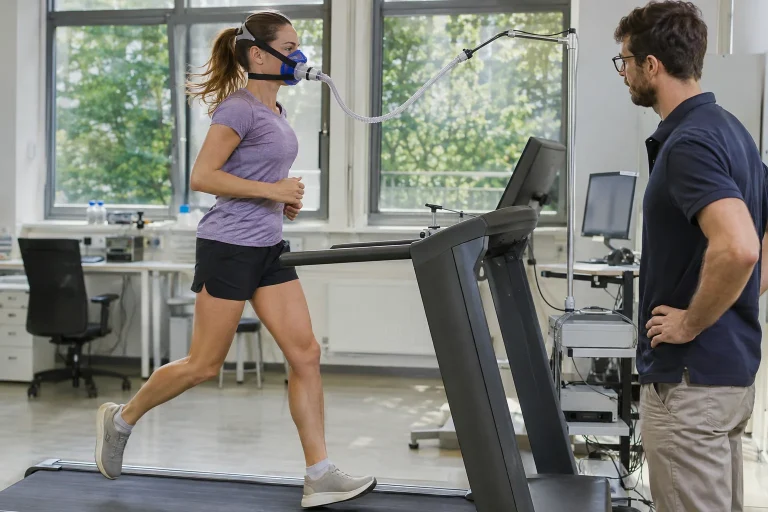
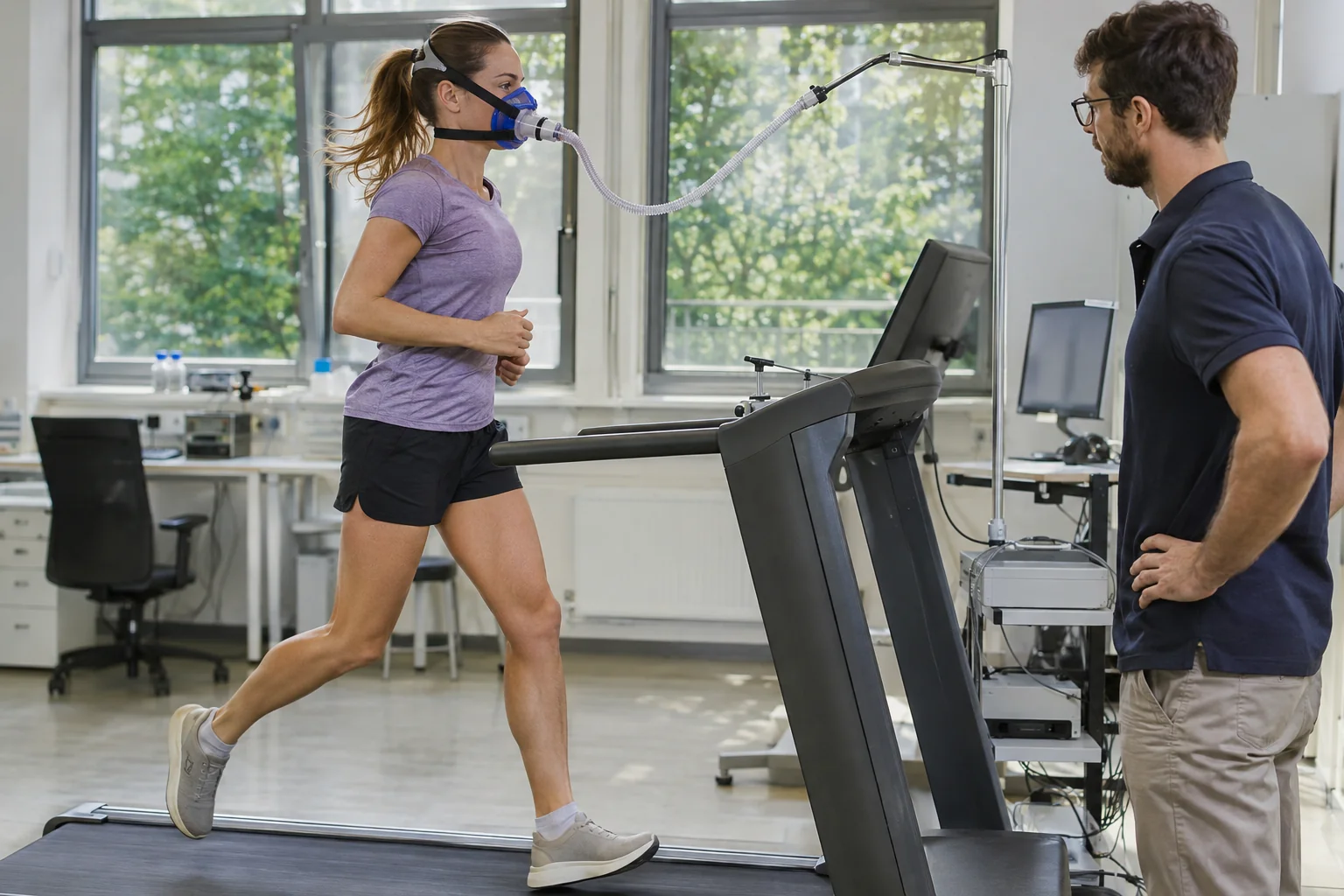
An energy-validation study compares the watch with a defined reference method. Roos and colleagues’ 2017 study investigated running in twenty trained participants using three watches of that period; alongside a respiratory-gas-based reference, it used an additional method to estimate the energy demands of high intensity. Error varied with intensity. The main lesson is that results from steady, moderate running do not automatically apply to short, very intense sections.
For the same reason, look beyond the reference method’s name. Indirect calorimetry estimates energy expenditure from gas exchange under defined measurement and calculation conditions. It is not the same as simply putting another consumer watch on the other wrist. Agreement between two watches may be interesting, but both could be wrong in a similar way. Matching a clubmate’s value is not laboratory verification, even if the displays are strikingly alike.
The running protocol matters at least as much as the brand name. Did participants run continuously or take walking breaks? Were data collected on a treadmill or outdoors? How long were the sections, and who took part? These details show how closely the study resembles your own use. A short, steady outdoor test cannot establish the total energy demands of a mountain event lasting several hours with stops with the same certainty.
What do an older and a recent validation study show together?
The 2022 outdoor study compared Apple Watch Series 6, Garmin Fenix 6 and Huawei GT 2e estimates with a portable gas analyser during walking and running in twenty young adults. Results differed between devices. The sample and models are specific: the data is not a general 2026 ranking and does not establish the individual error for a reader of another age, body type or pace.
A more recent example is the 2026 study of Galaxy Watch 6 and 7. It examined a 27-minute protocol alternating walking and running in 148 healthy adults using indirect calorimetry. Mean absolute percentage errors were 10.10 and 12.55 per cent, while differences in group means were not statistically significant. The research was funded by Samsung; this is context for interpretation, rather than something that independently invalidates the result.
Do not turn the two studies into opposing slogans. “There was no significant difference” does not mean every participant’s watch was accurate; mean percentage error does not mean every run differs by that amount. The newer study did not repeat the same people, watches and activity as the older one. The useful question is what evidence exists for a specific use, rather than whether calories are true or false once and for all.
Do not turn a percentage into your own correction factor
Take an illustrative reference of 500 kilocalories and a watch reading of 600. The overestimate relative to the reference is 100 divided by 500, or 20 per cent. Simply taking 20 per cent off the displayed 600 gives 480, not 500. The percentage for the same difference depends on which number is the denominator. This basic calculation already shows why applying an error percentage read online to every session without reflection is unreliable.
A bigger problem is that error may not have a constant direction or proportion. In our own three-run example, the references are 300, 500 and 700, while the watch gives 330, 460 and 770 kilocalories. The differences are +10, −8 and +10 per cent. A single deduction cannot correct all three. These are invented numbers, not characteristics of a model; they show why mean bias and variability between occasions are separate questions.
A group mean can also hide opposing individual errors. If two people have the same reference but one estimate is 100 higher and the other 100 lower, the mean error is zero. Neither person’s accounting becomes accurate as a result. Your app has no switch that converts an average reported in another sample into your personal calibration. Repeated home observations can reveal data behaviour and changes, rather than establish true energy expenditure without a reference.
 Enlarge image
Check continuity in your log too
When comparing four similar runs, record duration, distance, workout type, sensor source and the energy field used. Mark a new watch or app change separately. If the weekly calorie total jumps in the week of a switch while running time and distance barely change, examine the calculation chain first. Do not immediately assume a large increase in actual energy expenditure or an unexpected fitness change.
A device’s own trend may be a useful reference if it calculates consistently, but consistency is not correctness. A wall clock that is always ten minutes fast can show the interval between events well while giving the wrong start time. Energy data is more complex because bias may vary with the activity situation. Weekly comparisons therefore still need time, distance and a description of the run; these are not redundant duplicates.
When exporting, check whether the original watch calculated the value, the receiving service recalculated it or you entered it manually. An identical number on a screen does not necessarily mean an identical origin. Label manual entries accordingly. If two systems differ, first identify which field and time window you are comparing, then check for duplication. The aim is a traceable log, rather than choosing the most favourable display.
Eating after running requires more information
A watch’s energy value is neither permission to eat nor a debt. Rigidly withholding food based on one estimate, or requiring exactly that much energy to be eaten back, assumes precision the display does not establish. Daily planning also involves the session’s duration and nature, the timing of the next activity and your own eating circumstances. One total cannot combine these into a ready-made portion rule for everyone.
For example, an ordinary breakfast may follow a shorter morning run in good time, while a longer weekend outing may involve different food logistics. The last digit on the display need not determine that distinction. If the data persistently drives anxiety, compulsive compensation or skipped meals, it is sensible to set this field aside and seek appropriate professional help. This concerns how the number is used, rather than a judgement of willpower.
A useful training note may ultimately say more like this: “Fifty minutes of continuous running on the usual route; I recorded the watch’s active-energy estimate in the existing system.” This includes both the activity completed and the status of the data. The calorie number remains what the evidence may support: an informative output from a defined algorithm. The value of running, your eating routine and your body’s functioning do not need to be compressed into one whole number.
Sources
- Apple: daily activity
- Apple: measurement inputs
- Roos and colleagues, 2017
- Le and colleagues, 2022
- Ferreira and colleagues, 2026
How Futószív articles are prepared: our editorial guidelines.