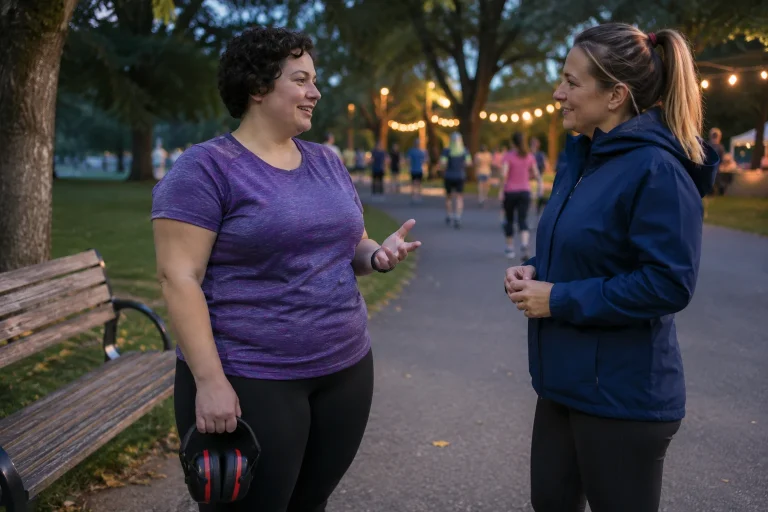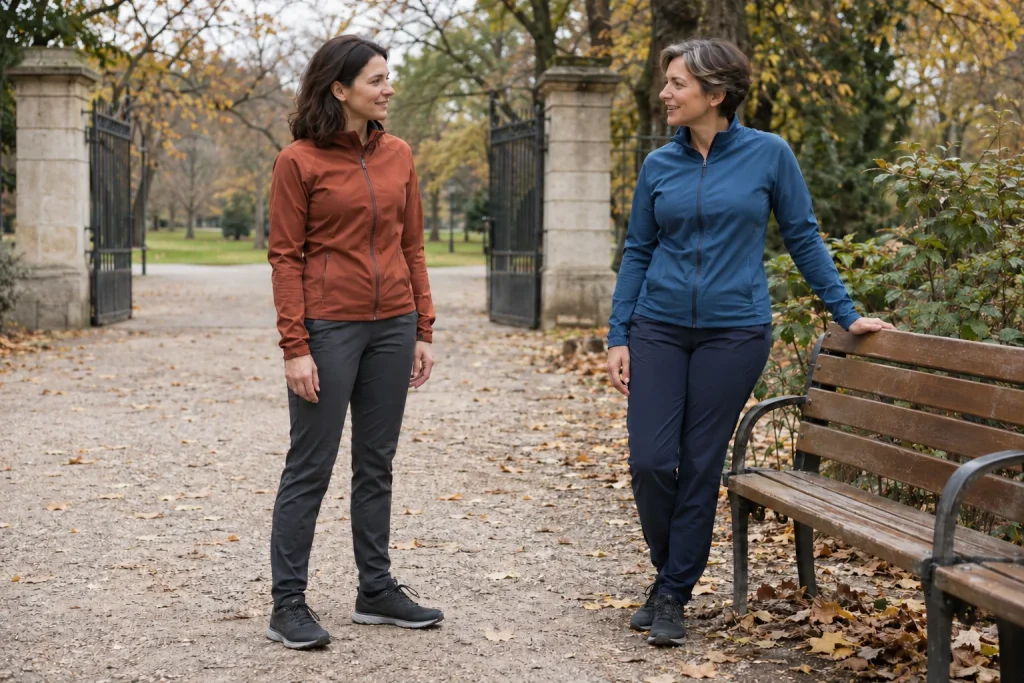
A park entrance, bend or sound at the start may be ordinary background to someone else, while recalling a difficult past event for you. Group running may matter, yet you do not want to justify requesting a clearer route or quieter meeting point. These needs can coexist: connection with the community and knowledge of the choices available.
Advance information and supportive agreements can make an outing more predictable. This does not turn group running into trauma treatment or guarantee how you will feel. Your individual care plan and current condition govern; the club’s role is clear organisation and respect for decisions rather than making you process difficult experiences on location.
A place can be a reminder
The VA National Center for PTSD says places, people, sounds or smells can recall a traumatic event. A reaction does not necessarily mean the same thing is happening now. A reminder’s meaning can be personal and not understandable from outside. Several source examples concern veterans; this does not make every runner’s experience or reaction identical. VA: trauma reminders.
A group companion need not see the same meaning in the place to take your request seriously. If you want another entrance, discussion can begin with feasibility. You do not need a shared account proving why the location means something else to you. Available logistical information and detailed disclosure of personal history are different things.
One recalled memory does not establish PTSD either. NIMH says post-trauma responses vary, while persistent symptoms disrupting life may need professional assessment. You can describe experience without a diagnostic label. If symptoms recur or daily life increasingly revolves around them, discuss this with an appropriate professional. NIMH: post-traumatic stress disorder and help.
Make the programme knowable beforehand
SAMHSA’s trauma-informed approach highlights safety, transparency, collaboration and the person’s voice and choice. These are healthcare and organisational principles rather than a certification system for running clubs. A useful organisational inference for a group outing is not leaving essential conditions undisclosed until arrival. SAMHSA: principles of a trauma-informed approach.
Ask about exact meeting point, intended route, expected group size and sequence. At an event, a loud start signal, stage programme, flashing lights or a section difficult to leave early may matter. An organiser cannot guarantee every detail, but knowing that helps too. “We will see” differs from identifying a genuinely variable circumstance in advance.
Ask separately how route or meeting-point changes are communicated. If the group regularly improvises, clarify what is definite in the original description. You decide whether uncertainty fits your plan. Advance detail does not aim to exclude every unexpected feeling, but lets you decide without missing important organisational facts.
 Enlarge image
The option to leave must actually work
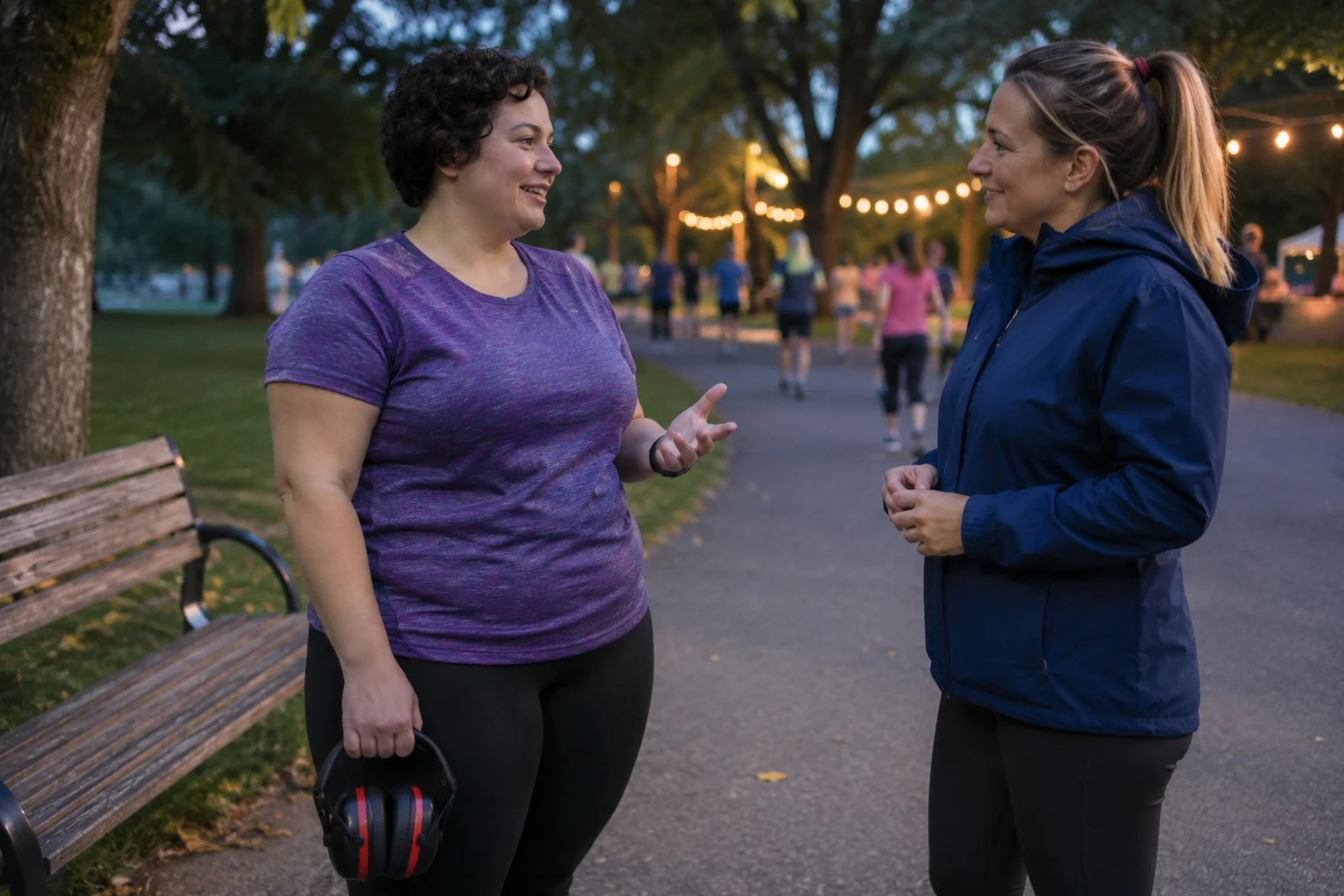
“You can drop out at any time” provides real choice only when practicable. Where can you stop participating, and how do you return to the meeting point or get home? Can you keep your phone, keys and necessary belongings? If everything is in a shared car accessible only when the whole group returns, leaving may be harder than the invitation suggested.
Choose a companion and agree beforehand what you need when changing plans. Perhaps ask them to help speak with the organiser or stay while arranging transport. This is not unlimited supervision: they must find the role manageable too. A clear agreement can relieve both by leaving fewer decisions for an uncertain moment.
If confused, disoriented or not feeling safe to set off alone, leaving should not mean wandering by yourself. Request help from the chosen person, use your care plan and professional assistance when needed. Immediate danger or serious deterioration need not be called a mere venue inconvenience. The group’s finishing plan must not override safety.
You also choose how much to disclose
WHO’s 2011 psychological-first-aid guide centres humane, supportive practical help respecting dignity, culture and abilities. It was developed for support after serious crises rather than trauma therapy during running. Respect matters in a group too: help should not depend on publicly recounting personal history. WHO: Psychological first aid.
A short sentence may suffice: “This place brings a difficult memory; I would like to know the route and leave with my agreed companion if needed.” You need not explain the whole event before everyone. Give the organiser only a practical request if preferred and discuss more with your chosen companion. This arranges personal boundaries rather than competing in secrecy.
Photographs and later accounts belong here too. Someone’s difficult moment should not automatically become a group post. If sharing something yourself, specify the intended audience and request it not be passed on. Other participants need not know every detail to avoid intrusive questioning or calling a personal decision weakness.
Choice and long-term avoidance
Freedom to decide about participation is not a therapeutic recommendation to avoid every reminder indefinitely. VA warns that avoiding trauma-related thoughts, feelings and situations as the main coping method can maintain or worsen PTSD symptoms. This relationship belongs in professional treatment rather than justifying an organiser keeping someone on a route against their wishes. VA: avoidance and PTSD.
Appropriate treatment may include targeted work with fears and memories. Designing it is not the club leader’s or companion’s task. NIMH describes psychotherapy, including exposure and cognitive elements, as treatment with a trained professional. Running through a reminder location does not become such a procedure because someone says it will help.
If in treatment, explain the particular outing you want to join and how its circumstances affect you. Clarify participation, support and next steps in your plan. Agreed choices need not mean abandoning long-term goals. The distinction is between a forced group attempt and an understood, professionally developed process.
A useful agreement beforehand
The following table organises logistics. It describes no trauma-treatment step and guarantees no symptom-free participation. It helps avoid discussing necessary practical conditions for the first time amid uncertainty at the location.
| Area | Detail to clarify beforehand |
|---|---|
| Meeting | Exact location and how changes are communicated. |
| Programme | Route, expected duration, noisy sections or places difficult to leave. |
| Your decision | What will you join, and which part would you prefer to decide later? |
| Chosen companion | What do they accept, which signal do they recognise and whom do they notify? |
| Getting home | Access to phone, keys, transport and actual help. |
| Privacy | What may be shared with whom, and are photographs or accounts acceptable? |
A fictional example: a group uses a different park entrance and plans a photograph afterwards. You request the detailed route in advance, arrive with a friend and say you do not want to appear in the photo. The organiser provides information and accepts the request. You need not prove your past, and the group need not infer a treatment result from participation.
Another occasion reveals several unpredictable essential conditions. Consider these under your plan, with the clinician if needed. Your decision at departure need not match others’ enthusiasm. An inclusive programme allows changed participation without a public explanation or loyalty test.
 Enlarge image
What can a companion do in a difficult moment?
First, avoid arguing about whether your reaction is justified. They can simply ask what you need under the earlier agreement and help with the concrete task. Support should be understandable and manageable. They should not begin their own trauma-processing method, question you for details or promise you will definitely feel better after another lap.
Discuss physical closeness and touch too. What reassures one person can distress another; good intentions do not replace choice. A companion might say: “I can stay if you would like; tell me how I can help.” This is community presence rather than clinical intervention. If the situation exceeds agreed help, involve appropriate professional support instead of trying ever more improvised ideas.
Event staff can benefit from an easily located named contact for on-site questions. Access to a quieter place, showing an exit or notifying a companion can be specific help without the organiser diagnosing symptoms. If someone is unresponsive, severely confused, injured or in immediate danger, immediate healthcare assistance is needed; in Hungary, call 112.
The place for later discussion and professional help
Afterwards, reviewing whether practical agreements worked may suffice. Did you receive the route promptly, was your chosen companion available and were photo preferences respected? You need not recount memories in detail to give this feedback. The club can improve organisation; recurring memories and symptoms belong in appropriate care.
NHS PTSD information recommends professional help for suspected symptoms or treatment not working adequately; options may include trauma-focused psychotherapy and other care. A group run can provide companionship without replacing individual assessment. A useful community framework accommodates connection, personal boundaries and recognition that professional treatment decisions are not made at the running venue. NHS: PTSD and treatment options.
Sources
- NHS – PTSD
- WHO, 2011 – Psychological first aid
- NIMH – Post-Traumatic Stress Disorder
- VA National Center for PTSD – Trauma Reminders
- VA National Center for PTSD – Avoidance
- SAMHSA – Trauma-Informed Approaches and Programs
How Futószív articles are prepared: our editorial guidelines.