Even while putting on running shoes, you watch for your heart to beat faster. Distance or pace may not seem frightening; instead, a sensation connects with an earlier unpleasant experience. A well-meaning acquaintance may say: run through it and you will learn nothing is wrong. Working with bodily sensations linked to fear is not the same as forcing an exercise test on yourself, however.
Do not automatically call new or unusual chest pain, fainting or severe breathlessness panic. Persistent chest pressure, radiating pain or chest symptoms accompanied by sweating, feeling unwell or breathlessness require immediate help on 112. An earlier panic diagnosis does not rule out another illness. The following provides a framework for professional discussion of fear and understanding an individual treatment plan. NHS: urgent signs with chest symptoms.
Bodily sensation, its meaning and fear
A panic attack can involve intense fear with physical symptoms such as rapid heartbeat, trembling, sweating or breathing difficulty. The NHS also stresses that several occur in other conditions, so not every frightening palpitation is a panic attack. Discuss a previously medically assessed pattern separately from a new symptom. Diagnosing this for you is not a running group’s or sports watch’s task. NHS: panic disorder and assessing symptoms.
In discussing fear, describe three separate things: what you felt, what you thought it meant and what you did next. For example: “I noticed a strong heartbeat”, “I feared becoming unwell”, “I immediately began checking the watch repeatedly”. This does not explain the medical cause of symptoms, but shows a process to assess together with a professional.
There is no need for shame when a bodily signal brings strong fear. Previous extensive running or detailed knowledge of watch features does not make it simple. Heart rate’s meaning and fear of the number are connected but different questions. Both may belong in individual care, while psychological explanation does not replace necessary physical investigation.
A panic attack is not the same as panic disorder
NIMH distinguishes an occasional panic attack from panic disorder. The latter may involve recurrent unexpected attacks, persistent fear of further attacks and resulting behavioural changes. Avoided situations may expand and life narrow. Diagnosis follows professional assessment of history and symptoms rather than a high value during running. NIMH: panic attacks, panic disorder and treatment options.
For running, this might begin with skipping one hill and later include anxiety at the thought of group training. Someone else may have similar fear outside movement situations. These illustrate what to report rather than signs for self-diagnosis. What matters is how everyday life changed and which situations you began avoiding.
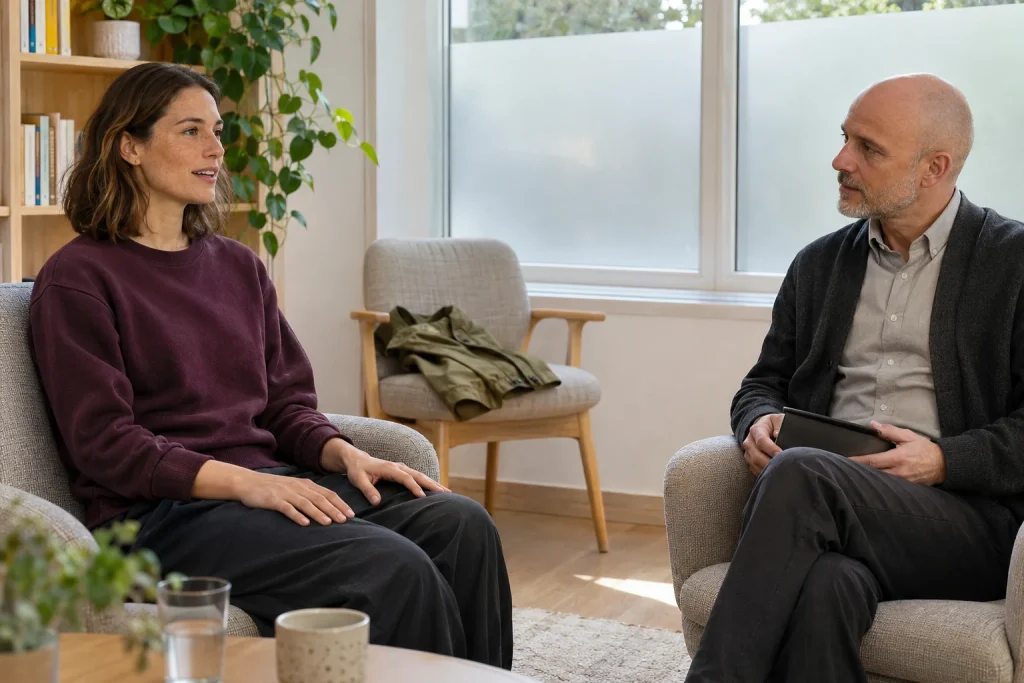
You need not wait until avoiding every activity or gathering another bad experience. Discuss physical symptoms and fear with a GP, and treatment options with an appropriate mental-health professional. If already receiving care, include changed fear around running. A changed relationship with a previously important activity is more than an incidental leisure detail.
 Enlarge image
What is interoceptive exposure for?
NIMH describes interoceptive exposure among cognitive behavioural methods for panic disorder: therapeutic work with bodily sensations that provoke fear. It aims to address fears and interpretations associated with the sensations. This can form part of a defined psychotherapy procedure rather than a general instruction deliberately to raise heart rate. The method is selected for individual condition and treatment plan.
One question shows the difference: what is this step’s therapeutic aim and who assessed its suitability? Intervals set by a coach may have a sporting aim without becoming individually planned panic treatment. A runner’s self-imposed “I will keep going until it stops” trial is not professional treatment either. Arbitrarily increasing exertion and frightening situations does not demonstrate understanding of the method.
This article therefore gives no home sensation-provoking exercise, breath-holding task or exertion ladder. These would lack individual assessment, precise purpose and follow-up. If your clinician considers movement relevant to therapy, ask its form, circumstances and feedback. You need not invent the answer before the next workout; clarifying a clinical plan is meaningful progress itself.
What does a therapy trial support?
Craske and colleagues’ 1997 randomised trial with thirty-eight participants compared two multicomponent cognitive behavioural treatments in people with panic disorder and agoraphobia. One included interoceptive exposure and the other breathing retraining, alongside other shared components. Several measures improved similarly; some outcomes favoured treatment containing interoceptive exposure. Attrition limited interpretation of follow-up. Craske and colleagues: comparison of therapeutic components.
This is older research in a small, defined clinical sample. It did not investigate whether running alone treats every fear of heart rate or assess a running workout’s risk. Studying treatment components shows the procedure has a developed professional background. It does not justify extracting one detail from the complete treatment setting and repeating it on yourself.
The NICE panic-disorder guideline links CBT to suitably trained practitioners working under professional supervision and evidence-based protocols. It also recommends discussing physical activity as part of general health. Both statements matter: activity may have a place in life, while designing the therapeutic procedure remains a separate professional task. NICE CG113: panic-disorder treatment recommendations.
Discuss the heart-rate watch’s role too
Repeated body checking and frequent reassurance seeking can form one pattern of health anxiety. The NHS also discusses reviewing behaviour and its impact on life in this situation. This does not mean every heart-rate measurement is problematic or every watch-using runner has health anxiety. Health anxiety and panic disorder are not the same diagnosis either. NHS: health anxiety and repeated checking.
A useful question about your experience is whether you view data for an agreed sports task or repeatedly try to prove there is certainly no danger. If checking fills much of your activity, tell the clinician. You need not prescribe complete cessation of measurement as your own therapeutic task, particularly if a professional requests data for a health reason.
A watch display is not the diagnostic arbiter of a new episode of feeling unwell. A reassuring-looking number does not exclude every cause, and a frightening number alone does not name a disease. Actual symptoms and the personal care plan govern. If agreeing data’s role with a professional, clarify what to record and what will be evaluated so the log does not become constant self-examination.
What should you bring to the first conversation?
You need not assemble a perfect life history. A short factual account can clarify several details: bodily symptoms, associated thoughts, changed behaviour afterwards and earlier medical assessment. Separating them helps the professional see more than sporting performance or one bodily number.
| Area | Question to clarify |
|---|---|
| Bodily sensation | What did you experience, in which circumstances, and was it new or previously assessed? |
| Fear | What did you fear at the time, and what remained afterwards? |
| Avoidance | Which running or everyday situations have changed since? |
| Checking | What role have the watch, watching your body or reassurance from others taken? |
| Health background | Which investigations, diagnoses, prescribed treatment and new changes are known? |
| Personal aim | Which activity do you want to reconnect with under suitable conditions? |
“I used to go to the park alone, but now I worry even on the morning before meeting” is more precise than “I run badly”. The goal need not be kilometres alone: meeting club members calmly again, understanding what to do about symptoms or organising movement less around the display. Naming the goal does not promise immediate achievement, but makes shared planning more useful.
NIMH’s psychotherapy information suggests asking about qualifications, experience, reasons for the method, treatment goals and assessment of progress. Report medication and physical history too. Collaboration includes understanding suggestions, reporting difficulties and knowing whom to contact after changes. NIMH: questions about psychotherapy.
 Enlarge image
A running companion can support you without staging surprise treatment
Share as much about the outing as you consider necessary and appropriate. For example: “I am working with a professional on fear around bodily sensations. Please do not make our agreed programme harder without discussing it first.” Support does not mean secretly taking someone uphill, starting surprise intervals or saying they may no longer stop.
Your companion need not insist every heartbeat is certainly harmless either. It helps more to know their practical role in the individual plan and which questions require professional help. Belonging should not depend on how much fear or how many symptoms you conceal. Clinical steps are not determined by others’ pace, route length or the inconvenience of losing a race entry.
If care clarifies movement’s personal role, coordinate necessary practical conditions with the coach. This does not make the coach a therapist or mean the therapist automatically prescribes sporting load. Naming roles avoids translating one professional’s advice into unlimited permission in another field. A running companion can remain a companion: present, listening and respectful of the agreed plan.
A safety plan also takes physical symptoms seriously
Recurrent or increasingly frequent palpitations may require medical discussion too. Palpitations that do not settle, or occur with chest pain, breathlessness, faintness or fainting, require urgent help. Even if such an episode has stopped, urgent medical advice remains warranted. Do not begin a self-directed exposure test to prove its origin. NHS: palpitations and associated urgent symptoms.
Treatment’s value is not shown by never noticing a bodily sensation again. More useful goals are understanding the individually assessed situation, knowing when and how to seek help and addressing fear within an appropriate professional framework. Enjoying movement then need not become a forced proof task. The first step may be a precisely framed conversation rather than another compelled run.
Sources
- NHS – Panic disorder
- NHS – Health anxiety
- NIMH – Panic Disorder: What You Need to Know
- NICE CG113 – Recommendations
- Craske and colleagues, 1997 – Interoceptive exposure versus breathing retraining
- NIMH – Psychotherapies
- NHS – Chest pain
- NHS – Heart palpitations
How Futószív articles are prepared: our editorial guidelines.