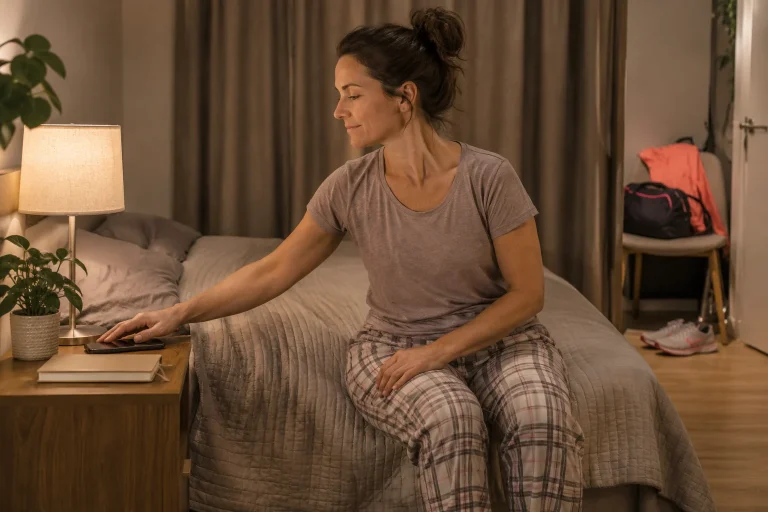
You plan to leave for a dawn run, but your partner’s snoring woke you several times again. Both of you are tired in the morning, and discussion easily turns to who prevented whom from sleeping. Two important stories coexist: your rest was interrupted, and your partner may have a night-time phenomenon they barely know about. A shared solution should take both seriously.
Not every snore means sleep apnoea, nor does snoring explain every bad night. Still, the difficulty need not become a joke or endurance contest. A calm daytime conversation, separate accounts of events actually observed and healthcare assessment where needed may help. Finding a quieter sleeping space and investigating a breathing problem can be parallel tasks.
Sound and breathing are different information
The NHS explains that snoring involves parts of the mouth, tongue, throat or nasal airways vibrating during breathing; these can relax and narrow during sleep. Snoring is common. Medical discussion may be appropriate if it greatly affects the person or partner, or simple changes do not help. Disruption to a partner’s rest is therefore a problem worth describing in itself. NHS: snoring and seeking help.
Alongside loudness, specifically note apparent breathing stops and restarts or gasping and choking sounds. The NHS recommends medical assessment for possible sleep apnoea with these and constant daytime sleepiness. Observations matter even if your partner says in the morning they remember nothing. You do not have to experience the same thing. NHS: signs of sleep apnoea.
Use separate sentences in everyday conversation: I heard loud snoring; I woke several times; once I thought your breathing paused. Do not let the last observation disappear within an argument about noise. Equally, do not present it as a diagnosis. Your task is accurate reporting, rather than classifying breathing pauses or calculating disease severity at home.
Take both people’s sleep seriously
Sharing a sleeping environment can produce two different accounts. One person makes a sound, the other wakes and stays awake; another time, both rise for unrelated reasons. Describe your rest without assigning every consequence to your partner. “I definitely woke three times to the sound” is more useful than the general accusation “I slept nothing because of you”.
Beninati and colleagues’ original 1999 study analysed simultaneous sleep investigations in ten couples. One partner was being assessed for suspected sleep apnoea; positive airway pressure treatment introduced during the second part of the night improved partners’ sleep continuity and efficiency. This was a small clinical sample and a single study night, not a guaranteed result for all couples or a home device trial. Beninati and colleagues: investigating a partner’s sleep.
An original 2008 Sleep Heart Health Study paper using a non-clinical population sample, however, found no general sleep-quality deterioration in partners without breathing disorder whose partner had one, compared with the appropriate comparison group. The studies examined different people and settings. Not every partner is affected alike; an average finding does not invalidate your own night-time difficulty. Partner sleep in the Sleep Heart Health Study sample.
 Enlarge image
Lead a daytime discussion with a problem you can address
Do not try to settle everything at the next snore. A simple communication example is: “I woke several times and struggled to concentrate in the morning. I would like us to find a way for me to rest and ask whether an assessment is needed.” This is not couples therapy, but a specific statement separating your consequences from the healthcare question.
The person snoring should also be able to respond without shame. They may not hear its loudness or know about an observed breathing event. “You deliberately stop me sleeping” does not help decide what care is needed. A shared aim can be rest and clarification, rather than proving who recalls the whole night more accurately.
Observation does not require secret long recordings or displaying your partner in a social group. If a provider specifically requests audio or video, agree beforehand what will be recorded, where it stays and who sees it. A brief spoken description can also begin assessment. Personal overnight information is generally unnecessary for arranging group running, and a running group is not a sleep-diagnostics panel.
Record your awakening separately from what you saw
| Observation strand | A short useful sentence | What should not be added as established fact |
|---|---|---|
| Your sleep | I woke to the noise and then struggled to return to sleep. | I certainly did not sleep a single minute all night. |
| The other person’s breathing | It seemed to pause sometimes, then restart with a gasping sound. | I established the severity of apnoea at home. |
| Daytime consequences | I struggled to stay awake during the morning journey. | The next run will definitely put everything right. |
| Shared arrangements | We agreed separate places to rest for now. | Changing rooms resolved the other person’s airway condition. |
The table is an editorial example, rather than a validated sleep questionnaire. Follow any diary or observation requested by the doctor. The aim is not to keep you awake all night counting every sound. A short summary of already noticed events and your own daytime difficulties can be enough for a meaningful discussion to begin.
The NHS says it may help to attend with someone able to describe the snoring. Agree this beforehand; a partner’s presence should support rather than speak instead of the patient. Both can offer observations, while the doctor clarifies what else is needed. NHS: what may help at the appointment?
A quieter sleeping place is a practical agreement
Arranging your own rest is a real task while the situation is clarified. Discuss a separate sleeping space, different evening preparation or noise reduction. Do not make these a test of relationship quality. They may settle who can rest more quietly tonight, but do not identify the cause of snoring or replace indicated investigation.
The NHS snoring page also mentions earplugs for a partner whose sleep is disturbed. Reducing noise does not treat the other person’s airway function, however. Consider safety and home responsibilities: if one of you needs to hear an important signal or a care call, adapt the arrangement accordingly. NHS: practical considerations for a partner’s rest.
Details independent of snoring can be addressed too. NHLBI lists a quiet, dark, cool bedroom and enough time for sleep among general habits. If searching for morning running kit also wakes your partner, prepare it elsewhere beforehand. That is not the cause of snoring but a separate, tangible disturbance. NHLBI: an environment supporting sleep.
Assessment examines breathing and the whole history
NHLBI says sleep-apnoea assessment asks about symptoms, risk factors and family history; a sleep study may clarify type and severity. A diary can add information on sleep quantity, quality and daytime sleepiness. A phone audio recording or sports-watch overnight display is not the same process. NHLBI: diagnosing sleep apnoea.
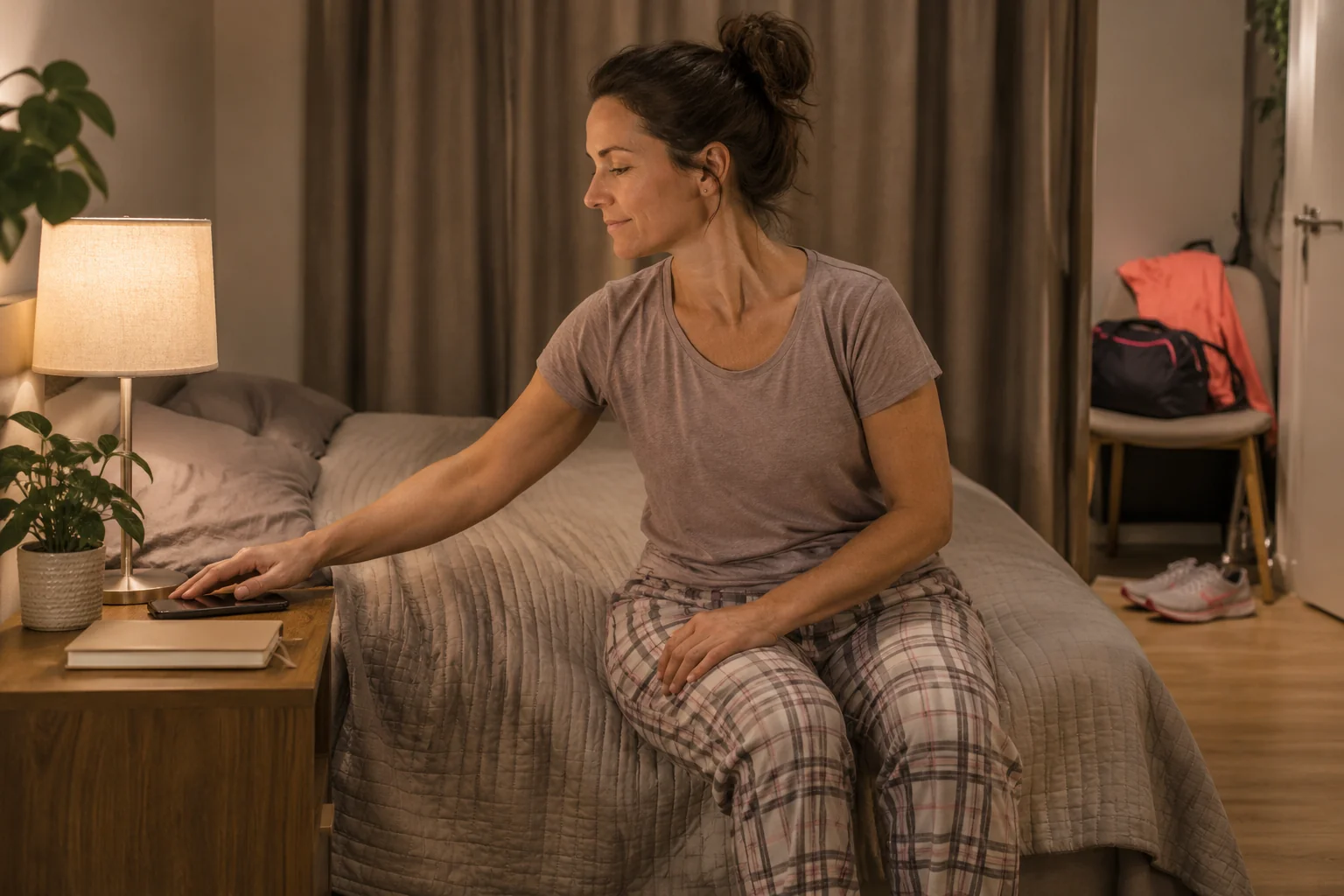
At the appointment, describe each person’s experience separately: the affected person’s daytime state, what the partner saw or heard and changes in the partner’s own sleep. If either person’s daytime difficulty continues, do not automatically attribute everything to the other’s snoring. Both may need individual assessment based on their circumstances.
Do not create a reassuring threshold from home observations, such as hearing no sound one night. You may have been asleep, elsewhere or simply not remember. Absence of observation differs from an investigation ruling something out. If more measurement is requested, clarify its purpose, procedure and how results will be discussed.
 Enlarge image
Do not infer the treatment goal from loudness
NHLBI describes several treatments for confirmed sleep apnoea: lifestyle changes, positive airway pressure devices, individually fitted oral appliances and other care. Selection depends on the condition and individual requirements. CPAP uses air pressure to help keep airways open; it is not merely a noise-reducing machine to adjust freely for someone else’s comfort. NHLBI: sleep-apnoea treatment options.
If a device or treatment plan is prescribed, discuss discomfort and usage difficulties with the provider. A partner can help collect questions or arrange travel but should not independently alter settings. One seemingly quieter night cannot decide whether to stop a device. Treatment follow-up remains an individual healthcare matter.
Regular activity can be valuable in a runner’s life, but a group workout or good race result cannot replace care for sleep-disordered breathing. Do not try to solve the situation through extra running prescribed to stop a partner snoring. Clarify programme suitability separately from treatment, especially with pronounced daytime symptoms.
Adapt the next running morning to both people too
After poor sleep, arrangements can change: a later meeting, an alert driver taking over or reconsidering departure. The NHS insomnia information emphasises not driving when sleepy. A group start that feels obligatory is no reason to ignore sleepiness, nor must a snoring partner prove their health through sport. NHS: sleep difficulties and daytime safety.
Make the next check-in concrete: was an appointment requested, what observations will you bring, and which practical agreement supports rest meanwhile? You need not renegotiate the entire relationship every morning. If an interim solution works for only one person, say so and seek another option. Taking the other’s symptoms seriously can coexist with expressing your own need for rest.
A good shared response is not necessarily one device or a perfectly silent night. It is a clearer understanding of disturbing sound, possible breathing events and both people’s daytime consequences separately. Decide together about rest arrangements and take healthcare questions to appropriate care. Running remains one morning activity rather than a way to prove or conceal overnight difficulties.
Sources
- NHS: snoring
- NHS: sleep apnoea
- Beninati and colleagues: effects of snoring on a partner’s sleep, 1999
- Sleep Heart Health Study: partner sleep in a population sample, 2008
- NHLBI: diagnosing sleep apnoea
- NHLBI: treating sleep apnoea
- NHS: insomnia
- NHLBI: healthy sleep habits
How Futószív articles are prepared: our editorial guidelines.