Lists for starting exercise soon fill up with specialist shoes, several kinds of clothing, a watch, a membership and various accessories. On a tight budget, that can make sport seem out of reach before you have even begun. It helps to approach things in a different order: first understand an activity that suits you and what using it actually involves, then decide what is missing. A “beginner in a larger body” is not a shopping category in itself.
Saving money is no reason to accept restrictive clothing, poorly fitting shoes or equipment whose safe use is uncertain. If there is no safe, affordable solution for something, you can look for a different venue, format or time. This article does not recommend running to every reader, set an individual exercise load or replace necessary healthcare. Its purpose is a realistic decision about getting started, with financial constraints considered as a practical fact.
Do not choose your activity in the shop first
A short recreational activity suited to your circumstances, a group gym class and a home equipment programme have different requirements. There is little point equipping yourself for all of them before you even know which will be feasible. The NIDDK information on starting physical activity recommends considering activities you enjoy, specific barriers and options that take cost into account. Money is therefore part of planning, rather than an awkward afterthought.
First identify where you would go and what would happen there. What is the setting like, how will you get there, will you need to change, and in what weather would you use it? For an organised session, ask about the actual equipment requirements. A sport’s general fashions are not the same as a particular class’s needs. A clear answer explains why each item is needed and what options exist if you do not currently have it.
A good price cannot replace an assessment of whether your chosen starting activity suits you. If symptoms, a known condition or uncertainty about your capacity require professional discussion, discounted equipment will not resolve that. A cheaper activity is not automatically suitable, and an expensive package is not necessarily more personalised. Consider the exercise situation and the purchasing decision as related but separate questions.
Review what you already have by how it will be used
A label is not the first thing to judge existing clothing by. Does it fit properly, allow the planned movement comfortably, stay in place without distraction, and have a fastening you can manage? Trying it out does not mean a full workout or a test taken to the point of pain. It is an everyday check that can reveal whether an item is usable or already presents an obvious obstacle before you start.
What matters is fitting the body you have today. You do not need to make a tight old item, kept as a future weight-loss goal, a condition for exercising. Pressure, rubbing or restriction is a practical problem, not a character flaw. A different cut or size may help, but you do not need to replace your entire wardrobe at random. Name the specific difficulty first; otherwise it is easy to buy a new product that repeats the same problem.
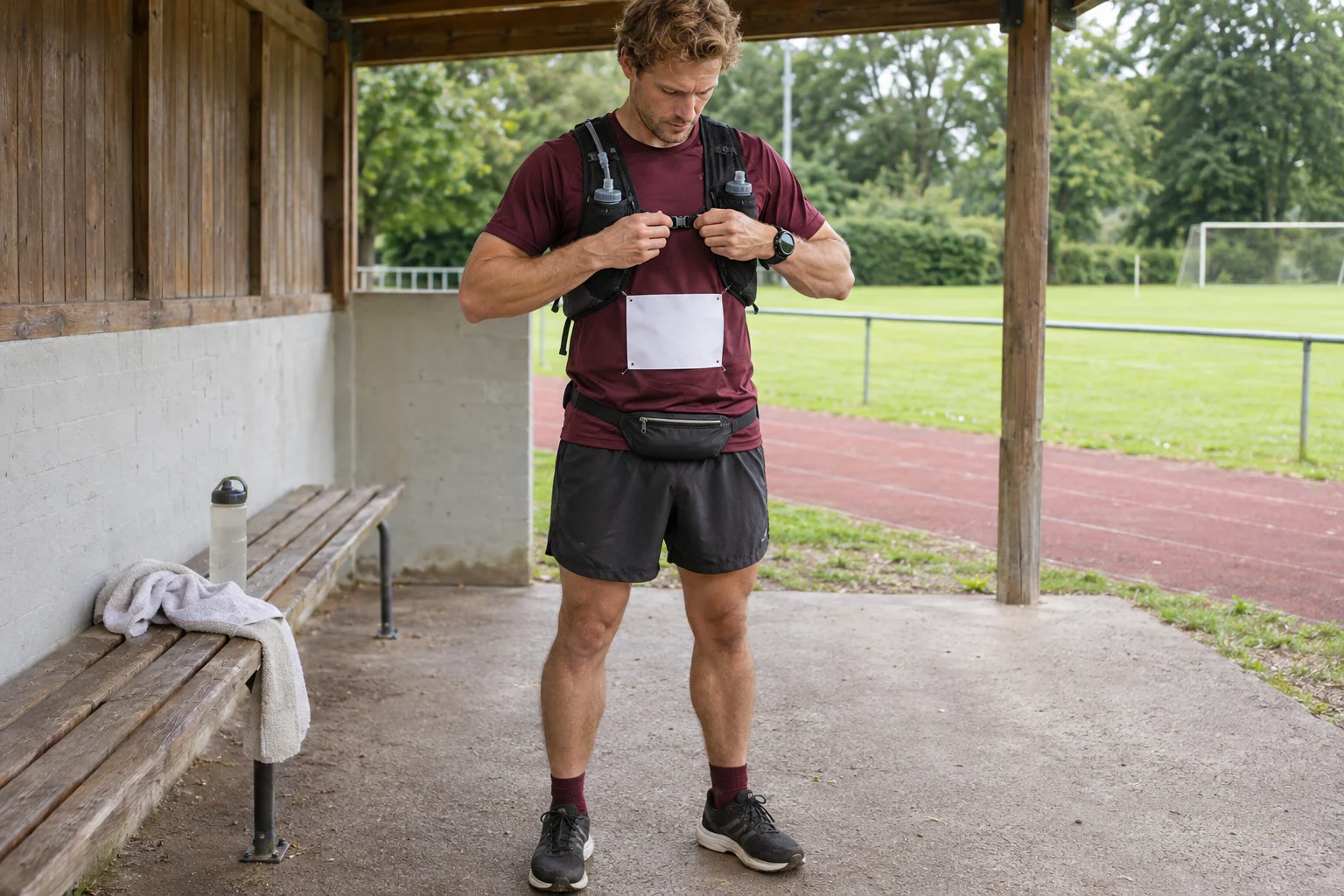
Layers and the things you carry also matter together. A top that is comfortable on its own may behave differently with a bag or jacket, and a pocket’s position may get in the way. If your phone or keys already fit somewhere workable, a separate carrying system may be unnecessary. If items obstruct you or cannot be carried safely, address that need rather than simply searching for the name of a cheaper product.
 Enlarge image
Shoe fit is not a luxury
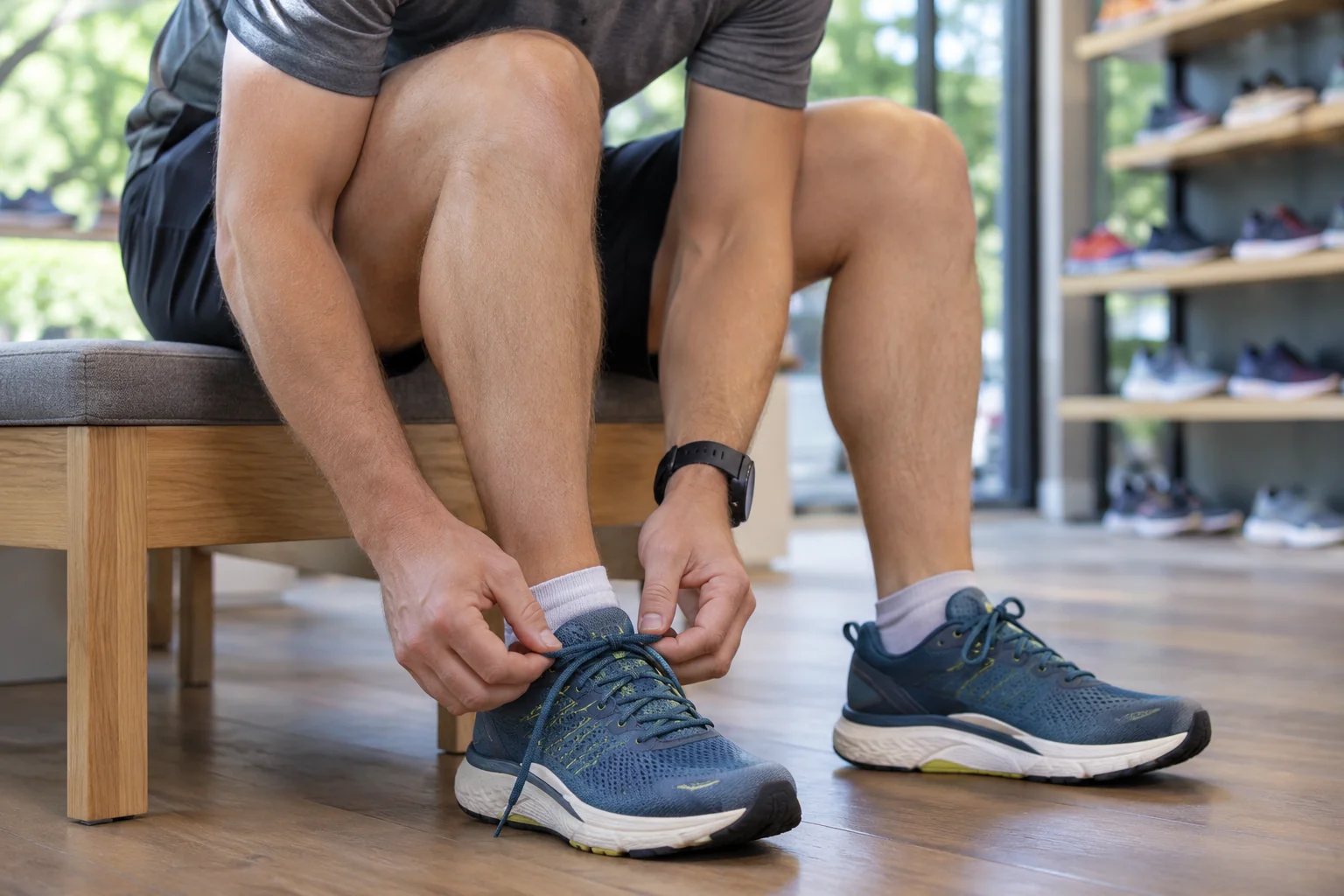
The AAOS information on shoe fitting explains that buying by size number alone is insufficient: models can differ, and shoes should be tried for their fit to your foot shape and intended use. The thickness of the socks you plan to wear matters too. A longer shoe will not necessarily solve a width problem, since it may leave too much room from front to back. Price alone cannot tell you whether the fit is right.
If you already have shoes, do not assume that exercise necessarily requires a new pair, but do not consider them suitable simply because you can still put them on. Examine their current condition and actual use: are they damaged, can they be fastened properly, and what has wearing them been like? This article cannot assess shoes remotely or prescribe a universal replacement mileage. For symptoms, foot problems or specific needs, appropriate professional help matters more than a general price list.
Even with a sale item, try it on and understand the purchase conditions. If only the smaller or narrower version remains, a discount does not remove the fit problem. You need not seek the most expensive model, but a usable size is not an extra you should automatically compromise on because of your budget. You can choose another product, another available way of obtaining it, or a later decision if no suitable option is available now.
Equipment condition and limits of use matter too
When using a chair, step, bench or home machine, stability, intended use and the manufacturer’s requirements matter. An object does not become sports equipment because someone uses it that way in a video. Avoid using damaged or unstable furniture, or furniture with an unknown load capacity, merely because it is nearby. Calling an exercise “bodyweight” does not mean that every part of the surroundings is automatically suitable.
With borrowed or second-hand equipment, understand what it was designed for, whether the necessary instructions are available, and who can help check or adjust it. This article provides no DIY repair or load-testing procedure. Do not jump on an uncertain object or apply increasing force to prove it will hold. If its use is unclear, finding another way to do the activity or seeking professional help is more sensible than assuming.
If a class uses equipment, you can ask in advance about the available versions and adjustments. You do not need to explain your body size publicly to have suitable conditions of use clarified. Borrowing can be a good option if the equipment and circumstances are appropriate, but price alone does not decide that. Good intentions within a group do not replace actual usability.
Identify the real gap before buying technical extras
A watch, premium app or detailed log may help some people, but they do not have the same role in every start. What question would the item answer? If you only need to know where the group meets, an expensive sports device does not solve the main problem. If a professional requests data or equipment for a particular reason, understand its purpose and whether another suitable way of meeting that need exists.
Advertising often links equipment with how seriously you take sport. In your own planning, function is more useful. An existing solution that works properly may be enough, while a new product may be necessary if it removes a real barrier. The number of items does not determine the quality of your start. Allocate money to a gap whose significance you already understand.
Do not confuse medical equipment with general comfort accessories either. If a healthcare professional recommended something for an individual reason, discuss leaving it out or replacing it with them. An online claim that something “does the same for less” does not establish equivalence. Equally, a medical-sounding explanation in a shop or advertisement does not automatically mean you need that product.
Include getting there and ongoing upkeep
The session fee may be only part of the total cost. Travel, changing facilities, laundry, equipment storage and arranging your schedule can matter too. A cheaper session farther away may be harder to manage overall than a nearby option. You need not calculate every item perfectly in advance, but identify recurring costs so that the plan does not become unexpectedly burdensome after the first week.
A free venue is not necessarily cost-free or suitable in all weather. It may take a long time to reach, lack a necessary service, or require different arrangements because of the weather. When choosing somewhere, consider the whole experience of taking part, rather than just the entry fee. A closer, more straightforward setting may remove several organisational barriers without any new sports equipment.
Equipment upkeep should be realistic too. Where will clothes dry, is there time to clean them, and how will they get to the next session? An item requiring complicated care or a machine that is difficult to store can add work. This is not an argument against all technical products. It is a reminder that use begins after the first purchase, and longer-term feasibility belongs in your budget.
 Enlarge image
How can you discuss a financial limit?
You can tell a coach or organiser: “This is my budget, and I would like to know which equipment requirements are actually necessary for this session.” Ask about a trial session, available equipment or another way to participate. Not every programme will have a solution, but a clear answer helps you decide. You do not need to publicly present a detailed account of your financial circumstances.
The NIDDK guide to activity at a larger body size describes movement in different settings and considering personal barriers. That does not mean every home activity or piece of public equipment is suitable for you. Look for an option that fits your circumstances. A lack of money does not make a dangerous substitute necessary, nor does it make your interest in movement less valuable.
If symptoms require healthcare, do not delay it simply because you feel you should first obtain “proper equipment”. Assessing symptoms and shopping are different matters. Likewise, a free online training plan cannot necessarily meet an individual need for professional input. Sometimes a realistic plan starts by addressing necessary support and the options for an exercise programme separately.
A straightforward starting decision in practice
Imagine a fictional situation: an adult wants to join group activity, but the full advertised equipment package is beyond their budget. They first learn how the session works, what questions affect individual suitability and which items are actually needed. They keep existing items that fit well, seek a solution for the specific gap, and leave comfort extras for later. If no suitable solution exists for something, they discuss another option rather than making a risky substitute.
Success in this example is not owning the fewest items or saving the most money. What matters is that the chosen activity, usable equipment and full demands of participation are manageable. Your own list can have three short lines: what already works, what needs addressing for a specific reason, and what is currently just a comfort idea. This is an organisational aid, not a compulsory equipment standard.
You do not need to buy the outward accessories of an expensive new persona to begin exercising. You are looking for a solution that fits your current body and circumstances. Safe use and a clear activity matter more than a specialist label, and a low price is an advantage only if the item really suits its intended use. Your budget can then remain a real condition of the plan, rather than a source of shame or a reason to take risks.
Sources and purchasing context
NIDDK: Staying Active at Any Size; NIDDK: Tips for Starting Physical Activity; AAOS OrthoInfo: Shoes – Finding the Right Fit. The practical suggestions for organising costs and equipment are original editorial guidance. They are not brand recommendations, equipment certification or an individual health-related exercise plan.
How Futószív articles are prepared: our editorial guidelines.