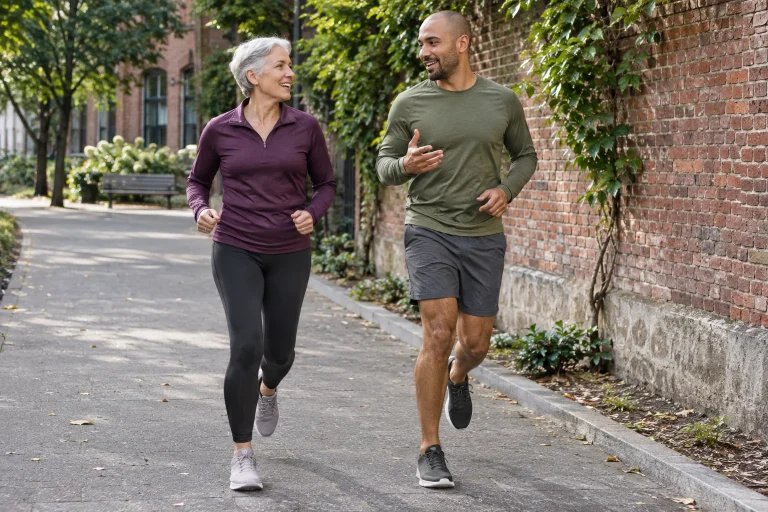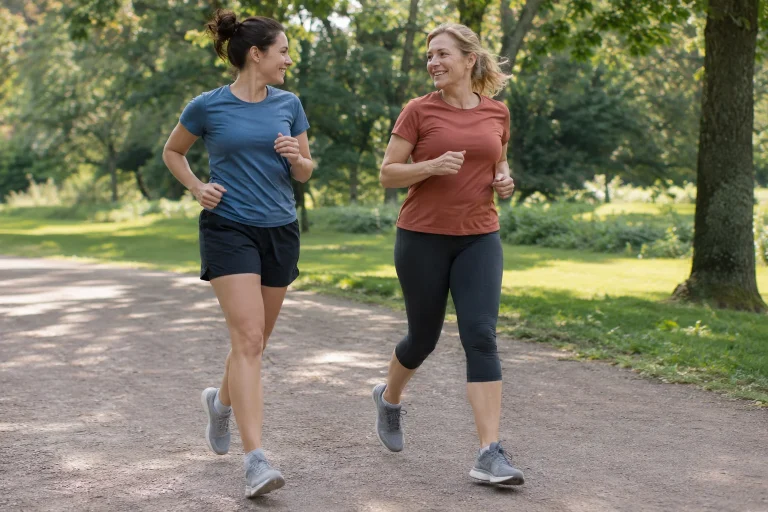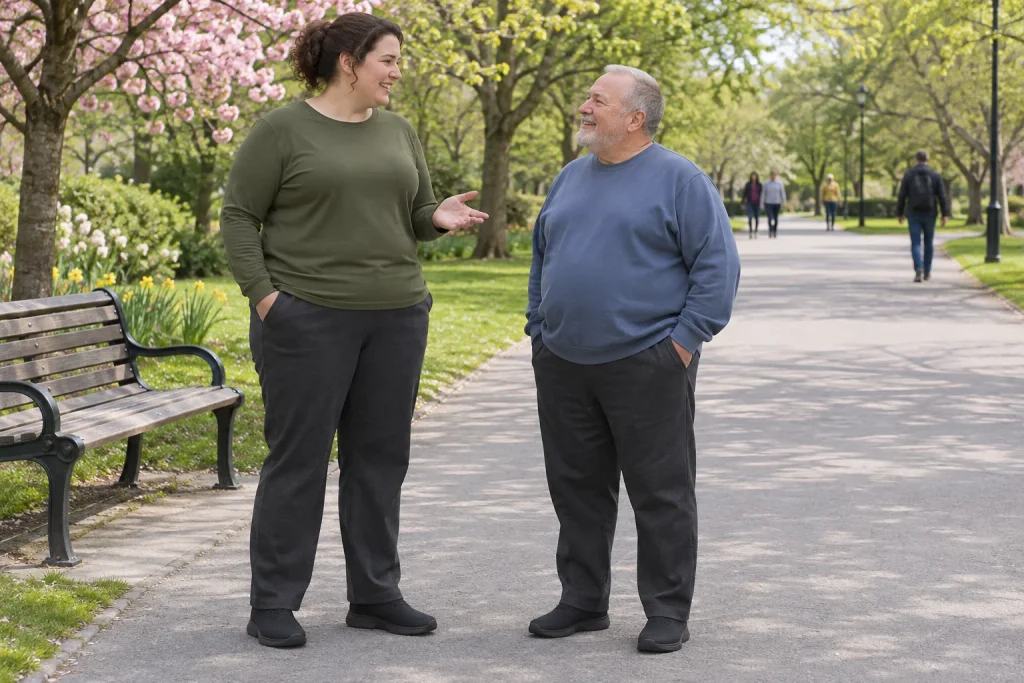
“We weigh the same, yet they find it easy.” In a beginner group, that sentence can quickly turn into self-blame. You can see the other person’s pace, but usually not their complete activity history, health circumstances or experience that day. The same kilograms do not make two starting points identical or establish the appropriate task for both of you. Treating a scale reading as a certificate of running tolerance draws too many conclusions from one value.
Exercise tolerance is not a single property valid in every situation either. Effort experienced through breathing, symptoms during activity, understanding the task and fitting participation into everyday life are different questions. This article does not create a home suitability test. It explains which differences group comparison can conceal and which information is useful when discussing your own activity.
Equal body mass does not mean identical body size or health
Two people of equal body mass can differ in height and build. Body mass index, or BMI, relates weight to height, so even the same kilograms need not give the same value. BMI still does not become a running test, however. The NICE assessment chapter describes it as a practical body-size measure requiring careful interpretation; it is not a direct measurement of central fat distribution or a test of movement performance.
Health cannot be read from external body size either. You cannot know a fellow runner’s history, medicines, previous symptoms or what they agreed with their care provider. Equally, you do not need to justify your own body against a condition you attribute to someone else. If you have a symptom or health question to clarify, someone of similar size already taking part does not replace its assessment.
This does not mean body mass can have no role in professional assessment. It means it is insufficient on its own to assign an individual running task. Keep boundaries between data designed for different purposes: a body-size measure, a risk assessment and experience in an activity situation answer different questions. One shared number does not automatically connect them.
“Beginner” covers several histories
Someone can be new to running while active in another sport for a long time. For another person, regular recreational activity itself is new, or they are looking for an appropriate return after illness. A third ran previously but now lives in different circumstances. A registration form can place them in the same beginner group while they bring very different questions. The group’s name does not prove everyone will experience every element of its first session identically.
Previous sport does not automatically prepare you for every task either. Familiar cycling, occasional walking and new running movement are different situations. The practical question is what you have experience with, what is new and what change you plan now. Tell the instructor rather than trying to infer your task from another participant’s impressive performance. “I haven’t done this before” is information, not an excuse.
Specify the timeframe too. “I exercise” can mean current regular activity or a habit from years earlier. Old experience may matter, but do not confuse it with today’s starting point. You do not need to present your entire life story to the group. A brief private discussion can convey relevant current history, based on appropriate healthcare advice if needed.
 Enlarge image
The same pace can mean different relative intensity
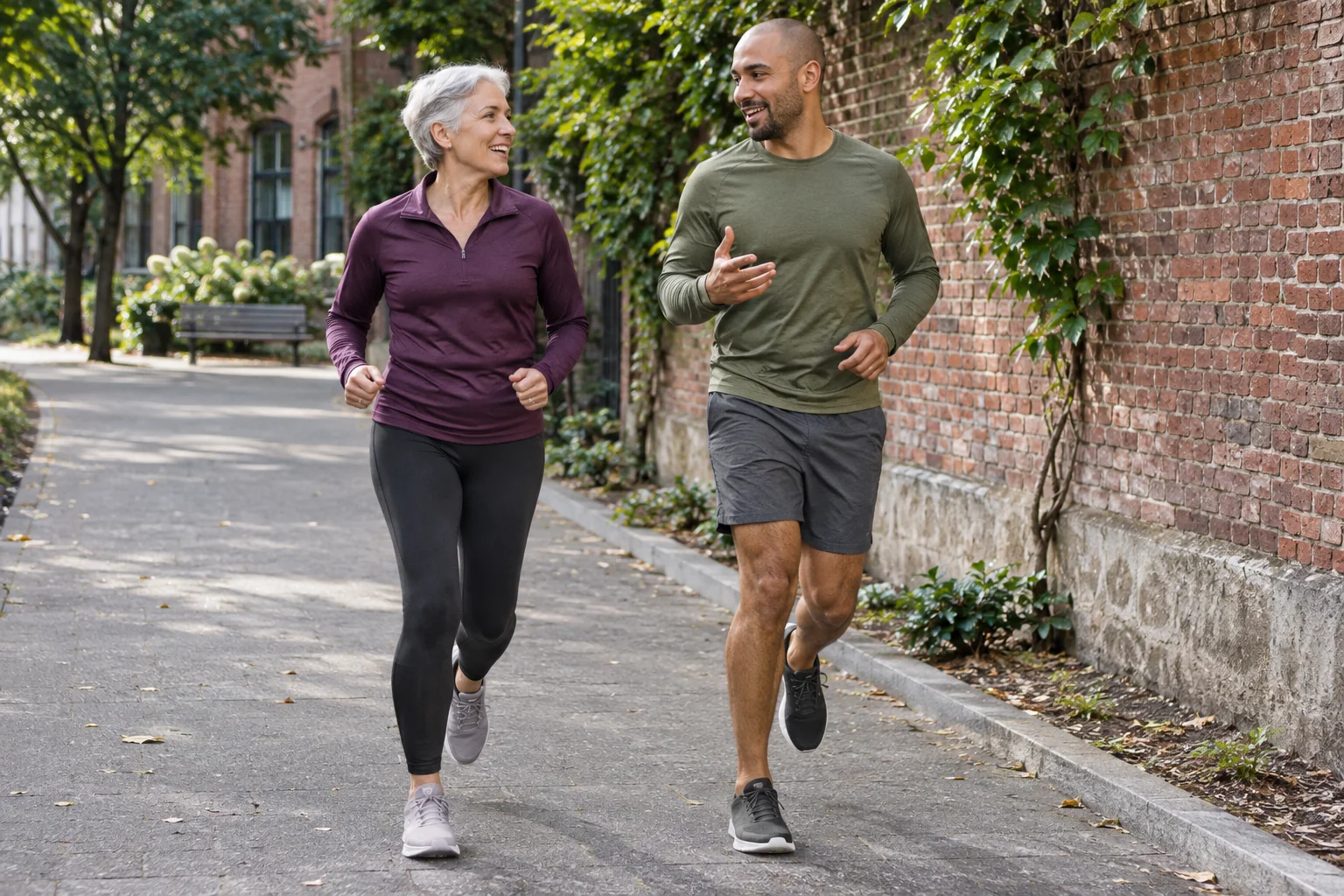
The CDC information on activity intensity distinguishes absolute and relative intensity. The first describes an activity’s energy demand without considering individual fitness; the second describes how demanding it is for that person. A shared activity can therefore require different effort from participants. The group’s uniform speed does not establish identical individual load.
In practice, the easy conversation of someone beside you is not an instruction that you should feel the same. Communicate your own experience: “This section feels harder for me now; I’d like to discuss another version.” You do not need to question their effort or minimise your own. Moving together is a social situation, while selecting an appropriate task also requires individual considerations.
The CDC also describes the talk test as a rough way to judge intensity, but it is not medical clearance and does not rule out other movement problems. Being able to speak does not make a painful or uncertain task suitable for you. This article therefore does not assign mileage, heart-rate targets or suitability thresholds from a spoken sentence. Breathing experience is one piece of information among others, not an answer to every question.
The route and circumstances also shape the task
Two people can complete the same distance while one lives near the meeting point and the other has already walked a long way beforehand. The log shows the same group section, but the whole occasion differs. Getting home, waiting, carrying a bag and time to change can also affect participation. Group comparison often leaves out these invisible parts.
Location matters too: a wide flat surface, a city route with many stops or an uneven trail can pose different tasks. Someone else’s familiarity with terrain does not mean moving there is equally straightforward for you. Say if you need more time to know the route or a more manageable location. You need not explain the difference through body mass; name the specific circumstance.
Nor does every day repeat the same situation. Work, travel, rest opportunities and health changes can make your experience differ from your own earlier one. Another person’s progress that day is even less suited to judging these factors. Discussing your circumstances is more useful than turning one session into a general label about who is a good or determined beginner.
What makes participation individual within the same group?
The NICE recommendations on physical activity emphasise current fitness and ability. This is not a rule for grouping people by body mass. In how a session works, the question is whether you can discuss beforehand, request a different task and report something unsuitable. “Everyone at their own pace” also requires actual organisation behind it.
Ask where you can shorten the route, how the group reunites and whom to approach if you need to stop. If an alternative means being left alone on an unfamiliar route, that may be an important condition for you. With several instructors or helpers, make their roles clear. These questions help participants of every body size; you do not need to experience them as asking a favour for special treatment.
A specific sentence can help your groupmate too: “I’d like to meet you, but not take on the same task.” You might share arrival, an agreed part of warming up or conversation afterwards while doing some of the activity differently. A social goal and identical performance do not necessarily go together. A friendship or community’s value is not shown by everyone completing the same row in an app.
Which feedback helps you understand your own situation?
Instead of “They handled it better”, name what happened to you. Which task was new, where did you need to stop, were there symptoms and how did the whole occasion go from leaving to arriving home? These do not need numerical grades. A few short factual sentences often tell an instructor more than your place in a community ranking.
Later experience can be part of feedback too. If everyday tasks became unusually harder after the session or a symptom persisted, do not let the joy of a shared finish photograph conceal it. An article cannot establish the cause, but this information may matter in professional discussion. Understanding your situation is not an admission of inferior performance compared with someone else.
The NIDDK activity information recommends healthcare discussion for joint, foot, ankle or leg pain and lists warning signs of illness too. Another participant having no symptoms does not assess yours. Severe chest pain, severe breathlessness or fainting may require urgent help rather than activity. Comparison about equal weight is completely irrelevant then.
 Enlarge image
Two fictional beginners: what does the group see, and what does it not?
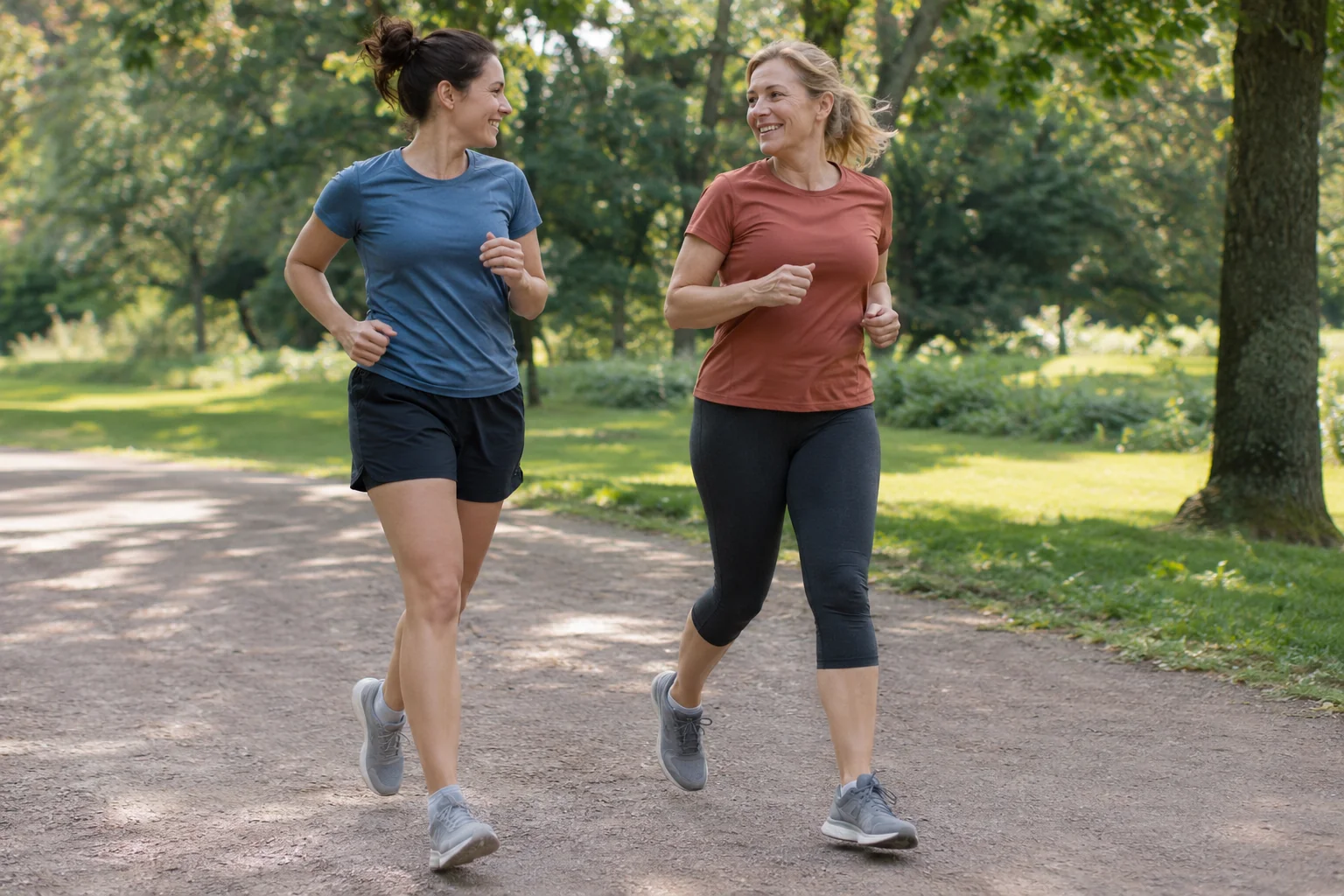
The following is an editorial example, not a study of real athletes. Two adults of the same body mass arrive for their first running session. One regularly cycles for transport; the other is seeking activity after a long break. They differ in height, daily routine and their journey to the meeting point. The group sees only one moving faster along a section.
This cannot be used to calculate how much either should run next time. Cycling history does not grant unlimited running suitability, and a break does not mean permanent unsuitability. Both need their current situation understood. If an instructor expects identical tasks solely from shared kilograms, they overlook differences the scale provides no information about.
The useful continuation in this example is a clarifying discussion: their goals, what is new, how they experienced the task and whether there is a healthcare question. No winner or loser is needed. Different feedback does not mean the group failed; it is natural information from different participants. Organisation helps when it can handle this, not when it hides everyone behind an identical number.
A more precise conversation instead of comparison
When you next feel you should match a similarly sized participant, pause before reaching that conclusion. What do you actually know about them, and what do you assume? What do you know about your own situation today? You may have more useful information for the latter question. Start there when discussing tasks, respecting individual health limits and necessary care.
Body weight remains one piece of information among many. A community can be a place where everyone need not prove the same thing, but can clearly communicate their needs. More precise feedback, understanding task conditions and appropriate assessment of symptoms bring you closer to a workable sporting situation than asking how two different people could receive identical loads from one shared number.
Sources and interpretation
NICE NG246: body measurements and health assessment; CDC: How to Measure Physical Activity Intensity; NICE NG246: Physical activity and diet; NIDDK: Staying Active at Any Size. The two participants’ story is fictional; it does not support an individual load or suitability decision.
How Futószív articles are prepared: our editorial guidelines.