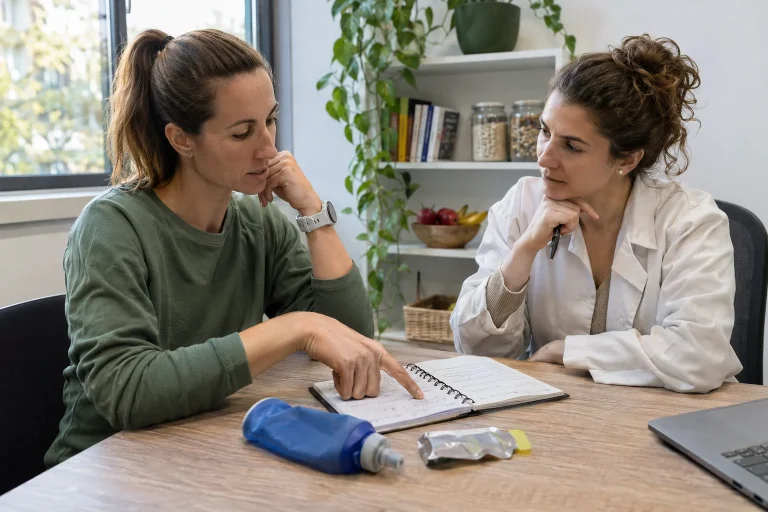
After exertion, muscle pain far greater than expected, unusual weakness or tea- or cola-coloured urine may require immediate medical assessment. Do not try another recovery workout to decide whether this is ordinary muscle soreness. The CDC/NIOSH recommends prompt care for these symptoms because rhabdomyolysis may be involved. In a serious emergency in Hungary, you can call 112. CDC/NIOSH: warning symptoms.
Suspected rhabdomyolysis is not a diagnosis to confirm at home. This article explains why timely help matters, which history to describe and what assessment terms mean. It gives no self-test from laboratory values, fluid dose or return schedule.
What happens in rhabdomyolysis?
The CDC explains that damaged muscle releases proteins and electrolytes into the blood. This can affect other parts of the body, including kidney function and heart rhythm. That is why suspicion must not remain merely a post-workout recovery question. Healthcare professionals need to assess severity. CDC/NIOSH: rhabdomyolysis basics.
The word sometimes appears in sporting communities as a description of a particularly hard workout. That is misleading: it is neither an achievement badge nor evidence of taking training seriously. With unusual symptoms, focus on your present condition rather than judging the work completed. You do not need to know severity before seeking help.
Understanding the mechanism briefly helps explain assessment’s importance. It does not let you infer from muscle tenderness what entered the blood or how your kidneys work. External appearance and workout data cannot replace healthcare assessment. Your role is reporting symptoms and history precisely.
Describe disproportionate symptoms relative to your own normal too
The CDC describes pain greater than expected from exertion and weakness making previously manageable tasks difficult. One or several symptoms may occur. Every recognised sign need not appear together before you seek care for a new change.
Use an everyday task in your description: ‘Compared with my usual movement, I feel unusually weak and cannot manage this task as before.’ This is not a diagnosis, but communicates change more precisely than ‘severe soreness’. You do not need to compress the unusual difference into a pain score or race result.
Workout duration and difficulty are important history, but must not explain away everything. ‘It was hard, so this must be normal’ can close a question needing clarification. Tell the professional about exertion and symptoms together rather than deciding the cause at home.
Symptoms do not always begin at the end of exercise
According to the CDC, symptoms may start hours or days after muscle injury. Earlier activity therefore matters, not only the last few minutes. Later onset does not automatically exclude earlier exertion’s relevance, and you need not wait for another session before reporting it.
Arrange events briefly in sequence: which programme preceded the change, when you first noticed it and how it developed. Name multiple physical tasks if relevant. Work or another sport may have accompanied running. The whole account matters more than which activity an app saved.
Do not invent missing details. If all you know is that weakness stood out the next day, say so. Do not delay help while finding exact minutes or every training file. First make current symptoms clear; history can be refined in conversation.
 Enlarge image
Dark urine can be important, but is not a home test
The CDC lists tea- or cola-coloured urine among rhabdomyolysis symptoms, while making clear that symptoms alone cannot establish a certain diagnosis. Colour observation alone does not reveal what substance is in urine. You need not decide its origin using lighting or a home colour chart.
Suspected blood also needs prompt checking. The NHS blood-in-urine page emphasises reporting small amounts and uncertain observations. Blood in urine and abnormalities discussed in relation to muscle damage are not identical concepts; distinguishing them is healthcare’s task. Keep your report simple: it became unusually dark, and these are your other symptoms. NHS: blood or suspected blood in urine.
Do not drink an unprescribed large amount to make a later sample’s colour more reassuring or use any change as proof. This article prescribes no home fluid treatment. Appropriate care for the suspicion matters more than whether one visible sign matches an online picture.
What does a CK test measure?
Creatine kinase, abbreviated CK or CPK, is an enzyme. MedlinePlus explains that its blood level can help assess and monitor muscle damage. One result alone does not locate the damage or establish its cause; professionals interpret it alongside symptoms, history and other tests. MedlinePlus: creatine kinase test.
Blood-test timing and following changes can also be part of assessment. MedlinePlus explains that a rise after injury is not necessarily immediate, so repeat tests may be requested. Ask their purpose, but do not decide one earlier result explains every later symptom.
If you already have results, bring the original document. Test name, units, timing and the professional interpretation matter together. This article gives no number below which you can reassure yourself or above which you should start treatment alone. Individual actions following laboratory results belong within healthcare.
CK and creatinine sound similar but are different tests
Creatinine is not creatine kinase. MedlinePlus describes creatinine as a waste product produced in the body; blood and urine tests can inform kidney assessment. The names relate to different questions, and neither result automatically replaces the other. MedlinePlus: creatinine test.
This distinction helps practically when reading results. If told a laboratory value differed, ask exactly which test was meant. Do not search for the first similar name online and transfer its general explanation to your situation. Precise naming can prevent misunderstanding at the next consultation.
Know what each test follows too. Is it assessing muscle damage, kidney function or another part of the overall condition? The answer is not necessarily one number. Ask about relationships to understand personal actions, and identify any term that remains unclear.
Give the complete risk history without blame
The CDC/NIOSH discusses heat exposure, major physical exertion and muscle injury among possible risk circumstances. Certain health conditions and products may also enter assessment. This is not a personal scoring test; it explains why complete history matters. CDC/NIOSH: risk circumstances.
Describe the exercise environment, other physical work, injury or unusual conditions. Name medicines and supplements used too. No circumstance needs to be declared guilty beforehand. Care professionals need actual events rather than only what feels less uncomfortable to disclose.
Previous fitness does not exclude the condition. The CDC also gives examples of trained people who can develop rhabdomyolysis. Do not judge today’s symptom from last week’s successful workout. Report current symptoms and earlier experience as separate information.
Professionals determine treatment according to severity
The CDC treatment information describes care depending on severity. Blood tests and other assessment may be needed; more severe conditions may require hospital treatment and intravenous fluids. Monitoring complications is not a home recovery task. CDC/NIOSH: rhabdomyolysis care.
A list of treatment possibilities is not a menu to choose at home. How you feel cannot determine your own severity category. This portal recommends no saline, fluid dose, medicine or post-infusion sporting step. Seek help accessing appropriate care; the professional determines treatment.
A companion can support your account and help-seeking. They can describe changes noticed, but need not test muscle strength or ask you to try movements. Their role is not deciding whether the situation is severe enough. Arranging care for new symptoms matters more than settling an argument about continuing training.
 Enlarge image
What information can help the healthcare discussion?
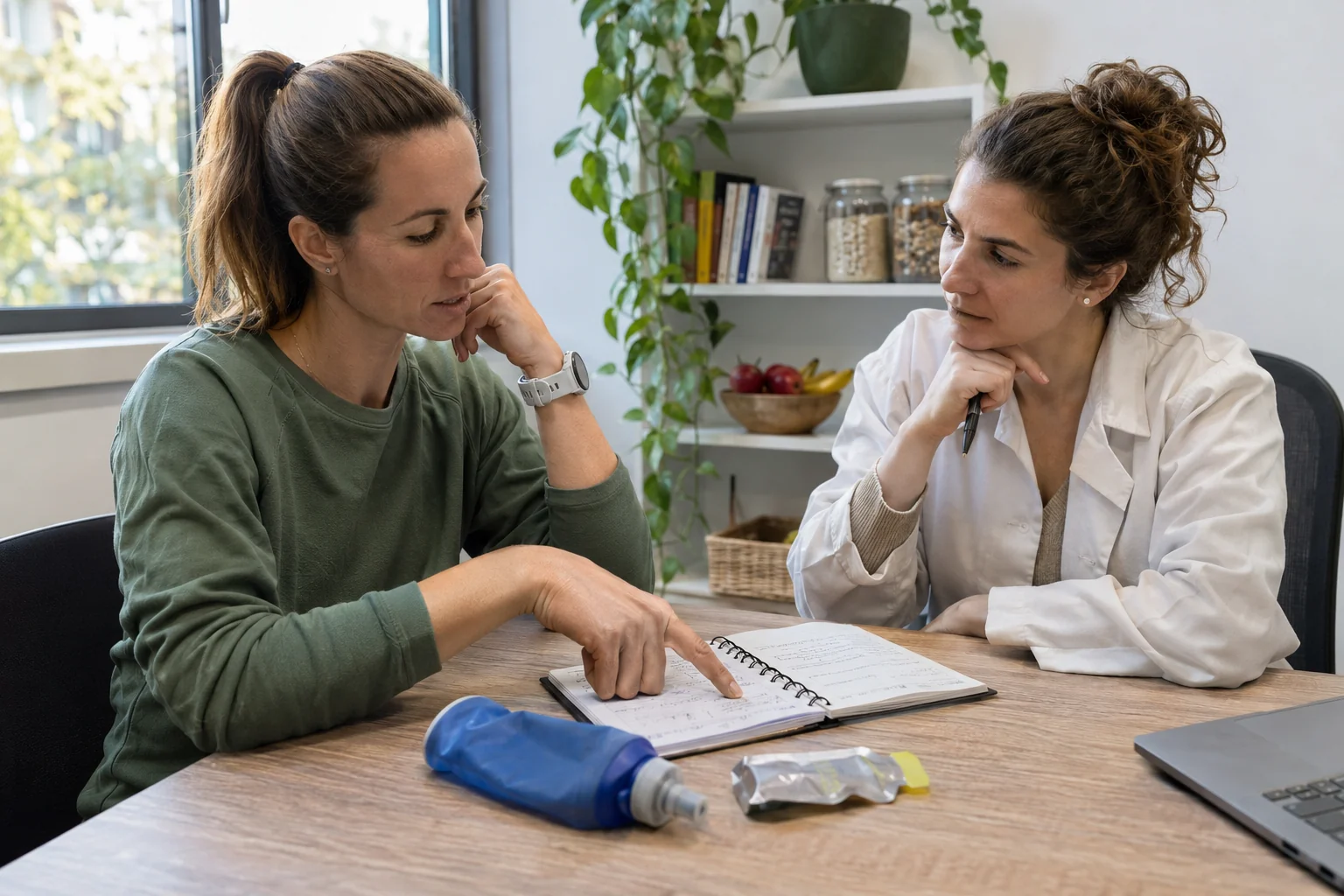
The table organises history; it is not a diagnostic list. With serious symptoms, do not complete every row first. Describe the current condition first and add history already known.
| Topic | Useful information |
|---|---|
| Current change | What muscle symptoms, weakness, colour change or illness developed? |
| Timeline | When did you notice it, and how has it developed? |
| Exertion and environment | Known running, other sport, physical work, heat exposure or injury. |
| Treatment and products | Medicines and supplements used, without independent changes. |
| Earlier assessment | What tests have happened, and what is new or different now? |
Separate fact from inference. ‘The usual task became harder the next day’ is observation; ‘it must just be training’ is an assumption. Professionals need the former. Name several possible circumstances without selecting one explanation.
After assessment, ask what is already known and what will be followed. If repeat tests, review or further care are needed, understand purpose and route. A clear answer also shows your role: which guidance to follow and which changes require earlier help.
Make the next-run question part of care
Easing symptoms or a better-looking value do not independently provide return clearance. Discuss movement from the assessed condition and personal guidance. This article provides no shared day, kilometres or trial workout. If sport matters to you, tell your care professional and request a specific answer about the next step.
Do not treat missed calendar entries as debts needing immediate repayment. Meaningful planning follows clarification of the current health question. A community can help organise follow-up, but another athlete’s recovery time does not describe your situation.
Suspected rhabdomyolysis is therefore primarily an urgent assessment question, not a need for stronger recovery measures. Take unusual symptoms seriously, describe history accurately and clarify test meanings with your care professional. The goal is timely appropriate help and understandable individual follow-up.
Sources
- CDC/NIOSH: Rhabdomyolysis and Work
- CDC/NIOSH: Signs and Symptoms of Rhabdomyolysis
- CDC/NIOSH: Risk Factors for Rhabdomyolysis
- CDC/NIOSH: Treatment of Rhabdomyolysis
- MedlinePlus: Creatine Kinase Test
- MedlinePlus: Creatinine Test
- NHS: Blood in urine
How Futószív articles are prepared: our editorial guidelines.