Park cinders feel yielding, a synthetic track springy, waterlogged earth soft, while a sprung structure beneath a track moves almost invisibly. It is easy to call all of them gentle ground. Yet several distinct properties can change underfoot: how far the surface deforms, how much energy it returns, how predictable its shape is and how much grip it provides.
Together, these shape the runner’s task. Easily compressed material is not necessarily a good spring; an almost rigid route can be smooth or uneven. Comfort, metabolic running cost and local mechanical loading are also different outcomes. Understanding a surface therefore means separating indentation, rebound and control of foot contact. This gives more precise route descriptions than the all-purpose soft–hard pair.
Four properties your feet sense together
Stiffness describes how much displacement accompanies a force change in a given measurement situation. In a simple spring model, stiffness is force divided by compression. A low-stiffness surface moves farther under a given force. A real track, however, is not one piece of material: its top layer, base and underlying structure together determine its response to foot contact.
Energy return is another characteristic. Some mechanical work during compression may return to movement; some may become heat or lasting deformation. Their proportions can differ despite identical indentation. A soft but highly dissipative layer and a structure with good rebound can therefore create very different running experiences. ‘Soft’ alone does not tell you what return path follows loading.
The third property is evenness of surface shape: do you find a predictable plane or support at a different height and direction each step? The fourth is grip and surface-layer shear behaviour. A stable rubber track may behave differently wet than dry, while gravel can shift beneath the shoe. These are not new names for vertical spring stiffness. Each deserves separate observation in a route description.
What did the sprung running-surface experiment show?
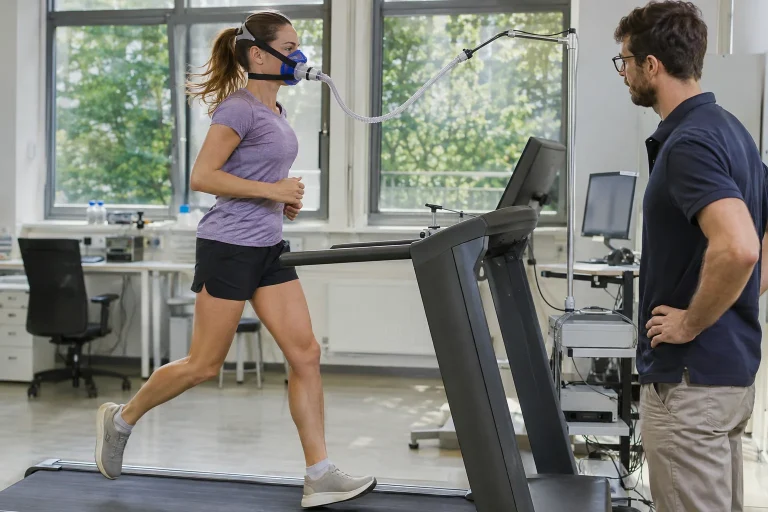
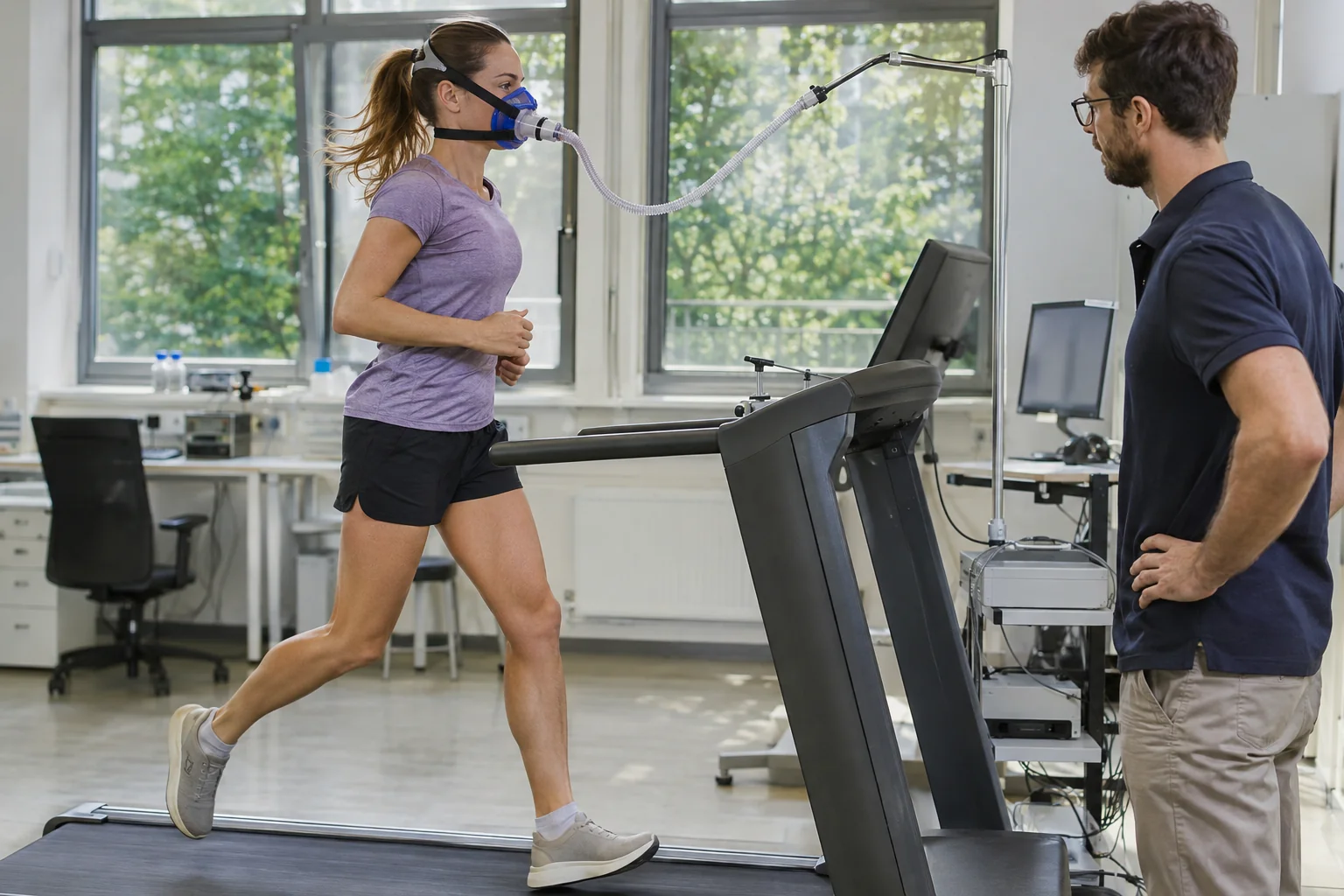
In Kerdok and colleagues’ classic experiment, eight men ran at 3.7 metres per second on five platforms with adjustable stiffness. Reducing surface stiffness by a factor of 12.5 reduced measured metabolic rate by twelve per cent, while model leg stiffness increased. The authors highlighted platform rebound as a possible explanation. This was a controlled elastic structure’s result, rather than a property of every natural soft surface.
The experimental platform specifically allowed control of an important physical characteristic. A woodland dirt route, by contrast, may be wet, torn up, cross-sloped and full of roots. Sand grains can shift relative to one another; mud may yield more deeply in places. An adjustable spring constant does not fully describe these situations. The platform result therefore cannot mean you will certainly use less energy on the route that indents most readily.
Timing matters too. Useful mechanical return requires energy to re-enter the runner–surface system in the appropriate direction and movement phase. A surface regaining its original shape only after your foot leaves differs from rebound during push-off. Simply observing that ‘the ground eventually flattened again’ does not measure energy actually returned to running.
 Enlarge image
Leg and track form a system together
In running’s simple spring–mass model, the leg is not a rigid column: a compressing and extending model describes the relationship between whole body and ground contact. This is not measurement of one tendon’s material stiffness. Knee, ankle, hip and body position together shape resulting function. Changing surface may also change the runner’s movement, so overall support reflects more than ground properties alone.
A highly simplified calculation illustrates this. Two ideal springs in series obey 1/k_total = 1/k_leg + 1/k_surface. If the model leg is 40 kilonewtons per metre and surface stiffness 200, total stiffness is approximately 33.3 kilonewtons per metre. The surface is not perfectly rigid, yet leg compliance determines more of the compression.
If surface stiffness falls to 50 in this thought experiment with the model leg unchanged at 40, total stiffness becomes 22.2. If the model leg instead increases to 100, the total returns to 33.3. These are not human targets or technique instructions; two ideal springs illustrate how overall system behaviour can stay similar while components change separately. Several internal solutions can underlie the same external result.
The equation does not handle muscle activity, time dependence, losses, sole rolling or lateral forces. Its numbers cannot therefore be filled from a sports watch to create a personal surface-selection calculator. The simple model’s strength is understanding the relationship: body and environment respond together. Increased model leg stiffness consequently differs from muscles feeling stiffer to touch or during stretching.
Uneven surfaces add a separate step task
The distinction between a smooth, compliant track and an uneven hard surface matters because the latter changes where foot contact is chosen. Each step involves shoe placement, surface direction and balance corrections. This task may exist even with little vertical ground deformation. ‘Hard therefore fast’ likewise rests on insufficient information.
In Bettega and colleagues’ 2025 study, ten adults used a controlled route comparing even surfaces with surfaces made uneven by hemispheres. Researchers sought to align running rhythm and foot-placement patterns. The uneven condition showed higher oxygen and energy costs and greater activity in some ankle-area muscles. The constructed laboratory obstacles were not a copy of a particular woodland trail, but clearly separate unevenness from elasticity.
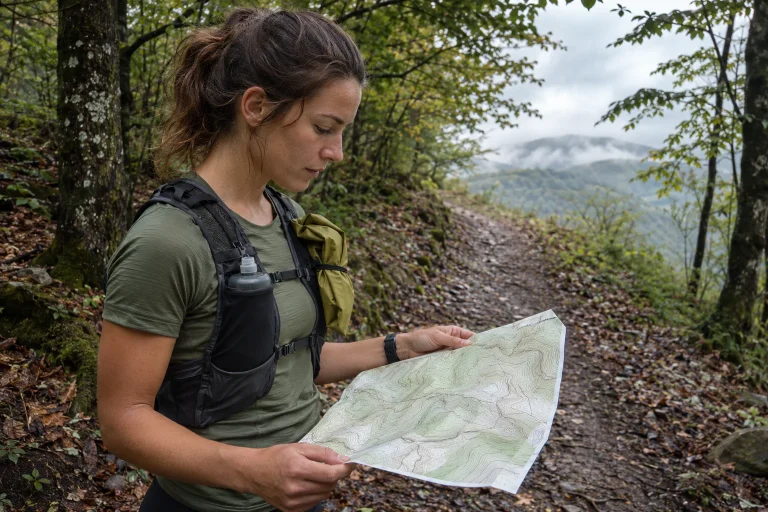
In nature, unevenness is not constant either. A smooth dirt route may lead to a gravel bend and then hardened wheel ruts. Mean kilometre pace merges these tasks. For comparison with asphalt training, think in sections: where were steps uninterrupted, where did placement need choosing and where did visibility require slowing? These differences describe actual route usability.
Short contact time does not automatically mean economical running
On a new surface, displayed ground-contact time can easily become a target. Shorter means ‘springier’ and therefore better; longer must mean lost energy. Yet contact time only describes the duration of a defined contact phase. Alone, it reveals neither force’s time profile, ground-energy losses nor muscle energy use.
In a treadmill experiment modifying contact time in ten trained runners, the shortest contact was not simply the lowest-metabolic-cost solution. The authors found an individual curved relationship between contact time and energy demand, while perceived effort poorly replaced instrument-measured cost during altered running. This was a movement-modification study, rather than a ranking of surfaces.
The practical lesson is not another number to achieve on every route. Read contact time as part of speed, surface and the whole movement. Longer or more cautious contact on gravel may respond to the task. Arbitrarily shortening it could lose secure support. Optimising one displayed value is not the same as solving the running task well.
Comfortable, economical, safe: three separate questions
Comfort is personal experience: is the step pleasant, is vibration disturbing and support predictable? Running economy measures energy demand at a specified speed. Safe use also includes traffic, light, weather and the ability to stop the route. A pleasant forest trail is less visible in darkness, while a fast rubber track may be unavailable at daily training time.
‘Where would I like an easy run today?’ therefore differs from ‘which track gives the best measured economy at a given speed?’ An even surface and comparable sections may matter for pace training; shade or enjoyable surroundings may matter more for a calm run. Choose the goal before ranking tracks. Not every run must centre on the smallest possible energy demand.
Short biomechanical or metabolic experiments should not become injury rankings either. Those would need another study type with adequate follow-up, accounting for volume, history, shoes and many other factors. Personal surface experiences still matter. If a route repeatedly prevents comfortable movement, choose another without accepting ‘soft protects everyone’ or ‘hard harms everyone’.
 Enlarge image
Describe the next surface usefully
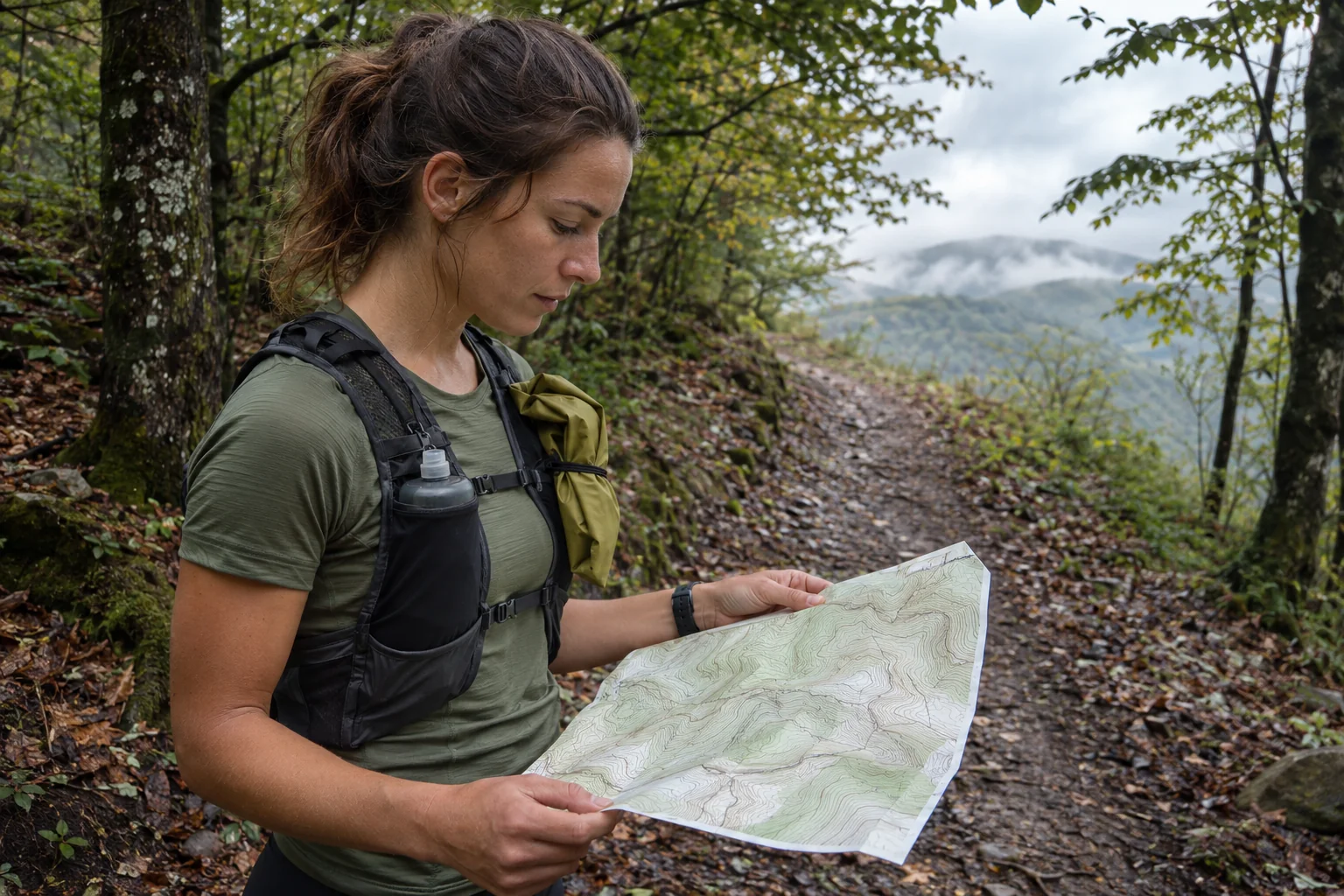
A useful route note may contain four short observations. How much did surface shape change underfoot? Was rebound predictably felt? How much did foot placement need searching? Did the top layer shift or slip? These are observations, rather than laboratory material constants. ‘Wet earth yielding in places, with many detours’ is more informative than ‘soft’.
| Situation | What should you notice? | What remains a separate question? |
|---|---|---|
| Smooth, elastic track | Rhythm, predictable support and consistent sections. | Personal energy benefit is not measured from feeling. |
| Loose, yielding surface | Shifting, indentation and the option to return. | Softness does not establish high energy return. |
| Hard, uneven route | Foot placement, local obstacles and visibility. | High stiffness does not mean a simple running task. |
| Wet, smooth paving | Grip and usability of bends. | Vertical elasticity does not measure slipping. |
If adding training data, include section pace, length and stops together. Do not only compare the whole loop’s mean heart rate with another day when temperature, wind and fatigue may differ. Repeated experience of a shorter, well-described section may help more than a long route’s average mixing every surface. This matters especially when one loop contains asphalt, earth and rubber track.
Choose a surface for the task
In a concrete example, you plan an easy run with two options. The park dirt route is pleasant but yields variably after overnight rain; a nearby smooth promenade is dry and separated from traffic. You need not establish which spring constant is lower. For today’s aim, what matters is calm, predictable movement. On another day with a different surface condition, the same park may be better.
When trying a new route type, allow shortening or returning to an easier section. Do not simultaneously seek a speed record, test new shoes and change technique while changing surface, since the experience’s causes become hard to distinguish. Meaningful comparison is not a complicated measurement obligation, but a clear question: how usable was this route for this task?
A good running surface is therefore not the winner of a single-material-property contest. Deformation, energy loss, rebound timing, evenness and grip together provide the environment for movement. The body responds, rather than crossing it as an unchanging spring. Seeing this system behind ‘soft ground’ supports more precise research understanding and freer choice of a track suited to your training.
Sources
- Kerdok and colleagues: a sprung surface with adjustable stiffness, mechanics and metabolism.
- Bettega and colleagues: energetic and EMG comparison of even and uneven laboratory routes.
- Moore and colleagues: contact time, model leg stiffness and metabolic cost.
How Futószív articles are prepared: our editorial guidelines.