Jogging may feel manageable for breathing while every landing feels uncomfortable for your legs. At other times, only the next day reveals that knees or ankles tolerated the session less well than hoped. The task is not to continue unchanged through greater willpower. First clarify sensations, circumstances and the goal you want to reach another way.
“Impact” is an everyday description rather than a diagnosis. It may describe uncomfortable ground contact without naming a tissue or process. At a larger body size, it is particularly important not to dismiss symptoms through weight alone. Running is no compulsory weight-loss task, and another activity need not feel like surrender.
Severe pain, major swelling, deformity after injury or inability to bear weight need urgent assessment. A hot red joint with fever or poor general condition is not a situation for seeking another workout. The NHS information on knee pain and the NIAMS page on sports injuries indicate that these signs should not be bypassed by trying new shoes or another machine.
Describe the sensation without naming a disease
Say where symptoms occur: front or outside of the knee, around the ankle, underfoot or a less clearly defined area. Then describe when: first jogging steps, after longer activity, downhill or after stopping. Do not locate it through firm pressure, jumping or repeatedly provoking pain at home. A history described from memory is valuable too.
Say separately whether it happens in everyday walking or only a sporting situation. Changed movement matters too: limping, uncertain stepping or difficulty rising? Completing app-recorded distance does not override these changes. Consequences are often better described through a daily task than average pace.
NIAMS describes history, previous and changed activity, and physical examination as parts of assessing sports injuries. Your observations help communicate history rather than replace examination. You need not decide whether cartilage, tendon or muscle is involved before requesting help. An online symptom label can narrow conversation before the situation is clear.
What changed outside running?
Training may not be the only change before symptoms. More walking, standing work, moving house, stairs or a new daily route may have shaped the week. You need not convert daily activity into running kilometres, but mention unusual total load. “I jogged the same amount but spent long hours on my feet at work that day” differs from a short walk after a restful day.
Within sport, consider duration, session frequency, pace and route separately. If all changed together, symptoms cannot confidently be assigned to one factor. You need not investigate through a series of home experiments. Listing changes helps the professional assess load beyond one isolated run.
Equipment and ground can be useful details without becoming automatic explanations. Softer-feeling surfaces or new shoes do not guarantee symptom resolution, and discomfort alone does not prove a shoe defect. If symptoms return despite several changes, assessment may take priority over another purchase.
 Enlarge image
Separate the activity aim from running’s form
A next session can aim to retain company, provide endurance activity or complete a prescribed injury-related task. These can overlap but differ. Walking with a friend can serve a social aim without necessarily replacing an individual rehabilitation exercise.
The American College of Rheumatology patient information distinguishes therapeutic and recreational exercise in joint conditions. Therapeutic tasks relate to a particular condition and aim; recreational walking or swimming does not automatically replace them. Ask: “Am I replacing running, or do I also have a separate task that must remain?”
The NICE activity recommendation emphasises present capabilities and agreed aims. Health-related activity benefits extend beyond weight loss. You need not retain painful running for a larger calorie estimate. Finding usable activity suited to the aim is a task in its own right.
How can options be compared meaningfully?
Walking, cycling and aquatic activity often arise, but none guarantees suitability by name. Walking involves route and stopping options; cycling involves adjustment and getting on and off; pools involve water safety and access. Review the actual usage situation alongside your symptoms and aim rather than only the sport’s name.
| Possible form | What should be clarified? | What does it not establish alone? |
|---|---|---|
| Short, level walk | Walking symptoms, a shortened route, seating and return home. | That every walking duration is suitable. |
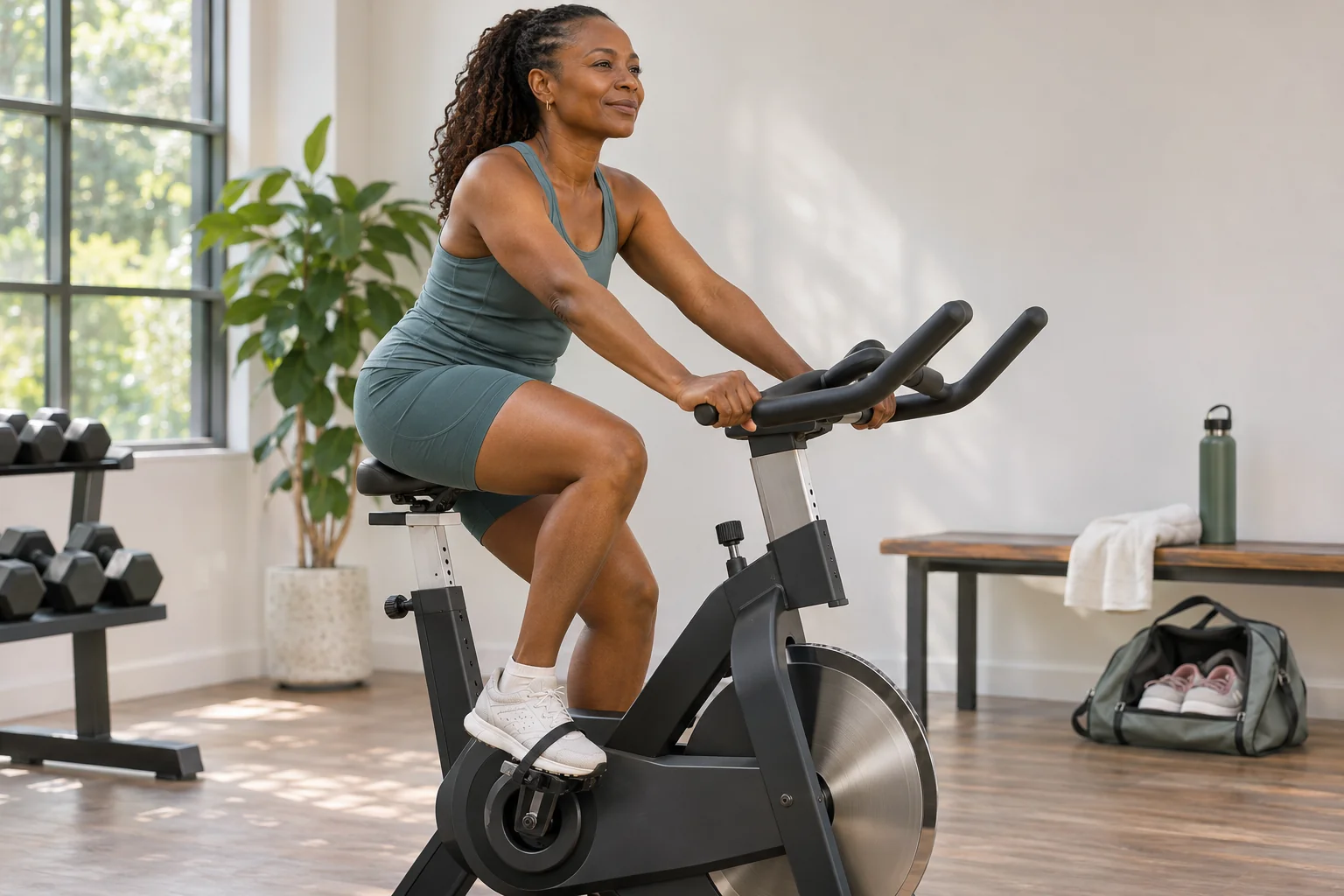
| Exercise bike | Seat, pedal distance, access, resistance and personal symptoms. | That sitting always means easy effort. |
| Aquatic activity | Entry, exit, swimming ability, supervision and the particular task. | That water solves every symptom or condition. |
The table offers organisational considerations, not a medical sport-selection test. One currently unsuitable option does not make the others automatically safe. Nor must you immediately find your final lifelong sport. A temporarily usable, agreed option can organise routine while the symptom cause and further plan become clearer.
Lower-impact activity can still be too demanding
No landing impact does not mean little effort. High bike resistance or intense aquatic classes can be demanding. If the aim is a more manageable session, discuss duration, effort and organisation alongside form. Do not immediately make an alternative longer and harder because impact feels lower.
You need not jump overnight from painful activity into a large volume of an entirely new sport. New movement and settings first need familiarisation. Your plan can include an initial meeting with equipment, venue or instructor. Its value may not be measured in training minutes, yet it can establish usable conditions for later sessions.
ACR also highlights physiotherapists or other suitable professionals in developing and modifying programmes for joint symptoms. General recommendations do not require completing a prescribed volume despite every symptom. A personal plan should clarify observations, omitted tasks and changes requiring renewed consultation.
Keep observation simple rather than seeking pain
Three short lines can help: what you did and under which conditions; what happened during it; how usual tasks went afterwards. For example: “Agreed short walk on level ground with a turnaround option; no new symptoms during it; evening stairs were as usual.” This describes personal experience rather than proving the next session can certainly be longer.
If symptoms arise, describe character and timing rather than grading endurance. “I could have tolerated more” does not mean load was appropriate. Do not check new pain through repeated jumping, acceleration or repeating the distance. Rules agreed beforehand with the professional should guide stopping and requesting feedback.
Avoid compulsory daily pain-score contests if they make you continually examine symptoms. A short note useful for the next discussion can suffice. A venue being too busy or the return journey adding walking is also information. The whole session influences how an activity works, not just the intended training section.
 Enlarge image
You need not necessarily lose the social part
Temporarily setting running aside can also mean missing familiar meetings. If friendly conversation is a principal value, find a shared portion that does not force symptom-provoking movement. Meet before departure, take a short personally suitable walk or join afterwards. Social presence need not depend on completed kilometres.
Tell your friend specifically: “I am not seeking a brisk replacement workout now; I just want to keep our meeting.” This can avoid well-intended replanning that is too demanding for you. Separate activity for a while is fine too. Someone else’s favourite alternative is not automatically suitable for you, and friendship does not require trying an unfamiliar situation.
Ask club organisers beforehand about flexible participation or calmer shared events. You need not publicly disclose your entire health history; share what organisation requires. A community helps when there is room for your current limits, rather than only when you complete every programme identically.
What concrete plan should conclude the discussion?
Finish with an understandable aim and conditions, rather than only a sport name. For example: “Next time I will try the agreed short activity somewhere I can get home easily, observing symptom changes and daily tasks.” Duration and personal limits belong to the individual plan, not this general article.
Clarify when and how you will discuss experience again. New symptoms need not necessarily wait for a distant review; action depends on character and severity. A task failing to fit daily life can be reported like physical difficulty. An inaccessible pool or uncertain machine is not a good plan merely because its sport is suitable in theory.
Possible return to running can remain a separate later question. You need not promise a date, and another activity need not be merely a waiting room. The aim is to avoid unexplained symptoms and establish a genuinely usable personal activity plan. More precisely understanding what you seek is progress too: less uncomfortable landing, manageable effort, company or a task serving a specific recovery goal.
Sources
- NICE NG246: Physical activity and diet
- American College of Rheumatology: Exercise & Arthritis
- NIAMS: Sports Injuries – Diagnosis, Treatment and Steps to Take
- NHS: Knee pain
How Futószív articles are prepared: our editorial guidelines.